avatarAna Carolina Helena

Free AI web copilot to create summaries, insights and extended knowledge, download it at here

1890

Abstract

dramatically changed.</p><p id="d1c8">Unless you work in a smaller space, <b>AC is now everywhere.</b> <b>In the US, <a href="https://www.ashrae.org/">ASHRAE</a> </b>(the American Society of Heating, Refrigerating and Air-Conditioning Engineers)<b> first set a standard for the ideal indoor temperature in work settings somewhere between 69.8–71.6ºF (21–22ºC). It was 1966. </b>These numbers quickly became a thumb-rule, used and taught in the decades to come, turning almost into a worldwide norm.<b> </b>The problem? Back in the 60’s, there weren’t yet many women on those office floors and men wore three-piece suits almost every single day!</p><h2 id="9c88">The Variables Behind Thermal Comfort</h2><p id="a221">Beyond <b>air temperature</b>, a couple of factors are also known to influence our perception of indoor temperature <a href="https://www.hse.gov.uk/temperature/thermal/">[1]</a>: <a href="https://www.hse.gov.uk/temperature/thermal/#radiant"><b>radiant temperature</b></a>, <b>air movement and speed, humidity, clothing, as well as <a href="https://www.hse.gov.uk/temperature/thermal/#metabolic">work rate and metabolic rate</a>.</b></p><p id="ed19">I bet by now you already guessed a couple of reasons why previous recommendations needed some adjustments to better mirror our contemporary reality.</p><blockquote id="6883"><p><b>Women, for instance, have on average metabolic rates up to 35% lower than men’s <a href="https://www.nature.com/articles/nclimate2741">[2]</a>, meaning they need to spend much more energy to keep their basal body temperature in chilly offices.</b> The result: less energy to be spent on work tasks, less focus, less overall productivity. Men have also largely adopted a <i>casual business</i> attire in the majority of work fields, making them much less prone to oversteaming in layers of formal clothing during the warmer months of the year <a

Options

href="https://www.newyorker.com/tech/annals-of-technology/is-your-thermostat-sexist">[3]</a>.</p></blockquote><p id="11fc"><a href="https://www.ashrae.org/file%20library/technical%20resources/standards%20and%20guidelines/standards%20addenda/55_2017_d_20200731.pdf">ASHRAE’s last update to the range, from 2017</a>, says to have taken these concerns into account and made adjustments accordingly, <b>pointing now to recommended office temperatures that are slightly higher - around 71.6–75.2ºF (22–24ºC) — </b>and noting also that<b> going further away from this optimal range could mean up to 10% reduction in overall performance of the teams.</b></p><h2 id="bb4d">Finding Some Middle Ground</h2><p id="ae4f">When it comes to temperature, pleasing everyone might be impossible, but it does not hurt to try some mitigation measures to ensure a healthier, more pleasing environment for all in the floor:</p><ul><li><b>Monitor relative humidity indoors as well</b> (on top of hot temperatures, humidity levels well above 50–60% will make everyone umcomfortably sticky during hot summer days, making the weather conditions feel even more unbearable!)</li><li><b>Slightly increase the airspeed rate</b> (add a small fan to your desk for a quick fix or ask facility managers to slightly ajust the AC. It will give the immediate impression that the temperature inside is a bit lower than it actually is!)</li><li><b>Compromise in formal attire on those steamy summer days</b></li><li><b>Install or ask for shutters/ curtains you can regulate</b> (to prevent the strong summery sunrays from overheating the space in the first place)</li><li><b>Make or ask for slight adjustments on the thermostat by looking at your team</b> (mainly women or you don’t move much in between desks? You might want to opt for a temperature that falls slightly higher within the optimal range)</li></ul></article></body>

Thermal Comfort: Decoding Variation in Office Temperature Preferences

Why can’t we ever come to an agreement?

Everyone has (or had in the past) a colleague in the office that keeps ringing the facility management team to complain about AC temperature. Another that insists in keeping a shawl inside, even during steaming hot summer days. That someone might even be you.

There is always someone feeling either too hot or too cold. But have you ever wondered why there’s so much disagreement on the ideal indoor temperature? And if there’s something we can do to seek consensus among all?
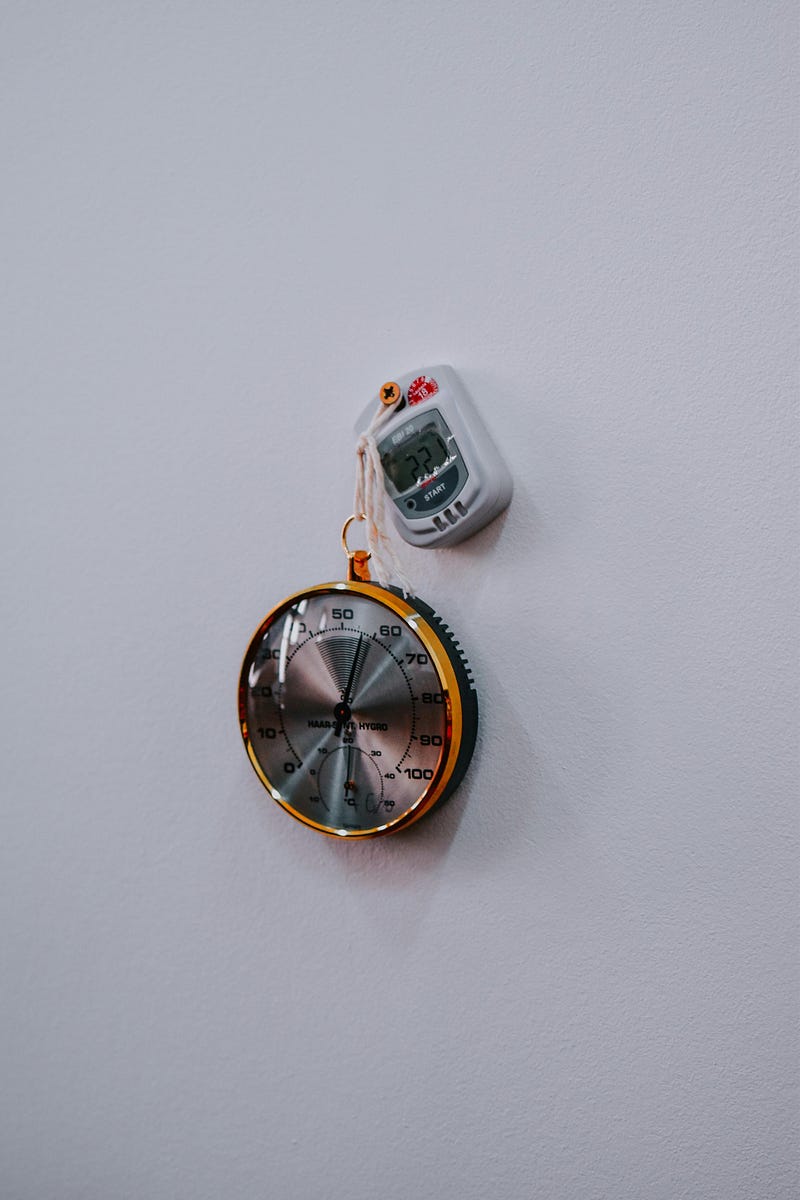
Thermal comfort is not just a matter of how hot or cold it actually is inside, but also about what are the relative humidity levels indoors, our gender or level of activity and how each one of us perceives all these parameters slightly differently. [Dids . on Pexels]

Mechanized, centralized systems, which became the norm in larger buildings, mean less individual control and a higher probability of leaving many dissatisfied with the temperature indoors.

Let’s start by seeing and better understanding how we arrived at the in-use standards for thermal comfort and their suitability in contemporary workplaces!

The First Standard, Offices in the 60’s and Men in Suits

Before the 1950s and 60s, we mainly ran worldwide on ad hoc strategies to ease the suffocating feeling of burning summer temperatures or make freezing winter days seems slightly less harsh. But since then, things have dramatically changed.

Unless you work in a smaller space, AC is now everywhere. In the US, ASHRAE (the American Society of Heating, Refrigerating and Air-Conditioning Engineers) first set a standard for the ideal indoor temperature in work settings somewhere between 69.8–71.6ºF (21–22ºC). It was 1966. These numbers quickly became a thumb-rule, used and taught in the decades to come, turning almost into a worldwide norm. The problem? Back in the 60’s, there weren’t yet many women on those office floors and men wore three-piece suits almost every single day!

The Variables Behind Thermal Comfort

Beyond air temperature, a couple of factors are also known to influence our perception of indoor temperature [1]: radiant temperature, air movement and speed, humidity, clothing, as well as work rate and metabolic rate.

I bet by now you already guessed a couple of reasons why previous recommendations needed some adjustments to better mirror our contemporary reality.

Women, for instance, have on average metabolic rates up to 35% lower than men’s [2], meaning they need to spend much more energy to keep their basal body temperature in chilly offices. The result: less energy to be spent on work tasks, less focus, less overall productivity. Men have also largely adopted a casual business attire in the majority of work fields, making them much less prone to oversteaming in layers of formal clothing during the warmer months of the year [3].

ASHRAE’s last update to the range, from 2017, says to have taken these concerns into account and made adjustments accordingly, pointing now to recommended office temperatures that are slightly higher - around 71.6–75.2ºF (22–24ºC) — and noting also that going further away from this optimal range could mean up to 10% reduction in overall performance of the teams.

Finding Some Middle Ground

When it comes to temperature, pleasing everyone might be impossible, but it does not hurt to try some mitigation measures to ensure a healthier, more pleasing environment for all in the floor:

  • Monitor relative humidity indoors as well (on top of hot temperatures, humidity levels well above 50–60% will make everyone umcomfortably sticky during hot summer days, making the weather conditions feel even more unbearable!)
  • Slightly increase the airspeed rate (add a small fan to your desk for a quick fix or ask facility managers to slightly ajust the AC. It will give the immediate impression that the temperature inside is a bit lower than it actually is!)
  • Compromise in formal attire on those steamy summer days
  • Install or ask for shutters/ curtains you can regulate (to prevent the strong summery sunrays from overheating the space in the first place)
  • Make or ask for slight adjustments on the thermostat by looking at your team (mainly women or you don’t move much in between desks? You might want to opt for a temperature that falls slightly higher within the optimal range)
Architecture
Interior Design
Office
Temperature
Humidity
Recommended from ReadMedium