
TRAVEL ALPHABET
The A to Z of My Favourite Travel Destinations
B is for Bletchley Park
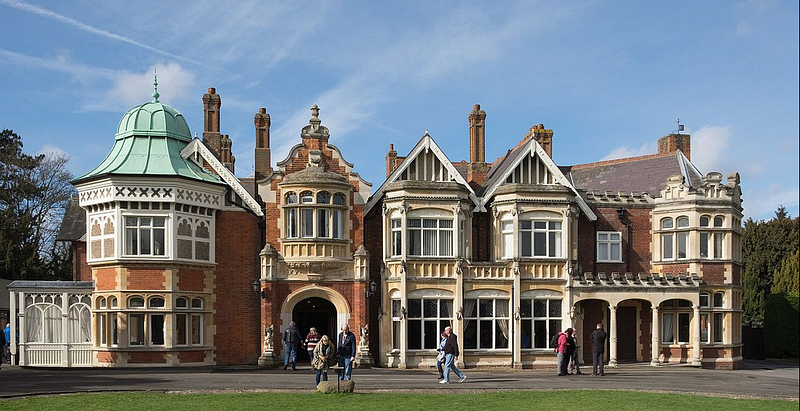
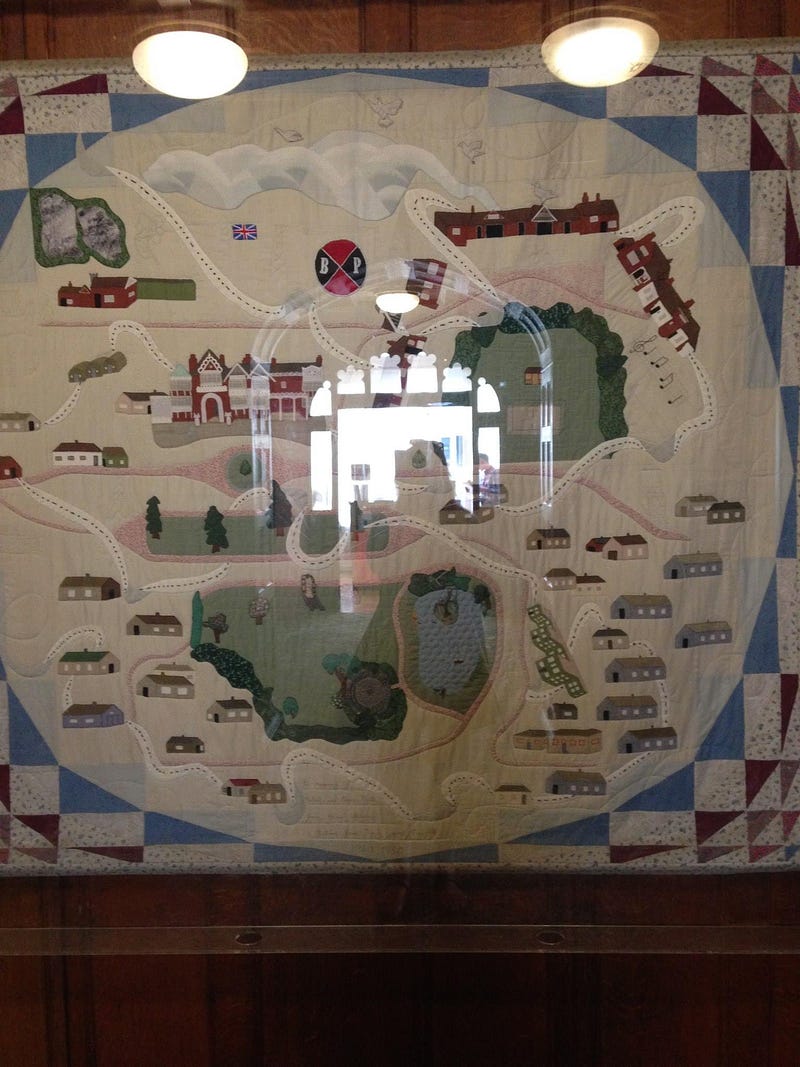
Bletchley Park had been on my bucket list for a while, so I decided I’d get going early and spend the day there. Even so, from where I was staying in London, it required a train, a tube and another train from Euston Station. It was midday when I arrived at Bletchley Station. It was a short walk to Bletchley Park itself. After getting my bearings (it’s a huge estate) and looking through the displays in block C, I ate the lunch I had packed — an egg and bacon sandwich with an elderflower sparkling water — I’m addicted to elderflower. I joined the 1 pm tour at the Mansion.
The guide was very informative and I found out everything I ever wanted to know that absolutely no one knew about till 30 years after the war finished — even most of the people who worked there! So, so secret! It was fascinating! We heard about the lives of some of the men and women who worked here during the war — over 9,000 on round-the-clock shifts, so 3,000 people coming and going every eight hours and no one in the village ever questioned it. It was wartime I suppose.
This was the place where the codebreakers worked day and night to break the Enigma codes — the Germans made a new code every single day so every single day it had to be broken! The Enigma machine had initially three rotating wheels so when a letter was typed, another letter was selected, I think 25x25x25 possibilities — the only thing that wasn’t possible was that the same letter was selected! Not much of a hint!
As the war progressed, the Germans increased the difficulty of the Enigma machine by adding more wheels. Hitler also had a machine called a Lorenz whose code could only be cracked with the help of Colossus (a huge computer) and Tunny (to decipher the code). They helped the D-Day invasion succeed by fooling Hitler into thinking they would land near Calais — so very, very clever!
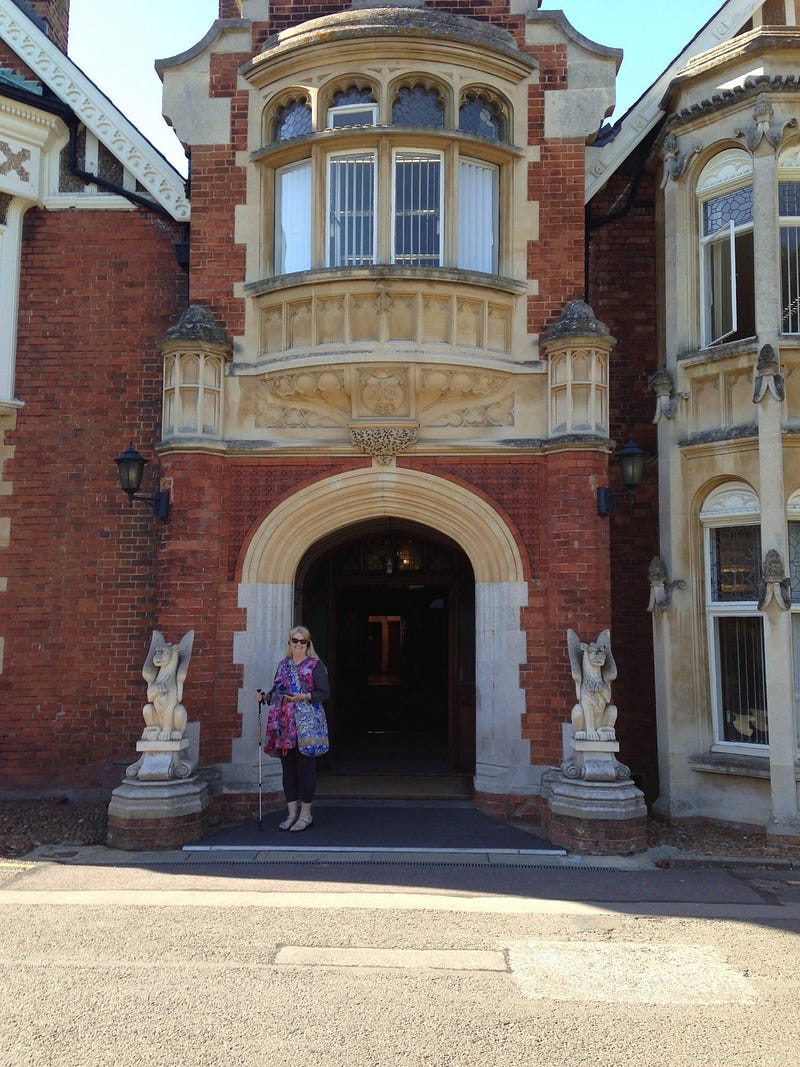
The intelligence operation started in The Mansion before the war and rapidly expanded to many huts where 3,000 people worked all day and night. The Mansion itself wasn’t very old by English standards; built in the late 1870s and was purchased by the Leon family in 1882.
For more information, go here. The saddest thing I remember was Alan Turing who was a major driving force in the development of machines to speed up the decrypting process was found guilty as a homosexual after the war and committed suicide by biting an apple coated in cyanide, whereas the German commander behind the Enigma machines was released after only 3 years in prison. No charges were ever laid.
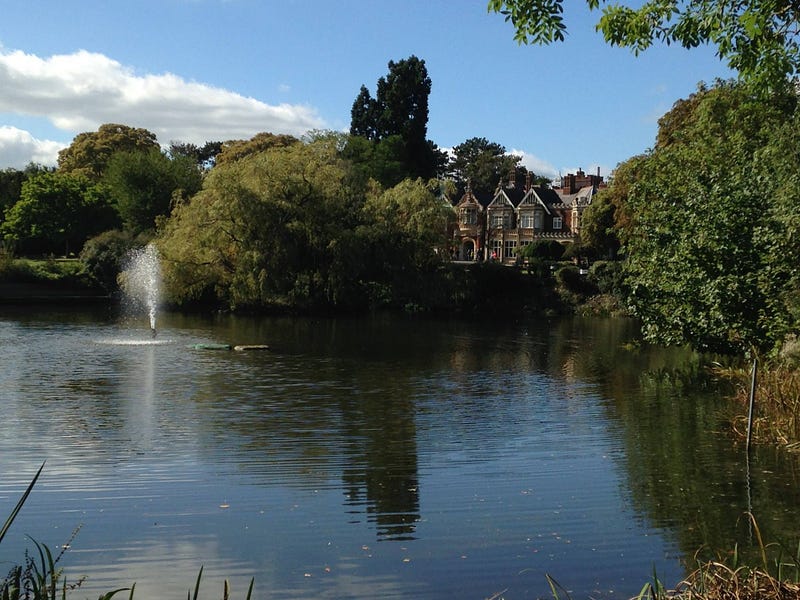
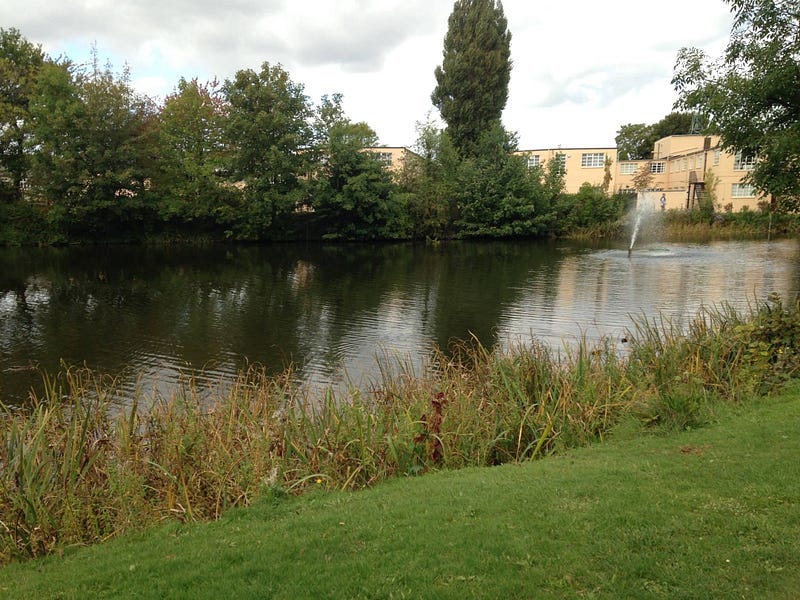
I tend to get carried away with history and its injustices. I sat sunning myself by the lake (it was a glorious day) after seeing the Colossus and Tunny machines. I sat imagining what it would have been like to have been one of the workers back then. They had recordings at points around the lake of meetings between young men and women who worked there, so it was not too difficult to put myself back in history. The park itself is very peaceful with so much history that was secret for so long!
If you’re a history buff, you’ll love Bletchley Park.
Here’s my first A story!
Here’s Sam Millichap’s B story!


