
🏋🏻 The 6 most important tips for building muscle quickly 🏋🏻♀️
I will show you several tips on how to build up your muscles and get fit.
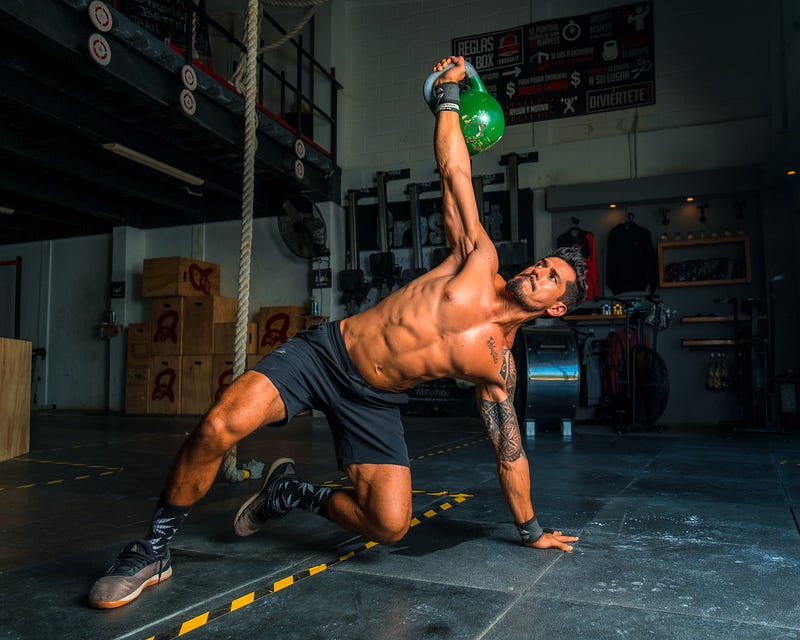
For a well-toned, muscular body, you need to train hard and eat right. We reveal how you can build muscle quickly and effectively — in the gym or at home
Would you also like a well-toned body? Sure, with a broad chest, strong arms and a flat stomach, you not only cut a good figure and boost your self-confidence, but also do a lot for your health. But getting there is tough: not only do you have to lift weights ambitiously, you also have to reduce your body fat percentage. To help you achieve guaranteed muscle definition, I have put together a guide with all the important tips for perfect muscle building.
What are the benefits of muscle building training?
Effective muscle training clearly brings you: more muscles, more power, more self-confidence! But it’s not just about superficial things like your appearance. Your health benefits enormously from your muscle training. Below we give you 5 reasons that should convince you to train regularly.
1️⃣ Muscles prevent pain
Poor posture can lead to headaches or back pain. This is due to weakened back muscles, which leads to imbalances that your body then has to compensate for. Shortening and tension in the muscles are possible consequences. You can specifically prevent this with muscle building and strength training. Especially if you have back pain, you should not neglect exercise. On the contrary: the right muscle-building exercises will strengthen your back muscles and provide relief.
2️⃣ Muscles make you slim
Yes, you read that right: Muscle growth helps you lose weight. Because your muscles are the number 1 fat burner — around the clock. It doesn’t matter whether they are working or not. This basic tension, also known as muscle tone, constantly consumes energy. In plain language: the more muscle mass you have, the more energy your body burns, even at rest. In technical jargon, this is referred to as an increased basal metabolic rate. The result, confirmed by studies: you lose weight faster and can maintain your weight more easily. On average, your muscles use around a quarter of the energy that your body uses overall.
3️⃣ Muscle mass never lets you freeze again
You probably know those muscular guys who, even in winter, always walk around indoors in a T-shirt while others are still shivering in a sweater. This is because the muscles produce heat. A study in “The American Journal of Human Genetics” confirms that people with many red muscle fibers are significantly more resistant to the cold. Only around 45 percent of the energy used to work muscles can be used for muscle contraction: Body heat is the waste product, so to speak, and this is also true at rest. This explains why you sweat after strength training or why you literally shiver when it’s cold or shivering: the body actively warms itself with the help of the muscles.
4️⃣ Muscles protect your bones and joints
Muscles not only enable you to maintain an upright posture and make it easier for you to move, they also make you more robust overall by supporting your body and protecting your bones and joints. The strength of the muscles around the joint ensures that you effectively prevent injuries, especially in the joints.
5️⃣ You’re never too old for muscle-building training
You can sustainably increase your muscle mass through targeted strength training. If, on the other hand, you don’t do any strength training, your muscles will shrink — and you will gain body fat more quickly. From the age of 30, you lose muscle mass every year without strength training, around 3 kilos per decade. So the older you get, the more important physical fitness is for maintaining your muscles and health. The good news is that even in old age, the body still responds very well to muscle training. Even if you may no longer accumulate muscle mass of over ten kilos per year, it is never too late to start strength training to become more agile, fitter, stronger and more efficient. Before you get started, however, you should have yourself checked by a doctor to take any previous damage into account.
How do I plan my muscle building training?
How do you train properly to achieve muscle growth? Building muscle mass and increasing strength are your body’s adaptation processes. If you push it beyond its known limits, it will also adapt to this in the future. To ensure that your muscle training is successful, you should follow the following training rules and principles:
How strenuous should muscle-building training be?
No pain, no gain. In other words: Challenge your body! Only then will it react to training stimuli and change. Sweat, muscle burning and sometimes sore muscles are intentional. Only then will you build muscle. “You should train your muscles to fatigue with high intensities and volumes in order to achieve maximum muscle growth. For beginners, it is perfectly sufficient to only push a muscle to its maximum load. Advanced athletes should push it to the limit. For larger muscles such as the quadriceps on the thigh, you can do 10 or more sets. However, I recommend doing different exercises in three to five sets. But be careful: it is essential that the stressed muscles recover sufficiently afterwards! “If you don’t give your muscles time to thicken, you’re wasting valuable growth potential.
How do I plan my muscle building training?
How do you train properly to achieve muscle growth? Building muscle mass and increasing strength are your body’s adaptation processes. If you push it beyond its known limits, it will adapt to this in the future. To ensure that your muscle training is successful, you should follow the following training rules and principles:
How strenuous should muscle-building training be?
No pain, no gain. In other words: Challenge your body! Only then will it react to training stimuli and change. Sweat, muscle burning and sometimes sore muscles are intentional. Only then will you build muscle. “You should train your muscles to fatigue with high intensities and volumes in order to achieve maximum muscle growth. For beginners, it is perfectly sufficient to only push a muscle to its maximum load. Advanced athletes should push it to the limit. For larger muscles such as the quadriceps on the thigh, you can do 10 or more sets. However, we recommend different exercises in three to five sets. But be careful: it is essential that the stressed muscles recover sufficiently afterwards! “If you don’t give your muscles time to thicken up, you’re giving away valuable growth potential,” says Power-Prof Stephan Geisler from the IST University of Applied Sciences in Düsseldorf.
How often do I have to train to build muscle?
Only repeated, regular training leads to the goal. So train at least twice, preferably three times a week. Beginners train twice a week, advanced athletes up to 5 times. Ideally, each training session should last 30 to 60 minutes. You should not lift for longer, minus the warm-up and cool-down, otherwise you will prevent your muscles from regenerating and thus from growing.
How many repetitions and sets should I choose for muscle building training?
Choose the weights so that you can do no more than 8 to 12 repetitions — the last ones only with difficulty. A good movement tempo for beginners: 2 seconds for the overcoming phase, 1 second for the static phase and 2 seconds for the yielding phase.
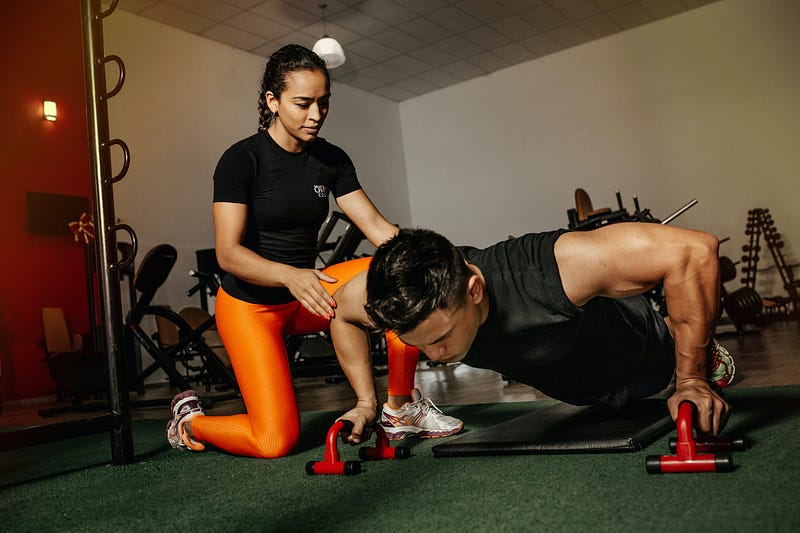
Example: For a push-up, this would be 2 seconds for the downward movement, 1 second at the lowest position and 2 seconds for the upward movement. Just one intensive set is enough to stimulate muscle growth. You should move on to the next exercise after the 3rd set at the latest. Take a break of at least 1 minute between sets. You should continue after 3 minutes at the latest.
🦾
The worst thing is when you say to yourself oh I’ll start tomorrow 😁
🦾
Which weight provides optimal muscle building?
The amount of weight is very important for your training success and muscle growth. The load is optimal if it creates an effective stimulus on the muscles without unnecessarily increasing the risk of injury. The ideal weight should be 10 % below the maximum training intensity. You determine your maximum weight when you do an exercise for the first time by estimating and trying it out (or getting advice from a trainer). For strength training, choose a weight that allows you to complete 8 to 12 repetitions. If you can do less than 8, the weight is too high. If it’s more than 12, it’s too low.
🏋🏻♀️ 🏋🏻
When do I need to change my muscle building training plan?
Always doing the same sequences, speed of movement and exercises does not challenge your body optimally in the long term, no matter how much weight you add. As a result, your muscle growth will stagnate. Therefore, change the training stimuli every 6 to 8 weeks, for example by switching exercises. Use other training equipment, such as free weights instead of machines. Change grip techniques, body position, pause length or tempo.
How do I divide up my muscle-building training?
Beginners who only train twice a week are best advised to do a full-body workout in which they train all muscle groups. If you train at least 3 times a week, it makes sense to divide your full-body training into muscle groups over several days. This is because each muscle should only be used again after it has fully recovered, after around 48 hours. The advantage of split training is that you can train on consecutive days. The 3 most common split tactics:
💪🏽 The push-pull method: You divide the units according to how the muscles work. Push movements are on the program on one day and pull movements on the other. For example, a push workout could train the following muscles: Chest, triceps and front shoulder. The pull workout follows the next day with exercises for the back, biceps and rear shoulder.
💪🏽 The player-opponent method: Muscles working in opposite directions are specifically trained together. Example: 1 time biceps and triceps as well as abdomen and lower back, front and rear thigh as well as chest and upper back. Advantage: Each muscle can be stressed to the maximum as it is fresh and rested.
💪🏽 The upper body-lower body method: You train your legs, abdomen and lower back in one session, then your arms, chest, shoulders and upper back the next time. This way you avoid overloading certain muscle groups.
How important is recovery when building muscle?
Recovery times are just as important as your muscle training. Muscles need to regenerate, nutrients need to be replenished and the residue from burning energy in your cells needs to be removed. Plus: your muscle grows during the recovery phase. That’s why you should allow your muscles to rest for 24 to 48 hours after every workout, depending on your level of training. If you reach for the dumbbells again too soon, you will gradually become weaker. The reason: the body has no chance to regenerate its performance. This is called overtraining. You can find tips on how to recognize overtraining here.
However, you shouldn’t wait too long before your next training session, otherwise you will miss the moment when your body has more power. After about 1 week, it will be back to its original performance level. It adapts to the lack of stimuli by breaking down the muscles.

How does muscle building work? What is muscle hypertrophy?
Muscle building is the enlargement of the body’s musculature. Hypertrophy training, the technical term for muscle building training, aims to increase the overall cross-section or circumference of the muscle by increasing the thickness of the individual muscle fibers. But what happens in the body during muscle growth? The prerequisite for building muscle mass is that the muscles are challenged beyond their usual performance level. This training stimulus caused by the workout results in micro tears in the stressed muscle (muscle soreness). In the recovery phase after strength training (around 24 hours), the body begins to repair the damaged fibers and even thickens them in order to adapt and strengthen them for similar strain in the future. In training theory, this process of adaptation is called supercompensation.
Is muscle soreness part of muscle building?
Slight muscle soreness is part of it. Muscles only grow when micro tears occur in the muscle during a workout. And these small injuries cause the sore muscles. However, you shouldn’t overdo it, otherwise you could end up with muscle injuries that force you to take a longer break. Give your muscles a break until they have recovered. You should not train again immediately if your muscles are sore. Otherwise, this can lead to long-term damage to the muscle. You can speed up recovery by taking a cold shower after strength training and getting at least seven hours’ sleep every night. This also helps with sore muscles.
🏋🏻 🏋🏻I know what it’s like to have to conquer your inner laziness, the urge to put it off
Which exercises are suitable for muscle building?
Put together your muscle-building exercises so that you train the whole body. All large muscle groups need to be worked intensively. XL arms are of little use if you have a chicken breast. Not only does it look funny, but such muscular imbalances will also set you back in sport and everyday life. Choose exercises for your upper body, back and legs.
Advanced athletes swear by the basic exercises for building muscle mass for the large muscle groups. These basic exercises involve at least two joints. Plus: depending on your level and availability, they can be performed with free weights (dumbbell training) or your own body weight:
✔️ Squats ✔️ Bench press ✔️ deadlifts ✔️ Pull-ups ✔️One-arm dumbbell row
By the way, these are the best exercises for building muscle. When choosing exercises for muscle building, don’t choose too many for one muscle group. It is better to focus on the total number of repetitions per muscle group. This should be between 20 and 50 repetitions to start with. If you have been doing this for a while, you can even do 100 repetitions or more for a muscle group, depending on the method you choose. For beginners and after an injury, exercises on machines tend to be more suitable for building muscle, as the movements are guided. Advanced users choose free weights, as with dumbbell training and cable pulls. Free weights mimic athletic movements and thus stimulate more muscle mass.
💪🏽
How do I create a training plan for muscle building?
First, set yourself a goal. Write down what you want to achieve with strength training. The more specific, the better. Then create your training plan by setting 3 training days. Plan a maximum of 3 rest days in between. Get what you need for training, such as a dumbbell set and professional help. Beginners are best advised to sign up at the gym. However, with a little supervision and good tips, you can also start training at home.
Plus: keep a training diary from now on. You should keep a record of your muscle building progress so that you can keep improving. Make a note of the muscle group, exercise, weight, sets, number of repetitions and duration of the workout. Important: Change your training plan every 6 to 8 weeks so that your muscles receive new stimuli.
🏋🏻
🏋🏻
How does muscle building work without equipment?
You can also do your muscle-building workout in the comfort of your own home. You don’t even need equipment such as dumbbells. All you need is your own body. Bodyweight training, i.e. strength training with your own body weight, is also ideal for untrained and overweight people, as it is easy to learn with natural movements. Plus: bodyweight training doesn’t challenge any muscle in isolation, but always muscle groups and even entire muscle chains.
Alternatively, you can of course also train at home with equipment. Even if having your own home gym sounds like a luxury, you don’t need a large room or premium equipment. This is the basic equipment:
👉🏼 Barbell bar 👉🏼 Dumbbell locks 👉🏼 Dumbbell set with dumbbells 👉🏼 Alternative: multifunctional dumbbell set
What is the right diet for fast muscle building?
However, strength training and regeneration alone are not enough. For effective muscle building, your diet must also be right. To grow, your muscles need the right nutrients. The most important building blocks for muscle growth are proteins. They are what make your muscle fibers expand after a hard workout. The catch: our body has fat and carbohydrate stores, but no protein stores. As a result, if you eat too little protein or consume too much, your muscles will be attacked and even broken down.
A protein-rich diet allows you to train intensively in order to stimulate new muscle growth. However, it is not the proteins themselves that are crucial, but their building blocks, the amino acids. Some of these are essential, which means that the body cannot produce them itself, but must absorb them through food. Good sources of protein include fish, meat, dairy products, pulses and nuts.
When should I eat for optimal muscle building?
To build muscle mass effectively, you should plan to eat 5 to 6 meals approximately every 2 to 3 hours. Eat a snack before training (such as a few nuts) so that your body doesn’t run on fumes and can provide quick energy. Immediately after muscle training, there should be plenty of protein (even before showering), such as a protein shake, and carbohydrates (e.g. fruit). Reason: This way, your body has the muscle-building substances available immediately after exercise. “Protein should be made available to the body up to 30 minutes after training so that it doesn’t pull the proteins out of the body,” says Uwe Schröder from the Institute for Sports Nutrition in Bad Nauheim. One hour after strength training, eat a meal with a high proportion of protein and carbohydrates. In the evening before going to bed, a snack such as 1 cup of cottage cheese is recommended. Our personalized nutrition coaching can help you build muscle so that you no longer have to worry about the right diet.
💪🏽
Do I need food supplements and supplements to build muscle?
Building muscle requires a lot of energy. Basically, you should eat real food to build muscle, not supplements. As long as you eat a wholesome diet, you don’t need pills and supplements. Exception: protein powder is indeed useful. These are the 7 best supplements for building muscle.
Conclusion: building muscle is healthy
Muscle-building training not only gives you a good-looking body, but is also healthy. Because: If you don’t do anything for your body, you will constantly lose muscle mass — all by yourself. If you not only want to look good, but also stay fit, you should also do strength training. A regular workout prevents back pain, muscular injuries and annoying tension. And by the way, you’ll also get a six-pack, a broad chest and XL arms. Our muscle building guide contains the roadmap to your dream figure. Now all you have to do is get started!