
The 5 Saddest Words in Youth Sports
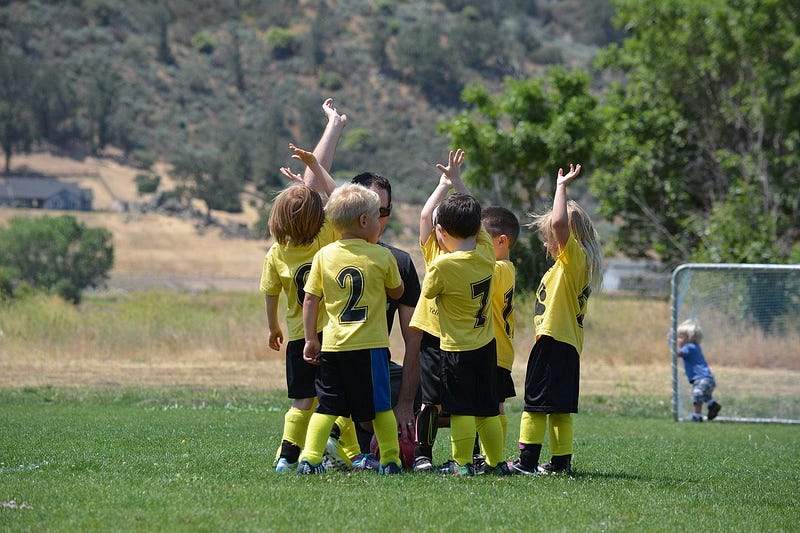
I was concerned, but at first glance there did not seem to be anything wrong. My daughter started the game at goalkeeper, her normal position, yet the coach removed her after ten minutes. Neither team had broken onto the score sheet and she had only made a couple of plays, so I did not think performance or injury was a factor in her removal. Perhaps she was feeling sick.
The game continued through the crisp fall afternoon. Halftime came and went and still she sat on the bench. Goals were scored and at the final whistle we found ourselves with one less than the opponents. Not exactly the way we wanted to finish the season, but the result was not much of a surprise either.
Curious to discover why our daughter did not come back into the game, my wife and I folded up our chairs and began the trek across the field. Like she was shot out of a cannon, our daughter left her team and made a bee line to towards the parking lot.
Hustling, I caught up with her a few feet from our car. She stopped when I called her name and spun to face me.
I’ve known my daughter for almost eight years. I know when she is mad. She has a stubborn streak a mile wide and I could see the anger and defiance in her eyes. Preparing for the worst, I asked her what happened.
“I don’t want to talk about it,” was her reply. She’s fourteen and when she puts her foot down, it’s easier to move a boulder than get her to budge.
I played the only card I had available, fatherly concern. “Your mom and I just want to make sure you are ok. What happened out there?”
She began to tell her story.
Her coach was a little irritated because she did something contrary to what he was trying to have them do. When he shouted out a correction, she asked him, “What am I supposed to do if they aren’t open?” Because it was across a soccer field she yelled the question. Also, did I mention she is a fourteen-year-old girl. The question might have sounded a bit sassy. So, he pulled her from the game because “she talked back to her coach.” For the remainder of the game he ignored her as she sat on the bench
After telling her story, she looked at me and said “I can’t take it anymore.”
I have coached soccer, and been a parent of soccer players, for many years. To me, there is nothing sadder than a child losing the joy of a sport. The pain was worse because I knew the passion my daughter has for soccer. To be pushed past her limit by an adult, a coach who should be a steward of the game, is unacceptable.
A Ball and a Field
Gather a group of children in a open, grassy field and give them a soccer ball. Now walk away and watch what happens. Almost instantaneously a game will break out. Will there be rules? Probably and most likely they will change sometime during the course of the day. Will there be disagreements? Certainly, and they will get resolved. Are there spray painted lines, fancy scoreboards, or grandstands? Not in the least. But they will play, have fun, and be tired at the end of the day.
Children don’t need fancy uniforms or state of the art facilities to play a sport. There have been sandlots which hosted imaginary World Series games. It is the adults who want stadium seating and the finest Kentucky bluegrass. It is the adults who post 500 pictures on Instagram of their t-baller in their bite-size authentic jersey.
It’s Not Our Game Anymore
Every year a story makes national headlines when parents forget the most important tenet of youth sports. Youth sports does not exist for the entertainment of the parents. Last June, (2019) a fight between parents broke out during a youth baseball game. The seven-year-olds on the field could be seen scattering while parents attempt to land haymakers. This was a game between seven-year-olds being officiated by a thirteen-year-old and the ‘role models’ ruined the game. Some of the parents were upset with the umpire’s call and the incident escalated into a fistfight.
Read more about the incident here.
In the grand scheme of things, how important is it if a teenager misses a call at first base during a game played by seven-year-olds? It won’t add a billion dollars to the national debt or cause an oil spill which contaminates protected wetlands. A child will be out instead of safe. They might be disappointed for a few minutes but will probably forget as they eat ice cream with teammates after the game.
It’s not our game. But we can still have fun. We can still enjoy a Saturday afternoon at the fields. I have been a coach and official for almost twenty years and I love being involved with youth sports. If we understand our role and make the game about the children, everyone will have a better time.
Winners and Losers
“Winning isn’t everything, it’s the only thing.” Vince Lombardi
I don’t like to lose.
Does anyone really enjoy losing? Probably not. But some of us lose better than others. I was twenty-two when I managed my first Little League team. A loss was heartbreaking. I watched my 9 and 10-year-olds fight for a victory and saw their sadness when their efforts fell short. The dugout was somber after those losses. However, by the time I had the equipment put up in the storage shed both teams would be at the snack bar laughing and eating ice cream together. The loss, though not forgotten, was just not as important as I thought.
Over time I have learned the value of losing. Failing to achieve success can be a great tool. Losing is an incredible motivator and teaches us lessons we might ignore with a win. I am not advocating losing on purpose, I just want you to reframe how we view a loss.
One season my team went 3–15. We lost the first 12 games of the season. When the season was all said and done, a very good friend of mine pulled me aside and told me he thought it was the best he had ever seen me coach. Looking back, I had to challenge myself to find better ways to teach the game. I had to keep 12 young men excited about the game and motivated to improve despite being on the short end of the scoresheet game after game. We learned a lot that season and still had fun.
In sports we should keep score and teams should be able to win their contest. But only in the sense that it gives both teams a target to aim for. Winning at youth sports is about learning the joy of discipline, cooperation, and hard work. Winning at youth sports is about players learning to challenge themselves to improve. Winning at youth sports is playing and having fun. I think when Lombardi spoke his most famous of quotes, he did not mean winning on the scoresheet, he meant winning as in doing things the right way.
What is the Cost of Success?
According to a 2019 article on foxnews.com, the youth sports industry in the United States brings in approximately 17 billion dollars per year. This includes travel, equipment, lessons, training programs, and facility fees. Local recreational clubs have been pushed aside by ‘elite’ level programs. The expansion of the elite programs has significantly raised the cost of participation. This has priced many children out of playing the sport they love.
Read the foxnews.com story here.
Many leagues are pricing out many of the lower income families in the country. When my daughter was twelve an entire year of recreational level soccer cost $275. The next year, when she tried out for an elite team her fees were over a thousand dollars for the year. That cost did not include uniforms, cleats, gas for travel to away games, and tournament fees. Some families cannot afford to pay that much to play soccer. This is tragic. We be looking to make youth sports more inclusive not more exclusive.
These elite programs tempt parents with the lure of the college scholarship. ‘Don’t you want the best training possible for your son/daughter to help them get a college scholarship?’ they ask. What they fail to mention is that the NCAA estimates just 2% of all high school athletes are awarded scholarships. We are drastically changing the landscape of youth sports to push children towards a reward only a very few will receive.
Instead of driving children towards ultra-competitive leagues at 10 or 11 years old, players should be learning leadership and teamwork. And they should learn the joy of the game. Most of the star players at the younger ages excel not from talent but because they have developed physically earlier than their peers. It is not uncommon for the Pee Wee football star to not make the middle school team and the hero of middle school football to barely make the high school Junior Varsity team.
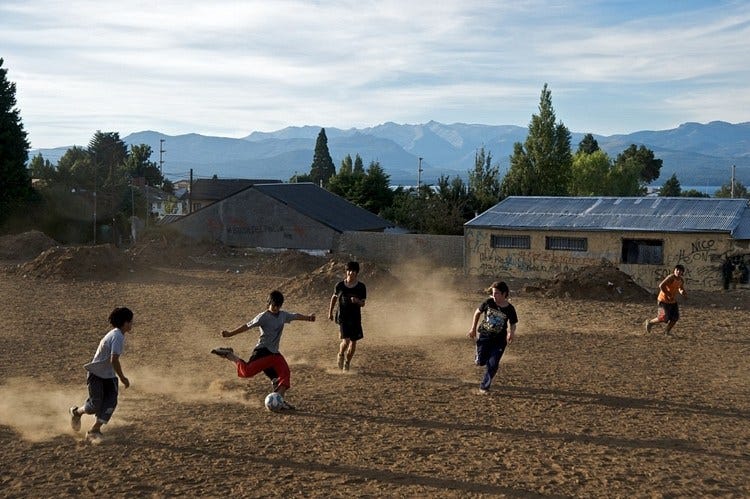
Brazil has won 5 World Cups. The have some of the most creative soccer players in the world. Most of them learned to play in the streets or the dirt fields of their home towns. They did not have nine-year-old elite travel soccer teams. They had the space to play and kids to compete against. That is all they need to learn the basics of the game. As they get older and show more interest, then coaching and tactics can be introduced. We can learn a lesson from our friends to the south. Make the game available to as many children as possible and make it about fun. They will learn more along the way if they are not stressed out about winning the 11-year-old Tri-State championship tournament.
Let’s Change the Game
All sports see a high level of attrition around the age of 13. Puberty and changing interests are certainly a factor, but many who have studied youth sports believe there is a high level of burnout as the player becomes a teenager. The child gets frustrated with the pressure to play at the highest level possible. They are years away from being scouted by colleges, but have to stress about making mistakes that might prevent them from earning a scholarship.
In addition to burnout, repetitive motion injury is on the rise among youth athletes. The rise of specialization at an earlier age is leading to a greater rate of overuse injuries. In an 11 Alive news report on sports injuries, Dr. David Marshall, the director of sports medicine at Children’s Healthcare of Atlanta says, “The trend in youth sports seems to be that of overuse.”
You can’t get a college scholarship or sign a professional contract at 13-years-old. However, you can get seriously hurt or lose the joy of playing a sport. We can still have organized teams and leagues, but as adults let’s take a step back and give the game back to the kids. We should strive to make the activity more about the children’s enjoyment than the adults. Perhaps we will find our kids play better and learn not just to be winners of a sport but also winners at life.