
The 5 Reasons Why Andrew Jackson was a Cruel Slaveholder
The 7th President of the United States made his fortune from slavery

Andrew Jackson bought The Hermitage plantation (Tennessee) in 1804 and ensured that slaves worked tirelessly picking cotton. By the time of his death in 1845, he owned 150 slaves.
In the 18th Century, the dominant view was that racial characteristics were irrelevant (all men are created equal) which led to the abolition of slavery in Northern states.
Southern states wanted to cling to the peculiar institution for economic reasons.They managed to found a way to validate this system by shamefully defining black people as members of the subhuman species. They could therefore retain the entire egalitarian philosophy (all white men are created equal).
Jackson was a staunch defender of slavery and was oblivious to his alarming treatment of slaves. It is thus important to list the five aspects that define his cruelty towards black people.
Slaves lived in tiny cabins
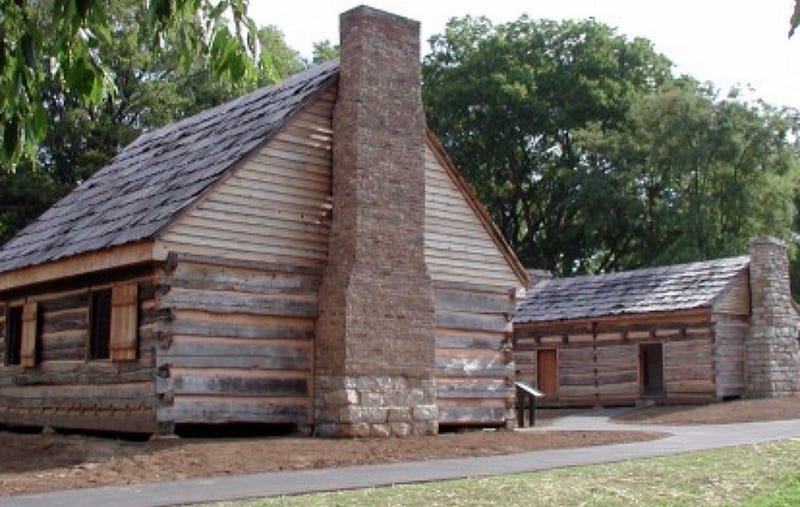
They were quartered in three different locations around The Hermitage. The domestic slaves lived in the backyard, the field slaves in the field quarters and the skilled ones in the first Hermitage (a minuscule copy of the main house).
Groups of ten individuals or more lived in tiny cabins. It had one floor, one door, one window and a small loft.
Jackson pushed for slaves reproduction
He wanted to save money and boost his revenue so he encouraged slaves to have as many children as possible.
Jackson liked purchasing black children
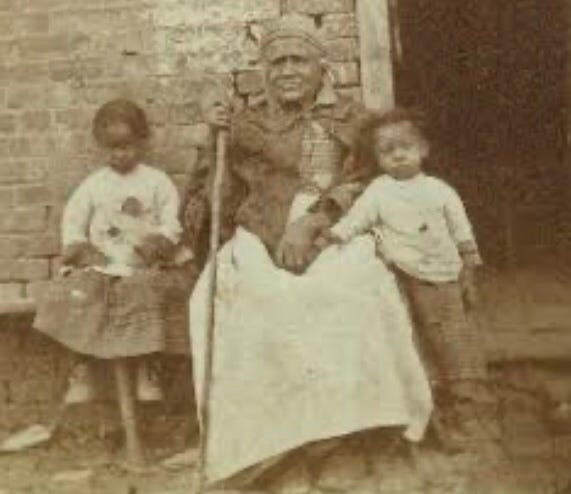
He bought his first child slave in 1791, a sensitive six-year-old boy called Aaron.
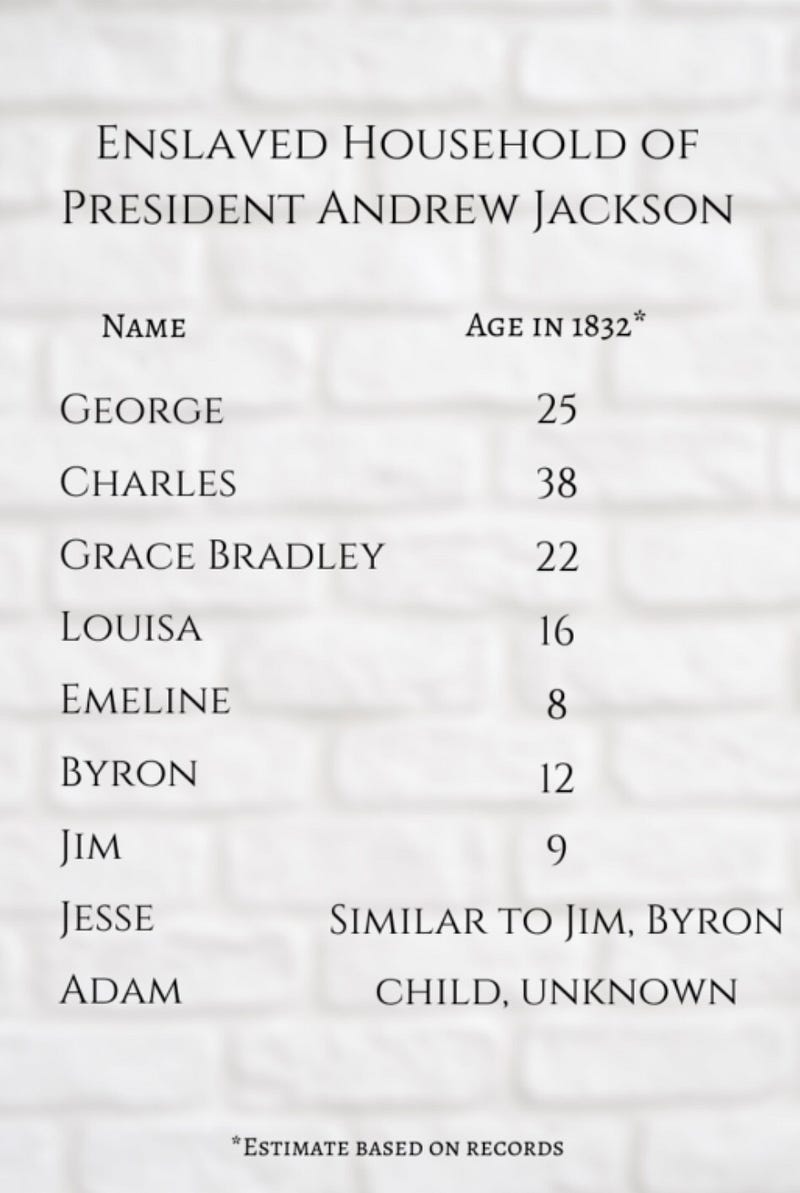
In a document recorded by The White House, six children were listed as part of the enslaved household in 1832.
Jackson separated slave families
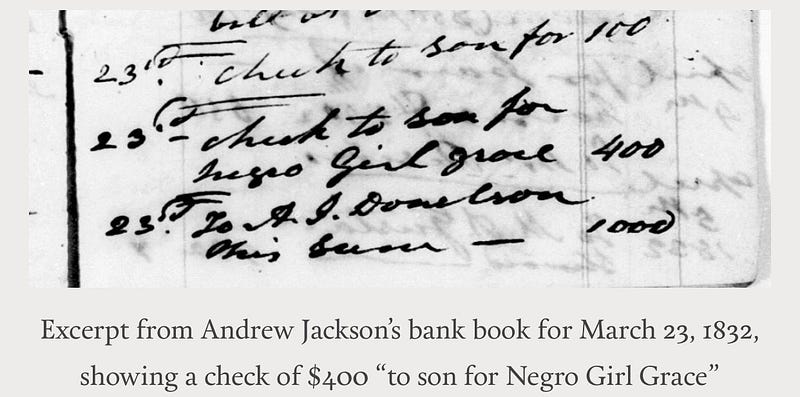
He brought slaves to the White House from Tennessee and purchased more of them during his presidency to accommodate his family. For instance, he bought Grace Bradley and her sister Louisa to take care of his grandchildren.
Jackson ordered harsh punishment for unruly slaves
When a slave woman was judged to be guilty of improper conduct, he wrote to his overseer that “she must be ruled with the cowhide” (The Papers of Andrew Jackson, Vol.V).
When a slave ran away from his plantation, Jackson put an ad in the Tennessee Gazette that promised a reward for his return and “10 dollars extra for every 100 lashes any person would give him”.
In Conclusion
Slavery was the primary source of Jackson’s personal wealth. A discussion about his role in strengthening the peculiar institution has to take place instead of hailing him as a hero.


