
The 5 Best Writing Advice I’ve Ever Received
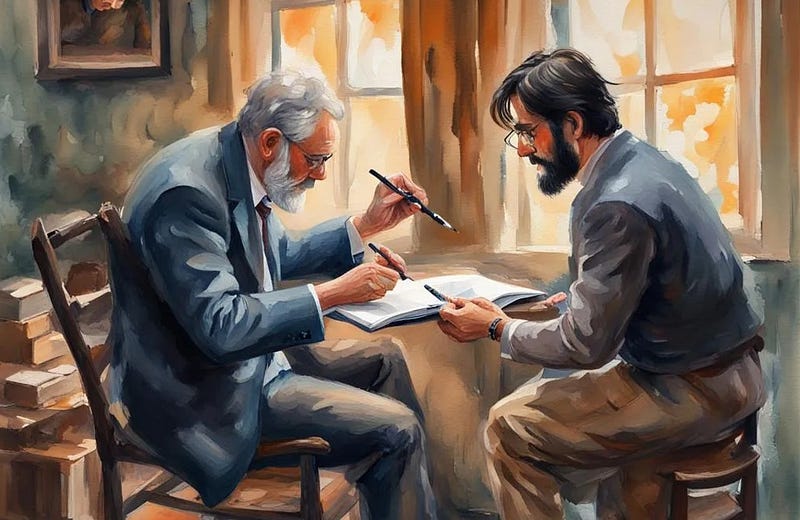
Since I started this adventure:
- I’ve read dozens and dozens of books about writing
- Hundreds (maybe thousands?) of blog posts about writing
- I’ve had the chance to chat with many authors
- I’ve read and listened to countless interviews and podcasts with many of the authors I love
A long journey of learning in which I received a lot of advice. Some good, some not so good. And of course, some terrible ones.
The mistake some make is to think that their method is the right one. Because it works for them, it will work for others, but every writer is unique.
Every writer has his or her own character, habits and personality, and there’s no single method for achieving good results. But several.
Today, I’m sharing 5 of the best advice I’ve received. The ones that built my identity as a writer. A few words of advice that help me keep writing even when I’m discouraged.
1) Plan your writing routine…. and stick to it!
I’ve been writing for about ten years. I’ve tried dozens and dozens of methods. This is the only method that has worked for me.
- Writing while waiting for inspiration … it didn’t work
- Writing when you can… it didn’t work
- Writing when you think you’ll have time… it didn’t work
Unexpected resistance will always stand in your way.
My best method:
- Set days and times
- Set a schedule that you won’t move
- Treat writing as it should be treated, seriously
2) Write what you want
Pressure can quickly paralyze you. Especially when you start being read. Many doubts start to creep in.
- “What will the audience think?
- “What if?”
The “if” are manifestations of the demon of resistance and doubt. To write is to dare to share your voice. You have to do it without fear or apprehension.
If you want to write about something, just do it.
3) Finish what you start
Writers’ illnesses can take many forms. Creative minds are full of ideas. These creative minds are often their own victims. Too much story, too many projects. The writer scatters his or her energy on everything and manages to finish nothing.
The writer ends up losing himself in the fantasy he builds. Forgetting that his reality is to finish his projects.
Between two writers of the same level, the most successful will always be the one who finishes his projects.
The one who doesn’t finish any of them is wasting his talent and sabotaging himself.
A writer has to move forward in project blocks. He works on one project until it’s complete. Then another. It’s a rigor he has to force himself to have.
Finish your projects or fail.
4) Write… a lot
It’s hard to assess your progress, but if you write a lot, I can guarantee you’ll see some glaring differences from what you wrote a while ago.
You’ll catch obvious errors, sentences that could have been more beautiful, transition issues, poorly chosen words…
The text will seem to have been written by an old version of yourself who was very untalented. This is a good sign: it means you’re making progress and your style is perfecting itself.
This is proof of progress.
A lot of people ask me:
- How can I improve?
- What books should I read?
- Which writing course should I buy?
If you don’t write often. None of the above. Practice makes perfect. Write, a lot, more, more and more. Passionate about your craft. In love with it.
I’m not going to say that a coach can’t help you, because I’ve helped several writers. But if you’re looking to make progress, write. Practice a lot.
It’s the foundation of everything.
5) Done is better than perfect
Another writer’s disease is the quest for perfection. Proofreading again and again and again and again. Like that last sentence that never seemed to end. But, as you know, there are always things to correct.
Have an editing process, like a quality check, once the text has been produced.
Pass this quality control, click publish and move on.
All the time you spend looking for perfection is time you’re not using for your other projects.
No text will ever be perfect.
Those were 5 tips that I apply every day in my writing life. There are many more, and it’s hard to rank them. But these are high on the list. Follow these precepts and you’ll make rapid progress on your various projects.
What about you?
- What’s the best advice you’ve ever received?
- What are the ones that have built your identity as a writer?
- Is there a quote that stays close to your heart?
If you don’t want to miss any of my content, you can subscribe to my newsletter.
My best stories, delivered straight to your inbox.