
4 Costs of a ‘Grow Now, Clean Up Later’ Mentality
How the consequences of neglecting environmental issues boomerang back at us
Credit: This article is based on the scientific article “The costs and benefits of environmental sustainability” by Paul Ekins and Dimitri Zenghelis. (Full citation and link available at the end of the article)
The earth is in bad condition as it currently suffers from three planetary crises at the same time: climate change, loss of biodiversity, and environmental pollution. These crises are pushing the earth toward tipping points. Tipping points are points of no return because one environmental issue triggers further environmental issues, causing a cascade effect. For example, the melting of the Greenland Ice Sheet can trigger other issues at 1–3 °C (1.8–5.4 °F) temperature increase that push the temperature even higher above a catastrophic level of 4 °C (7.2 °F) increase (see How Arctic Coasts Are Affected By Climate Change for an example of melting permafrost). Despite these urgent issues, economists warn us that rapidly converting to an environmentally friendly economy is prohibitively expensive.
The warnings that converting to an environmentally friendly economy is expensive is based on the predictions of standard economic models. Two of the most widely used models to quantify the costs and benefits of climate policy are DICE and RICE. These models look at the growth of a single new product or industry based on historic trends concerning the acceptance of new technologies. DICE stands for Dynamic Integrated model of Climate and the Economy; RICE stands for Regional Integrated model of Climate and the Economy. These models consider the money and hours of work required to produce a single product, without considering changes in other technologies that could influence product advancement and acceptance. As the scope of these models is limited, they fail to accurately predict trends in technologies that can be used to mitigate the planetary crises.
Also, history doesn’t provide an accurate model of our current technological changes. This is because we used to experience advances in one type of technology. But these days, technologies in multiple fields are advanced. This creates competition that drives further innovation. For example, in the energy sector, solar, wind, wave, fuel-cell, and geothermal technological developments compete to provide renewable energy. Traditional economic models, based on single advances in technology have proven inaccurate in predicting the growth of renewable energy industries: all world energy predictions since 1995 have significantly underestimated the growth of renewable energy and failed to predict dramatic price decreases. Prices decreased for instance for solar panels by 83% and for wind turbines by 35% since 2010.
While these models have a limited scope and therefore are not able to make accurate predictions, these models also suggest that growing economies now and cleaning the results later is the most suitable strategy. This is because they predict that costs for mitigation are higher than for solving issues later. But shockingly, an additional 0.5 °C temperature rise (0.9 °F) from 1.5 to 2°C (2.7 to 3.6 °F) by 2100 is expected to cost between $15 trillion and $38.5 trillion. These costs come from a wide range of consequences. These are the worst costs of the ‘grow now, clean up later’ mentality:
Environmental issues
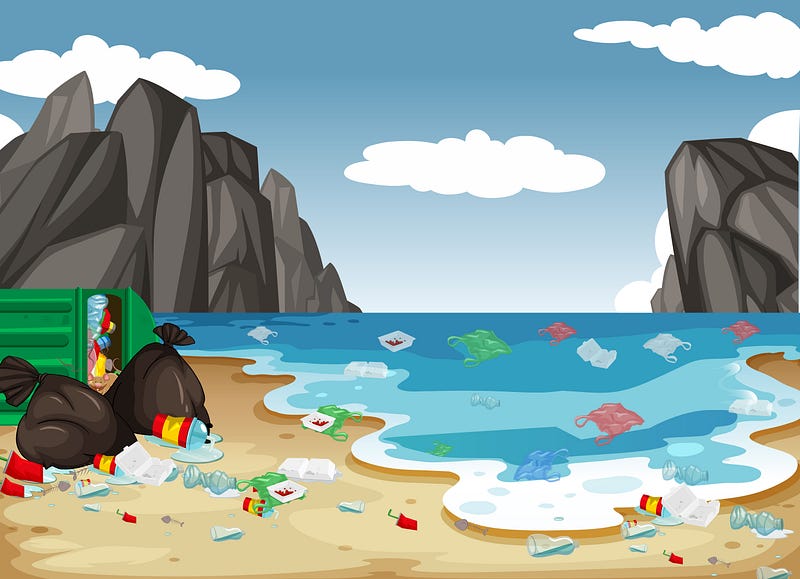
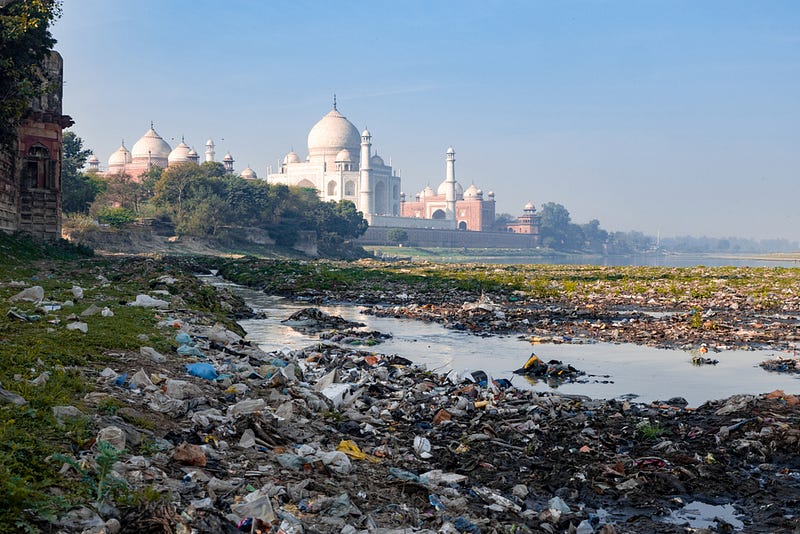
The first cost of a ‘grow now, clean up later’ mentality is the cost of having to solve environmental issues. Dealing with environmental issues is often more expensive than preventing these issues. For example, dealing with environmental issues caused by littered waste is often more expensive than collecting and processing waste before it is distributed in the environment. And as some types of pollution accumulate over several years in the environment, the costs accumulate over the years as well.
For example, India applied the ‘grow now, clean up later’ concept and is an excellent example of the cost of trying to clean up later. The resulting issues cost India today about 5.7% of its Gross Domestic Product (GDP). The GDP is an economic indicator that measures the total value of all the goods created and services provided by a country in a year. Their GDP is $3,2 trillion, so 5.7% is $181 billion. Those $181 billion include costs for dealing with air pollution, inadequate water supply, sanitation and hygiene issues, and degraded farmlands, pasturelands, and forests. And costs for India are not only direct by paying to solve the issues, they also cause higher healthcare costs and reduced food production.
Counterproductive investments
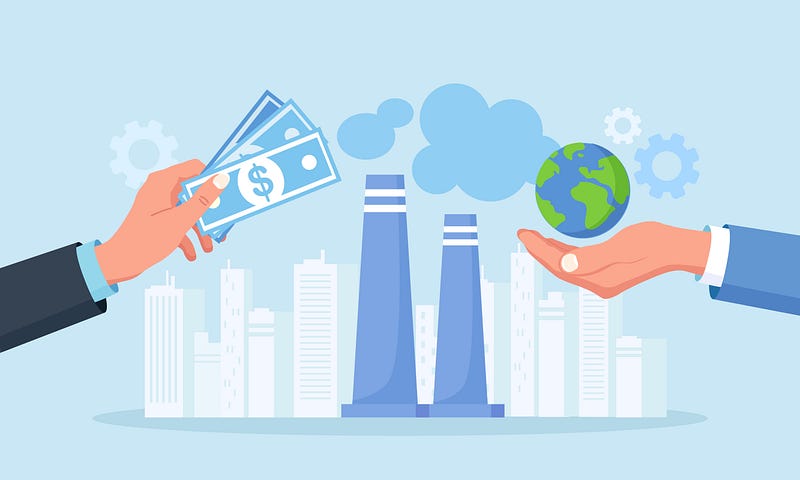
The second cost of a ‘grow now, clean up later’ mentality is the cost of having to make counterproductive investments. Counterproductive investments are for example investments in repairing or retrofitting technologies that harm the environment so that they continue to have harmful effects. Retrofitting means that new technology is added to reduce the harmful effects. The initial costs of repairing or retrofitting may be less but the eventual costs of cleaning environmental damage can be much higher.
For example, cleaning a factory that causes air pollution involves changing the equipment that causes the pollution. When broken equipment is repaired, the same amount of air pollution is emitted; when equipment is retrofitted, the amount of air pollution may be reduced; when equipment is replaced, the amount of air pollution may be completely prevented. All options cause financial investments but the environmental costs are lower the less pollution remains.
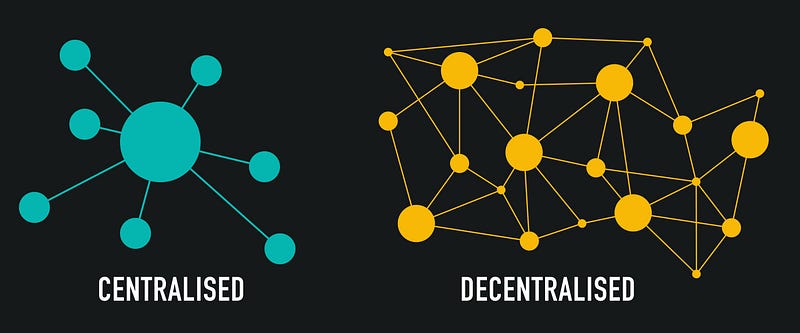
Also, purchasing equipment that uses more environmentally friendly technology immediately may be less expensive than purchasing equipment that requires retrofitting or replacement. This is because new technologies allow skipping the pollution phase. This concept of skipping obsolete technology by upgrading directly to the most efficient, environmentally friendly version is called leapfrogging. Leapfrogging allows for example developing nations to advance their technologies directly to the level of developed nations, avoiding the costs of cleaning that are required after using obsolete technology.
For example, developing nations can leapfrog inefficient centralized electricity grids by immediately investing in infrastructures that allow distributed energy generation. This is helpful in the transition toward generating energy from renewable sources as supposed to burning fossil fuels.
Health risks
The third cost of a ‘grow now, clean up later’ mentality is the cost of having to deal with pollution-related diseases. Diseases triggered by or worsened by pollution cause 16% of deaths worldwide, about 254 million lives in 2015. That makes pollution the leading cause of death, worse than tobacco, viruses and bacteria, or alcohol.
And while pollution creates costs in the number of deaths, it also creates financial costs. For example:
- the total welfare damage in 2015 is estimated at $4.6 trillion, about 6.2% of the global GDP
- water pollution costs $140 billion in lost wages annually
- water pollution causes $56 billion in healthcare costs annually
These costs in money, productivity, and health continue as long as the ‘grow now, clean up later’ mentality remains.
Luckily, these costs can be prevented as much of the pollution can be avoided using pollution control strategies. Many pollution control strategies have proven to be effective in developed countries and can be used in developing countries as well.
Lack of resources
The fourth cost of a ‘grow now, clean up later’ mentality is the cost of having to deal with a lack of resources. Some resources are already lacking or scarce, other resources will inevitably run out sooner or later because they are non-renewable such as fossil fuels. This is because in general, our use of materials, including fossil fuels, has more than tripled since 1970, from 27 billion tons to 92 billion tons. This is about the same amount as Great Pyramids of Giza covering Russia 15 times in 1970 to 51 times today! Also, Earth Overshoot Day was on July 28th 2022, which is expected to be even earlier in 2023. Earth Overshoot Day marks the day of the year when we have used more resources than can be replenished by nature.
Using more resources than can be replenished by nature also has indirect environmental costs. For example:
- agriculture and other biomass production is responsible for 90% of the loss of biodiversity
- agriculture uses more than 80% of fresh water available each year causing freshwater scarcity
- mining and extraction, including fossil fuels, cause pollution
As a consequence, our health is impacted as well (further reading: Health reading list).
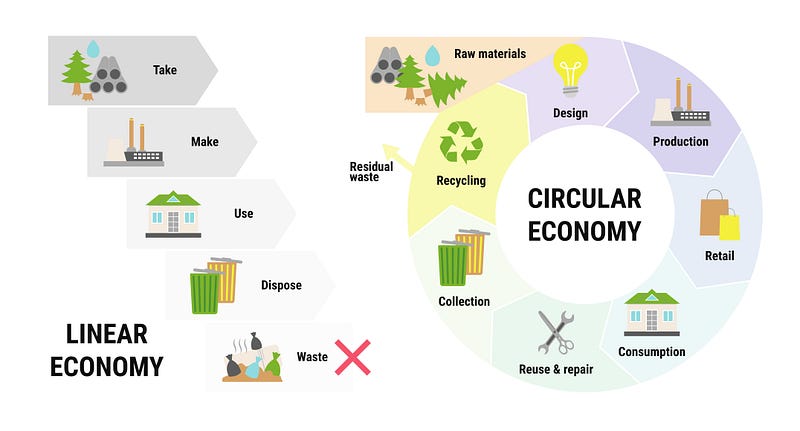
When we continue these trends, our use of resources will double by 2060 to 190 billion tons (106 times Russia covered by Great Pyramids of Giza); the amount of forest will decrease by 10% and other natural habitats by 20%. This means for example pollution and clean freshwater scarcity will further increase and biodiversity will further decrease. But the good news: these trends can be counteracted by converting our current linear economy to a circular economy. A circular economy means that no or hardly any resources are wasted and materials are used over and over again.
Conclusion
So, the ‘grow now, clean up later’ mentality causes high costs. This is because we have to deal with environmental issues, health issues, and limited resources, and are tempted to make counterproductive investments. Cheaper solutions involve preventing pollution in the first place, making environmentally friendly investments, using renewable sources, and converting our economy to a circular economy.
How we can take action
Here are practical ideas of what you and I can do to combat the ‘grow now, clean up later’ mentality:
- Advocating for stronger pollution control laws at all levels of government
- Investing in clean technology whenever you are purchasing items that offer a choice
- Repairing broken objects
- Reusing materials as much as possible
- Bringing waste to recycling so that materials can be disposed of properly or — even better — reused
Which one of these can you implement in your daily life? And do you have further ideas of what you and I could do? Thank you in advance for putting them into practice and sharing them in a comment to this question to inspire all of us.
Credit
This article is based on:


