
The 4 Components of a $4,228 Medium Article
It only took me an hour to write
It took me one hour to write this article. Within 30 days, it made more than $3,000. Two months in, it’s still generating decent earnings.
I’m not saying this to boast. I’m not proud of the fact that the article I put the least effort into made the most money. For example, I listened through a 400-page biography and several hour-long interviews to write a profile on Disney’s CEO. The result? 1,700 views and $94 in earnings. I’m saying this to illustrate that writing is less about “effort” and more about knowledge of how to present your ideas, and which ideas you should select to present.
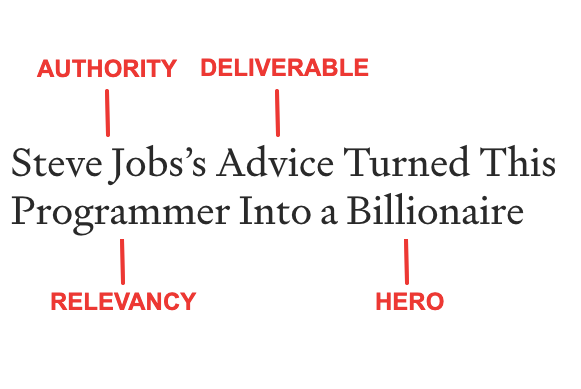
I’m writing this to make Medium a better place. It gave me a start, and I want it to succeed. Here are three reasons why I think my article about Marc Benioff did so well. Specifically, I want to talk about the headline.
1. It Had a Clear Deliverable
As a Medium user, you’re familiar with the sheer amount of new content published here every day. Guides, how-to’s, news updates, opinions. You have to separate the wheat from the chaff.
With news websites, factual information is the deliverable. You can effectively read websites like BBC or CNN just by skimming through the headlines. You only click on the stories of particular interest for more context. On Medium, most people write how-to articles that emphasize actionable insights over factual information. Facts are only used to back up suggestions, not standalone products.
Many how-to article headlines suffer from ambiguity. Headlines like “How to do Make Money on Youtube” are ambiguous in what the reader can expect to find. Is it a personal story? A listicle? An analysis? What’s the deliverable? Instead, I believe just by specifying your deliverable you can attract a much wider audience. In my case, the keyword was “advice.” Potential readers instantly knew what the centerpiece of the article was, and they wanted to see what it is.
2. It Was Authoritative
Established news platforms like BBC are household names that are trusted by hundreds of millions of people worldwide. People quote BBC journalists just because they’re BBC journalists. We, Medium writers, sometimes forget that anyone in the world can create an account and publish their writing. As Medium writers, we have no authority by default, we have to earn it.
As a Medium user, it’s really exhausting to go from one article to another to realize that the people giving off advice left and right actually don’t have any real authority. It decreases my trust in the platform as a whole and makes me more careful when choosing the next article to read.
In my article about Marc Benioff, the headline started off with Steve Jobs’s name. I don’t think there’s a soul in this world who would dispute that Steve Jobs is an authority figure in tech entrepreneurship.
3. It Is Relevant to Medium’s Audience
Medium’s audience is mostly tech-oriented, and it took me way too long to realize this. Most people here have software or design jobs. It’s so easy for us writers to forget that we’re actually writing for other people. Real people. With real backgrounds.
A single mom is probably not going to be interested in a two-seat convertible. A monk is not going to be interested in dating websites. And programmers, well, they’re certainly interested in making more money. Marc Benioff’s story is the classic programmer-to-billionaire epic. Benioff is also big on philanthropy and a role model for many programmers.
4. It Made the Reader Feel Like a Hero
In Made to Stick, we’ll also find that this story embodies one of three classic story templates: it is the story of connectivity. It’s the modern story of the Good Samaritan: a successful entrepreneur offers invaluable advice to a competitor in need. The advice leads to a multi-billion dollar empire.
In some ways, it is also the story of a hero. Becoming a billionaire is no trivial achievement no matter what the circumstances are. In this case, Medium’s tech audience can relate to the hero, who was also once a programmer.
Trial and Error Is the Only Way to Succeed on Medium
I still have no idea whether the Benioff story had any real merit or was just a cosmic fluke. I’ve written around 60 articles in the past few months, and only a few succeeded in such fashion. I’ve spent a couple of months trying to understand why that article worked so well. These are the only findings that were somewhat consistent with my other successful articles.