
The 4 Biggest Writing Mistakes I’ve Made on Medium
And How You Can Avoid Them
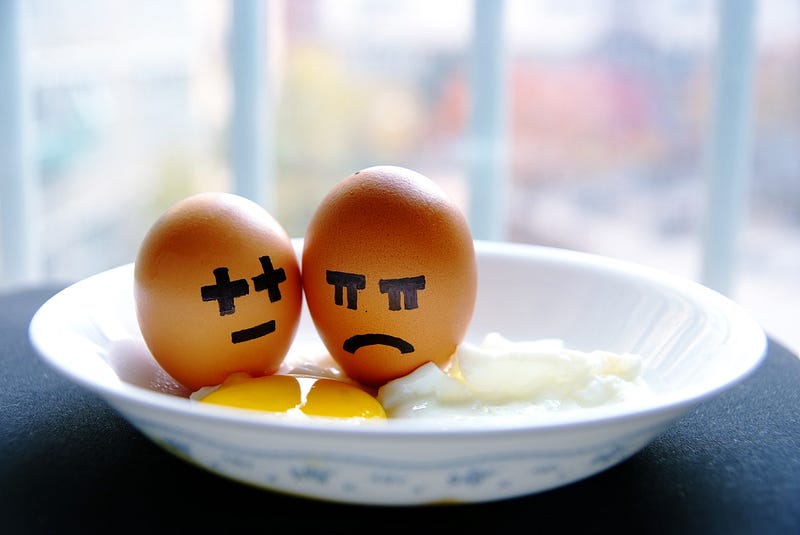
It’s not a secret. I’ve been here before. And now that I’m back, it’s obvious to me what I did wrong the first time around. These are not philosophical revelations, these are actual platform errors that you can avoid. But only if you want to.
There’s no judgment here. If you employ some of these strategies and they work for you, great! If your sole purpose here is to make money, great — some of these tips won’t matter to you. But these are basic mistakes that I made that, at the time, I thought were very smart moves. With the benefit of hindsight and time off, this is everything I did wrong writing on Medium the first time:
Quantity over Quality
In July of 2018, I wrote 53,354 words and published 39 stories on Medium.
In March of 2018, I wrote 53,014 words and published 57 stories on Medium.
In 2018, as a whole, I wrote 389,317 words and published 305 stories and 107 Series posts on Medium. Every single one of those stories was deleted when I left the platform.
At the time, I thought all of these stories were good. Looking back, it’s laughable that I even entertained that ego-driven hyperbole. I am not going to say I was publishing crap on purpose, but when I look at my Medium graveyard there’s more than just bones in there. There’s a lot of dust. Because the stories had no substance. And they just faded away.
It’s hard not to get the bug. Everyone’s challenging to you write 30 posts in 30 days and to be honest, that is a great way to get started and stay consistent. But we can’t think that all of those articles are going to be good. They’re not. Some of them probably suck.
But when you are transfixed by the lure of a following for your writing or by 10 Ways to Make $5,137 in one month on Medium, you can’t help but try. And I tried. I tried so hard that I talked about the numbers more than the words. That’s quantity over quality. And that’s one area where I completely failed in my first go-round.
There’s a better way to avoid this conundrum without stymying your output. It’s very important as a writer, especially on here, to publish consistently. But that doesn’t mean you have to keep them all after their time has passed. Instead of being harsh on publishing day, try going back through your old posts every month to see which ones sh*t the bed and try to understand why.
Most of the time it’s because it wasn’t any good. Why are you leaving your worst stories for the algorithm to play with when you can only allow them, and your readers, access to your best ones?
Current Events
This is quantity adjacent. When I used to sit down I would sometimes use outside influences to give me relevant content instead of paying more attention to the list of topics I was passionate about. This was a mistake.
It was close to Easter so I wrote a story about how I didn’t care about Easter. On Valentine’s Day, I cracked back on the commercialization of love. As New Year’s approached, I waxed poetic on resolutions. This all makes sense. It’s current. It’s relevant. But that didn’t make the stories good. Timeliness doesn’t take precedence over our writing.
Not to mention, everyone else was doing the same thing. And who wants to be writing the same thing as so many other people on the same site? I guess I did, at the time. And I did because it was easy. But writing is not easy. Good writing is extremely difficult and taking the low-hanging fruit of content isn’t the way to please your readership.
This happens a lot with politics, especially in this climate. But there is a big difference between an established political writer addressing the most recent horror show and Jimmy, a guy on Medium, doing the same. We tend to comment on things we have no experience with and expect the readers of our normal life lessons to be jazzed. They’re not.
I tried to stay too current. To capitalize on something that was trending seemed like a valid writing strategy. But that’s just it. It was a strategy. And a mistake. When everyone zigs, we should zag. Writing does not have to be current to be relevant. It’s historical. Futuristic. It’s whatever we want it to be. It doesn’t have to be about right now.

Content Repetition Failure
This is a big one. It’s basically pressing the same button over and over again. A lot of people do it, but eventually, it will stop working. I know because I did it. I would write about how I wrote 30,000 words in a month and then the next month I would write, basically the same thing, about how I wrote 40,000 words in a month. That’s content repetition failure.
It did really well the first time so I wanted to employ the same strategy and general narrative to insure that it was “successful.” But in doing so I was beating a dead horse. I was just reproducing the same story, with a twist. At the time, I thought I was being smart. This is a running theme. I wasn’t.
Readers get bored. They may not notice at first, but they will figure it out. And then they won’t want to come back because they will think you are just phoning it in. Have you ever read a story by someone and you are really sure you’ve read it before? It’s because you have. And that means you could have spent that time reading something original.
It’s pretty easy to avoid this. Pay attention to your stories and log them. Know what you’ve written and what you haven’t. And don’t take the bait. The lure on the end of the line telling you to do the same thing, but different. Do something new. Your readers will appreciate it.
Excessive Linking and Referencing
If you haven’t noticed, I haven’t linked to a single thing yet. In 2018, I am not exaggerating that I would have had about four links and a couple of embeds by now, always trying to drive traffic to more of my stories. But it’s funny when you think about it. Why am I trying to distract my reader from what they are reading with a tasty link to something else?
I mean, I click on them and save them for later so I know links are hyper-effective online, but it was the quantity again that did me in. If the first paragraph has three links to other stories, what am I supposed to do as a reader? It seems kind of grabby in retrospect. Like I am trying to keep my readers all to myself.
The same goes for the end of your story. I’ve always been a proponent of the “If you liked this, you might like this as well” finish. We should be pointing readers to one piece that isn’t directed by the algorithm at the bottom. But when you put more than one story down there I think you are making the reader do too much work.
Of my many mistakes, the final story was rarely one of them. I always tried to leave one link that was very relevant to the story I just wrote. So there was a synergy and a way to follow, from story to story, the content arc. When we do this right, we see those notifications where someone keeps going down our rabbit hole. And it’s amazing.
But when we have seven links in the story, two embeds, and then three more embeds at the end, we are asking a lot of the reader. And honestly, we are pressuring them to read more of our work. Almost begging in some aspects. And I’ve done it. But when I stepped back, I saw it differently. I see it differently.
You can avoid this by asking yourself one question (and a follow-up) when it comes to a link or an embed:
“Why am I putting this here? Is it to help the reader or to help myself?”

The Rest
I could talk about my obsession with the stats page and how now I don’t even look at it more than a couple of times a week. Or my lurid fascination with waterboarding the algorithm on a daily basis and how I could care less about how it works anymore. Or how I tried to reverse-troll the trolls and how, by writing mostly poetry, I’ve checked that off as a daily time suck. But all that was in another story (link coming at the end 😉) and this was really intended to be about platform errors and not psychological ones.
I did a million things wrong on Medium the first time, but this time I am hoping I’ve learned from my mistakes. And the mistakes that plagued me most were the ones that affected how I looked at myself as a writer. To take complete ownership of my own creative license I couldn’t fall prey to quantity, currency, repetition, and excessiveness any longer. I had to own my goals. And when I did that, I realized that these were errors I could have controlled.
This isn’t to say that all of these things can’t be used well if your goals are different than mine. But in this era of self-promotion and hyper-flagellation everywhere we look, I think we have to take a step back and ask ourselves why we are doing what we are doing and grant ourselves freedom in the most honest of answers. This is me doing just that.
If you liked this, you might like this as well: