
The 3 Superpower Skills I Learned From Travel That Will Elevate Your Life
No one could teach me; I had to learn them myself.
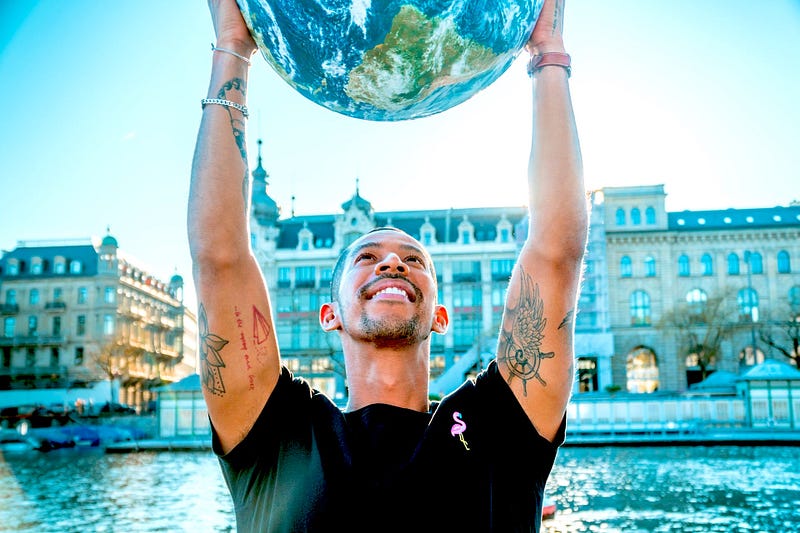
The last three years have been a roller coaster of emotions: Incredible highs and devastating lows I couldn’t have possibly imagined—sometimes on the same day.
I’ve been traveling throughout Europe since 2019, but due to circumstances beyond my (or any of our) control, I’ve had to endure many difficulties.
And in those moments—when I was alone, afraid, and angry—I learned several powerful skills that improved every area of my life. And coming from a kid who used to have crushingly low self-esteem, they became almost like a superpower.
I want to share the three superpower skills that will help you, especially in difficult situations that break you and seem to happen endlessly. (Keep in mind: The stories I share are 100% accurate, but I’m in no way trying to generalize the people from those countries—so don’t get offended.)
How to Stand Up For Yourself
This is one of the most important things I’ve learned from my travels, especially being stuck in a difficult place during the pandemic.
In a lot of countries—and since I stick out like a sore thumb (everyone automatically assumes I’m from China)—people love taking advantage of foreigners.
I've been pushed around in every way imaginable. I’ve been insulted for absolutely no reason. I’ve had people play games with me and take pleasure in treating me like shit.
But only weak people do this. So all you have to do is show strength and it will be like a semi-trailer truck hitting a Smart car.
Stand up for yourself. Put your foot down. Train the universe how to treat you. This does not mean insulting them, returning their negative energy, or “releasing” all your repressed anger at them.
All you have to do is gather yourself, calmly state your feelings and frustrations, and let them know you wouldn’t tolerate it—even when your heart’s pounding and your legs are shaking.
You might be afraid to upset people or put yourself in a vulnerable situation, but let me tell you: It’s always much, much worse to say nothing. Why?
Because you erode your self-confidence and self-respect. You walk away kicking yourself and thinking, “I should’ve said ____. I should’ve said ___…”
You think you’re “taking the high road,” but the truth is you’re scared. (After all, what does “taking the high road” have to do with standing up for yourself when someone is disrespecting you? You’re not hurting them; you’re just speaking up.)
Here’s an example: On my first day in Bulgaria, I walked to a restaurant and politely asked for a menu. The waiter gave me attitude, talked shit to me, and walked away sans menu.
I don’t give a fuck how bad your day is — you do not treat another innocent human being like that.
In years past, I would’ve got pissed, froze, and walked away. Not anymore. I found the manager and explained what happened. They were horrified so they brought over the waiter (who, of course, looked at me, threw their hands up, and yelled, “What?!”).
Ultimately, the outcome didn’t matter — what mattered was I asserted myself and confronted the situation. And every time I did it, even if I resolved the problem or not, I felt a million times better.
I felt proud for proving that I had the confidence, courage, and self-respect to stand up for myself. Remember: The universe is always listening.
If you don’t stand up for yourself, no one will stand up for you. You’re not a 6-year-old anymore; you’re a grown adult. Who’s going to stick up for you when you’re alone and you don’t know anyone within 3,000 miles?
You have to do it yourself.
How to Fight For Yourself
I've had so, so many people mislead me and tell me the wrong information—including people of authority. Hospitals. Airbnbs. Governments.
I would even double-check and they would tell me the wrong thing again.
Oftentimes, I knew they were wrong, but they kept (angrily) telling me that they were right. But I stuck to my guns and I kept fighting and fighting.
Lo and behold, it turned out I was correct all along.
In these moments, I never stopped struggling for what I believed in. And even though I had arguments with stores, hospitals, airports, Airbnbs, and more, I wasn't afraid to fight when I knew I was right.
In fact, if I didn’t fight for myself, I would’ve let some really bad things happen to me. I would’ve been screwed out of thousands of dollars, given the wrong health information, or barred from entering countries.
If you don’t fight for yourself, no one is going to fight for you. Many people take a lackadaisical approach to life and they want other people (or services) to do all the hard work for them.
But you have to fight for your rights. You have to pick up the phone. You have to walk there and go face-to-face.
I’ve had so many tell me “no” when the answer was “yes.” For example, numerous times, I’ve walked into a store to ask if they have something. “No,” they reply without hesitation.
“But it’s right behind you!!” I say.
It seems exhausting sometimes—and it can be. But at the same time, people make mistakes. (And hilariously, people tend to make more mistakes when they work in some kind of bureaucracy.) And when it affects you, you need to take action. You can’t just give up because it’s “hard” or they refuse to admit they’re wrong.
It’s your life—what are you going to do?
How to Support Yourself
When I dealt with frightening, fearful experiences—like racial insults, violent threats, rioting in front of my front door, frustrating health problems, etc.—I sometimes reached out to others to talk.
But the sad truth was, often, it went in one ear and out the other.
For example, when I had horrific stomach issues where I could only eat 500 calories a day for a month—and I was feeling like shit all day long—I told a friend about my situation.
“Yeah, my life has been pretty hard too,” they replied. “The other day, I ordered a pizza with no onions and they put onions on it.”
Wow. So you know my pain…
But if people have no idea what a situation is like, how can they understand? If people don’t have many challenges or difficulties in their lives, how can they relate?
They can’t.
Look, empathetic witnesses are great and valuable. But sometimes, if the person you’re talking to has never been through something as difficult as what you’re going through, they don’t have a frame of reference.
It’s not that they can’t help—sometimes, they can—but it stresses the importance of being your own supporter.
Learn how to support yourself. Learn how to comfort yourself (without turning to alcohol, drugs, addictions, etc.). Learn how to get yourself out of a mental and emotional clusterfuck.
Learning this is one hell of a superpower because it transforms how you deal with adversity. Yet this is one of the hardest skills to learn because you can only learn it when you’re up to your waist in shit. There are no practice runs; you can only learn when it feels like your life is falling apart.
Interestingly enough, the same also applies when times are good.
I can’t tell you how many times I’ve told someone about something great that just happened—in a socially calibrated way so I don’t sound like an arrogant douche—and I’m met with a toneless, “Nice,” or a robotic, “Wow.”
Thanks, buddy.
Again, if you don't know how to be your own supporter, you'll let these incidents warp your mind and your opinion of the situation. It actually starts to trivialize and belittle both your bad times and your good times.
No one can want your success more than you.
Otherwise, you put yourself in a situation where other people's opinions will control you—and if they don't want to give you the approval you crave, you're fucked.
So don’t rely on other people to celebrate your victories. Celebrate them yourself. (If they want to celebrate too, that’s great! But don’t be completely dependent on them.)
Learn to be your biggest fan.
It’ll make a huge difference.
Ready to upgrade your success? I’ve created 5 free life hacks that will boost your results. If you use them, your life could change very quickly.