
The 3 Reasons Why Netflix Lost at Its Own Squid Game
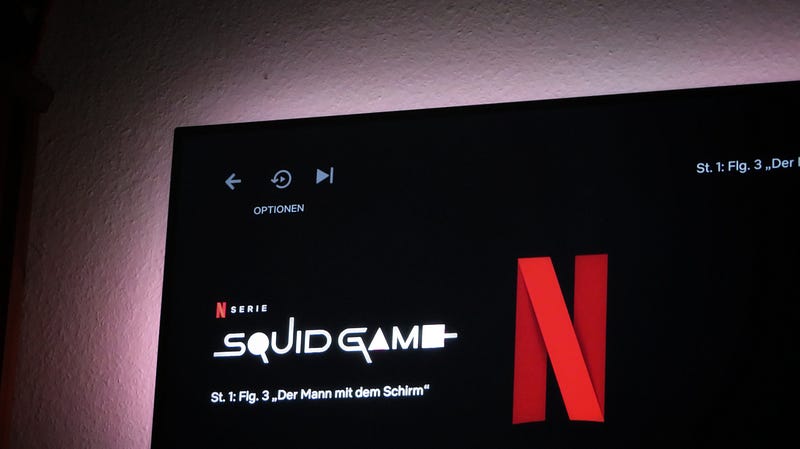
Between 2020 and 2021, I began to spend more and more time watching Netflix.
Apart from the obvious pandemic situation, there were two distinct phases in my watch pattern.
In my first phase, I explored hidden gems by trying random search phrases. I liked the exercise for two reasons: Firstly, it opened me to happy surprises outside the traditional Drama/Comedy/Thriller genre soup.
Secondly, and more importantly, the effort gave me a dopamine boost.
After having exhausted my options, my attention turned to already popular pieces: Suits, House of Cards, and the can’t-turn-off-or-look-away kind of meth-serving: Breaking Bad.
That was the only time watching Netflix felt like it was worth the money I paid.
Sometimes in late 2021, though, I sensed the start of the decline. That decline is still happening, and I see no reason the curve might be back up again. The current announcement in subscribers' fall and stock decline are just the symptoms.
The root problem has 3 distinct branches that I would outline next.
#1: The failed promises:
One failed promise is obviously the sharable password policy that allowed Netflix to inflate its subscriber base. It allowed it, as long as it felt threatened by new entrants such as Apple and Disney. After the pandemic, having seen its peak subscriber base, Netflix grew complacent and decided to reap with all hands.
It forgot the very medium that allowed it to succeed (the Internet) would also enable its competitors to thrive, and get ahead with better content.
In fact, forget competitor streamers. With Web3.0, torrenting (P2P) is mainstream.
But here, I am talking about another failed promise of Netflix.
Around the same time, I wrote a piece on How Netflix Can Bring Back True Netflix and Chill. In that, I stated that problems with Netflix the product were two-fold: Poor searchability and bad metadata.
While it has solved the former with better recommendations, it has gone back on the latter one. Netflix’s outreach has made user acquisition almost a trivial item. But bad metadata makes the subscriber engagement the real pain in the neck.
The movie/series descriptions are not only irrelevant but are often superfluous. Pick 10 random pieces, and you will find that their descriptions mostly talk about “How many Grammys it won”, “Who is the director/actor” or “Whose novel this is based on.” The story is invisible.
If someone already knows about this trivia, why would you show it again? If you want to supplement the excerpt with it, it is still acceptable. But replacing the very thing that draws the viewer with accreditation is plain stupidity.
If someone bumped across it but was curious to watch, why would he/she watch it just because it had some award/big name feathers in its cap? What viewers value the most is the story. If you fail to provide a good story outline, the viewer has to risk his/her free time before clicking to stream. This quite often results in exiting the app and starting YouTube or social media — the real competitors of Netflix, as I described.
If millennials feel this friction, imagine Gen Z with a shorter attention span, and you know where the 200,000 dropped subscriptions are coming from.
It’s like you sold a vacation pass, and when customers came back to redeem it, you try to wow them with attraction names (boasting 1 million travelers), instead of showing them the pictures of the locations and the hotels, and an opportunity to book.
Wasn’t Netflix about us, the users, whose personalized choices it serves as an obedient postman — the exact thing it did with the DVDs of the Blockbuster era?
Instead, Netflix became the preacher, who tells us what we are watching, and how much proud we should feel.
#2: Toxic Culture:
In 2018, I came across an article about Netflix’s toxic culture. Lately, things have gone from bad to worse.
In its thrive to increase the talent density in the company, Netflix introduced something known as the Keeper test.
We focus on managers’ judgment through the “keeper test” for each of their people: if one of the members of the team was thinking of leaving for another firm, would the manager try hard to keep them from leaving? Those who do not pass the keeper test (i.e. their manager would not fight to keep them) are promptly and respectfully given a generous severance package so we can find someone for that position that makes us an even better dream team. Getting cut from our team is very disappointing, but there is no shame. Being on a dream team can be the thrill of a professional lifetime.
If you read that right, yes, the policy is aimed at instilling the fear of elimination. Every team member has to compete and surpass the invisible bar of the Keeper’s test.
Netflix is well past the time of the backbone-building. As a software developer, I can say that as long as it is growing its existing product suite of streaming apps, no level of lazy talent can justify the continual evaluation of its dream team employees.
While brandishing its dream team entitlement (or the forced N in the FAANG, which should have been FAAMG — replaced by Microsoft), it has to realize that it is dealing with high-tech + creative talent, not floor workers who are more easily replaceable.
To empower its AI arm, it needs a lot of data scientists — a group of experts who are quite high in demand already, and every big tech company is welcoming them with a red carpet. Introducing a higher bar for such talent alienates it from the company, especially amid the times of the great resignation movement.
How many products does Netflix sell anyway? It has turned into one huge media company, but it’s still monolithic. If you talk about its big-tech valuation, just look at early-stage Google, or revamped Microsoft, which opened up its work cultures to enable and sustain a crazy growth curve. They are lately struggling with diversity issues, yes, but they at least admit they have challenges up their way. They have a high entry bar, but past that, the culture is fairly competitive, far from insecure.
What set of lofty goals justifies Netflix inducing such a stress-centered work culture is beyond anyone’s understanding. If it is anything, it’s an entitlement, which also fuels its third problem.
#3: Elitism:
This is a problem that is not evident today, and will never be — to the world at large. But any mass-market company like Netflix always faces it. How it responds to it decides its survival.
Content is Netflix’s bread and butter. Netflix offers two types of content.
The first type is quite visible recently: The stock stories. I don’t remember any names from the top of my head, because they are just that: Unremarkable copycats.
I remember seeing 15 detective thriller series lying under the “Thriller” section. They are sitting there for the last 4 years. I also remember seeing some 10 psychological thrillers — each of which almost borderlines on horror. They could have been manufactured by the same screenwriter. For better or worse, they could as well be from an excel sheet.
My 11-year-old kid can predict the entire storyline just by looking at the metadata description.
This first type is Netflix’s dream state. It would like to churn out as many as possible from this lot to maximize its profitability. This is how it aims to level up against billion-dollar copyrights rich Disney, which doesn’t need to pay screenwriters until it needs to up its game at least 10x.
But quantity beats quality at some point, isn’t it?
Well, that argument reminds me of a game console I bought in my childhood. It had 42 games — all original and complete: Mario, Contra, Bomber man, to name a few. My jealous friend bought one boasting 30000 games. After a week, he came to me complaining the number revealed the levels. The unique games totaled 30.
Viewers of Netflix’s stock stories will meet the same fate.
The second type is items that are established and already popular outside. Netflix acquires such content with huge sums of money.
I am not against acquisitions. Netflix is also into acquiring Game-based companies. For content suitable for Kids, it also acquired The Roald Dahl Story Company, which is just fine, because it enriches its inventory with established classics.
But it acquired Friends, which cost $100 million. At that time, Netflix was under $2B in debt. I wrote that it was a bad idea — a misguided judgment, to be fair — for a company like Netflix.
In keeping itself busy and/or paying for the acquisitions, it misses the middle rung, which provides the best ROI: The Squid Game type of content. This is the gray capital that doesn’t cost too much money. Precisely because of that, it misses Netflix’s radar.
Such content doesn’t come from replicating established patterns. Nor does it come by buying the bestsellers that invariably involve hefty legal costs.
It comes from discovering hidden gems from the gray market. It could be from fiction platforms. It could as well be the novels that barely sold 500 copies, but had all 5* reviews.
When I say gray market, I do not mean stealing. I also do not advocate exploiting the content creators. My sole purpose in using the term gray market is to signal its lack of discoverability and its relative invisibility to the elite class.
For example, one can’t google his way to the most horrific thriller that Gen Z would like. One needs to dig into forums/podcasts that Gen Z frequents, find out what they are discussing, and try to discover who has got their nerves. If he/she is unavailable to sign up, try to assess the type of content, then attempt an authentic reproduction of that pattern, not the plotline.
Conclusion:
When Netflix was started, it was a newcomer who challenged Blockbuster’s frivolous customer service rooted in a gargantuan monopoly.
Then, Netflix turned into a company. To inflate its stocks, it secured itself a place in leading tech, rubbing shoulders with FAAMG+.
But the gray suits made it forget that it is a content company. At least, it needs to fake it, till it makes it.
Content means imagination. Imagination knows no bounds. That is how Disney became what it is today.
Netflix needs to unbind itself from the clutches of corporate greed, elitism, and toxic culture. If not, the only place it will have in people’s collective memory would be the derogatory phrase aligned with it: Netflix and Chill.