
The 3 Questions to Ask Yourself Before Buying Anything
I am 32 years old and I never had a credit card, thanks to this.
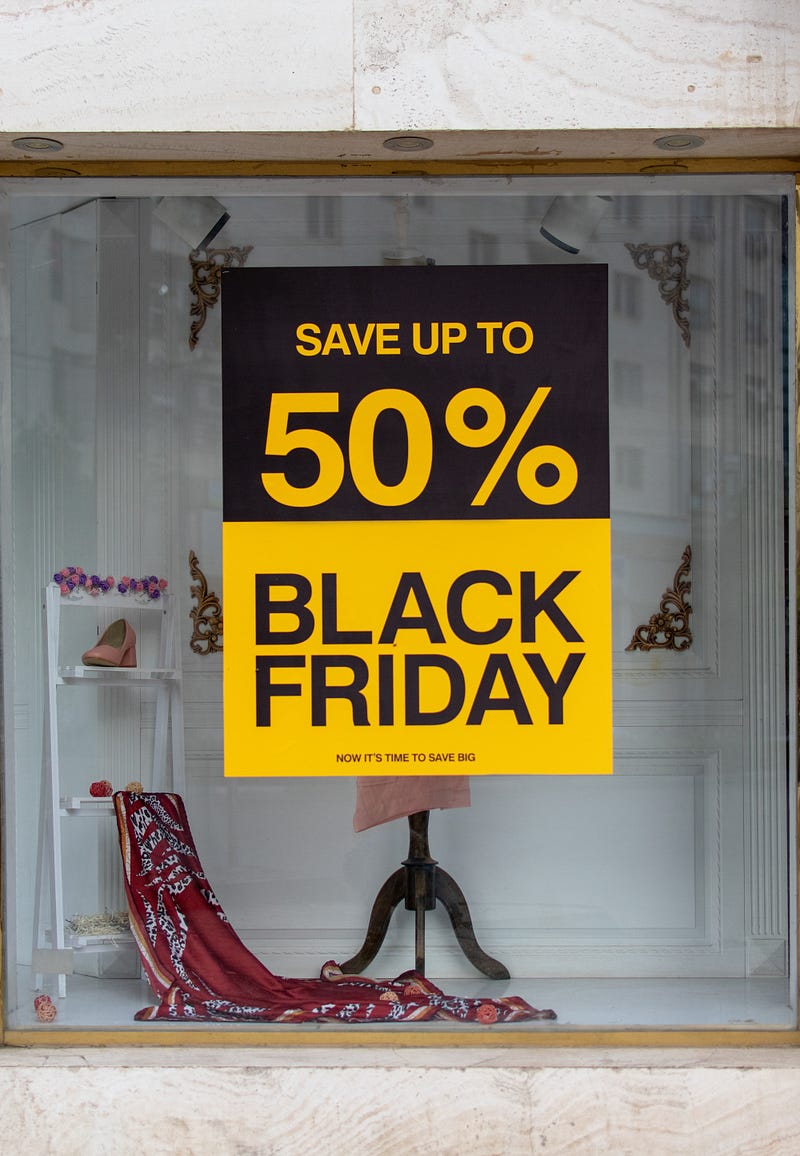
This year, during the consumerist carnival also known as Black Friday, I bought nothing for myself. My only purchases are the Christmas gifts for my wife, father, and mother. So it was just like last year, and the year before that. Meanwhile, a few of my colleagues went dangerously close to the limit of their credit cards.
Don’t get me wrong. I am not a weirdo living in a cave, neither I still use a Nokia 3310. I do have a normal lifestyle and walk in a neat-fashion — although I do not have a car. But with years, I learned how to control myself to the point of never need a credit card during my 32 years on this planet.
When people ask me how I managed to be credit-independent for so long, my answer takes the form of 3 questions. Some people hate answers with more questions but keep reading and you will see the logic behind it.
These 3 questions shaped my consumer habits and helped me to have a light lifestyle. Something that helped me to endure this crisis — a crisis that deeply affected me since I am a hotel operator.
It will help you too. You have my personal guarantee of it. Ask these 3 questions the next time you go shopping and have an extraordinary improvement in your judgment.
Do I need it?
A few days ago my wife commented during our breakfast that winter jackets were on sale at a store nearby, and I should visit the store to check the models. I thanked her for the information but answered that my winter jackets were enough for a couple of winters more.
Then she told me that I even did not see how cheap they were. The price, however, is irrelevant. I simply don’t need more winter jackets. Even if they had an 80% discount, it still would be a foolish idea to buy them, since it would be money over an item that has, at this moment, no marginal utility.
One could argue: “Oh, but in a few winters you will need a new jacket”. That is true. Maybe in two or three, I will need, but I bet that until then there will be plenty of stores going on sale. Until there, I can invest the money in a phonemic language course, or books.
To change your purchase habits, you must understand one thing: good prices do not create necessity. No one suddenly needs X or Y just because they are on sale. Either you need it or not. And if you don’t, if you have enough of it for the next years, then don’t buy it.
Does the price (or cost) is affordable for me?
Even before these questions shape my purchase habits, I already had a lesson about this specific 2nd question.
When I was 18 and had my first driving license, my father helped me to look for a car. As any single teenager, I wanted to make the most of the money saved to buy this car. Therefore, I planned to spend virtually everything on a stylish vehicle with a good engine.
The place where I was going to buy my car was almost one hour far from our city, so on the way, my dad talked to me. He asked which car I wanted. My plan was to buy a 2.0 — or larger — engine car, big and nice to hang out to parties. When I said that, my father asked me how much I thought was the difference between the fuel, insurance, and other costs of a 2.0 and a 1.0 car. I had no idea.
When he explained the numbers to me, I realized the mistake I was doing. My money was enough to buy a 2.0 car, but fuel and maintenance would devour my part-time job salary. What was the point of having a nice car to go party if I would not have enough to buy tickets?
If the answer to the first question (Do I need it?) was yes, you go to the second question, and ask yourself: Can I afford it?
Do not think only about the current price, but consider also the costs that the item generates in the future.
Remember to not misjudge your purchase power by considering credit — cards included. No reasonable people would take credit to buy superfluous items. If you are using credit for this end, it means that you cannot afford it, and in this case, you should not buy it.
If you answer yes to both questions, then it is time for the third, and last one. Different than the previous one, this does not have a closed answer and demands a bit more reflection.
What do I benefit from it?
The reasons behind the act of purchasing something are much more subtle than we imagine. If you ask a Wall Street stockbroker why he is spending part of his bonus on a fancy pair of Hermès shoes, he may answer that is for working or for special occasions. That he is preferring this brand instead of others less expensive because Hermes is more comfortable or durable.
But this is not the reason. Even if the shoe was more durable, it costs multiple times the price of an ordinary shoe, so he could just by a dozen and change when they are torn.
The reality is that he is buying Hermes to show his success to potential clients. And success, in the financial market, is a proxy for competency. Is this a valid reason? Maybe it is, although Nassim Taleb wisely criticizes such demonstrations.
The important point here is to know the reason behind spending money on something. One does not buy a designer shoe because it is more comfortable, but for status. If this is necessary for your life, ok, it is not up to me to judge it. But often, when questioning the benefits of what we are buying, we realize that we could live without it.
That is how I lived 32 years without a credit card, and that is how you can resist using yours during the next Black Friday, Cyber Monday, or whatever they create to empty your pockets.
Conclusion
There are 3 questions to ask yourself before buying anything. Adopting the habit of asking will improve drastically your consumer habits. Any expense will be more deliberate, instead of impulsive.
1 — Do I need it? If the answer is no, don’t buy it. If it is yes, go to the next question.
2 — Does the price (or cost) is affordable for me? As in question 1, if you answer no to it, it means you should not purchase it. If the answer is yes, you answer the third and final question.
3 — What do I benefit from it? The answer to this question should be a reflection of what you are really seeking by buying something, and how necessary this is for you.
If all the answers indicate that you should buy the product, great! You are doing deliberate shopping and having healthier spending habits. Time to start the price negotiation.
Levi Borba is the CEO of expatriateconsultancy.com and a best-selling author. You can check his books here and subscribe to his future articles (and receive a free ebook) here.