
The 3 Keys to Writing a Story that Sells
Number three makes all the difference

Every writer and marketer out there has a story to sell. Authors and writers are constantly trying sell themselves through their words so that readers, editors, publishers, reviewers, and all the other markers of success will think they are worth another read. Or a business has created a product they want customers to not only buy, but connect to, so that they can grow their brand, and more importantly, their audience.
From here on out, we’ll call all products stories. Because essentially that’s what people are after when they buy a product, a way of enhancing or continuing the overall story between themselves and whatever it is that story is about to them.
A lot of times, when people are presented with a story or come across it in the wild, they find themselves unamused. More stories are written then are sold. Slush piles everywhere overflow in editors’ inboxes and only a handful at most get chosen. Step into a store and there’s a sickening array of options for you to choose from when it comes to everything from toilet plungers to belts.
How are creators out there supposed to make their stories stand out from the rest? Well, it’s actually pretty easy. Most creators out there are all ready doing it to a degree. But many aren’t applying the three basic principles of a selling story that’ll grab people’s attention; therefore, they aren’t getting the revenue or attention they want.

For those who get their stories chosen out of the hordes, it feels like the scene in Charlie and the Chocolate Factory when Charlie finds the Golden Ticket. Except our chocolate bar is just our inboxes or wallets, which aren’t anywhere near as tasty.
I know this because I’ve worked as an editor and judge for several different publications. Before being chosen, I was given tests and the opportunity to show my worth. What my head editors were looking for was my ability to see what makes a good story and if I could articulate that.
More importantly, though, my experience comes from reading. From consuming media, and taking it one step further, to ask myself and others, what makes this better or more appealing than that. The most common answers have to do with a connection to that product. A story that they have built in their head and hold close to their heart.
It took a couple of years before the lessons really sunk in — to be honest, they are still sinking in and I hope they never stop — , and I was able to turn the skills I learned as an editor to help me sell more pieces as a writer. From September 2019 to March 2020, I’ve sold about 13 pieces and landed jobs as a staff writer for 5 different professional publications.
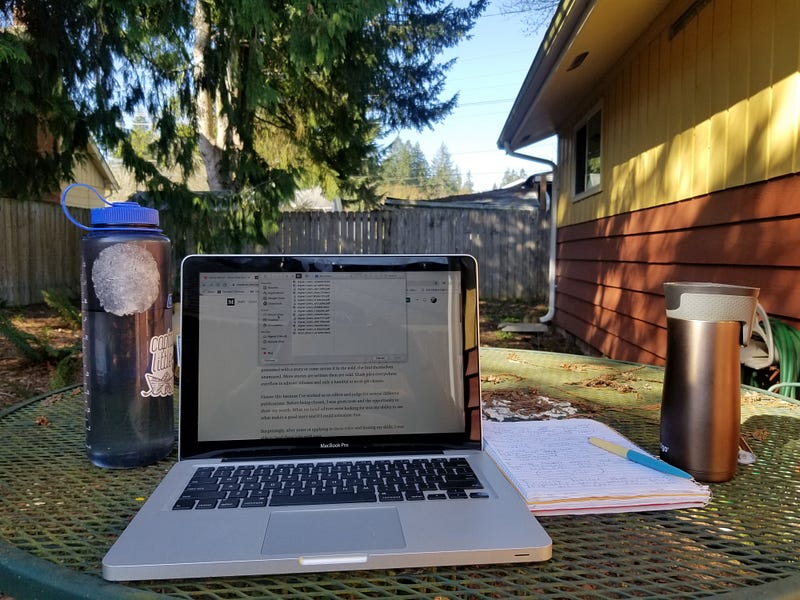
I write from anywhere and chose my work assignments. My everyday work is my dream job.
I’ve been able to do this by pinpointing 3 key elements of a great story. And because I am a reader before I am a writer — as all writers should be — I want to see more great stories out there because I know that tons of people are sitting on a story they can’t make work or get an editor to look at, so it never makes it past the slush pile or onto someone’s e-reader.
I want to see your stories because as an editor, I want to be the one to say ‘this is the best story I’ve ever read.’ As a reader, I need more great stories to fall into and digest for entertainment and the lessons they hold in every sentence. It takes great work to create great work.
So, please, take these elements and apply them to your stories. Use them to enhance your prose and grab more readers.

Story Element One: World
When an editor begins reading a piece, one of the first things that they look for is a well-developed world. A sense of reality in a fiction or nonfiction piece makes the reader and editor disappear into the story. The world must come to life in the readers head. It must be real enough that people can tell you what it looks and how it felt.
Writers make this happen by using every word to mean exactly what it means. A lot of times, I come across writers who choose a word because it sounds ‘good’ or ‘cool’, but it doesn’t actually fit the piece or atmosphere they are trying to create for the readers. Creating a world that feels real when it’s not takes the use of precise words told in chronological order.
Make your sentences do more than just point the readers eyes in a direction. Create sentences that carry the weight of action by the way they flow from one beat or moment to the next, bringing with it all of the world and characters.
It takes a steady eye in editing and a strong sense of world and word in writing to capture that affect, but it can be done. And when it is, readers will want to reread each word, lose themselves in the flow of narrative.

Drop the readers into a world filled with descriptions of characters, politics, and life that feel real and tangible.
That comes down to word choice, research, and the writers understanding of their story. Audiences want to know that the writer knows what they are doing in the world they are painting. When it comes to your characters, don’t think solely in descriptions when describing them. Think of ways you can show who your characters are without directly stating. Same with settings.
As a writer, you are a witch of creation. Your stories are your spells. With each word you strike down, make sure it evokes the world and atmosphere you are trying to set with your story, so much so, that your reader is pulled head first into your tale.
More to the point, stories are horcruxes for the writer. A way for them to survive on long after they have left.
Story Element Two: Theme
It takes more than just a well-developed world to catch readers’ and editors’ attention. The second key element to a sellable story is one with a relatable theme twisted. Relatable to who? You may wonder. It should always be more relatable to the reader and yourself more than anyone else.

A great exercise that writers can do is envision their ideal reader for a story. What do they like? What have they already experienced? What pulls them toward the things that they like?
That’s where the sentiment ‘write what you know’ comes in. But the thing about reliability is that a lot of people have similar ideas based around those themes, which is why you as a writer needs to twist those themes on their head.
Have a story idea about being a kid from a broken home? Great! Lots of people have experienced that so you have a wide audience base, but just telling a story about being from a broken home is boring. That theme needs to be twisted and pushed further for it to be sellable and worth a read.
It’s your job as a writer to push the basic and ordinary further. To make it a story that’s memorable, you have to come up with an idea that puts people in their seats with relatable yet foreign imagery and themes.

Story Element Three: Authority
There’s a bit of advice floating around that can be found in writing reference manuals across the board. When you write, you must write with authority. Like knowing your world and characters enough to describe them in unique ways. That’s one way you can show your authority as a writer.
The best ways of showing your authority, mind you, are unspoken. They’re shown in your writing. By the words you select and how you decide to tell your story.
One of the most common ways that authors have shown their authority in the past have been to give readers answers to questions brought up early on. Another way is in your use of grammar and syntax to strengthen your story. When a story is capable of pulling a reader on with how well it is written — to the point where the words fall away and are only a window to the story itself — that is when you have mastered authorial control.
All of these elements working together is what is going to give you the advantage over the thousands of other writers doing the same thing you’re doing. Editors and readers will also return to you for more stories and pieces because you have showed the world that you can do this crazy thing called writing, and you can do it right.
For more craft tips and advice, subscribe to my newsletter for writers. December’s newsletter will be all about dialogue and how to use it to win over readers and progress plot.
Aigner Loren Wilson is a Black SFWA, HWA, and Codex writer. Her work has appeared in Arsenika, Terraform, Rue Morgue, and more. She was listed on the honors list for the Otherwise Fellowship award for 2019. She also writes or edits for Strange Horizons, Nightlight Horror Podcast, Oly Arts, Discover Pods, and more.

You just read another exciting post from the Book Mechanic: the source for writers and creators who want to make more work that sells and sell more work they make.
If you’d like to read more stories just like this one tap here to visit