
The 27th Screen Actors Guild Awards: Five Key Takeaways
The pandemic continued to impact Hollywood in unprecedented ways with the Screen Actors Guild (SAG) Awards being remote, pre-recorded, and significantly shortened. The condensed, fast-paced ceremony aired earlier tonight on TBS and TNT and was thankfully free of technological malfunctions, long-winded speeches, and awkward presenter banter. But it certainly didn’t clarify much about the race for the 93rd Academy Awards.
What are the SAG Awards and why are they important?
The SAG Awards are comprised of 15 competitive awards to individual actors and acting ensembles across film and television. The nominations are voted on by a subset of the membership of SAG-AFTRA, a labor union that represents approximately 160,000 film, television, and radio performers. The full membership then votes for the winners. By their very nature they are often a star-studded affair and over the past quarter century they have evolved into a highly esteemed awards ceremony.
Although SAG’s television winners only occasionally coincide with the Primetime Emmys (the top award for television), they have a strong track record as a bellwether for the Academy Awards (the top award for film). Since their inception, the SAG winner has gone on to win the corresponding Oscar 80% of the time in Best Actor, 76% of the time in Best Actress, 64% of the time in Best Supporting Actor, and 68% of the time in Best Supporting Actress. The top SAG award (Best Performance by an Ensemble in a Motion Picture) has corresponded with the top Oscar (Best Picture) 48% of the time. Although SAG hardly has a perfect track record of predicting Oscars, it cannot be ignored — especially in an Oscar race as wildly unpredictable as this year’s.
FIVE KEY TAKEAWAYS FROM THE 27th SAG AWARDS
#1. Several key Oscar races remain unpredictable.
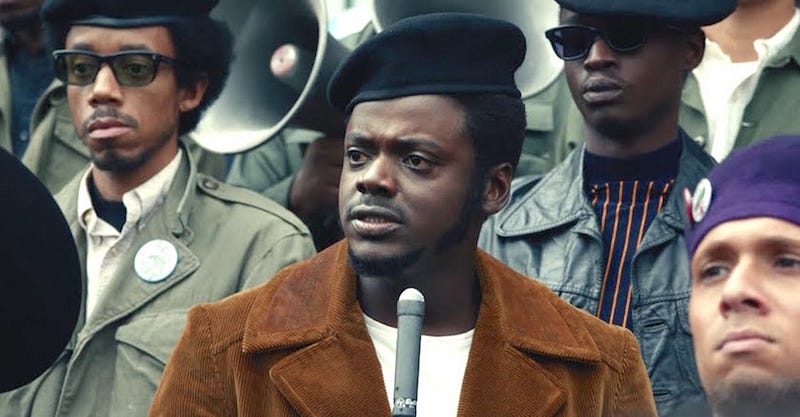
It is looking increasingly like the two male acting categories are locked up. The late, great Chadwick Boseman (Ma Rainey’s Black Bottom) and his Black Panther costar Daniel Kaluuya (Judas and the Black Messiah) have now picked up Best Actor and Best Supporting Actor, respectively, from all of the major awards given out so far — the Golden Globe Awards, the Critics’ Choice Awards, and the SAG Awards.
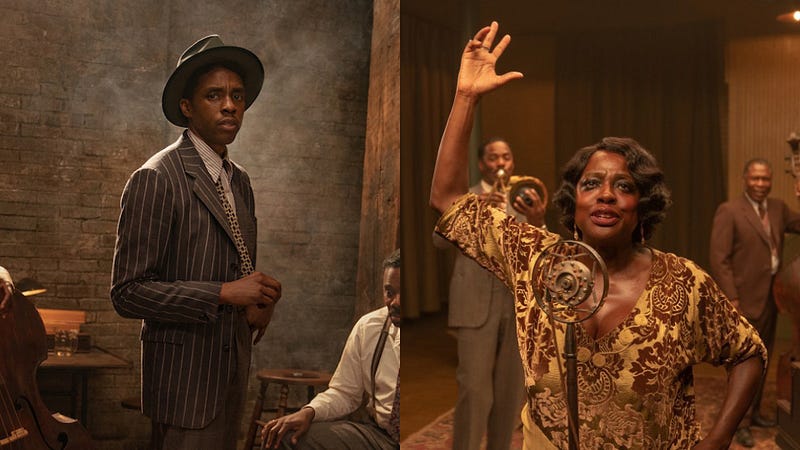
In stark contrast, the corresponding actress categories are exceedingly confusing. The SAG Award for Best Actress went to Viola Davis (also for Ma Rainey’s Black Bottom) and while she should certainly can’t be counted out to repeat at the Oscars, there are a few factors working against her. First, SAG clearly loved Ma Rainey more than the Academy, given that they gave it one of the five slots for their top award and the Academy didn’t include it in their eight slots for Best Picture. Second, each major awards body has given the award to a different actress (Carey Mulligan won the Critics’ Choice Award and Andra Day and Rosamund Pike won the Golden Globes for Best Actress in a Drama and Comedy, respectively). Third, the last time the Best Actor and Best Actress Oscars went to the same film was 1997’s As Good As It Gets. Normally, next week’s BAFTA Awards (the UK equivalent of the Oscars) would be majorly clarifying. But a massive overhaul to how the BAFTAs select their nominations means that many Oscar frontrunners were snubbed. The Best Actress Oscar could still go to any of the five Oscar nominees. My money is still on Carey Mulligan for Promising Young Woman, but I am less confident about that by the day.
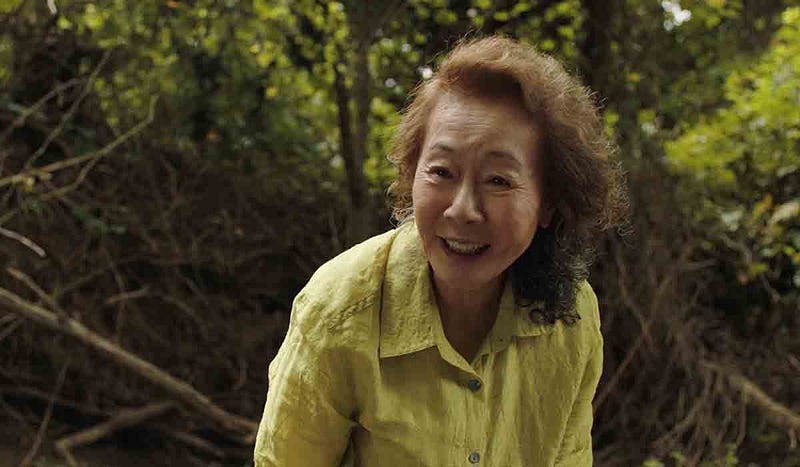
The Best Supporting Actress Oscar race has been wildly unpredictable all season, with long-presumed frontrunner Glenn Close (Hillbilly Elegy) coming up empty-handed and scoring a Razzie nomination for Worst Supporting Actress for the same role. Attention then shifted to Jodie Foster (The Mauritanian) after her surprise Globe win, but she wasn’t even nominated for the Oscar. Then it seemed like it was Maria Bakalova (Borat Subsequent Moviefilm) who was the frontrunner after her win at the Critics’ Choice Awards. But with her losses at the Globes and SAG, it is now looking like Yuh-jung Youn (Minari) may just become one of the only Asian actresses ever to win an acting Oscar (or any Oscar for that matter).
Although the Best Ensemble SAG winner only matches up with the Best Picture Oscar winner about half the time, there have been four times when a surprise upset in Best Picture has been foreshadowed by Best Ensemble SAG win (Shakespeare in Love over Saving Private Ryan, Crash over Brokeback Mountain, Spotlight over The Revenant, and Parasite over 1917). So, what does that mean for tonight’s winner The Trial of the Chicago 7? Well it certainly can’t be counted out for Best Picture, but given its less than rapturous reception at the Oscar nominations, I suspect that the real takeaway is that Minari isn’t as big a threat to upset as some prognosticators had been suspecting. It really needed this Best Ensemble win to make it competitive.
Click here for my article on this year’s Academy Award nominations
#2. The Crown, Ted Lasso, and The Queen’s Gambit are clear Emmy frontrunners.
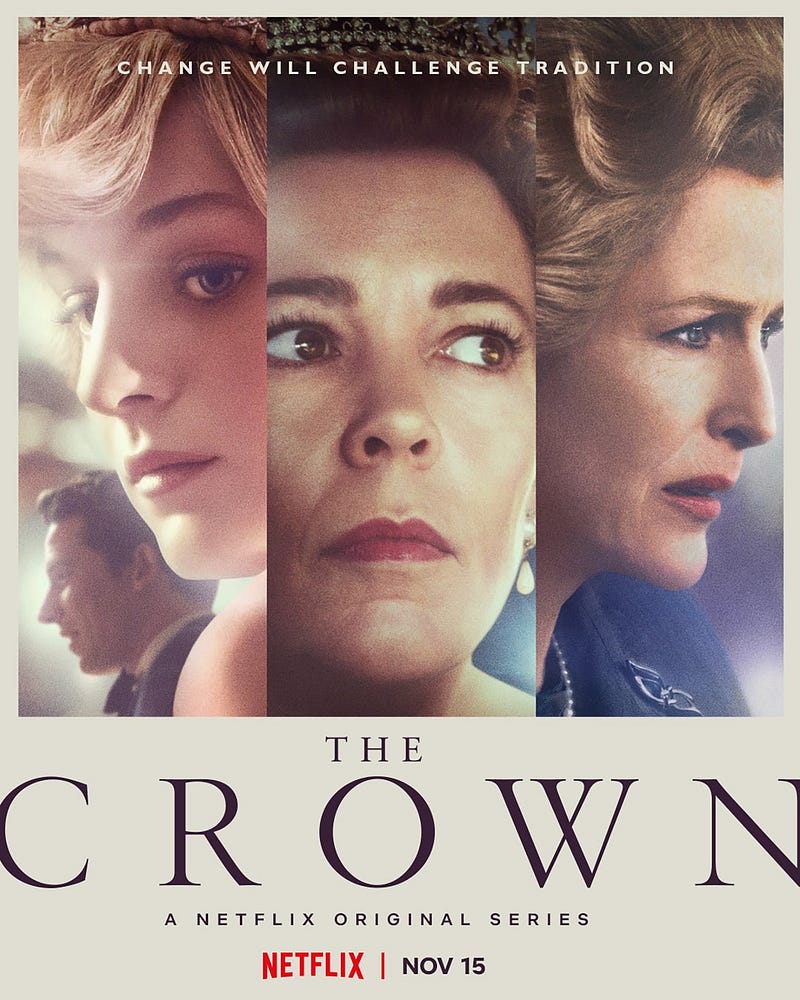
There are many reasons the SAG Awards and Primetime Emmy Awards rarely line up. These include the fact that the eligibility periods diverge significantly (SAG follows the calendar year and the Emmys follow the traditional summer- to-summer television season) and the fact that they do not separate their acting nominees into lead and supporting. But major love from SAG can portend Emmy glory.
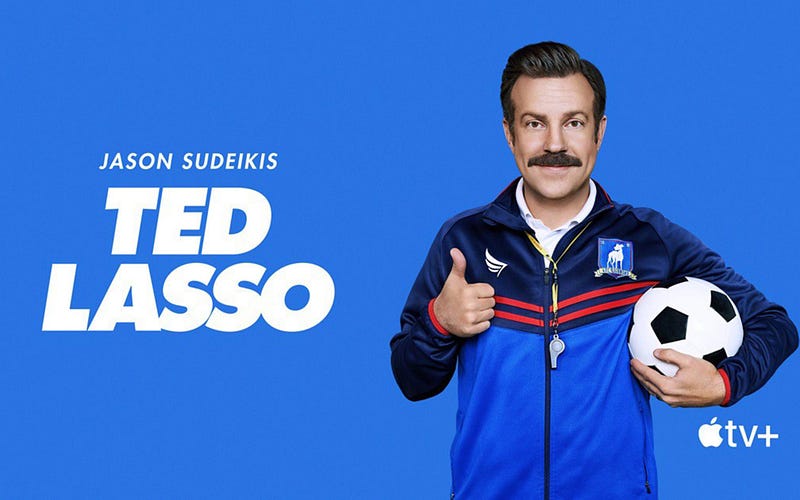
Of the eight major awards given to television series, half went to programs ineligible for this year’s Emmys due to their airdates (the comedy series Schitt’s Creek, the drama series Ozark, and the limited series I Know This Much is True). The four winners that are eligible, however, seem likely to repeat there. I fully expect the fourth season of Netflix’s royal family drama The Crown, the inaugural season of AppleTV+’s football comedy Ted Lasso, and Netflix’s breakout chess prodigy limited series The Queen’s Gambit to dominate their respective categories when the next Emmy ceremony rolls around this September. In particular, tonight’s SAG winners Gillian Anderson, Jason Sudeikis, and Anya Taylor-Joy seem like clear frontrunners in their respective categories.
#3. It was an historic — but imperfect — night for diversity and inclusivity.
For the first time in SAG history, all four individual acting winners for film were non-white (Boseman, Davis, and Kaluuya are black and Yuh-jung is Korean). This is a truly impressive milestone but it was undercut a bit by the fact that the top award went to the only nominee with an ensemble dominated by white actors (The Trial of the Chicago 7) and all eight television awards went to all white actors (with the lone exception of Karen Robinson who won as part of Schitt’s Creek’s ensemble).
With regard to LGBT representation, Schitt’s Creek’s win joins a long line of comedy series prominently featuring LGBT characters that has been feted with SAG’s top comedy series award. In the last 25 years, 14 winners of the top comedy award had lead LGBT characters (Will & Grace, Glee, Modern Family, Orange is the New Black, and now Schitt’s Creek) or supporting LGBT characters (Desperate Housewives, The Office). If only the Oscars could do nearly this well with LGBT inclusivity.
Click here for my recent article about Disney’s struggles with LGBT inclusivity
#4: Maybe awards ceremonies don’t need to be so long.
The SAG Awards have never been a television event in the ways that other award shows like the Oscars, Grammys, Emmys, Golden Globes, or even Tonys have been. Nevertheless they have always aired live on cable in a two-hour ceremony. Due to COVID, this year’s telecast was cut in half, conducted remotely, and was pre-recorded. (There was much speculation about whether the winners would leak and, thankfully, few did.) Overall, the experiment was mostly a success. The show was well-produced and fast-paced. Due to it being pre-recorded, technical snafus were virtually nonexistent and acceptance speeches were edited down. (We also didn’t have to spend numerous minutes watching people walk up to the stage.)
The telecast relied heavily on a stable of actors talking about the nominees, presenting the winners, and doing bits about COVID and the early days of their acting careers. It was a bit odd to give these actors — many of whom weren’t even nominated — so much screen time in such a short ceremony, but at least a very charismatic group of actors was selected (Dame Helen Mirren, Rita Moreno, Mindy Kaling, Sterling K. Brown, Cynthia Erivo, Josh Gad, Common, and Jimmy Fallon).
Although I agree with SAG’s decision to hold the telecast in this way due to COVID, there is quite a bit missing when the telecast isn’t live and in person. There’s much less glamour and spontaneity, two key factors that make awards shows fun for many people.
Click here for my review of this year’s chaotic Golden Globe Awards
#5: It was an absolutely devastating year for losing Hollywood icons.
Although the SAG Awards opted not to give out its perennial Lifetime Achievement Award on the telecast this year, they did include a lovely “In Memoriam” section introduced by Viola Davis. And, damn, was it gut-wrenching. It is hard to fathom the sheer number of acting legends we lost in the last year and seeing their faces one right after another was heartbreaking. Olivia de Havilland, Kirk Douglas, Cloris Leachman, Chadwick Boseman, Christopher Plummer, Sean Connery, Jessica Walter, and Hal Holbrook are just a few of the recognizable faces included in the segment.
Click here for my tribute to the late, great Cloris Leachman
Film Winners:
- Outstanding Performance by a Cast in a Motion Picture: The Trial of the Chicago 7
- Outstanding Performance by a Male Actor in a Leading Role in a Motion Picture: Chadwick Boseman, Ma Rainey’s Black Bottom
- Outstanding Performance by a Female Actor in a Leading Role in a Motion Picture: Viola Davis, Ma Rainey’s Black Bottom
- Outstanding Performance by a Male Actor in a Supporting Role in a Motion Picture: Daniel Kaluuya, Judas and the Black Messiah
- Outstanding Performance by a Female Actor in a Supporting Role in a Motion Picture: Yuh-jung Youn, Minari
- Outstanding Performance by a Stunt Ensemble in a Motion Picture: Wonder Woman 1984
Television Winners:
- Outstanding Performance by an Ensemble in a Drama Series: The Crown
- Outstanding Performance by an Ensemble in a Comedy Series: Schitt’s Creek
- Outstanding Performance by a Male Actor in a Drama Series: Jason Bateman, Ozark
- Outstanding Performance by a Female Actor in a Drama Series: Gillian Anderson, The Crown
- Outstanding Performance by a Male Actor in a Comedy Series: Jason Sudeikis, Ted Lasso
- Outstanding Performance by a Female Actor in a Comedy Series: Catherine O’Hara, Schitt’s Creek
- Outstanding Performance by a Male Actor in a Television Movie or Limited Series: Mark Ruffalo, I Know This Much is True
- Outstanding Performance by a Female Actor in a Television Movie or Limited Series: Anya-Taylor Joy, The Queen’s Gambit
- Outstanding Performance by a Stunt Ensemble in a Comedy or Drama Series: The Mandalorian
Follow me on Medium and Twitter.
Check out my other recent articles about awards season:


