

The 27 Club: Tragedy, Obsession, And Lost Talent
From Jimi Hendrix to Amy Winehouse — and everyone in-between
The “27 Club” remains one of the most unsettling and cryptic groups in music history. It refers to a group of artists who all passed away at the dire young age of 27. Amy Winehouse, Kurt Cobain, Janis Joplin, Jimi Hendrix, Jim Morrison — the list, unfortunately, goes on. It’s such a troubling coincidence that when fans started to sense a trend, they in turn dubbed the collective the 27 Club.
The term became widely known after Cobain’s death in 1994. Before that, only eagle-eyed rock music fans realized the pattern. Notably when Jim Morrison, Janis Joplin, Brian Jones, and Jimi Hendrix all died between the years 1969 and 1971. The significance of the club resurfaced when Amy Winehouse passed away in 2011.
Interestingly enough, statistical research shows that the “27 Club” is a myth. Celebrities aren’t more likely to die at the age of 27. Only 1.3% of musicians from 1950–2010 died at the age of 27. The most common age for musicians to pass away is 56 with 2.3% of all musicians joining ‘The 56 Club’.
Moreover, there are renowned celebrities in both the unspecified “26” and “28 clubs.”
Mac Miller, Sharon Tate, Otis Redding, and Nick Drake all died at 26. Heath Ledger, Avicii, and Big Pun died at 28. Yet there’s no collective for these people — no fans there to connect all the dots.
So, what caused fanatic obsession with The 27 Club? And, is there anything to connect its members besides bizarre coincidence?
Conspiracy and Kurt Cobain
“Nobody dies a virgin, life fucks us all.” — Kurt Cobain
Before Kurt Cobain put a bullet to his head he penned the now-infamous lyric from the Neil Young song “Hey Hey, My My.” In the suicide note, he wrote: “It’s better to burn out than to fade away.”
After Cobain took his life in 1994, music would never be the same. The death of the grunge icon was one of the most discussed events of the decade. It also fueled many conspiracy theories — many of which surround the 27 Club.
Following Cobain’s death, his mother Wendy O’Connor famously said, “Now he’s gone and joined that stupid club, I told him not to join that stupid club.”
Several weeks later, Rolling Stone would later confirm she was referencing the 27 Club.
Cobain’s family had a long history of mental illness, including two great-uncles and a great-grandfather who all committed suicide. However, the words of Cobain’s mother dominated news headlines and created a mythos around the 27 Club.
Some fans began to speculate that Cobain entered the club intentionally — that he wanted to be a martyr for the next generation of musicians. Others believe he was killed. Even today, the Seattle Police Department gets requests from fans and skeptics to reopen the case.
Many, however, are disgusted with the conspiracies developed over Cobain’s death. Charles R. Cross, author of “Heavier Than Heaven: A Biography of Kurt Cobain” is one such critic.
“I’ve seen some people who think that these deaths are intentionally timed. Like Kurt Cobain intentionally killed himself at that age simply to be in that club,” says Cross. “You know, he suffered from depression, drug addiction, and numerous other issues. He tried to kill himself at 17, 25, 26 as well, so it’s not like he did it just to join a club.”
One thing is for certain. Cobain’s untimely death became the linchpin of the 27 Club. Without him, the club likely wouldn’t cause the obsession it does today.
Notable Members of the 27 Club
Here are the 13 most notable members of the 27 club, in order from their time of death. Rest in peace to these legends whose lives were tragically cut short.
Robert Johnson — One of the founding musicians of blues and rock & roll. He’s famous for a folk-legend where he did a deal with the devil. Many of his songs include singing about hellhounds and other satanic themes. He died in August 1938.
Brian Jones — The original founder and leader of the Rolling Stones. He was thrown out of the group by Mick Jagger and Keith Richards as they took the music in new directions. Less than a month later, in July 1969, he was found at the bottom of his swimming pool. His death still remains a mystery.
Alan Wilson — Guitarist of the psychedelic blues-rock band Canned Heat. In 1969 Wilson overdosed on barbiturates. His cause of death was determined to be accidental, but some members of Canned Heat believed it to be suicide.
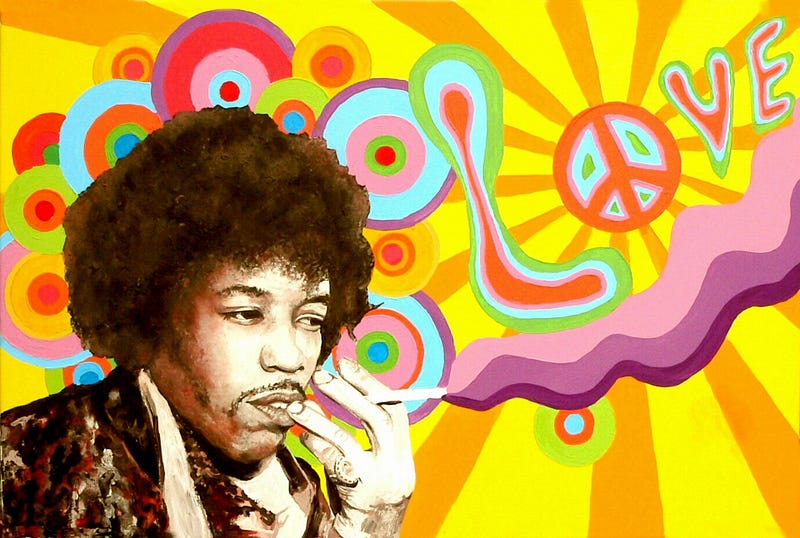
Jimi Hendrix — During a brief four-year career, Jimi Hendrix changed music forever. Before Hendrix died, he took some sleeping pills called Vesparax. Half a tablet can put a man to sleep for eight hours — Hendrix swallowed nine. He died later on a warm and cool night on September 18, 1970.
Janis Joplin — The last song Joplin sang before her death was “A Woman Left Lonely.” Later on that night, she died of a heroin overdose on October 4, 1970. Less than a year later, her final album, “Pearl,” was released and shot straight to the top of the Billboard charts.
Jim Morrison — The lead singer of the Doors was an icon for the 1960’s youth counterculture. His death is a mystery fueled by conspiracy theories. However, the common consensus is that he died of a massive heroin overdose on July 3, 1971. Morrison’s death is another critical moment where fans began to postulate the idea of a 27 Club.
Ron “Pigpen” McKernan — One of the founding members of the bluegrass rock group the Grateful Dead. He died on March 8, 1973, from gastrointestinal bleeding after complications from alcoholism and a rare autoimmune disease called congenital biliary cirrhosis. McKernan had been dead for up to two days when the landlady found him.
Pete Ham — The lead vocalist for the 1970’s rock band Badfinger. The group signed with the Beatles Apple label in the 1960s. Badfinger grew in popularity but barely made a dime off their music due to a shady record deal. Consequently, Ham fell into depression. Three days before his 28th birthday on April 24, 1975, he met with bandmate Tom Evans in a pub near his home in England. He told Evans: “Don’t worry, I know a way out. Ham hung himself later that night in his garage. Seven years later, Evans would also hang himself.
Chris Bell — He, along with Alex Chilton fronted the power pop band, Big Starr. While Big Starr saw success, and Bell’s contributions would go on to inspire Beck, R.E.M., and The Pixies, the group became a constant target for critics. The pressure added to Bell’s clinical depression and drug addiction. Later he had to work at his family’s restaurant after failed attempts to re-launch his career. In December 1978, Bell crashed his car into a pole while coming home from band rehearsal. He died instantly.
Jean-Michel Basquiat — A pop culture and art-world celebrity icon. He spent the 70's painting graffiti around the SoHo area of New York City. Later he would collaborate on artwork with Andy Warhol. In 1988, he died of a heroin overdose in his Manhattan art studio. Basquiat claimed to be shooting up to a hundred bags of heroin a day.
Kurt Cobain — He was found dead in his Seattle home on April 8, 1994. Cobain died from a self-inflicted shotgun wound to the head.

Amy Winehouse — If there’s a motif in the 27 Club, it culminated with Winehouse's death in 2011. She was responsible for the bestselling British album of the 21st century, “Back to Black,” in 2006. However, much like Kurt Cobain and Jimi Hendrix, Winehouse couldn’t escape her image. Moreover, the national media turned her life into low-brow, TMZ-styled pornography. In July 2011, she died of alcohol poisoning in her London home.
Anton Yelchin — From 2011 to 2015, Yelchin appeared in 18 films. He’s most famous for his role as Chekov in the widely popular “Star Trek” reboots. He died in a freak accident when his own car pinned him against a brick wall. Yelchin is the most recent member of the 27 Club.

Originally published at https://yardcouch.com


