The 2022 Data Survey & How To Scale Your Business in 4 Steps
Data in 2022: The Good, The Bad, The Ugly | Data Journeys: 12 or 6 verbs?! | What’s Data Lineage?!
If you’re new to this publication, this blog is YOUR Data, AI & Analytics Weekly Digest. I review the most popular data stories of the week & filter for you what’s HOT and what’s NOT.
If you like this, please consider commenting, liking and subscribing here.
1 — Customer of the Week: WPromote
30k jobs ran daily, over a 1,000 hours saved via automation. A data analytics response time that went from 3+ weeks to 30 mins. My Customer of The Week Award goes to Paul Dumais, CTO at Wpromote. His team has developed a highly scalable solution using BigQuery, DataStudio and Looker. I CAN’T wait for you all to hear about his Data Journey!
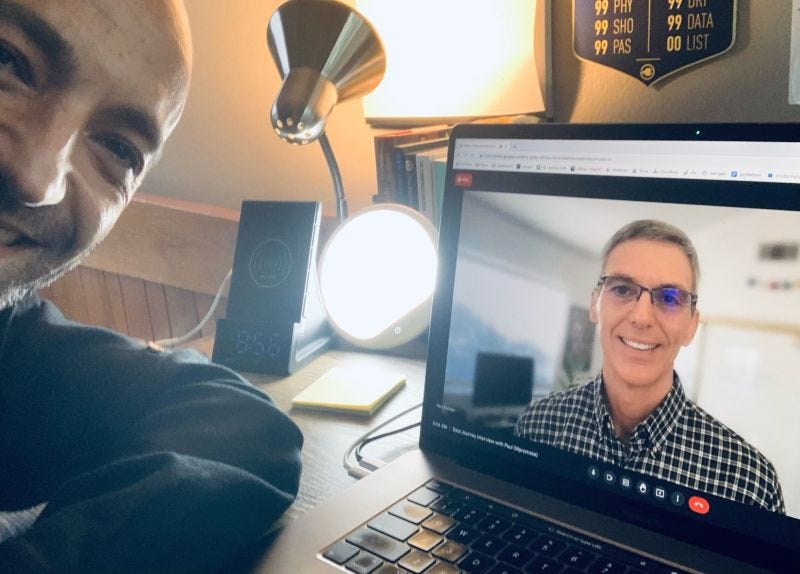
And don’t miss the story of Yves Rocher’s MYData initiative. Yves Rocher, Petit Bateau. Toute ma jeunesse! Thanks for the partnership Stanislas Duthier!

2 — The Journey Map: 12 Verbs to consider
The 12 verbs of the Data Journey Map. A deep guide to Data modernization. Nicely done Sandeep!
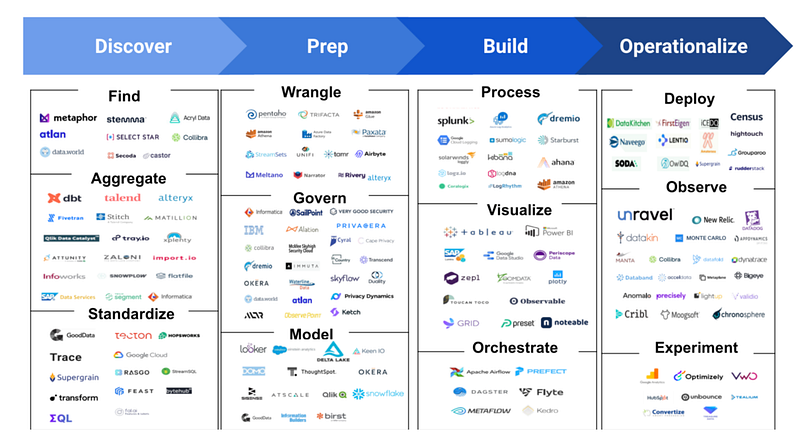
- Find: Discover the existing datasets along with the metadata details
- Aggregate: Collect new structured, semi-, or unstructured data from applications and third-party sources
- Standardize: Re-use standardized metrics that provide a single source-of-truth across insights
- Wrangle: Cleanse and transform the data for building reliable insights
- Govern: Ensure the usage and access to data is within compliance
- Model: Manage the global data namespace to effectively update and share
- Process: Analyze data across multiple data stores
- Visualize: Build dashboards and reports for visual analysis and information extraction
- Orchestrate: Setting up end-to-end transformation pipelines from raw data into insight
- Deploy: Continuous integration and rollout of transformation pipelines
- Observe: Proactively monitor the performance, cost, quality of data applications and pipelines
- Experiment: A/B testing to ensure insights lead to the right business impact
More here
3 — ELTMIS, a new acronym?!
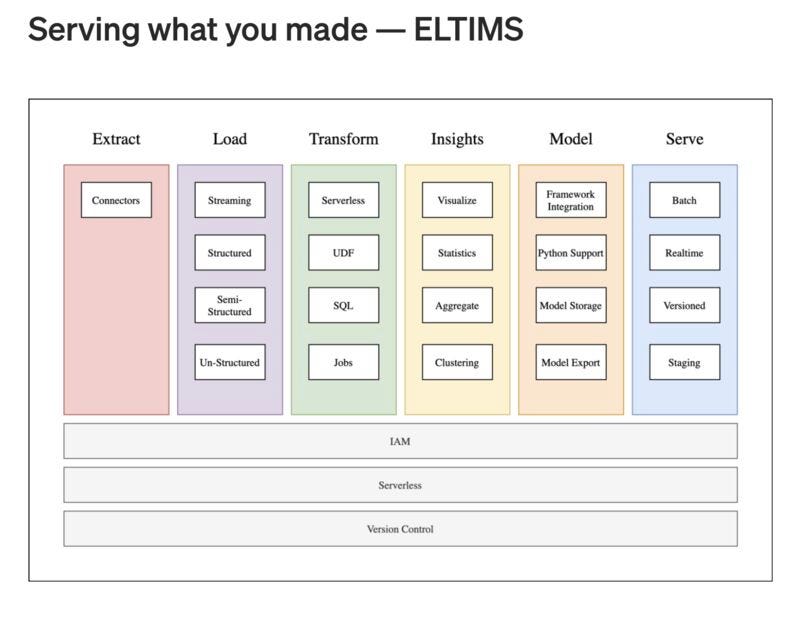
A shorter list of verbs could include 6: 1) Extract 2) Load 3) Transform 4) Insights 5) Model and 6) Serve!
An interesting take on the data pipeline by ML Architect Denys Linkov
4 — What is Data Lineage?!
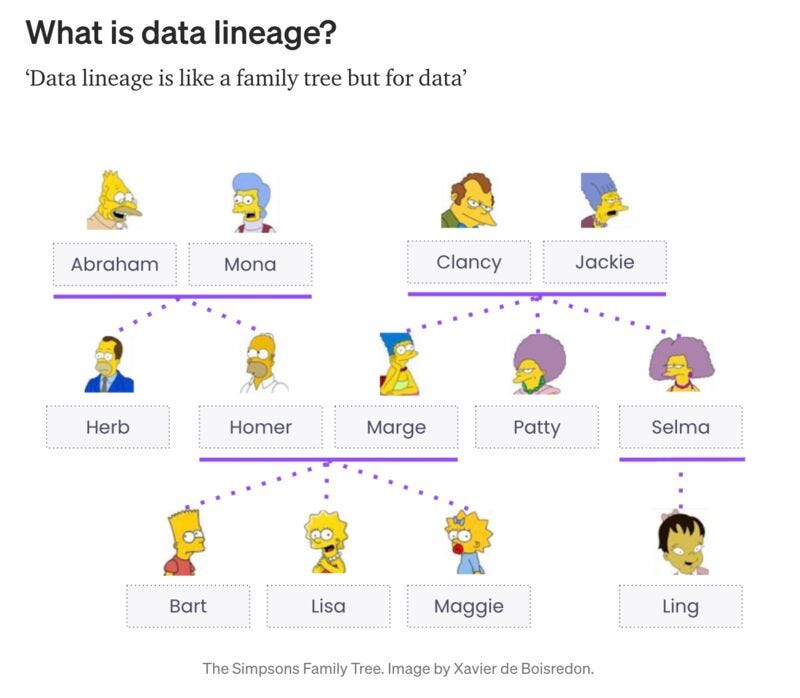
What is Data Lineage?! Interesting explanation by Xavier de Boisredon. Very useful is the use case breakdown, namely, traditional Data Lineage is used for: 1) Data Trouble shooting: “Find the problem at the source” 2) Impact analysis: “Am I going to break the CEO’s favorite dashboard?” 3) Discovery and Trust: “Garbage in, garbage out. But how do I check what’s goes in?” 4) Definition Propagation: “I am lazy. If only I could write documentation once and propagate it” 5) Data Privacy Regulation (GDPR and PII mapping): “I can’t protect what I don’t know I have” 6) Data assets clean up or technology migration: “Please tell me! What should I keep?”
And finally, my favorite: “Data lineage is like a family tree but for data”.
More here
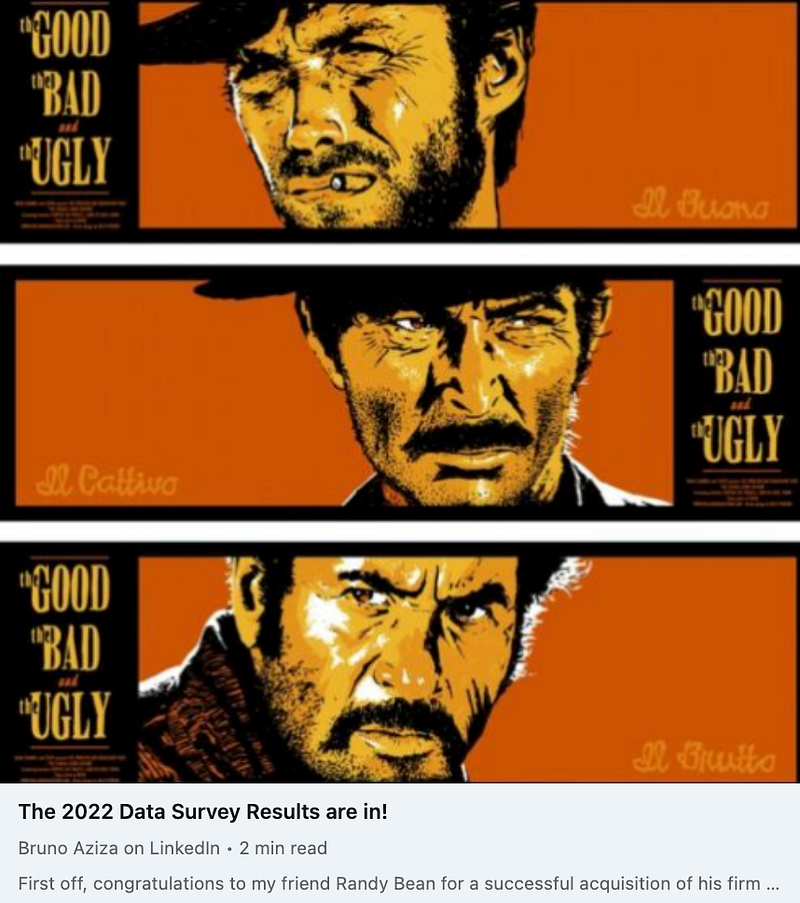
5 — The 2022 Data Survey Results are in
First off, congratulations to my friend Randy Bean for a successful acquisition of his firm by french company Wavestone. Second, congrats on celebrating the 10 year anniversary of the Data and AI Executive Survey.
This past week, the firm published the result of its analysis of key trends shared by data leaders from some of the biggest movers in the data space — 94 firms from AIG to Wells Fargo, AbbVie to Pfizer, Albertsons to Starbucks. Lots to read of course, but there are at least 3 key take aways around becoming “Data Driven”, executing on “Data Strategy”, the CDO roles and their priorities for 2022.
More here.
EXTRAS
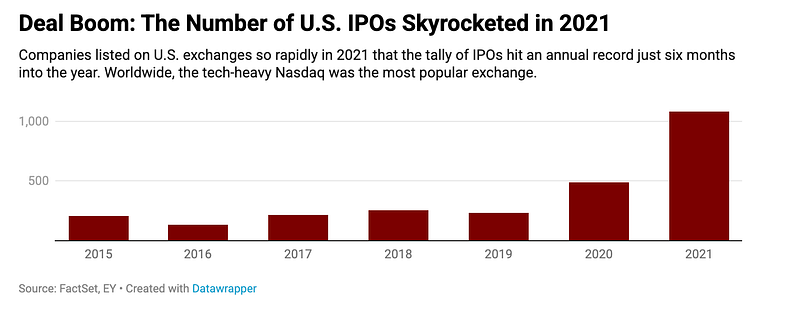
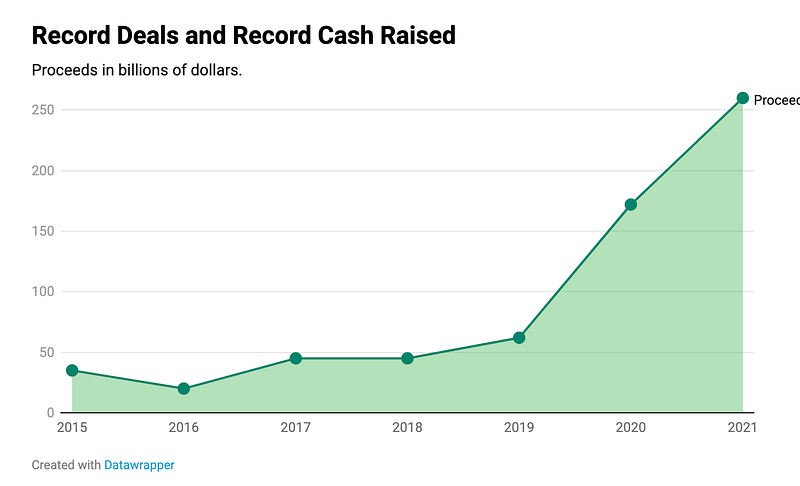
Which IPO are you MOST excited about in 2022?! In 2021, 2,388 firms raised $453B, the highest annual deal volume ever.
Want build and scale a great business ? Here are 3 resources that will help you!
Robert Scoble published an outstanding post on how to think about your business model. His post is very rich and full of personal stories.
I’ve known and followed Robert for many years (I still remember demoing “Twitter Analytics” to him some 10 years ago!). Robert was the first to see Siri, Tesla, Flipboard, Cloudera, and thousands of others. You can take his advice to the bank. Below, what I take away from his advice (the below is my paraphrase based on my experience so read the full piece here)
- Focus on the basics and keep it simple. To paraphrase, French philosopher and mathematician Blaise Pascal: “I would have written a shorter letter, but I did not have the time”
- Be honest about market opportunity
- Be clear about how you’ll make money.
- Stop thinking (or saying) you don’t have competition. Doing nothing is the hardest competition you’ll ever fight against.
- Execution is #1. Can your team execute on this upcoming challenge, mission…etc. Don’t bask in what you’ve accomplished. That’s important but you’re really only as good as your next achievement.
Another great resource to watch is Guy Kawasaki’s 10 20 30 rule (video below).
And finally, Brett Queener’s “Startup’s Narrative in 4 Steps”. I love Brett’s approach on Inputs and Outputs and the simple methodology he lays out in his post. I collaborated with Brett a long time ago, when he was at Salesforce and I was at BusinessObjects. He’s very sharp and this post is one to bookmark. The 4 steps/exercises include:
- Nail Your Value Proposition: “Do New, Do Better, Do More”? (more background here).
- Nail Your Competitive Differentiation: “Are Your Do’s Better than Others?”
- Nail Your Website’s Home Page Messaging: What 3 simple sentences hook your visitors?!
- Nail Urgency for your prospect: “What Happens if They Don’t Buy Your Product Now?”
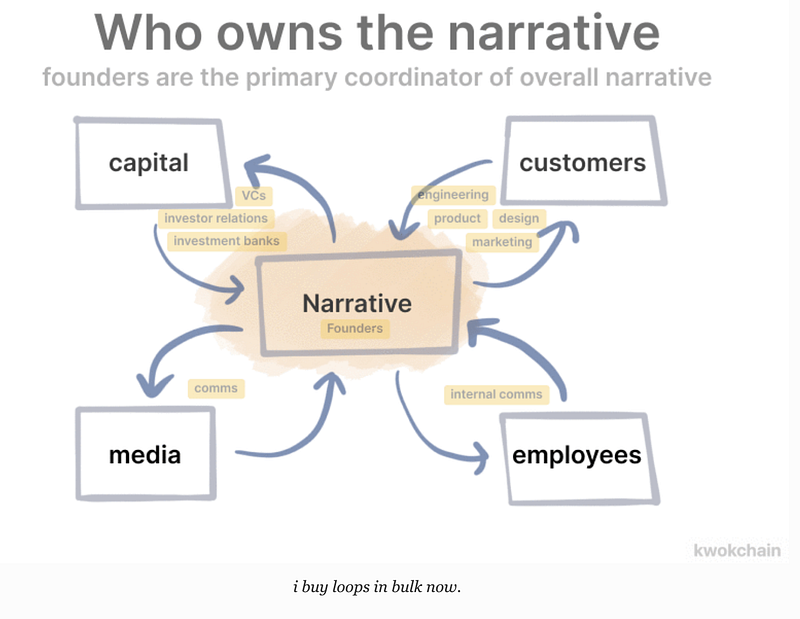
Brett provide an easy template to guide your narrative, reading references to Matt Lerner’s approach to making customers feel you’ve read their minds and finally a great piece from former Greylock Partners’ Kevin Kwok on “Narrative Distillation”, how you should think about your ‘story/pitch’ types (Narrative, Inflection or Traction) and a map for who ‘owns’ your company’s narrative (screenshot below, full post here).