
The 2.5%: On Understanding Innovation

If I had asked people what they wanted, they would have said faster horses.
— Henry Ford
Are technological innovations predictable? Yes…only if you embrace non-linear thought.
In this post, we will prove that an exponential mindset is the key to unlocking innovation.
Linear Projection Fallacy
As individuals settle into routines…
- Sleep cycles
- Commuting to work
- Step-by-step career progression
…, we foster a linear mindset.
Linear thought is the great inhibitor to the adoption of innovation before it becomes mainstream.
As we will learn, technological progress does not occur linearly, it does so exponentially.
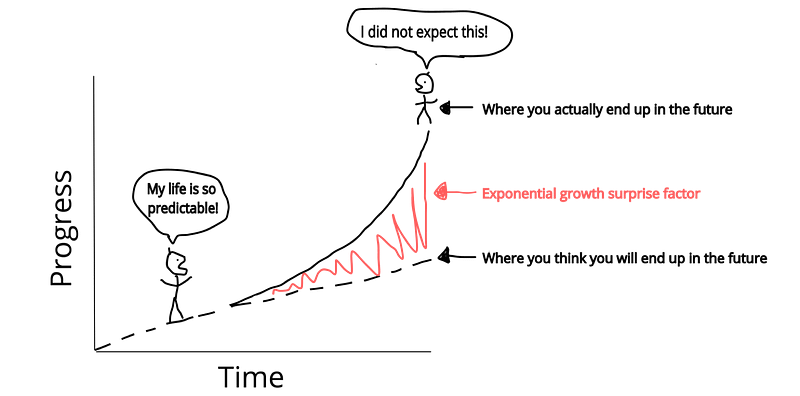
The Laws of Martec, Moore, and Kurzweil
The ability to underestimate this unintuitive rate of change is not isolated to individuals — it also applies to organizations. This gap is best understood through Martec’s Law, which states:
Technology changes exponentially; organizations change logarithmically.
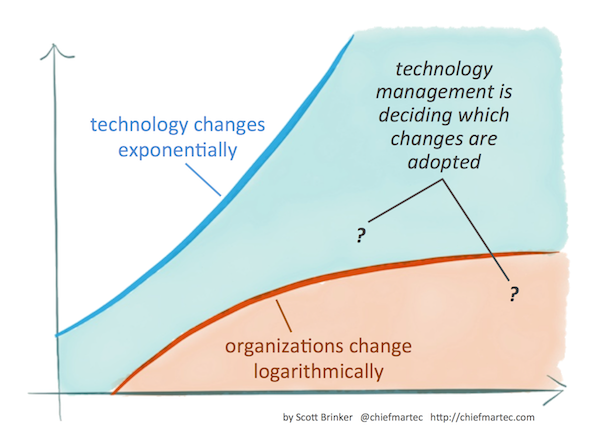
Martec’s Law outlines the fundamental challenge that organizations face — to explore or exploit new technologies. When confronted with this multi-armed bandit problem, the goal is to maximize the ROI earned through a sequence of technology lever pulls. In short, incumbents must endorse rapid innovation adoption (and failure) to avoid being eaten by hungry upstarts.
A more common law that captures this phenomenon is Moore’s Law. In 1965, Intel co-founder Gordon Moore observed that the number of transistors per square inch on integrated circuits double approximately every two years — or in other words, the growth is exponential.
A modern take on this premise is author of The Singularity is Near, Ray Kurzweil’s “Law of Accelerating Returns”. It states:
…fundamental measures of information technology follow predictable and exponential trajectories, belying the conventional wisdom that you can’t predict the future.
These three laws have identified how technology takes shape over time. Our shape grows slowly, explodes sharply, and then slows again due to ubiquitous market penetration.
The Arc of Innovation Bends Exponentially
In mathematical terms, this “S” shaped curve resembles a sigmoid curve — or S-Curve, for short.
The S-Curve
The S-Curve is what separates the Segway from the iPhone. Over time, new tech faces an inflection point where its adoption matures or fades away. If we are experiencing the next big thing, a hockey stick moment will occur; else, the tech will be relegated to obsolescence.
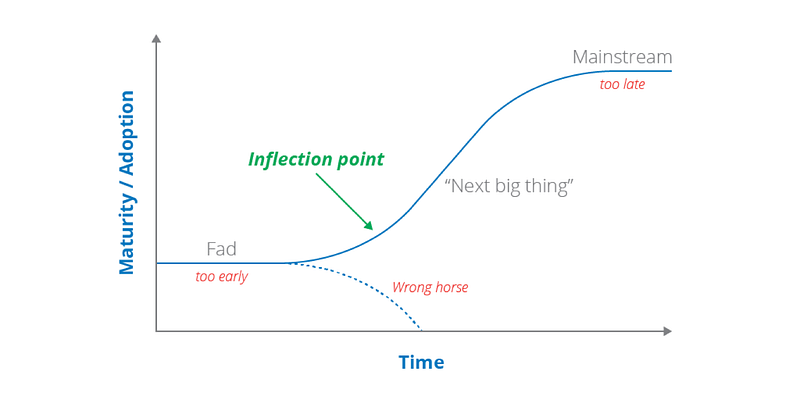
The journey from novelty to commodity is fraught with uncertainty.
To achieve mass market adoption, innovations must go through an innovation adoption lifecycle.
Diffusion of Innovations Theory
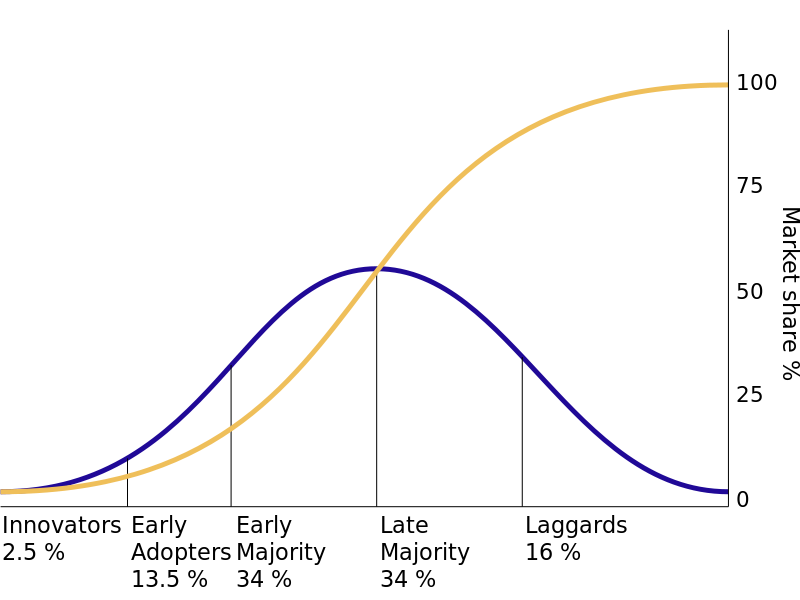
To explain why, how, and the rate at which technology spreads, the diffusion of innovations theory categorizes adopters into the following buckets:
- Innovators (2.5%)
- Early Adopters (13.5%)
- Early Majority (34%)
- Late Majority (34%)
- Laggards (16%)
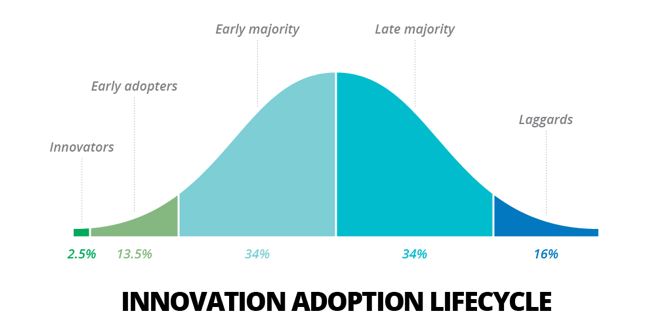
When we plot this adoption theory over time, we receive a familiar shape — the S-Curve.
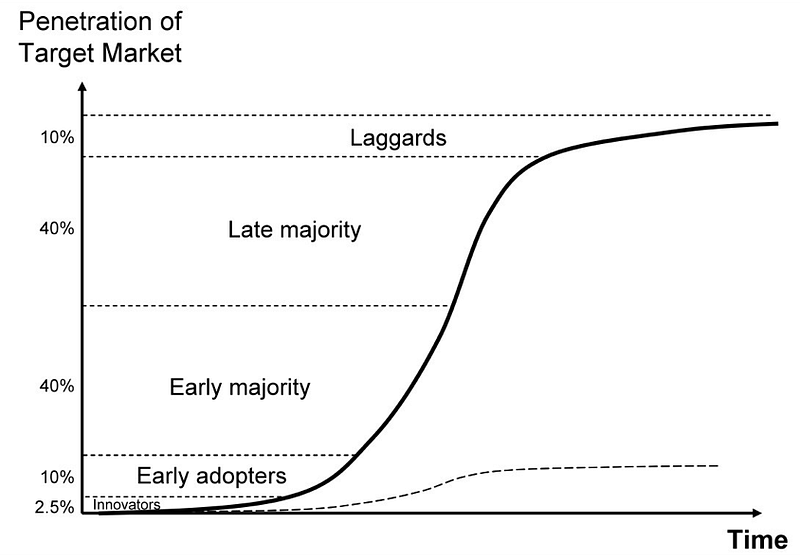
The intersection of the S-Curve and Diffusion of Innovations Theory depicts the point at which inflection points occur and when fads mature into utilities.
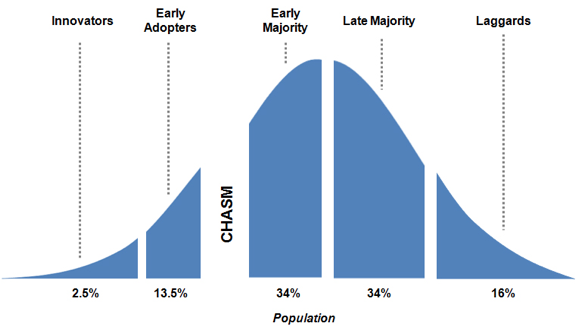
A major hurdle to mass adoption is what Geoffrey A. Moore coined as “the chasm”. Crossing the chasm is the only way to achieve your hockey stick moment.
Continuous Disruption
As one technology crosses the chasm, competitors to its business model are not far behind in the innovation adoption lifecycle.
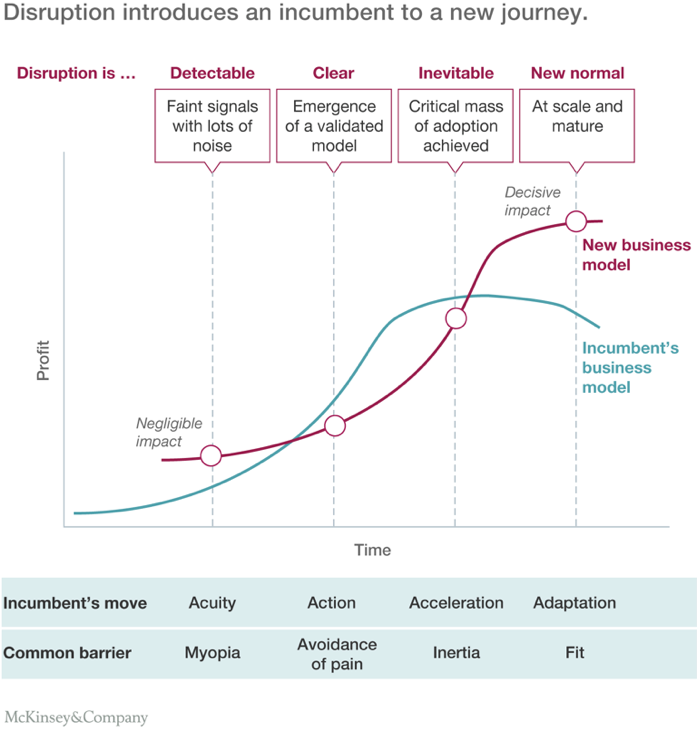
The incumbent’s S-Curve will inevitably be overtaken by an upstart’s S-Curve. A recent example of this is when the S-Curves of Blockbuster video and Netflix collided.
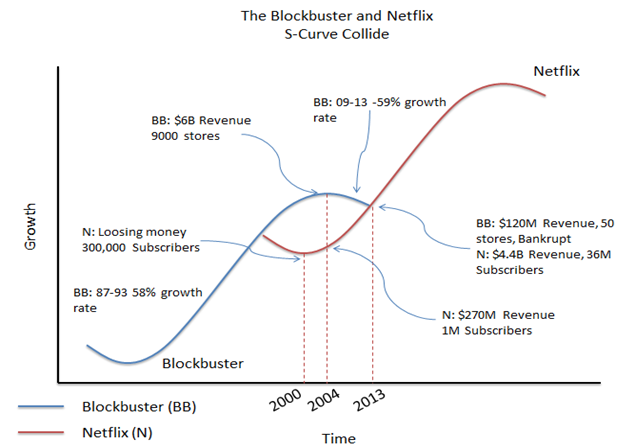
…and we all know how this story ended…
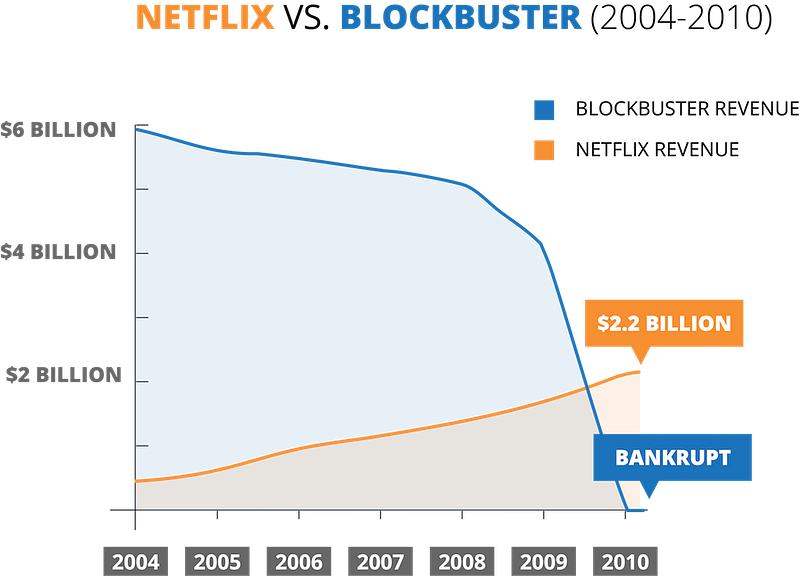
On a long enough time line, the adoption rate for every technology drops to zero.
The lesson to be learned is that S-Curves serve as the foundation for all human progress. As technology matures, we all benefit at an increasingly accelerated rate.
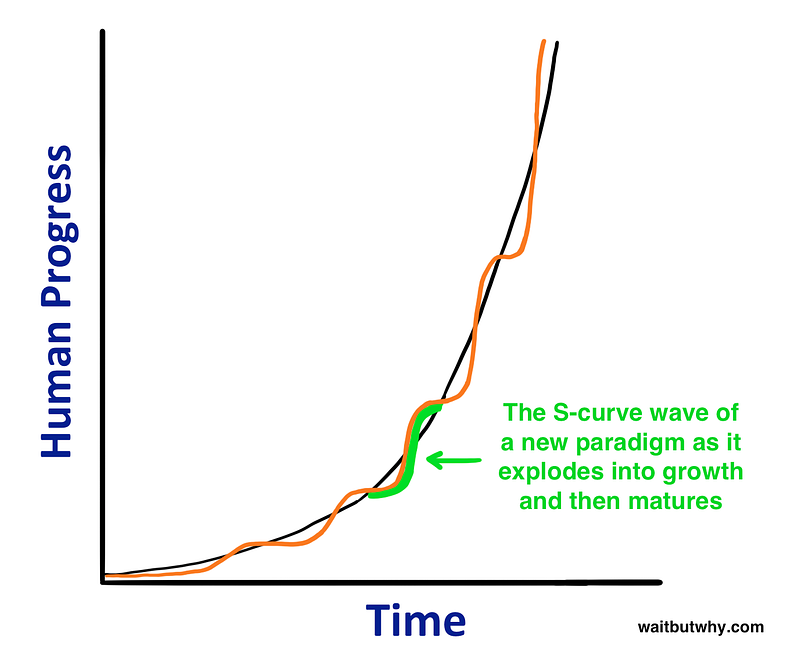
Digital Darwinism
Technology experiences waves of evolution. Currently, the tsunami overtaking information technology is Cloud Computing.
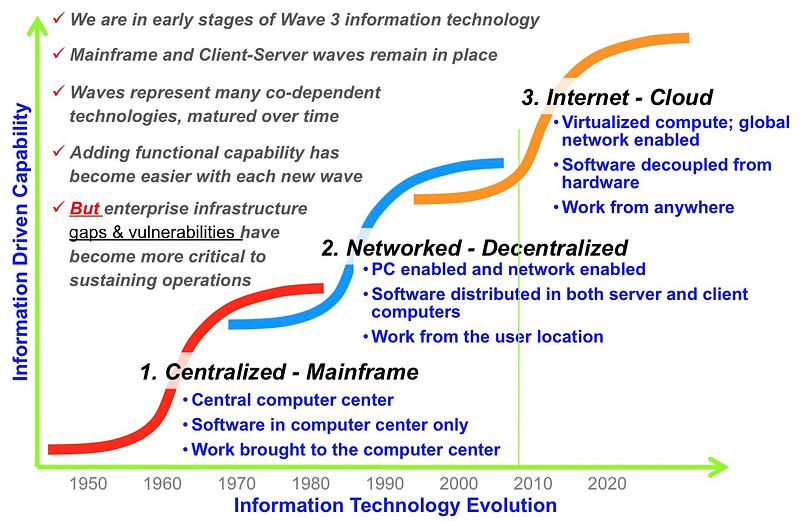
As we review technologies over the past century, the S-Curves come into focus…
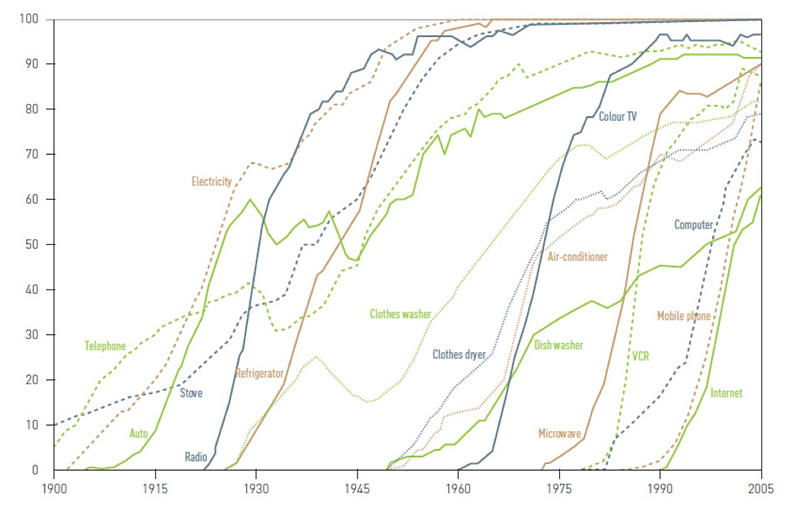
…and the velocity of S-Curve adoption rates is faster and more frequent over time.
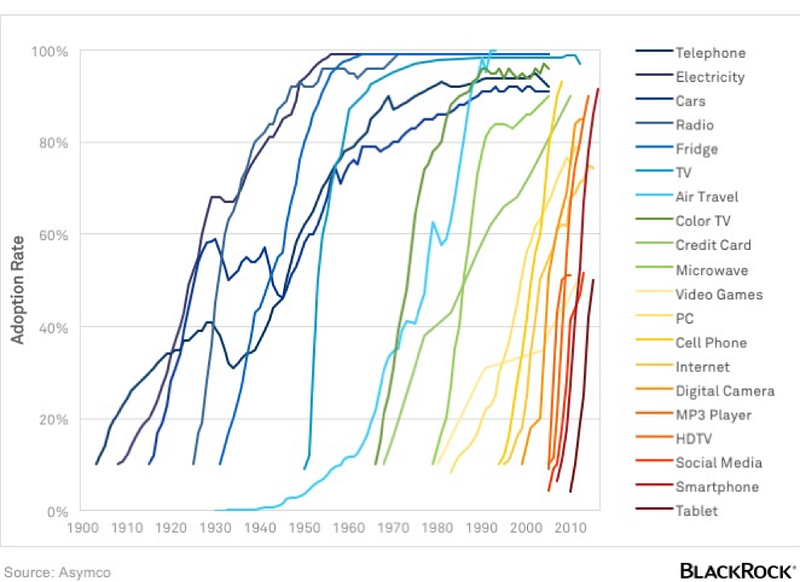
This gift to human progress is a curse to organizations who attempt to keep pace with this rapid change.
What it Takes to be Part of the 2.5%
Thankfully, there are several research and advisory firms that have developed graphical methodologies to help organizations separate technological hype from reality.
As organizations perform due diligence on their technology adoption decisions, these advisory models serve as great references.
The only caveat here is that advisory methodologies are purposefully generic to be applicable to as many potential businesses as possible.
Fusing your specific business needs with innovative progress must be done so with exponential change in mind. With this knowledge, what actions can organizations take to avoid becoming the next Blockbuster video?
Market Cannibalization
One solution is to self-disrupt.
Apple has remained innovative by disrupting its own products. Apple thinks differently…and exponentially.
Market cannibalization is why Apple has been able to successfully transition through the Personal Computer (PC) and Mobile S-Curves. Is Augmented Reality (AR) next?
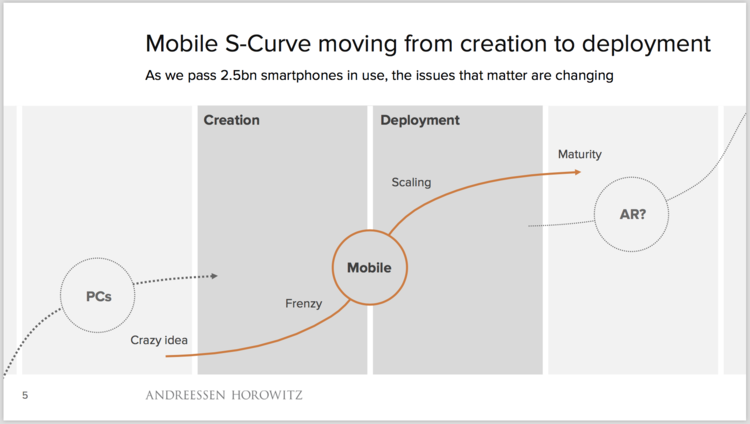
Time Perception
Keep an open radar screen. Avoid the temptation to perceive innovations as being 50–100 years away.
Project the Next Logical S-Curve
Now that we understand the hazards of linear projection, we should break free and predict based on exponential change.
For instance, when it comes to computation, the field of study closest to its inflection point is Artificial Intelligence (AI).
More specifically, a breakout looks to be happening in Deep Learning (DL). DL is a subset of Machine Learning (ML), which itself is a subset of AI.
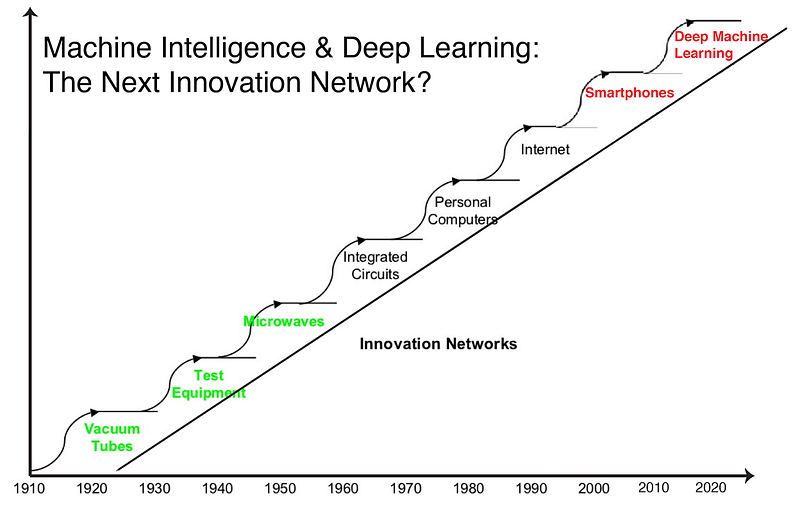
Since we are projecting exponential change, a valuable exercise is take the next S-Curve and project its disruptor. In the case of machine intelligence, it’s merging the human brain with computers.
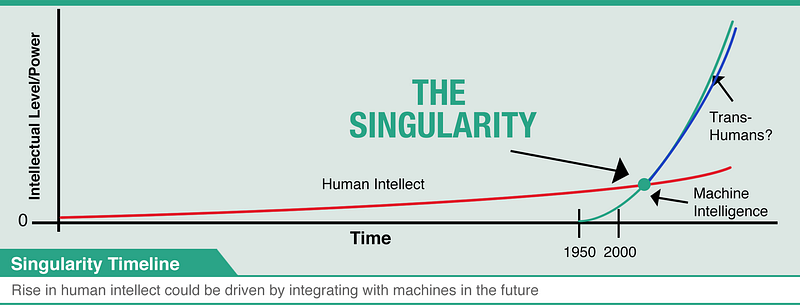
…and it should come as no surprise that the foremost innovator of this decade, Elon Musk, is already playing the innovator role in this space.
To view this post as a Medium Series on your phone, please check out: https://readmedium.com/the-2-5-understanding-innovation-bcf84d62bf1b


