avatarJean Campbell

Free AI web copilot to create summaries, insights and extended knowledge, download it at here

4254

Abstract

ltural revolutionaries) decide to get revenge. The film is violent, has a racy (for the time) sex scene, and includes a stellar cast: Marlon Brando, Harry Dean Stanton, Frederic Forest, Randy Quaid, and Kathleen Lloyd. John Williams (of <i>Jaws</i> and <i>Star Wars</i> fame) scored it.</p><figure id="0bdb"><img src="https://cdn-images-1.readmedium.com/v2/resize:fit:800/1*9JUJPCJCEE-ZpH4ebHCIZg.jpeg"><figcaption>The actual Missouri Breaks were tough country. Image <a href="https://commons.wikimedia.org/w/index.php?search=the+Missouri+breaks&amp;title=Special:MediaSearch&amp;go=Go&amp;type=image">WikiMedia Commons</a>.</figcaption></figure><h2 id="6570">5. Easy Rider</h2><p id="9d21">This road trip and love letter to America came out in 1969 at the height of long hair and bell-bottom jeans. The innovative storytelling opened the floodgates to celebrate hippiedom on screen in a still deeply conservative nation, with Dennis Hopper and Peter Fonda riding to glory before a sudden, shocking demise. Is it a western?</p><p id="a007" type="7">The two dudes are on motorcycles, arguably the horseback of the sixties. And they are outlaws who ride through the western states.</p><p id="78ca">Like the gunfighters of old, they walk into at least one establishment where they are not welcomed by the locals. The pair of drug-smuggling freaks recruit a small-town lawyer looking to tune in, turn on, and drop out (Jack Nicholson). Their journey exposes the violent, polarized underbelly of America in the 1960s.</p><figure id="5bf6"><img src="https://cdn-images-1.readmedium.com/v2/resize:fit:800/1*6gEKiEnkGNwWPErAO2Yhsg.jpeg"><figcaption>The horse Dennis and Fonda rode. Image courtesy <a href="https://commons.wikimedia.org/w/index.php?search=filming+easy+rider&amp;title=Special:MediaSearch&amp;go=Go&amp;type=image">Wiki Commons</a>.</figcaption></figure><h2 id="2b3b">6. The Planet of the Apes (1968)</h2><p id="d14b">Some might say the Apes didn’t live in the west, yet this film opens on an iconic western landscape at Lake Meade. The story of a dystopian future in which apes have conquered mankind embodies the idealism of the late 60s and early 70s. Charlton Heston gets himself snagged in a net by a bunch of talking apes, then learns chimps rule and his fellow humans are mute and dim-witted. He finds a girlfriend, steals a horse, and tries to outrun fate. Although the most recent Apes reboots are excellent, the original (written by Rod Serling of <i>Twilight Zone</i> fame) personifies an innocence we had in the late 60s. It also includes some groovy make-up and costumes.</p><h2 id="9e2f">7. McCabe and Mrs. Miller</h2><p id="42c2">Julie Christie and Warren Beatty, two fabulous seventies actors, star in this Robert Altman revisionist classic.</p><p id="1918" type="7">An oddball partnership between a sex worker and a gambler results in a successful brothel, not too surprising considering everyone is stuck in a grubby mining town.</p><p id="f857">Not all audiences love Altman’s directorial style (but don’t give up before you watch MAS*H), which sometimes feels claustrophobic and ponderous. If you appreciate realism and sticking it to The Man, however, this is a film you’ll love. It’s rated the 8th best western of all time by The American Film Institute.</p><h2 id="b6dd">8. The Cowboys</h2><p id="7e47">What Western list would be complete without a John Wayne film? This lesser known 1972 story stars The Duke and a cast of reliable cowboy actors including Slim Pickens and Bruce Dern. A crusty but benign rancher (Wayne) has no choice but to hire wet-behind-the-ears kids to help him wrassle up them dogies and hit the trail north. The movie swings between sweet and tragic, but you’ll find yourself wishing you had John Wayne to steer you through your tween years.</p><figure id="c495"><img src="https://cdn-images-1.readmedium.com/v2/resize:fit:800/1*XGG0FWZEAy7EHllDHFkjIg.jpeg"><figcaption>John Wayne in 1961, over thirty years into his acting career. Image courtesy <a href="https://commons.wikimedia.org/w/index.php?search=John+wayne&amp;title=Special:MediaSearch&amp;go=Go&amp;type=image">WikiMedia Commons</a>.</figcaption></figure><h2 id="0efe">9. Jeremiah Johnson</h2><p id="5af7">This film follows a war veteran

Options

(shades of Vietnam) who wants nothing more than peace and quiet. Johnson (played by Robert Redford) is a trapper and Mexican-American war vet who wants to get back to the land, as many in the sixties and seventies did. Based on the book <i>Crow Killer: The Saga of Liver-Eating Johnson </i>and the novel <i>Mountain Man</i>, and filmed largely in Utah, the story upends the myth of rugged individuality. Johnson encounters a Crow warrior, who helps him survive a brutal winter. He also finds a woman and mute boy, who he must protect — despite his desire for solitude. This was the first western film ever accepted at the Cannes Film Festival, in 1968. Despite some limitations, it retains a timeless beauty.</p><h2 id="8be2">10. Once Upon a Time in the West</h2><p id="8fd2">In 1968, Italian director Sergio Leone made his second great Spaghetti Western, in which he cast Charles Bronson, Claudia Cardinale, and Henry Fonda in a story of three guys waiting at a railroad station. Fonda plays against type as a bad guy in a parable about changing times. Cardinale realizes she may never have a family, not unlike other women in the 1960s who saw a new era dawning. The railroad — a metaphor for change and escape — plays a big role in this film, which is scored by Ennio Morricone.</p><p id="dbea">There is no genre as American as the western, which gets reinvented every generation. Clint Eastwood did it in <i>The Good, the Bad, and the Ugly </i>and again in <i>Unforgiven</i>. Mel Brooks gave us parody with <i>Blazing Saddles</i>, and Kevin Costner won over audiences with <i>Dances with Wolves</i>. Tarantino got in the mix with <i>Django</i>. The sixties and seventies were a time this nation was reimagining itself, and the westerns of the era reveal a country still growing up.</p><p id="feda"><a href="https://jeancampbell-25104.medium.com"><i>Jean Campbell</i></a> is a writer in humor, poetry, crime, and health. If you liked this article, sign up to get her posts in your inbox.</p><div id="62e0" class="link-block"> <a href="https://readmedium.com/when-hell-freezes-over-209d0fa16a94"> <div> <div> <h2>When Hell Freezes Over</h2> <div><h3>Sonnet</h3></div> <div><p>medium.com</p></div> </div> <div> <div style="background-image: url(https://miro.readmedium.com/v2/resize:fit:320/0*yC2BArWHNoO5Y-lC)"></div> </div> </div> </a> </div><div id="ba64" class="link-block"> <a href="https://readmedium.com/genius-new-theory-on-reads-6b2b0865a5f2"> <div> <div> <h2>Medium Code Broken</h2> <div><h3>Why people read or don’t read, and what you can do about it</h3></div> <div><p>medium.com</p></div> </div> <div> <div style="background-image: url(https://miro.readmedium.com/v2/resize:fit:320/0*JZgTudRlIHwsUh2w)"></div> </div> </div> </a> </div><div id="56b1" class="link-block"> <a href="https://readmedium.com/woman-ruins-vegan-chili-potluck-32e099e0bde7"> <div> <div> <h2>Woman Ruins Vegan Chili Potluck</h2> <div><h3>Local church event leads to confrontation and tears</h3></div> <div><p>medium.com</p></div> </div> <div> <div style="background-image: url(https://miro.readmedium.com/v2/resize:fit:320/0*9zeZ4PNvEnLe7M4a)"></div> </div> </div> </a> </div><div id="a696" class="link-block"> <a href="https://readmedium.com/i-messed-with-texas-c22f66b6f65e"> <div> <div> <h2>I Messed with Texas</h2> <div><h3>You had me at $67 a night, Knox City</h3></div> <div><p>medium.com</p></div> </div> <div> <div style="background-image: url(https://miro.readmedium.com/v2/resize:fit:320/1*yAzmyOTJcsOSJ0gVmbEpsA.jpeg)"></div> </div> </div> </a> </div></article></body>

The 10 Best Hippie Western Films

In Response to CC4: This is My Favorite
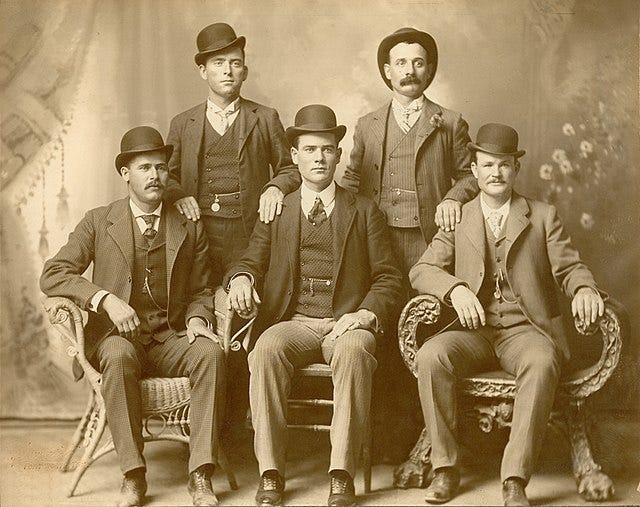
Butch Cassidy, far right, later played by Paul Newman. Image courtesy WikiMedia Commons

When hippies ride horses, you get a surreal creature prancing along the dusty mesa in a tie-dyed cowboy hat and Roman sandals. Welcome to the era where groovy met cowboy. Mountain men got back to the land, and outlaws had good manners. The late 1960s and 1970s produced some of the most interesting western films Hollywood ever made.

As a nation, we explored machismo and flower-power simultaneously, and possibly accidentally.

True Grit featured John Wayne and Dennis Hopper in the same film, which is enough to make your head spin. Apparently, they clashed openly on the set, where Wayne did not appreciate Hopper’s coarse manners.

1. The Long Riders

This story of Jesse James and the Younger Gang was released in 1980 and features three sets of real-life brothers — the Carradines, the Keaches, and the Quaids — playing historical badasses of the James/Younger Gang. They are portrayed as romantic heroes rather than thugs. Scenes are alternately dreamy and violent, and showcase the talents of David Carradine in a riveting saloon knife fight.

The film is largely historically accurate but tends to romanticize the lives of these desperados. You will definitely find yourself rooting for the bad guys!
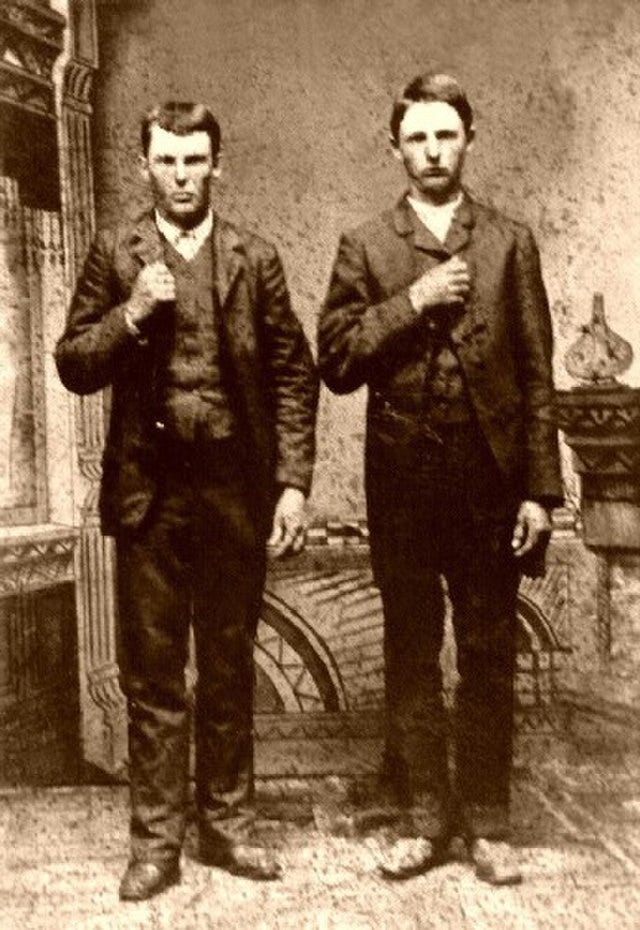
Frank and Jesse James in 1872. Image courtesy WikiCommons.

2. Butch Cassidy and the Sundance Kid

George Roy Hill directed what is widely considered one of the most entertaining films of the 1970s, western or not. Two genuinely likable movie stars, Paul Newman and Robert Redford, play anti-heroes Butch Cassidy and the Sundance Kid as they rob trains, flee posses, and unsuccessfully retire to South America. Some hated the sappy Burt Bacharach (“Raindrops Keep Fallin’ on My Head”) soundtrack, but a few appreciated the nod to modernism. The film also stars Katharine Ross as a schoolteacher looking for adventure.

Unlike The Long Riders, this film is historically sketchy. But who cares? When you’ve got Strother Martin, dynamite, sexy schoolmarms, and Bolivian bandits, all of your entertainment needs are met.
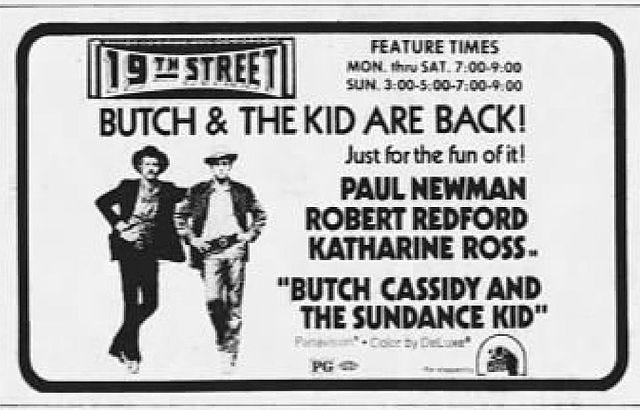
Redford and Newman made a great team. Image courtesy WikiMedia Commons.

3. A Man Called Horse

Richard Harris was an Irish actor who played an upper-class Englishman captured by Native Americans. You might say this film is culturally ambiguous, or anthropologically muddled, yet you can’t help but hope Harris’s character figures out how to master the art of living in a teepee. He endures incredible suffering — including one scene involving some serious nipple-play — to learn the ways of his new tribe. An unusual film with a humbling lesson and a hero’s journey, although like many films of this era, the Native Americans were mostly played by white folks.

4. The Missouri Breaks

The Missouri Breaks are a section of Montana where the Missouri river flows. Jack Nicholson plays a down-on-his-luck horse rustler whose friend has recently been hanged by a wealthy rancher (i.e. The Establishment). He and his gang (i.e. counter cultural revolutionaries) decide to get revenge. The film is violent, has a racy (for the time) sex scene, and includes a stellar cast: Marlon Brando, Harry Dean Stanton, Frederic Forest, Randy Quaid, and Kathleen Lloyd. John Williams (of Jaws and Star Wars fame) scored it.
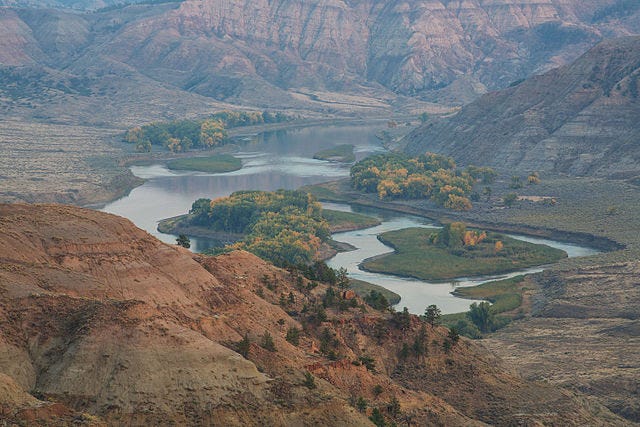
The actual Missouri Breaks were tough country. Image WikiMedia Commons.

5. Easy Rider

This road trip and love letter to America came out in 1969 at the height of long hair and bell-bottom jeans. The innovative storytelling opened the floodgates to celebrate hippiedom on screen in a still deeply conservative nation, with Dennis Hopper and Peter Fonda riding to glory before a sudden, shocking demise. Is it a western?

The two dudes are on motorcycles, arguably the horseback of the sixties. And they are outlaws who ride through the western states.

Like the gunfighters of old, they walk into at least one establishment where they are not welcomed by the locals. The pair of drug-smuggling freaks recruit a small-town lawyer looking to tune in, turn on, and drop out (Jack Nicholson). Their journey exposes the violent, polarized underbelly of America in the 1960s.
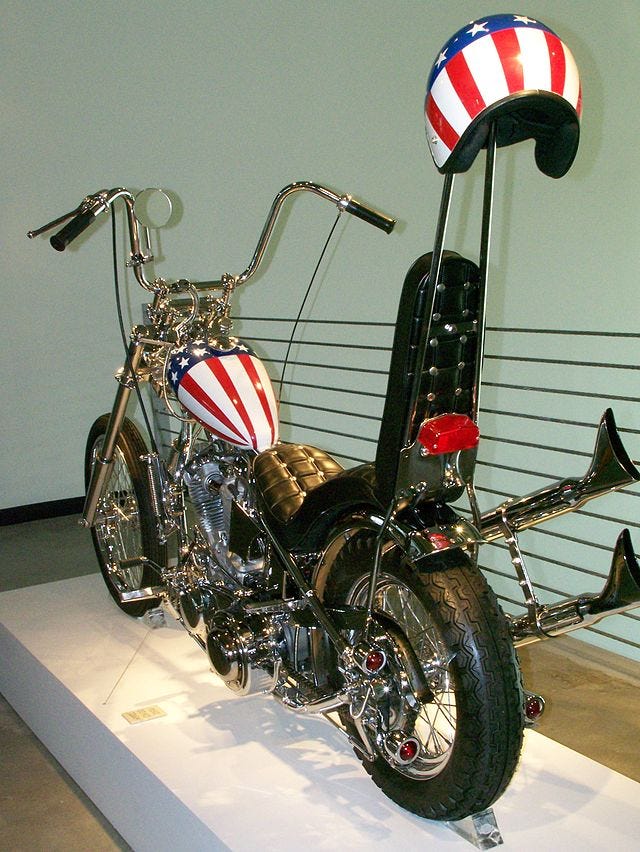
The horse Dennis and Fonda rode. Image courtesy Wiki Commons.

6. The Planet of the Apes (1968)

Some might say the Apes didn’t live in the west, yet this film opens on an iconic western landscape at Lake Meade. The story of a dystopian future in which apes have conquered mankind embodies the idealism of the late 60s and early 70s. Charlton Heston gets himself snagged in a net by a bunch of talking apes, then learns chimps rule and his fellow humans are mute and dim-witted. He finds a girlfriend, steals a horse, and tries to outrun fate. Although the most recent Apes reboots are excellent, the original (written by Rod Serling of Twilight Zone fame) personifies an innocence we had in the late 60s. It also includes some groovy make-up and costumes.

7. McCabe and Mrs. Miller

Julie Christie and Warren Beatty, two fabulous seventies actors, star in this Robert Altman revisionist classic.

An oddball partnership between a sex worker and a gambler results in a successful brothel, not too surprising considering everyone is stuck in a grubby mining town.

Not all audiences love Altman’s directorial style (but don’t give up before you watch M*A*S*H), which sometimes feels claustrophobic and ponderous. If you appreciate realism and sticking it to The Man, however, this is a film you’ll love. It’s rated the 8th best western of all time by The American Film Institute.

8. The Cowboys

What Western list would be complete without a John Wayne film? This lesser known 1972 story stars The Duke and a cast of reliable cowboy actors including Slim Pickens and Bruce Dern. A crusty but benign rancher (Wayne) has no choice but to hire wet-behind-the-ears kids to help him wrassle up them dogies and hit the trail north. The movie swings between sweet and tragic, but you’ll find yourself wishing you had John Wayne to steer you through your tween years.
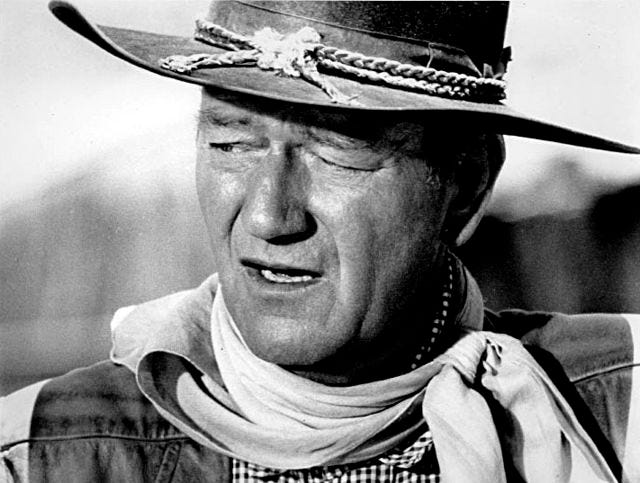
John Wayne in 1961, over thirty years into his acting career. Image courtesy WikiMedia Commons.

9. Jeremiah Johnson

This film follows a war veteran (shades of Vietnam) who wants nothing more than peace and quiet. Johnson (played by Robert Redford) is a trapper and Mexican-American war vet who wants to get back to the land, as many in the sixties and seventies did. Based on the book Crow Killer: The Saga of Liver-Eating Johnson and the novel Mountain Man, and filmed largely in Utah, the story upends the myth of rugged individuality. Johnson encounters a Crow warrior, who helps him survive a brutal winter. He also finds a woman and mute boy, who he must protect — despite his desire for solitude. This was the first western film ever accepted at the Cannes Film Festival, in 1968. Despite some limitations, it retains a timeless beauty.

10. Once Upon a Time in the West

In 1968, Italian director Sergio Leone made his second great Spaghetti Western, in which he cast Charles Bronson, Claudia Cardinale, and Henry Fonda in a story of three guys waiting at a railroad station. Fonda plays against type as a bad guy in a parable about changing times. Cardinale realizes she may never have a family, not unlike other women in the 1960s who saw a new era dawning. The railroad — a metaphor for change and escape — plays a big role in this film, which is scored by Ennio Morricone.

There is no genre as American as the western, which gets reinvented every generation. Clint Eastwood did it in The Good, the Bad, and the Ugly and again in Unforgiven. Mel Brooks gave us parody with Blazing Saddles, and Kevin Costner won over audiences with Dances with Wolves. Tarantino got in the mix with Django. The sixties and seventies were a time this nation was reimagining itself, and the westerns of the era reveal a country still growing up.

Jean Campbell is a writer in humor, poetry, crime, and health. If you liked this article, sign up to get her posts in your inbox.

Western
Film
Best Of
Coffee Times Challenge
Hollywood
Recommended from ReadMedium