
That's Why Workers Don't Want to Go Back to the Office
If there's anything more appealing than a campus, it's working from bed.
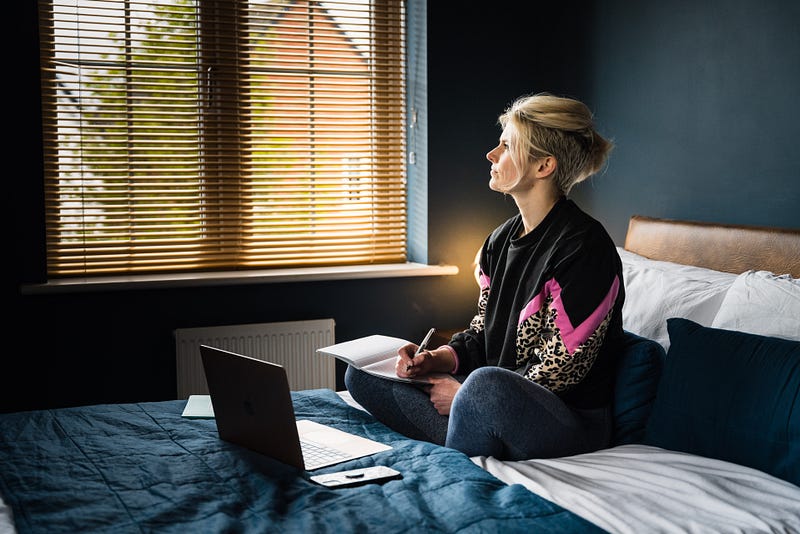
Almost half a century ago, most employees dreamt of a cubicle. Today, nobody wants to go to work at an office. Who should you blame?
Before you blame anyone, let me talk about what's happening. Companies are struggling to lure employees to the office, so a new trend is appearing, "Envy Offices" or workspaces that combine the comforts of a living room and the glamour of a vacation.
Companies are creating aesthetically-driven solutions to a psychological issue that can't be fixed by building more attractive offices. Talking about offices, how did we get to work in offices? Let's look at the history of offices and cubicles.
In the 1800s, no one worked in offices. Almost everyone worked on a farm or behind an assembly line. In the early 1900s, offices were small; only executives worked in private offices. By the mid-1900s, more and more people started to work in offices. But offices were small, intimate, and informal.
Cubicle farms were designed to pack people tightly with no privacy.
In the post-World War II era, the American white-collar workforce increased immensely due to economic prosperity and increased female participation in employment.
Companies ran out of offices to host employees, so management experts like Frederick Winslow Taylor advocated applying factory-like efficiency to white-collar jobs, introducing modular office furniture that converted the office into tightly packed cubicles. Taylor was a radical manager who believed, "Everything should be removed from a given workspace, except the materials needed to do the job at hand."
Taylor wanted to optimize space and improve productivity, but his cubicle design became known for its lack of privacy and stifled creativity in the workplace.
Cubicle reminds people that they are replaceable.
When you offer managers offices but everyone a cubicle, it creates a power struggle.
Cubicles remind people of their place in the power structure and tell them to become managers if they want more privacy. That's the wrong approach to allocating offices and cubicles to employees. Allocating workspaces should be based on need and not titles. Nikil Savel studied this division and discovered, "As the office became a bureaucracy ruled by the internal division of labor, the American dream faded, though it was still trotted out ceremonially. This caused more and more employees to hate going to the office.
Cubicles also remind people they are replaceable, "Look to the left and look to the right. There are a lot of people around that can do your job." Again, this is another reason people dislike the office environment. Add the lack of privacy and abundance of interruption, and you now have an environment that no one wants to belong to.
Companies didn't get the memo.
Companies took Taylor's productivity advice too seriously and started to remove cubicles from the office and created the open-plan office, a sterile space intended to house, or "warehouse," large numbers of workers at sets of desks divided by thin partitions that offer zero privacy.
The tech industry management loved the idea of open-plan offices. I recall a story I read a few years ago about Lindsey Kaufman, a senior writer at a major ad agency who was forced out of her private office for a seat at a long shared table in a big room. She hated the idea and felt that her boss ripped off her clothes and left her standing in her underwear.
Her words, not mine, "Our new modern office was beautifully airy and yet remarkably oppressive. Nothing was private. On the first day, I sat at the table assigned to our creative department next to a nice woman who I suspect was an air horn in a former life. All day, there was constant shuffling, yelling, and laughing, along with loud music piped through a PA system." Kaufman feared her co-workers were tallying her frequent bathroom trips and judging her 5:04 departure time.
If cubicles were bad, open-office plans were much more horrible. However, the corporate world ignored all the downsides of the open-office model. According to the International Facility Management Association, about 70 percent of U.S. offices had no or low partitions by 2014.
Companies like Google, eBay, Yahoo, and Facebook ignored the data that proved that the open-office model was horrible and adopted it for multiple reasons: "These new floor plans were ideal for maximizing a company's space while minimizing costs. Bosses loved the ability to keep a closer eye on their employees."
By 2015, many research firms "determined that the benefits in building camaraderie simply mask the negative effects on work performance." Again, employers ignored the data and thought providing employees with free lunch, potato chips, dried mango, and cold brews would make them feel at home and happy.
Employers were wrong, and in 2019, everything shifted.
Google's workspace was great, but it wasn't home.
Google revolutionized the office and provided many benefits, but when the pandemic hit, they asked people to work remotely, and everything changed.
As Emma Goldberg said, "If there's anything more appealing than a campus, it's working from bed. So when the pandemic arrived, and offices became literal homes instead of figurative ones, managers had to rethink what it meant to make the office an alluring destination." Now, employers don't have to compete to give more benefits to their employees. They have to compete to provide a better environment than employees's homes. As I discussed above, for the last 50 years, employees have been losing office space and privacy, and now they are fighting back by working remotely.
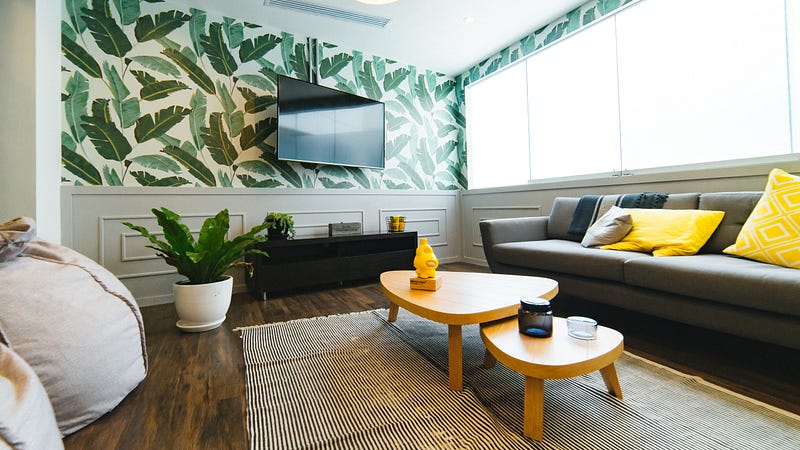
To lure employees back to the office, employers are creating working spaces employees feel compelled to be in. For example, Magic Spoon's offices look like Disneyland dining rooms, not an office environment. Every office room at Magic Spoon looks like a cereal box, and they pay influencers to promote their office spaces to lure people to come to the office and work there.
Magin Spoon is not alone; most employers are using social media to promote what they call Envy Offices.
According to The New York Times, "Companies are working to make their spaces more Instagrammable in a bid to attract younger workers back to the office — one that pairs the comfort of a living room with the stylish and glamorous appeal of a vacation." As Erica Carbajal researched, "The trend, known as "envy office," is not all new, but it is becoming a go-to among start-ups and tech companies competing for young workers. Such offices often feature colorful walls, upholstered furniture, and greenery."
The magic solution.
No one knows if Envy Offices will bring people back to the office, but I believe this:
Aesthetically driven offices alone won't bring employees back to the office. Offices must transform into healthy work environments that encourage creativity and foster camaraderie. Leaders must learn how to create a safe and healthy environment where people can trust each other and work together to achieve a common goal, and organizations need to establish performance metrics that measure performance and not hours worked.
Everyone needs to foster an atmosphere where everyone feels a sense of belonging. It is hard, but I know that companies can do it. Companies don't need to fight remote work completely. They need to create a hybrid work policy where creative people can be creative and productive at the same time.
Your thoughts?


