
Travel, Nature Photography
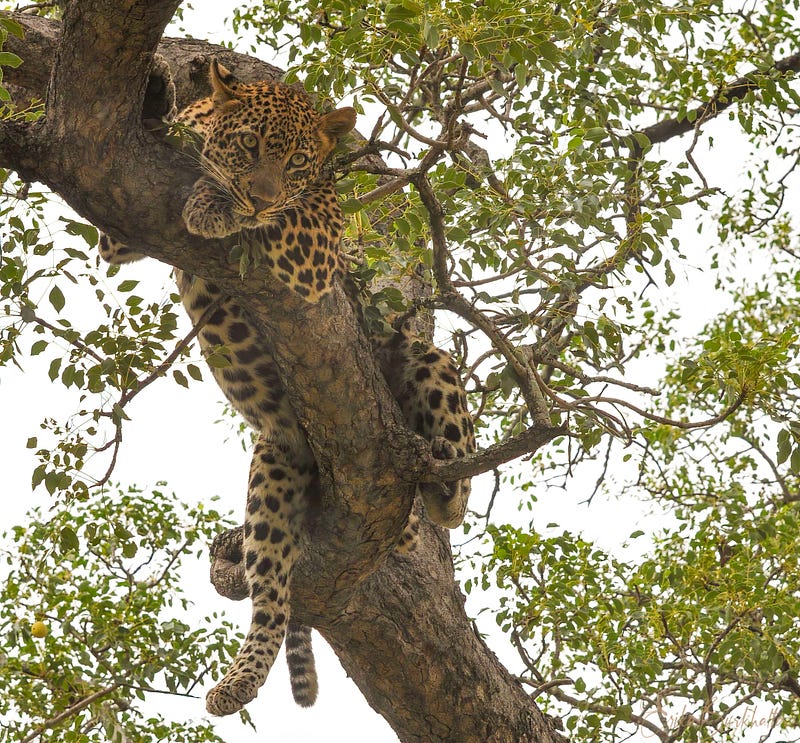
That Moment When We Found Ourselves Staring Into the Eyes of a Leopard Perched on a Branch Just Over Our Heads
To peer into the eyes of a leopard is to peer into the possibility of death and also into the complete interconnectedness of life
Aware — so aware of our every move, of the scent of our fear mingled with the tension of excitement, of our utter lack of cognizance of the dangers lurking in the dappled sunlight.
These were my first impressions of the leopard.
Languid as mottled water where it lays slow and warm in the bend of the river, the leopard lazed across the branch, limbs dangling into the air above our heads. Although motionless, she was far from asleep.
To peer into the eyes of a leopard is to peer into the possibility of death.
And yet, I had not heard any “alarm calls” from either the birds, or the impala or kudus, the leopards’ traditional prey, to alert either us or any other animals of the danger of her presence.
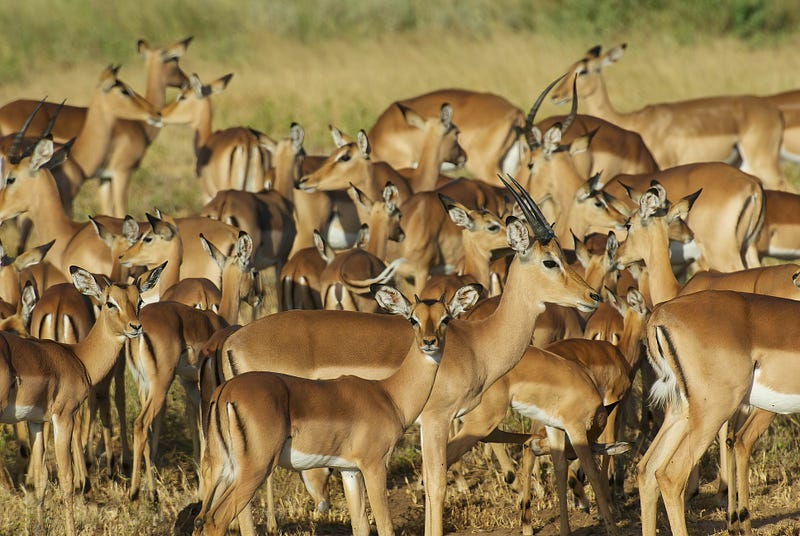
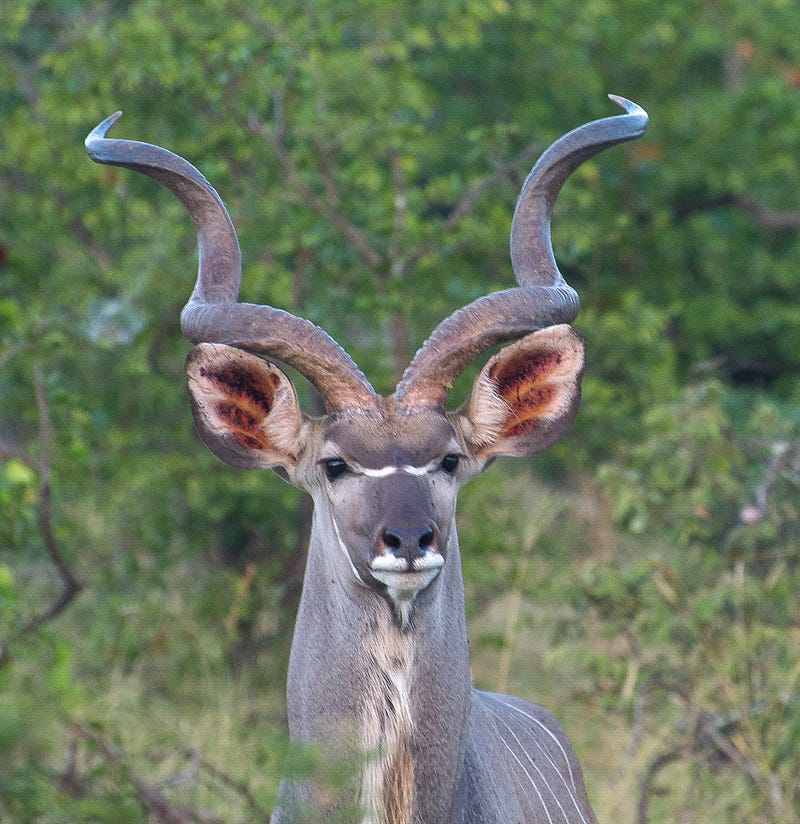
The creatures of the savanna knew that this leopard had just eaten. After the afternoon’s impala kill, a ferocious battle between her and a hyena, a predator who loves to scavenge for meals by stealing the spoils of other animals, had ensued.
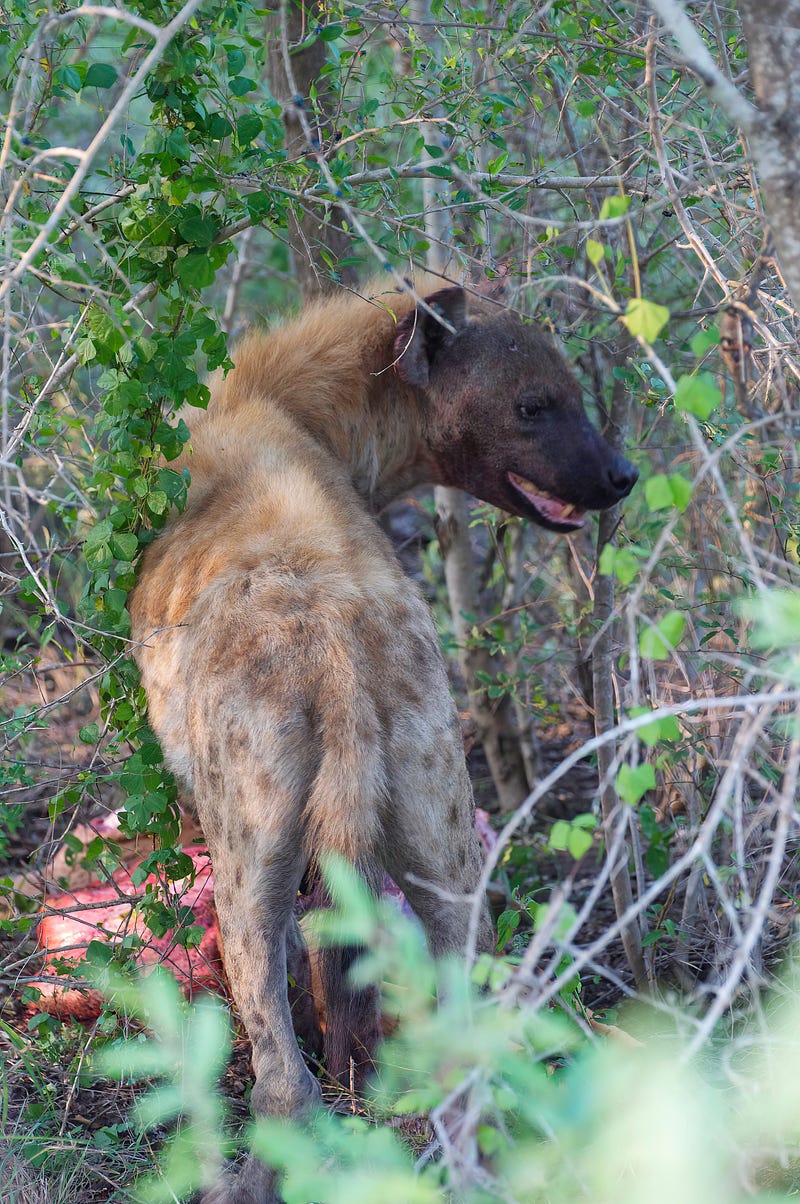
But this leopard had been victorious. She’d dragged the carcass up into the fork of a tree, where she had feasted until she’d had her fill. She would not need to kill again for several days. But she would watch over her meal, eating at her leisure from the safety of the leafy canopy.
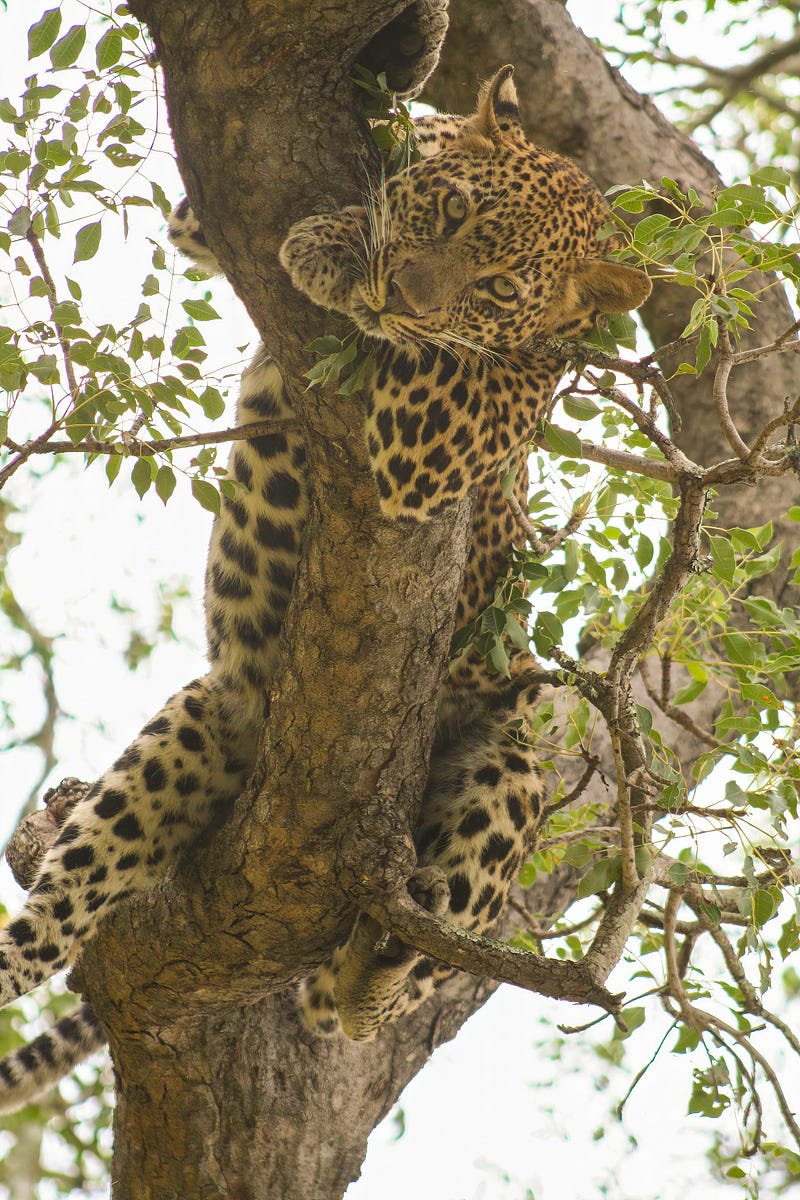
But that did not stop her ears from twitching or her whiskers from pulling back against her cheeks as she perused us, a jeep full of tourists on photo safari in a private reserve just outside of Kruger National Park.
Our guide and tracker, both locals who lived and breathed the nuances of the savanna, would not have brought us so close if they had not seen her make the kill that morning.
They pulled the jeep up just beneath her, and I could actually see her nostrils flaring with the scent of us.
To see a leopard in the wild had been a dream of mine since childhood. A swirl of half-terror (surely the guides would not bring us so close if it wasn’t safe) mingling with utter fascination, churned through my belly. A frisson of total awareness of the moment shot through me.
I fumbled with my camera, torn between capturing the moment with a photo and just “being” a part of the web of life for a few breaths. I ended up snapping a couple of pictures then put the camera down.
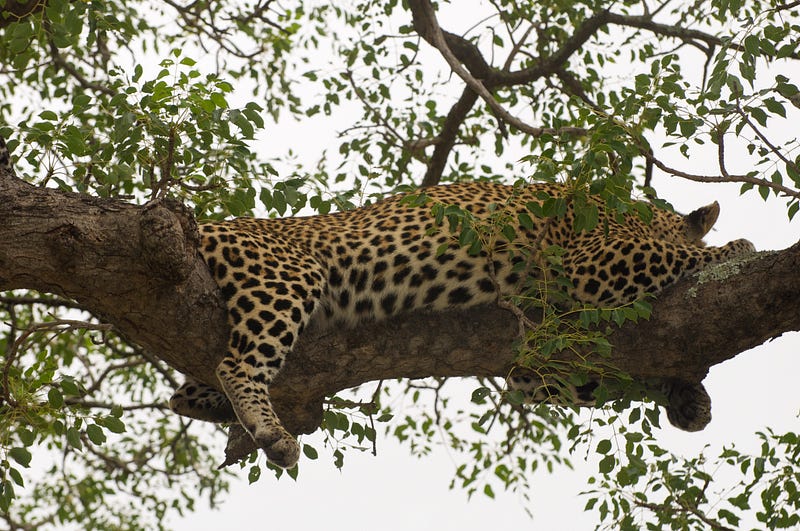
We drove underneath her, and she appeared to ignore us. But I knew she’d be alert in a heartbeat if she needed to be.
Back at the lodge my husband and I marked the little “game cards” we’d been given with “leopard.” We didn’t know if we’d be lucky enough to see another one on this trip. But we’d seen one. And that was enough.
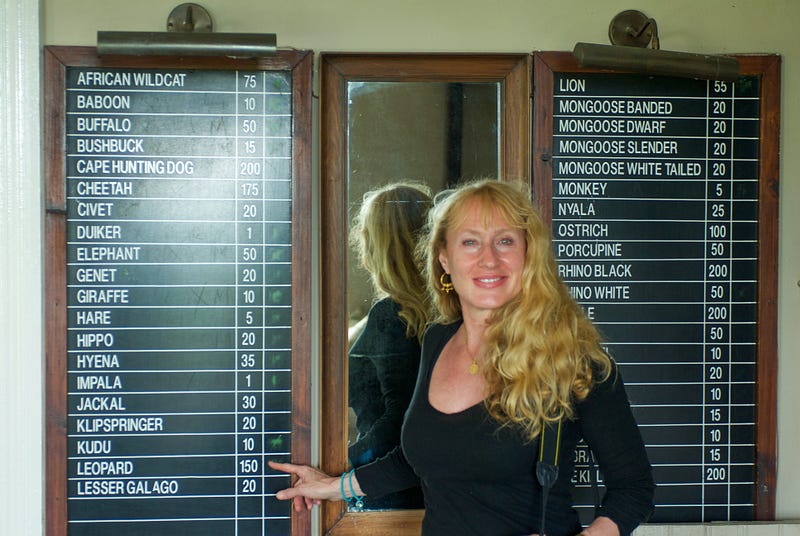
The next morning, we rose before dawn, were handed blankets to wrap around ourselves in the early morning chill, and climbed aboard another jeep.
Our guides were good. They knew the animals and their habits.
The jeep jolted to a halt. And right there, at the waters’ edge, another leopard lapped at the cool water.
We’d been told to never get out of the jeep, to keep our arms and legs inside, and to act as one unit. The animals saw us this way. If they picked out an individual amongst the group, they might go on “the hunt.”
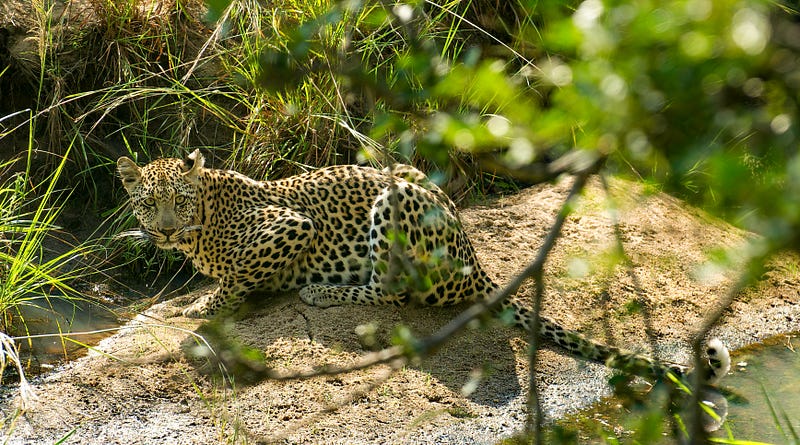
I swiveled in the back seat, trying to stay silent but to also keep my eyes on her.
She spotted us.
Padding on paws that make my house cats’ feet seem like tiny kittens,’ she ambled right up to the jeep.
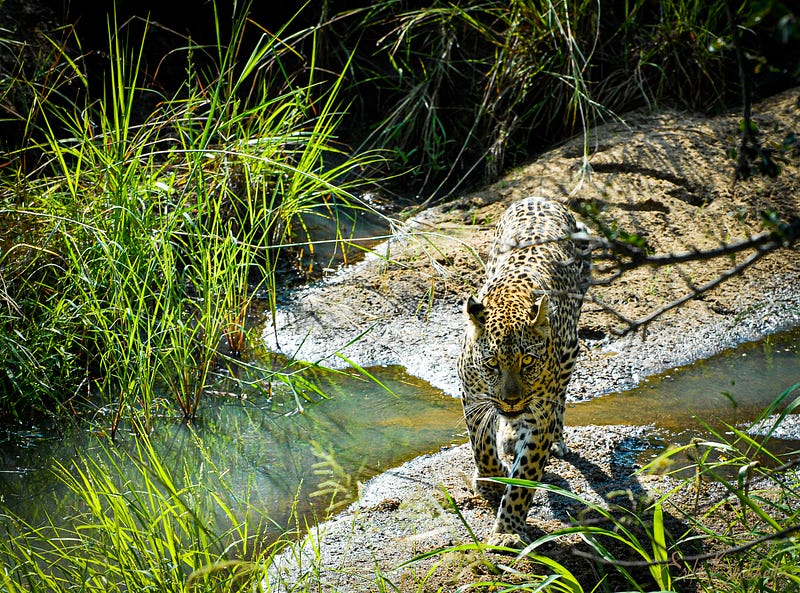
She kept coming, making direct eye contact with us the whole time.
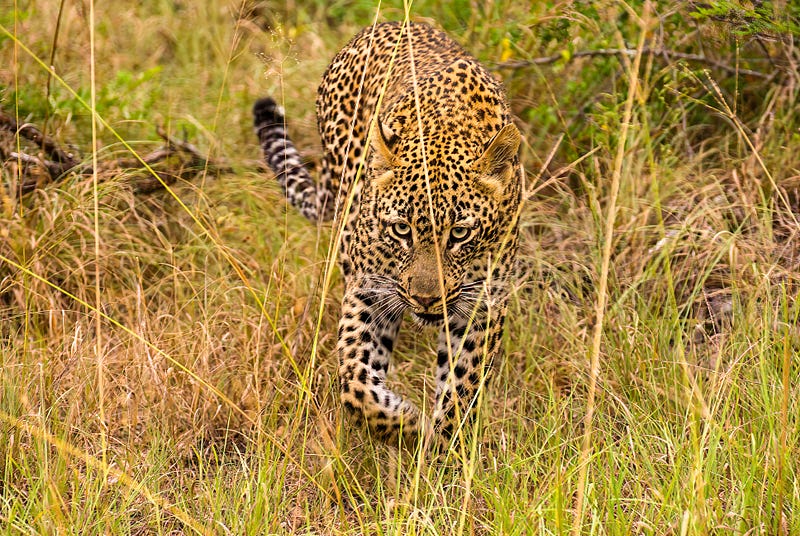
She passed right underneath the back of the jeep. I could have reached out and touched her. I hardly dared to breathe.
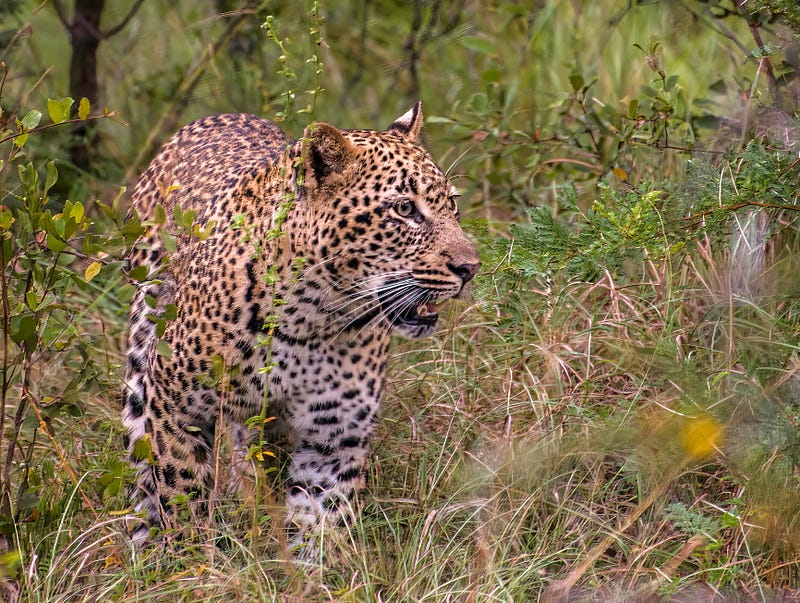
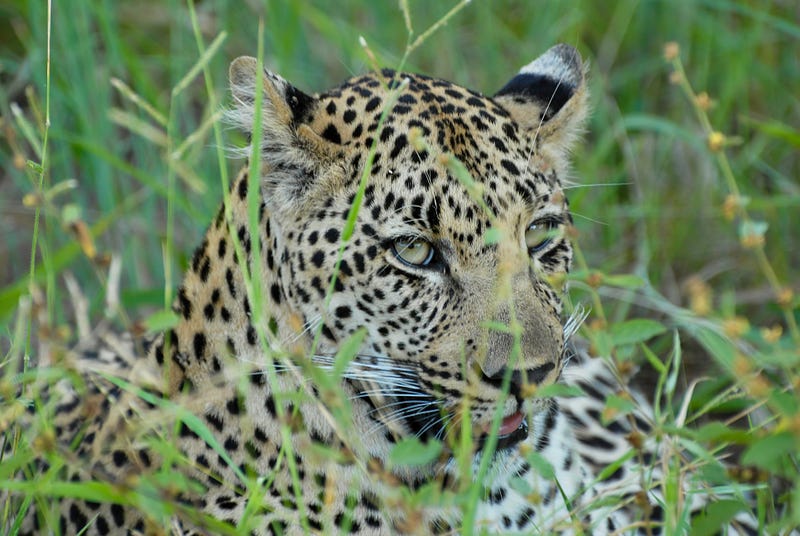
She strolled past and sat down in the grasses right beside us. Then, just like one of my house cats, she began to clean herself, using a giant paw to swipe across her face.
The last morning of our safari we headed out in the hush of dawn with one goal in mind. The guides knew that there was a mother with a six-week-old baby kitten.
They’d all been keeping an eye on her. But she moved that baby around to a new position of safety each day.
Frustrated, we sped around on the dusty roads, not seeing much of anything at all. It had rained the night before and things were a bit quiet on the savanna.
And then we saw her.
She strode out of the grasses — a female on a mission.
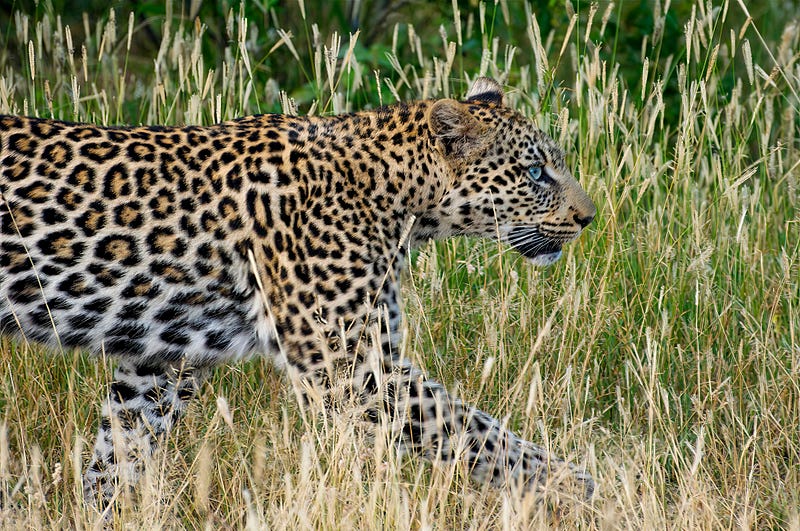
She knew exactly where she was going. And we, very quietly, and from a bit of a distance so that we wouldn't bother her too much, followed her.
My heart was racing. Were we going to see the kitten?
And then, there it was. It was so young that its eyes were still blue.
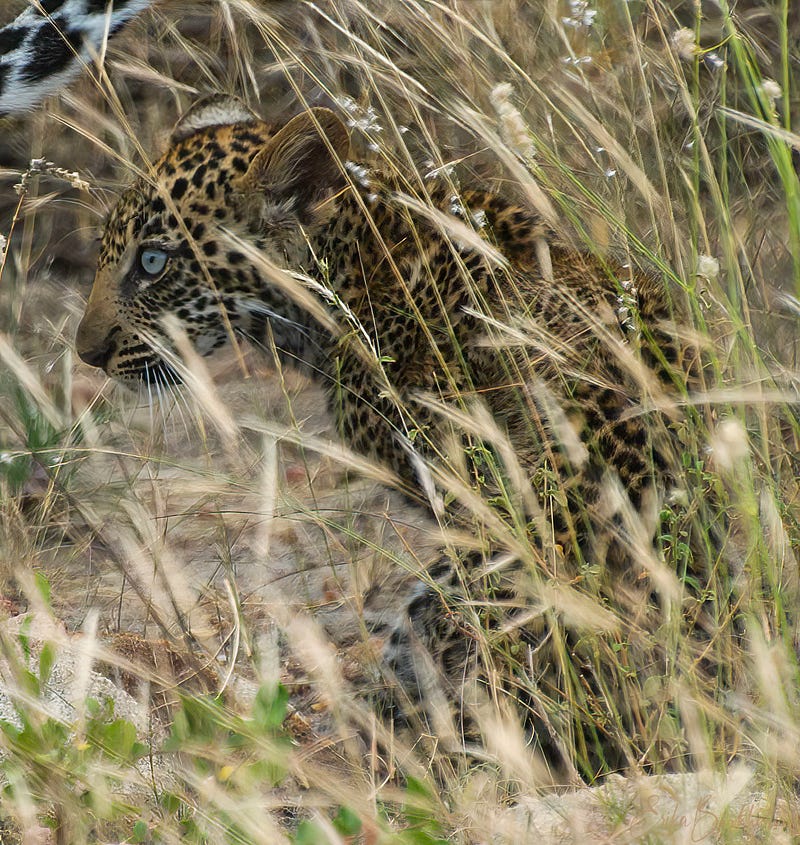
The proud mamma seemed to almost pose with her baby amongst the grasses.
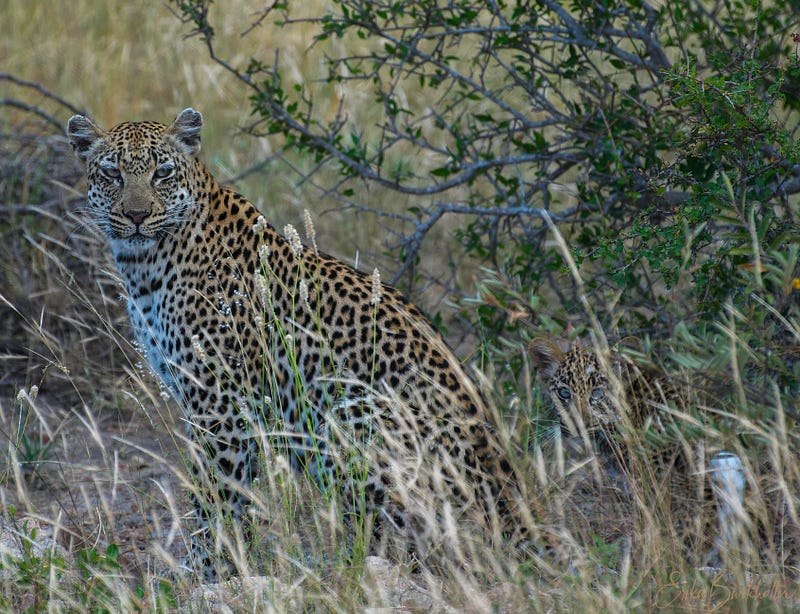
Spell-bound, we watched them for about ten minutes or so. Just like any good kitty mommy, she gave him a very thorough bath.
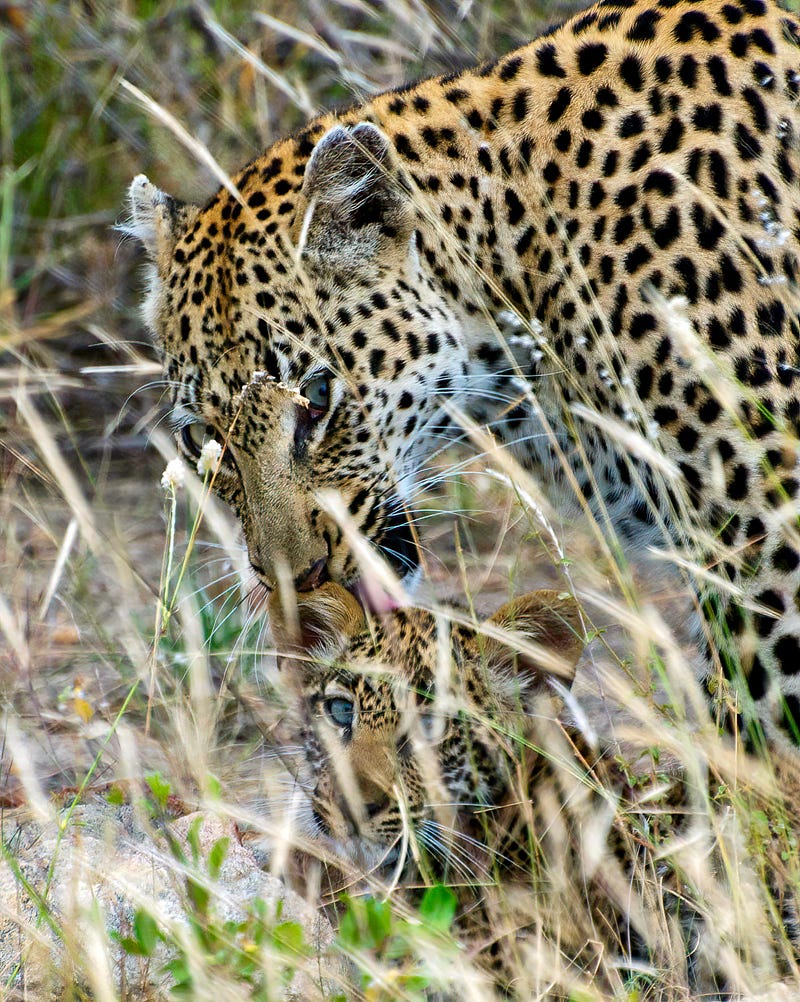
We didn’t want to disturb her too much. So, after a few minutes, we backed away and made our way back to the lodge. We didn’t even attempt to look for any other animals. This had been the pinnacle of the trip.
At the end of my days, I think that I will look back and remember these moments as being some of the defining moments of my life. To see a wild creature in its natural habitat is to catch a glimpse of the universe in its full glory.
It’s an “eat-or-be-eaten” world out on the savanna. It’s a world of intense beauty, of spell-binding agony, and an irrefutable display of the complete interconnectedness of all of life.
My favorite poet, Mary Oliver, once said:
“I would say that there exists a thousand unbreakable links between each of us and everything else, and that our dignity and our chances are one. The farthest star and the mud at our feet are a family; and there is no decency or sense in honoring one thing, or a few things, and then closing the list. The pine tree, the leopard, the Platte River, and ourselves-we are at risk together, or we are on our way to a sustainable world together, we are each other’s destiny.”
Erika Burkhalter is a yogi, neurophilosopher, cat-mom, photographer, and lover of travel and nature, spreading her love and amazement for Mother Earth’s glories, one photo, poem or story at a time. (MS Neuropsychology, MA Yoga Studies).
Thank you to the editors at Globetrotters (JoAnn Ryan, Anne Bonfert, Jillian Amatt — Artistic Voyages, Adrienne Beaumont, Michele Maize) for this month’s challenge — Wildlife:
September Monthly Challenge — Wildlife
What animals have you encountered on your travels?
medium.com
I also really enjoyed Ronald Smit’s story. He also saw a leopard:
And Arun’s birding story:
If you enjoyed this piece, you might consider subscribing to my stories. You’ll get an alert whenever a story gets published.
Photos and story ©Erika Burkhalter. All rights reserved.


