
Thanksgiving 2020
The beginning of healing, peace, and hope
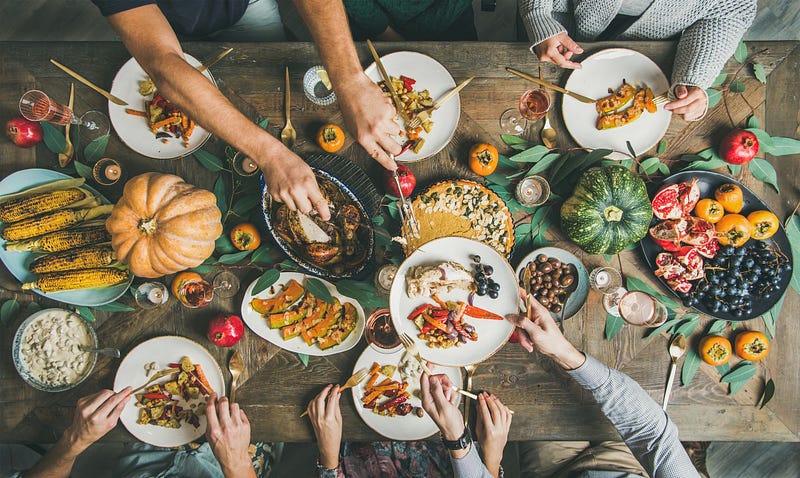
Thanksgiving has always had a special place in my heart. My grandmother always made a big Southern to-do out of it, and when November rolls around, I can still feel the childish excitement building up inside just like it did way back then. This year, it doesn’t feel as exciting, but I think the tradition still offers healing, peace, and hope for our futures.
What is so special about Thanksgiving?
As a young elementary school student, I learned that the Mayflower Pilgrims left England for religious freedom and eventually headed for the Jamestown settlement in Virginia. Unfortunately, they were blown off course and landed in what we know now as Plymouth, Massachusetts.
They found themselves in a strange land knowing that whatever rations were left from their ocean voyage would not get them through the winter. They didn’t know how to survive in this new place that was supposed to offer hope.
As the story goes, out of 102, all but 51 of those original Pilgrims died that winter. They were so afraid of the Natives knowing that their numbers were dwindling, they snuck out at night to bury their dead. The Natives weren’t too excited about the Pilgrim's presence either.
The beauty of the story is in the peace agreement between the two groups. The Natives eventually came, introduced themselves, and saw the devastation the Pilgrims were experiencing. The following Spring, they taught the Pilgrims how to grow crops and survive in the new world. From this place of sharing knowledge and working side by side, they were able to form a peace treaty. According to history.com, this peace agreement lasted for more than 50 years.
It was the best of times, it was the worst of times. ~ Dickens
The year 1620 was a devastating year for the Pilgrims in Plymouth. Similarly, the year 2020 will go down in history as a harsh year of political unrest, sickness, and the loss of many loved ones. While the risk and loss of those in Plymouth far outweigh ours today, it doesn’t diminish our pain. We can, however, be conscious of the healing that came with peace between the two groups of people.
The Mayflower Pilgrims and the Native People of Plymouth, Massachusetts showed us that people, even people who are afraid of each other, different races, different cultures, different religious beliefs, and totally different political backgrounds can come together in peace.
Gratitude, laying a foundation for peace
The first harvest after that devastating winter brought the Native People and Mayflower Pilgrims together for a great feast that has come to be known as Thanksgiving Day in the US.
Feasting is a celebration of life. It is an intentional act of gratitude for food, health, friends, and family. When we share a meal together, it is very intimate because we are sustaining life together.
Gratitude unlocks the fullness of life. It turns what we have into enough, and more. It turns denial into acceptance, chaos to order, confusion to clarity. It can turn a meal into a feast, a house into a home, a stranger into a friend. ~Melodie Beattie
Grandma’s Table
My grandmother was known for her down-home Southern cooking, and people loved to come over for her fried chicken, biscuits and gravy, or chicken and dumplings.
While the food was always looked forward to, Thanksgiving was about more than filling our bellies. It was a day that she invited all the family and many friends in the community who had nowhere else to go over for a good meal.
Now, while it may appear that she was an affluent woman, she wasn’t. She and my grandpa started their married life as sharecroppers and ended it making about six dollars per hour in a factory.
Their house was probably less than 800 square feet, but that never stopped her from feeding as many people as she could. She would open the door from the kitchen that led to a screened-in porch, throw a table cloth on the deep freeze, as she called it, and sit the children there. Chairs would be placed under the big Chinese Maple tree out back of her house, and guests would gather there as well.
There was never a shortage of food, kindness, or generosity, and I still get excited about it. It was her willingness to share and bring people together to celebrate that made the day so special. She knew she couldn’t change the world, but for one day, she changed the world for many people.
She didn’t care if you were a Democrat or a Republican, although she was fond of telling everyone in an indignant way that “she remembered Hoover”. No matter where you might land on the rainbow of human experience — you were welcome at her table.
We all want to be happy. We all want to avoid suffering. It is in this way that we are all the same. ~ The Dalai Lama
There is a lot of complexity and nuance to the Pilgrim story, but it is this Thanksgiving snapshot that models what is right in the world. This is what we can learn from, hold on to, and aspire to. The story of Thanksgiving is impactful because it is an ideal that we still hope for. The ideal is as relevant today as it was then, and perhaps more so.
Once you choose hope, anything is possible. ~ Christopher Reeve
This year, all around the world, there is a pandemic, quarantine, self-imposed isolation, and physical distancing keeping us at least six feet apart. For most, the Thanksgiving table is a metaphorical one this year.
Gather Together
While it isn’t safe for most of us to come together physically this year, we can reach out to family, friends, and neighbors through new-fangled technology and old-fashioned cards and letters. We can offer what the Thanksgiving table offers, peace and sustenance for the soul.
We can invite conversation necessary to grow a community, relationships, and hope. The metaphorical Thanksgiving table is like a mind that is open to finding common ground, agreeing to disagree, and listening to really hear and understand.
We can be like Grandma, willing to share food, kindness, and generosity. Perhaps, for many, this will be the beginning of healing, peace, and hope.


