
Thank You, Mom
The words I wish I could say to her face to face
Dear Mom,
Since the day you left this world, I have whispered, journaled, and prayed these words to you. I now send these words out into the universe.
My Words
Please tell me you’re okay. Tell me you’re at peace wherever you are. Where are you? I can’t do this without you.
You were my best friend, my protector, my confidant. I’m sorry I wasn’t a better daughter.
Since I can remember, you told me stories about grandma. I barely knew the “real” her, before she was in a nursing home for nearly a decade.
Whenever we would hear a mourning dove coo in the neighborhood, you said, “When you hear a mourning dove cry, Grandma said rain was coming.” I didn’t care about a bird or rain. I’m sorry for not caring sometimes.
Remember when grandma died, you were upset because she hadn’t sent a sign. Then one day, you looked at the clock when it read 9:14. You yelled, “I got a sign from her! 914 was my street number.”
I rolled my teenage eyes in response. I’m sorry I didn’t understand the pain of losing your mother.
Will you send me a sign? Show up in my dreams? I’m sorry I didn’t say, “I love you,” the last time we were together.
Alex was fussy that morning. After getting us all home, I realized I forgot the words we always say when we part. I’m sorry I emailed them to you and didn’t pick up the phone until it was too late.
Having two boys 18 months apart was more than I could handle. Or so I thought. Thank you for emailing me later that day, telling me you thought I was a good mom. You said you were proud of me. I reread the email from time to time. I’m sorry I wasn’t with you when you passed like we were with grandma.
I will never forget the day grandma passed. I was in 8th grade and she was slowly slipping away from us. I didn’t understand what DNR meant or how important the moment was until it was upon us.
She went from a medically induced coma to an awake person for a few minutes. Her eyes were like saucers looking through you, as you leaned over her asking if she needed something. She smiled. As the line on the monitor went flat, no one in the room spoke.
I walked over to the only window in the room, looked up at the blue sky, imagining her floating to her heaven. To her mother and father. And the husband she lost forty years prior. It was her time.
I’m sorry I wasn’t ready for you to go.
I wish you could see the boys now. You left them when they were 3 and 1–1/2 years old.
Sean remembers me crying that day when we found you. You two had the most special bond. Remember when we would come to visit you? I loved watching him race off the elevator into your arms.
You would let him take all your pots and pans out of the lower cabinets and line them up in the living room. “He’s going to be an engineer. He likes to line things up,” you said. I’m sorry I didn’t take a picture of them with you on that last day.
I waited months to see a sign. I whispered in my sleep, “Mom, please visit me. I need to know you’re okay.”
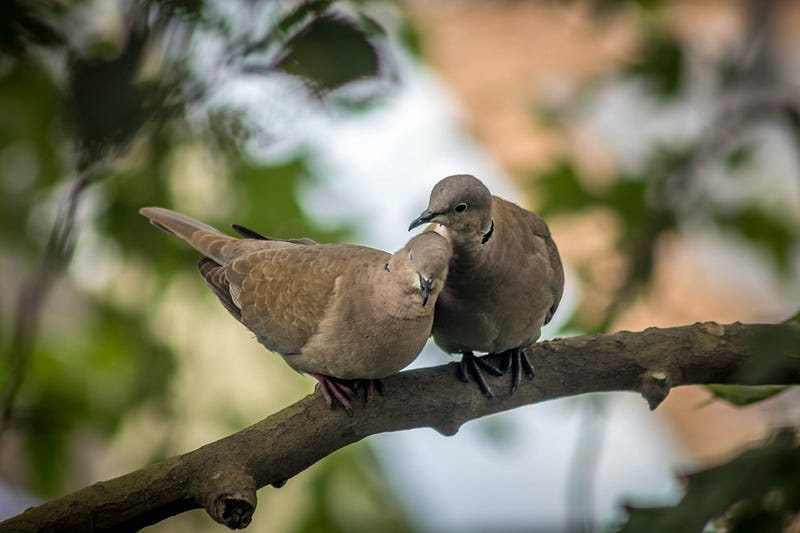
The spring after your passing, a strange bird landed on our deck. I didn’t recognize it. Was it a pigeon? Then the coo. That sound from my childhood. I had never seen a mourning dove after all those years of hearing them in the city.
Mom, thank you for sending me a sign. I love you.
Love,
Me.
Our death is not an end if we can live on in our children and the younger generation. For they are us; our bodies are only wilted leaves on the tree of life. — Albert Einstein
Thank you
Thank you Trista Signe Ainsworth for giving my words space here at Thank You Notes.
And thank you to those who read my words. It feels freeing to lift my journaled thoughts and whispers out into the world.


