
Thank You for Letting Me Know I Have Breasts
And for how I should feel about them. I may have never known if you hadn’t noticed
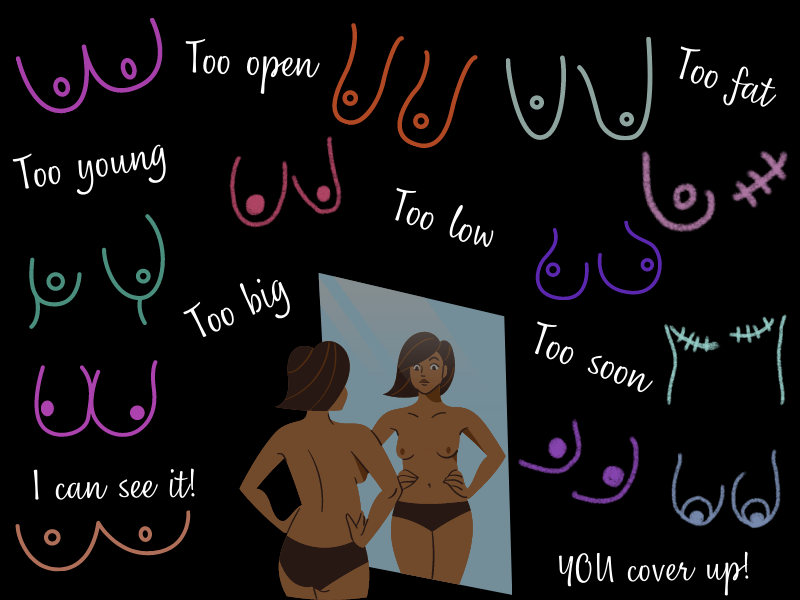
The first time I was made aware of my growing chest, I was ten.
It was a hot summer day, the kind of dry desert heat that makes soft cotton clothing feel like sandpaper. I walked into my home, uniform sticking to my chubby body, right into a mom-group gossip session.
“Did you see? L’s daughter R has big, big breasts now?”
“Whaaaa..? Really? Already? She’s only twelve, no?
“Yeaaaa. L should tell her to wear a brassiere. It looks so bad, no?”
I dutifully removed my socks and shoes, took a bottle of cold water from the fridge, and almost made it to my room, when one of the aunties said —
“Oh Preeti, you’re also becoming big now! Look at your chest!”
And I did. I looked down but I didn’t get it.
While they giggled, ignored me, and continued to chatter among themselves, I stood there wondering what they were talking about. These little mounds? But D — my sister — has them too. So what?
Later that evening, my mother came to me with a half-embarrassed, half-desperate request to wear an inner slip to school the next day; a temporary flattening measure until we could go to the store over the weekend to buy a teenage bra.
And I did that too. Only now, I was conscious of my body — of something being wrong with it because it grew “too soon” — and couldn’t help comparing myself with other girls my age.
What was wrong with me? Why did I have to be the one who matured early? Why couldn’t I remain flat-chested longer?
“Preeti — low neck. D — wide neck. J — low neck. M — short sleeve. Are you writing it down correctly?”
“Yes, yes, I am. Keep going!”
“S — very low neck. Ok, finished. All of you come out!”
It was our day for bad luck: The Squad had arrived in our classroom. And they were catching us rogue students who flouted the rules.
The rules in question — which were set to prevent college-going teenagers from being attracted to each other — were related to students’ attire: For girls: Salwar kameez with the dupatta (sash) covering the chest and pinned on either side. For boys: No tight pants or very short-sleeved shirts.
The Squad — a management-appointed group of idiots — would come around to every class on a surprise visit, lift our dupattas or make the boys stand up to observe our exposed-to-imagination-only body parts.
If the neckline was deep, we would be called out to meet the Dean and potentially be suspended, unless we ask for forgiveness.
“I’m sorry I have breasts behind this dupatta, behind this kurta, behind my bra, which you can’t really see unless you stare down my 7” deep neckline. Can you forgive me for your perverted imagination?”
While the boys laughed and made mental notes of which girls to watch out for, I stood there, partially mortified but mostly disgusted by this display of stupidity, thinking —
I didn’t do anything wrong, then why did this happen to me? Why couldn't I have been a boob-less boy instead?
And it kept happening.
There was the full-palmed cupping on the bus, the casual brush-and-go in the market, the pinching, the eve-teasing, the lewd glances and gestures, the innuendos by well-wishers, the covert fondling — taken advantage of — episodes by friends…it kept happening.
No visible cleavage, no push-up bra-induced ballooning bosoms, no peekaboo nipples. Just a person with under(the)cover breasts that drew attention by existing as a part of my anatomy.
It kept happening, even after I transitioned from conical bras to t-shirt bras to hide the pointiness. And it happened again, when I exercised them away.
It simply wouldn’t stop happening. It wasn’t about me, it was about them. Why did they keep doing this? Why did they hold breasts hostage in their disgusting minds and treat them as objects of pleasure only?
Then there were the girls.
My well-meaning, well-intentioned, innocent women friends who constantly engaged in body-image-related discussions.
Them: “You’re so lucky you’re tall, Preeti! Your boobs are proportional to your body.”
Me: “C’mon man, it’s not like that, I’m fat…”
Them: “Noooo! Do you see mine? One is SO much bigger than the other.” or “Please, take heart! I’m a double G in a 5 foot frame.” or “Ugh, my boobs are so tiny. What are these, mustard seeds?”
They were right. It seemed — to them, not me — that they had larger issues than I did. I am 5'8" and have always been overweight, but my weight was pretty evenly distributed. While I couldn’t ignore my breasts, too big or too small were not problems I had.
Society-bred appearance standards topped the list of why size did matter, followed by expectations of potential suitors (they like ’em big, they like ’em tiny, who cares what we like?), and physical discomfort figured somewhere way lower on the list.
Dialogue after dialogue of self-deprecating remarks, anxieties, and insecurities, years spent wanting what she has and wishing we could just walk around uninhibited. Without boobs being the focus for those with it.
But here we are now: In a braless, post-pandemic world where women are rejoicing boob freedom from within the safe confines of their home. Drawing attention of a different kind.
My breasts are bigger than ever, but I don’t care about nipple peaks or cleavage alerts anymore. I can’t deal with hooks or straps digging through my skin and choose soft, barely-there materials instead. They make my girls droop and sag, yes, but I care only about comfort. If the looks of it bother anyone else, they can look away.
It isn’t to say I’m comfortable with their current size — I have many morning moments standing in front of the mirror, pulling my breasts up from where they rest on my belly, holding them and hoping my will is the anchor they need to hang in place.
This time it’s all me: my own eyes are the ones scanning windows on my walks for a glimpse of my breasts, judging them yet enjoying the free-spirited bounce as I walk. While most of my friends are mothers (I’m not) and talk in length about how their boobs have changed after pregnancy, mine are just plain big.
I’ve even suggested cosmetic surgery as an idea to my partner, in the vain hope that he will dissuade me because I’m perfect as I am. And he delivers each time, but the niggling thought won’t go away: Is it worth the pain? Should I do it? Do I care? SHOULD I care?
I’m more aware of my breasts and my feelings around them than I have ever been. So yes, despite everything I’ve experienced at the hands of others, I’m weirdly thankful to those who made me sit up and notice my own body over the years.
And I’m most thankful to myself, for providing the space to build acceptance. Together we’ll get there.
Preeti Ramachandran writes personal stories about her wonderful life and extremely normal mental health. She believes she is funny, tags her articles with “Humor” and also dabbles in fiction. P.S: She finds it weird to refer to herself in the 3rd person.
Want more Breast Stories. Follow Breast Stories