Thank God for Women’s Studies!
An essay on how a feminist theologian’s class changed my life.
Hello there, I’m Judson Hurd. I’m currently in my mid 30’s living in Wilmington, NC, as a musician/composer, piano teacher, and writer. Recently I came across a tweet by local UNCW professor Mike Adams, and it made me contemplate some of my academic past at the University of North Carolina at Greensboro (UNCG). The screenshot below is of the tweet, which says, “Don’t shut down the universities. Shut down the non-essential majors. Like Women’s Studies.”
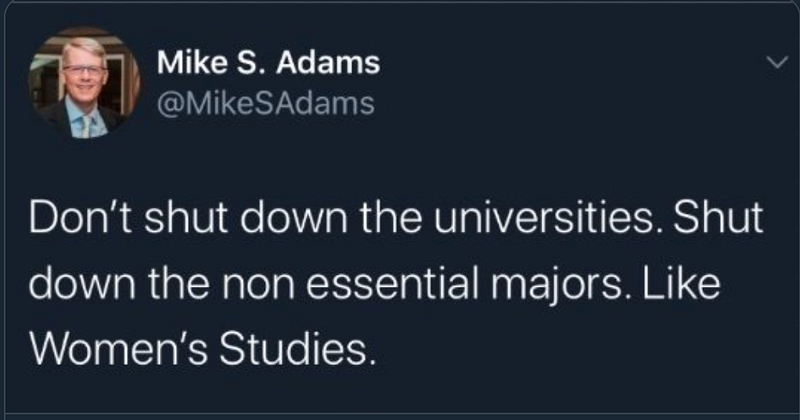
Full disclosure: I do not know Mike Adams, and I have not taken any of his criminology classes. My goal in this article is to show how these classes he wants to delete have shaped my character, thinking skills, empathy toward people, and how they are essential for making well rounded human beings.
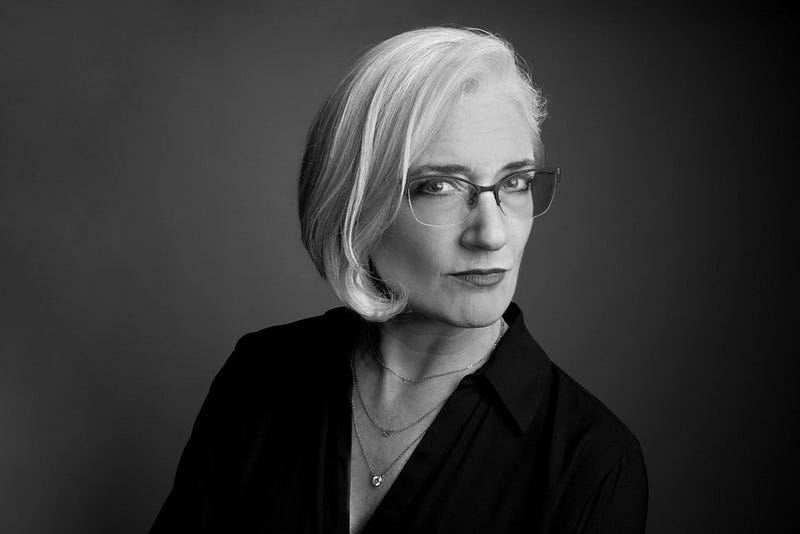
At the beginning of my college career, I was a music studies major, I took a break from school, toured with a band for a couple of years, and then ended up going back to school. I chose Religious Studies for my BA. At that point, I was still a part-time musician, and I was interested in expanding my knowledge of Religious Studies, especially in the areas of Church history and Judaism. I also took some Women’s Studies classes at UNCG; thus, I knew who Susan B Anthony was and had read about the women’s suffrage movement. The first religious studies class that I had with this kind of an angle was REL 310: Feminist Interpretation of the Bible, with Dr. Jennifer Bird. This class changed my life.
CHARACTER
Some of my first thoughts in the class were, “Feminist critique of the Bible? But why?” and, “I’ve never read any work by a feminist theologian before.” As the course progressed, my questions were, “Why haven’t I read more work by women theologians?” Dr. Bird was challenging the ‘status quo’ of the students’ thinking. However, she did it in a way that showed empathy and understanding (even to students that were upset or didn’t take the class seriously). She taught respect for other opinions and views without backing down. I want to say that in this class, I learned much that would shape my character.
THINKING SKILLS
I grew up as an Independent Baptist missionary kid in Paraguay for most of my childhood, until I was 15 years old. A lot of you are probably thinking, what the heck is an Independent Baptist? When I asked my mother this question, her response was, “Judson, Southern Baptists believe in dancing. We don’t believe in dancing.” As a young child, I expected a long answer explaining theological differences but instead got a reply that Southern Baptists were fans of John Travolta’s sweet dance moves.
My experience at UNCG was challenging at first, not only because I was fully supporting myself, working a full-time third shift job while carrying a full-time course load. But also because I was coming from a background of homeschooling, and a failed attempted semester at fundamentalist Christian school Bob Jones University. Getting used to being around other students who had different viewpoints that I had never come across was very helpful in building critical thinking skills.
Classes, like I had with Dr. Jennifer Bird, were essential in developing my thinking skills. Growing up in the church, the only time I encountered different opinions was when I read the books that I was supposedly not allowed to read. In this course, we were continually facing ideas and perspectives.
We examined texts from the Hebrew Bible, such as the story of the prophet Hosea who married a ‘harlot’ Gomer. I had been taught to see the command God gave to Hosea as a fitting way to send a message to Israel.
From a feminist theologian’s perspective, there was much to unpack from this story to the shaming of women like the prophet’s wife Gomer by stripping them naked in public for being a ‘harlot.’ These actions would not be acceptable in modern society, even if it were from God’s voice.
This lesson was crucial in uncovering a prevalent patriarchal culture in the way I was taught specific passages growing up. These exercises have encouraged me always to be questioning information and to use different lenses to discover new truths and meanings are crucial for developing critical thinking skills, regardless of what major the student has.
EMPATHY
As the years have passed, I’ve changed into a different person, and I’d like to think in large part because I have been open to receiving new information and respecting others’ experiences. My views on systematic oppression, social justice, misogyny, and other issues have changed. This change has happened due to classes that involved literature, art, film, philosophy, women and gender studies, and religion.
One quote from Dr. Bird’s class will stay with me for the rest of my life. I remember her saying that it was vital that we incorporate beliefs that are ‘life-giving instead of life taking.’ I’ve never forgotten this quote, and it’s helped me develop empathy toward the oppressed and minorities, and to speak up when there is injustice. I still have a ways to go on speaking out and doing my part, and these conversations are essential in our classrooms to help people like me grow in empathy.
Of course, science, math, and other STEM-related courses are essential in a student’s learning. What women’s studies courses helped me to see is how many parts of our lives have been defined and shaped by male (and often white) perspectives. The best way to expand those narrowly defined views on the world is to hear from non-male (and non-white) people.
CONCLUSION
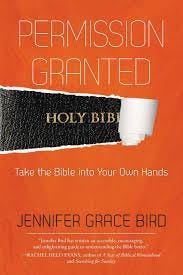
I hope this article has brought you a different lens, and I highly recommend that you check out the work of Dr. Jennifer Bird, who was gracious enough to give me feedback for this piece. What are some experiences you’ve had in Women and Gender study classes? I would love to hear them in the comments below!
Did you enjoy this story? Please consider subscribing to Medium with my affiliate link! Your membership fee directly supports me and other writers you read. You’ll also get full access to every story on Medium. Thanks for your support!