frame class="" src="https://cdn.embedly.com/widgets/media.html?type=text%2Fhtml&key=a19fcc184b9711e1b4764040d3dc5c07&schema=twitter&url=https%3A//twitter.com/AlexBlechman/status/1457842724128833538%3Fs%3D20&image=" allowfullscreen="" frameborder="0" height="281" width="500">
</div>
</div>
</figure></iframe></div></div></figure><p id="2003">Alright, yes. This is another flipping article about AI. But consider: why exactly has the world reacted so allergically to generative AI technology like ChatGPT and stable diffusion? For the most part, most people just roll over and accept new technology when it arises. From browser cookies to short-form video content, tech that has the potential to do serious harm is often embraced uncritically by all save for a skeptical few.</p><p id="b102">But generative AI tools have not been received like this. Over a year since ChatGPT’s release, it still seems like a new story, new hot take, or new scandal drops and adds further fuel to the inferno of AI discourse. Many people see the immediate risks that artificial intelligence poses to their livelihood, and many more see the more general risk that AI poses to the public. New tech always raises questions and arguments — gene editing and cryptocurrency come to mind — but it’s hard to remember the last time tech figures like <a href="https://medium.com/@ignacio.de.gregorio.noblejas/elon-musk-wants-to-pause-gpt-5-a81421c5bcbf">Elon Musk issued demands for researchers to pump the breaks</a> on new and potentially profitable technology.</p><p id="c0e2">So why all the tension over AI as opposed to so many other innovations? It seems clear: science fiction has explored AI more than perhaps any other speculative idea.</p><figure id="96aa"><img src="https://cdn-images-1.readmedium.com/v2/resize:fit:800/0*wGFklOxaxGSaqkQ8"><figcaption>The idea of an AI that can act like a person is hardly new. Clarke and Kubrick were just a bit off with their timeline prediction. Image: MGM Studios</figcaption></figure><p id="3677">To borrow a phrase from Tom Scott, authors of speculative science fiction are in the business of imagining futures; not <i>the</i> future, but a set of possible futures. They look at the general direction that the social order is progressing, both in terms of technological innovation and social values, and they try to imagine a future world where some thing, some new invention or idea or system has made a significant impact on the way we live and work. They consider the upsides, but more often than not they highlight what humanity loses.</p><p id="38d1">Throughout the history of the genre, artificial intelligence has been a fascination for
Options
authors. AI is such a broad concept in the realms of computing, linguistics, and robotics that the term can be applied very generally to an abundance of literary devices: androids are AI, as are holodecks and “<a href="https://en.wikipedia.org/wiki/Gray_goo">gray goo</a>”. It’s no wonder why sci-fi has latched onto the idea; it’s incredibly evocative to imagine a person-like being that’s created by humans, but is not human. Authors have been thinking about that basic idea since <i>Frankenstein</i>.</p><p id="37e3">By default, books, movies, and TV frame AI as the enemy. The AI is either not fit to self govern or, more typically, is actively hostile against humanity. This is either expressed as revenge against their creators (as in the anti-robot jihad in <i>Dune</i>) or just the naturally destructive and colonialist nature of machine intelligence (ala the Borg in <i>Star Trek</i>). To say that most authors (with a few notable exceptions) have warned against AI for generations is accurate.</p><p id="cbbc">It’s now 2024. Because of the media landscape’s long history assailing AI, people were ready to think critically about things like ChatGPT. Unlike the iPhone for example, which is difficult to find a concrete analogy for in mainstream 20th century sci-fi, the genre is jam-packed with malicious AI that seeks world domination and human flesh. It was through this lens that people approached AI with skepticism and naturally became more sympathetic with the obvious downsides of generative artificial intelligence.</p><figure id="0221"><img src="https://cdn-images-1.readmedium.com/v2/resize:fit:800/0*TRY2XeC-Z10EM1pe"><figcaption>Science fiction has made many predictions that have come true. But an abstract idea like “surveillance” is harder to identify in the real world than a product explicitly labeled as “AI”. Image: MGM Studios</figcaption></figure><p id="adce">So what can be taken away from this weird anomaly in the ever-more interconnected media/technology sphere? This 1000 word article can’t possibly make any conclusions about the role of AI in the social order. But it can make a few points about sci-fi:</p><p id="a18f">First, to the detractors, science fiction is a beautiful and thought-provoking genre of great importance for scholars and casual readers alike. Some of the most important books ever written were sci-fi, and now more than ever they need to be discussed.</p><p id="4a02">Second, to the writers, keep speculating. Keep imagining the great and the terrible futures that might await our species; for no matter how wild or unrealistic your sci-fi story might seem today, it could become a core literary tool for understanding the world tomorrow.</p></article></body>
Thank God for Science Fiction
How we’ve unknowingly spent our lives preparing for AI discourse
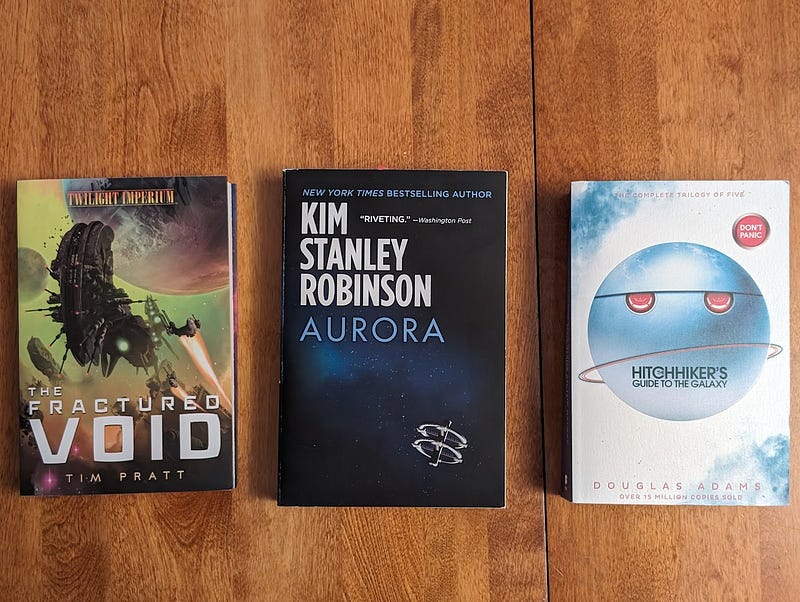
Three excellent books in a profoundly misunderstood genre. Image: Philip Harker
The side of the social internet that discusses books and literature — Goodreads, r/books, and most recently BookTok — has been an incredible and valuable forum for readers and authors alike. But the book community has a long and proud history of casting shade on “genre fiction”. For many self-styled book gurus, there is and has always been a certain kind of fiction that is low-brow and not Real Literature™. Genres such as fantasy, YA romance, and horror are often marketed towards a wide audience; as with many aspects of culture, it’s hip to spit on what the masses enjoy. After all, how could a book full of swords and orcs possibly engage intellectually with an educated reader’s astute and refined mind? (Hint: extremely effectively).
Science fiction is one such genre that is often perceived as less-sophisticated. Sci-fi has always had its detractors, and it’s hard to deny that there’s plenty of junk out there that doesn’t add much to the genre. But there is a unique aspect to science fiction that other genres lack — sci-fi authors have a freedom to explore and speculate on the future.
Certainly authors in other genres speculate all the time. “Speculative fiction” as a concept describes a myriad of categories. But there is something special about science fiction that interfaces directly with the Zeitgeist as it pertains to science and technology. When new tech crests the horizon, the first comparisons that casual observers make is in reference to sci-fi. It happened with the space shuttle, it happened with smartphones, and it’s happening right now with generative artificial intelligence (AI).
Alright, yes. This is another flipping article about AI. But consider: why exactly has the world reacted so allergically to generative AI technology like ChatGPT and stable diffusion? For the most part, most people just roll over and accept new technology when it arises. From browser cookies to short-form video content, tech that has the potential to do serious harm is often embraced uncritically by all save for a skeptical few.
But generative AI tools have not been received like this. Over a year since ChatGPT’s release, it still seems like a new story, new hot take, or new scandal drops and adds further fuel to the inferno of AI discourse. Many people see the immediate risks that artificial intelligence poses to their livelihood, and many more see the more general risk that AI poses to the public. New tech always raises questions and arguments — gene editing and cryptocurrency come to mind — but it’s hard to remember the last time tech figures like Elon Musk issued demands for researchers to pump the breaks on new and potentially profitable technology.
So why all the tension over AI as opposed to so many other innovations? It seems clear: science fiction has explored AI more than perhaps any other speculative idea.
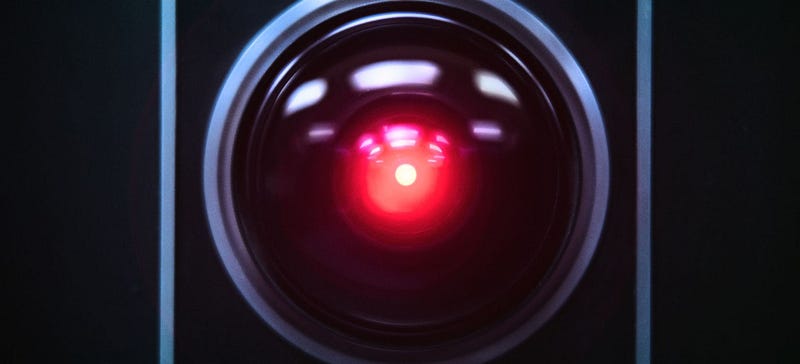
The idea of an AI that can act like a person is hardly new. Clarke and Kubrick were just a bit off with their timeline prediction. Image: MGM Studios
To borrow a phrase from Tom Scott, authors of speculative science fiction are in the business of imagining futures; not the future, but a set of possible futures. They look at the general direction that the social order is progressing, both in terms of technological innovation and social values, and they try to imagine a future world where some thing, some new invention or idea or system has made a significant impact on the way we live and work. They consider the upsides, but more often than not they highlight what humanity loses.
Throughout the history of the genre, artificial intelligence has been a fascination for authors. AI is such a broad concept in the realms of computing, linguistics, and robotics that the term can be applied very generally to an abundance of literary devices: androids are AI, as are holodecks and “gray goo”. It’s no wonder why sci-fi has latched onto the idea; it’s incredibly evocative to imagine a person-like being that’s created by humans, but is not human. Authors have been thinking about that basic idea since Frankenstein.
By default, books, movies, and TV frame AI as the enemy. The AI is either not fit to self govern or, more typically, is actively hostile against humanity. This is either expressed as revenge against their creators (as in the anti-robot jihad in Dune) or just the naturally destructive and colonialist nature of machine intelligence (ala the Borg in Star Trek). To say that most authors (with a few notable exceptions) have warned against AI for generations is accurate.
It’s now 2024. Because of the media landscape’s long history assailing AI, people were ready to think critically about things like ChatGPT. Unlike the iPhone for example, which is difficult to find a concrete analogy for in mainstream 20th century sci-fi, the genre is jam-packed with malicious AI that seeks world domination and human flesh. It was through this lens that people approached AI with skepticism and naturally became more sympathetic with the obvious downsides of generative artificial intelligence.
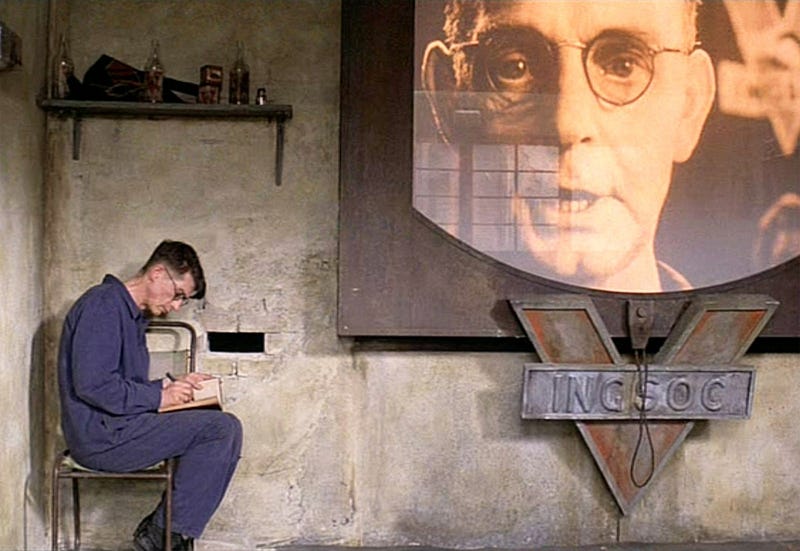
Science fiction has made many predictions that have come true. But an abstract idea like “surveillance” is harder to identify in the real world than a product explicitly labeled as “AI”. Image: MGM Studios
So what can be taken away from this weird anomaly in the ever-more interconnected media/technology sphere? This 1000 word article can’t possibly make any conclusions about the role of AI in the social order. But it can make a few points about sci-fi:
First, to the detractors, science fiction is a beautiful and thought-provoking genre of great importance for scholars and casual readers alike. Some of the most important books ever written were sci-fi, and now more than ever they need to be discussed.
Second, to the writers, keep speculating. Keep imagining the great and the terrible futures that might await our species; for no matter how wild or unrealistic your sci-fi story might seem today, it could become a core literary tool for understanding the world tomorrow.