avatarCathy Chapman, PhD

Free AI web copilot to create summaries, insights and extended knowledge, download it at here

2777

Abstract

a is that race is a social construct, and that racism is not merely the product of individual bias or prejudice, but also something embedded in legal systems and policies. <a href="https://www.edweek.org/leadership/what-is-critical-race-theory-and-why-is-it-under-attack/2021/05"><i>Reference</i></a></p></blockquote><p id="a165"><a href="https://www.nbcnews.com/news/us-news/teaching-critical-race-theory-isn-t-happening-classrooms-teachers-say-n1272945">Before I continue, let’s add some truth. Critical Race Theory is not taught in grades K-12.</a> Really. Yes, it is explored on the college level.</p><p id="dca5">How can someone say racism is “embedded in legal systems and policies?”</p><p id="1cde">You only need to read history to discover racism was always “embedded in legal systems and policies.”</p><p id="9d35">Racism has always been part of the system. Approximately 12.5 million Africans were captured or sold to slave traders and placed on crowded, disease infested ships with as little food as possible.</p><p id="e1de">Of those, 2.2 million people died, about the population of Houston, TX, the fourth largest city in the US. <a href="https://www.pbs.org/wnet/african-americans-many-rivers-to-cross/history/how-many-slaves-landed-in-the-us/">Reference</a></p><p id="a03d">(I’m talking about the systemic racism towards black people. Europeans decimated the Indigenous population from 1492 to 1900 with the killing of 12 million people, the populations of New York City and Los Angeles combined.) <a href="https://www.se.edu/native-american/wp-content/uploads/sites/49/2019/09/A-NAS-2017-Proceedings-Smith.pdf">Reference</a></p><p id="a735">In Article 1, Section 2 of the US Constitution, people who were not free were counted as only 3/5 of a person. I not aware of which part of the person was counted, but they were considered only 3/5 of a person.</p><p id="4ad7">I’d say being named as 3/5 of a person in the Constitution declares racism is embedded in the political and legal system.</p><p id="2197">“Separate but equal” was embedded in the legal and political system. Dan Patrick doesn’t want people to be aware of that part of history.</p><p id="a115">He probably doesn’t want people to know Washington’s dentures were actually made from human teeth, many or most of them from slaves.</p><p id="75b1">Patrick certainly wouldn’t want school children to be aware of the <a href="https://www.loc.gov/collections/voices-remembering-slavery/about-this-collection/">interviews done with former slaves.</a></p><p id="c965">Texas has tremendous amounts of racism, even in the larger cities which vote mostly Democratic. (Reference: my personal experience of living in Texas until I was in my early 60s.)</p><figure id="e809"><img src="https://cdn-images-1.read

Options

medium.com/v2/resize:fit:800/1*m0keHgbwvQI0URPy31ZjNA.png"><figcaption>Josephabradshaw at English Wikipedia, Public domain, via Wikimedia Commons</figcaption></figure><p id="6744">History allows for the tracking of trends. You must look for those trends to find them. For example, how does having wealth affect K-12 education, which then affects college education, which then affects success in life (at least financial success)?</p><p id="05c1">Recent studies on the trends of wealth and education demonstrate the more wealth you have the better education you have. <a href="https://equitablegrowth.org/income-inequality-affects-our-childrens-educational-opportunities/">Wealth is now a larger factor than race and ethnicity.</a></p><p id="2a9c">The question then follows, Is there a racial wealth gap? Yes, there is.</p><blockquote id="6e90"><p>In the United States, the average Black and Hispanic or Latino households earn about half as much as the average White household and own only about 15 to 20 percent as much net wealth. <a href="https://www.federalreserve.gov/econres/notes/feds-notes/wealth-inequality-and-the-racial-wealth-gap-20211022.htm">Reference</a></p></blockquote><p id="0aee">My next question is, “Why?”</p><p id="06e0"><a href="https://www.investopedia.com/the-racial-wealth-gap-5105010">The interpretation of research says</a>,“… the current gap is generally viewed as the result of historical and continuing patterns of wealth inequality.”</p><ol><li>Income Inequality (housing ownership disparity, discriminatory lending practices)</li><li>Housing Policies</li><li>Political Representation (Might want to investigate the effect of gerrymandering, Lt. Gov. Patrick)</li><li>Education</li></ol><h2 id="cc8e">Back to Lt. Gov. Dan Patrick and his fear of education</h2><p id="5f24">Does Patrick fear education? I honestly don’t know. He appears to fear the investigation of some concepts in the higher education arena as he wants to limit it.</p><p id="2c24">His stance came after “… the University of Texas Faculty Council … affirm(ed) academic freedom to teach about race, gender justice and critical race theory.” <a href="https://www.statesman.com/story/news/2022/02/18/lt-gov-dan-patrick-pledges-end-tenure-new-hires-texas-critical-race-theory-crt/6843755001/">Reference</a></p><p id="2990">Limiting education is the best way to prevent learning. That seems self-evident, but why do people fear learning?</p><p id="ebb6">Are people afraid what they “know” is true will prove false?</p><p id="a6d0">I must ask myself, “Am I willing to investigate all sides of a question or issue, or will I blindly believe what I want to believe and truth be damned?”</p><p id="0112">And that question brings up another question, “What is truth?”</p></article></body>

RACISM

Texas: Critical Race Theory and Academic Freedom

Texas my Texas, why do you hate knowledge
Purchased License Deposit Photos

Lt. Governor of Texas, Dan Patrick, wants to ensure professors of Texas Universities don’t teach Critical Race Theory. In other words, he wants to ensure intellectual inquiry at universities, including research universities, only occurs on his terms.

(Sports fans, although the Texas Dan Patrick was once a sportscaster in Houston, this is not the nationally known Dan Patrick.)

Read about his proposal here.

Why are people afraid of the truth

The truth can be freeing. It can also be extremely uncomfortable. It depends upon which side of the truth you live as to whether it is freeing or uncomfortable.

Even on the “right” side of truth, as in I want to be aware of my family’s history, discomfort abounds.

I am uncomfortable knowing, from two comments made by people now deceased, both sides of my family owned slaves. My family’s history is it was moral, right, and just to own a human being.

What does that mean about me?

In one way, it means nothing. I didn’t own slaves. My family hasn’t owned slaves for 150 years.

Here’s the question I ask myself, “If I lived at that time, would I have been an abolitionist or supported the “right” (yikes) to own another human being to work my land?”

The question takes some soul searching.

I want to say, “Yes, I’d be an abolitionist. I stand for human rights.” Would I have been willing to be ostracized from my family?

If I’d be willing to go against my family and support the end of slavery, would I be willing to give freed people my resources such as money and land?

Let’s say I was in charge of a cotton farm of 1000 acres. If I had 100 slaves and I gave each “40 acres and a mule,” 4000 acres would be needed.

What happens then?

The truth of the US history of slavery requires knowing not only the facts, but examining the consequences of the facts.

Those consequences are racism.

Critical race theory is an academic concept that is more than 40 years old. The core idea is that race is a social construct, and that racism is not merely the product of individual bias or prejudice, but also something embedded in legal systems and policies. Reference

Before I continue, let’s add some truth. Critical Race Theory is not taught in grades K-12. Really. Yes, it is explored on the college level.

How can someone say racism is “embedded in legal systems and policies?”

You only need to read history to discover racism was always “embedded in legal systems and policies.”

Racism has always been part of the system. Approximately 12.5 million Africans were captured or sold to slave traders and placed on crowded, disease infested ships with as little food as possible.

Of those, 2.2 million people died, about the population of Houston, TX, the fourth largest city in the US. Reference

(I’m talking about the systemic racism towards black people. Europeans decimated the Indigenous population from 1492 to 1900 with the killing of 12 million people, the populations of New York City and Los Angeles combined.) Reference

In Article 1, Section 2 of the US Constitution, people who were not free were counted as only 3/5 of a person. I not aware of which part of the person was counted, but they were considered only 3/5 of a person.

I’d say being named as 3/5 of a person in the Constitution declares racism is embedded in the political and legal system.

“Separate but equal” was embedded in the legal and political system. Dan Patrick doesn’t want people to be aware of that part of history.

He probably doesn’t want people to know Washington’s dentures were actually made from human teeth, many or most of them from slaves.

Patrick certainly wouldn’t want school children to be aware of the interviews done with former slaves.

Texas has tremendous amounts of racism, even in the larger cities which vote mostly Democratic. (Reference: my personal experience of living in Texas until I was in my early 60s.)
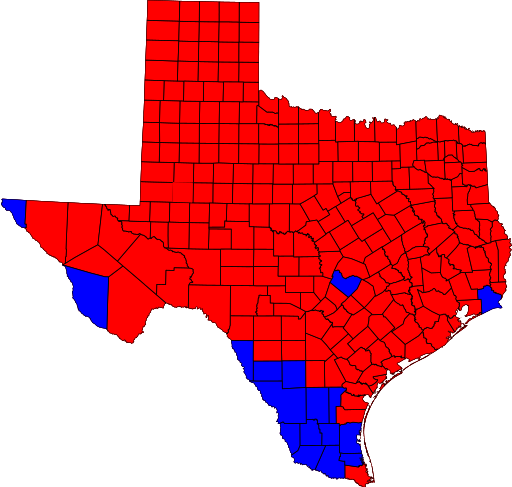
Josephabradshaw at English Wikipedia, Public domain, via Wikimedia Commons

History allows for the tracking of trends. You must look for those trends to find them. For example, how does having wealth affect K-12 education, which then affects college education, which then affects success in life (at least financial success)?

Recent studies on the trends of wealth and education demonstrate the more wealth you have the better education you have. Wealth is now a larger factor than race and ethnicity.

The question then follows, Is there a racial wealth gap? Yes, there is.

In the United States, the average Black and Hispanic or Latino households earn about half as much as the average White household and own only about 15 to 20 percent as much net wealth. Reference

My next question is, “Why?”

The interpretation of research says,“… the current gap is generally viewed as the result of historical and continuing patterns of wealth inequality.”

  1. Income Inequality (housing ownership disparity, discriminatory lending practices)
  2. Housing Policies
  3. Political Representation (Might want to investigate the effect of gerrymandering, Lt. Gov. Patrick)
  4. Education

Back to Lt. Gov. Dan Patrick and his fear of education

Does Patrick fear education? I honestly don’t know. He appears to fear the investigation of some concepts in the higher education arena as he wants to limit it.

His stance came after “… the University of Texas Faculty Council … affirm(ed) academic freedom to teach about race, gender justice and critical race theory.” Reference

Limiting education is the best way to prevent learning. That seems self-evident, but why do people fear learning?

Are people afraid what they “know” is true will prove false?

I must ask myself, “Am I willing to investigate all sides of a question or issue, or will I blindly believe what I want to believe and truth be damned?”

And that question brings up another question, “What is truth?”

Illumination
Critical Race Theory
Education
Racism
Texas Politics
Recommended from ReadMedium