
Tesla Should Rethink Its Semi-Truck Technology
Enride’s cabless autonomous battery-powered Pod looks like the future
Video killed the radio star
You can’t take anything away from Elon Musk. Although he didn’t found Tesla or even come up with the idea for an electric vehicle, Elon Musk has nearly singlehandedly taken electric vehicles (EVs) from the realm of science fiction to science fact. In another couple of decades (or less), Tesla will go down in history as the company that killed the internal combustion engine (ICE).
Yet even though the EV revolution is well underway, EV body design has not strayed very far from ICE body design. It’s almost certainly a waste of space and weight, but Tesla probably felt they had to design the frunk to keep making cars that look familiar to consumers. After all, in the early days, who wanted to ‘go electric’ if your new car looked like a pod?
However, based on the reception of the Cybertruck and Tesla Semi, Elon has proved consumers are open to more radical design changes if the changes make the vehicle better – and there lies the problem.Tesla hasn’t evolved the Semi far enough. If the Tesla Semi is really ultimately designed to run autonomously and in platoons, why have a driver in the Tesla Semi at all?
In this article;
- Einride’s fully autonomous battery-powered Pod
- Addressing the growing shortage of truckers
- Advantages/disadvantages of autonomous trucking
- Other manufacturers shaping the future of transport
- Final thoughts
Einride’s fully autonomous battery-powered Pod
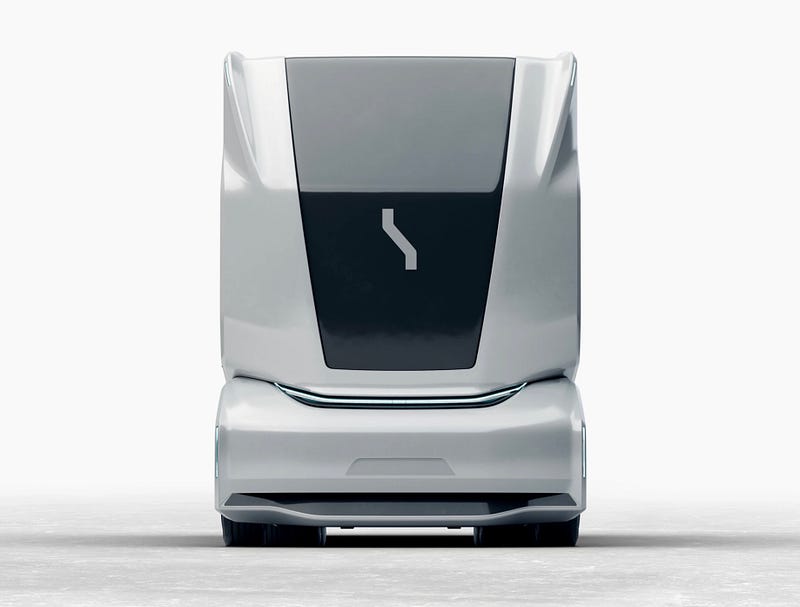
I say this half tongue in cheek, but what an absolute unit. With a design roughly based on the shape of bison, Einride’s mostly autonomous, part-time 5G remote-controllable electric-powered beast looks set to take a serious bite out of the transportation market in the very near future.
Although not the only vehicle making waves in the electric and autonomous world of heavy-duty transport, Einride’s Pod certainly makes one question the logic of keeping a human on board a transport vehicle since the Pod can operate completely autonomously. Without a cab, the vehicle looks surprisingly nimble. It’s all-electric, so it has the kind of torque older diesel technology simply cannot generate. The Einride Pod certainly isn’t the only cabless truck nearing full-scale production (more about that later) but it is an excellent example of design changes that can be considered when a human driver is taken out of the equation.
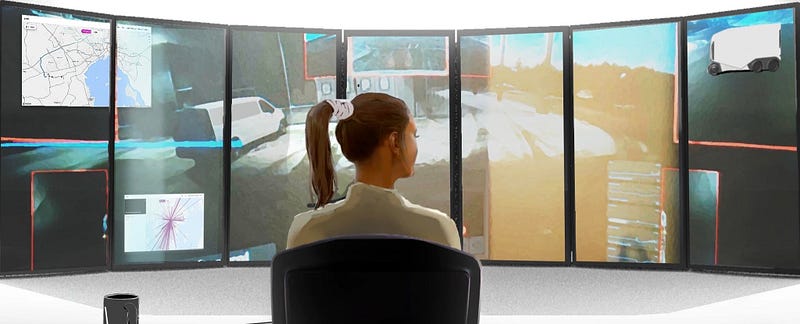
A lot of autonomous driving truck designs leave a seat for a driver, presumably so a driver can take over from the onboard computer when driving gets a little tricky or when it’s time to back a trailer to a loading dock. Einride Pods overcome this problem by using a remote control room connected to the Pod via a 4G or 5G connection. Pod operators sit in front of a bank of wraparound monitors that give the operator the sense they are actually in the cockpit of the vehicle. With cameras mounted all over the vehicle to eliminate blind spots for the autonomous driving system, operators can also access a full 360-degree view of everything around the Pod when it’s operated manually.
By using a remote control room, operators can already handle 2 vehicles simultaneously, taking over from the autonomous driving computer whenever there’s a difficult situation, for example, when backing into a loading dock. Einride thinks up to 10 self-driving pods could eventually be supervised by one human operator. And since the vehicles can all be accessed via an internet connection, the operator can handle Pods that are operating anywhere on the planet.
The growing shortage of truckers
With all of the recent job-killing automation we’ve seen in recent years, you might naturally be wondering if self-driving trucks are truly needed in this economy or just another way for corporations to save money by having to hire fewer drivers. The answer to both questions is — yes.
There’s been a shortage of qualified truck drivers for many years and to date, there has been no easy way to address the problem. Although the pandemic caused a short-term blip in the number of truck driving jobs, according to the Journal of Commerce, tens of thousands of truck driving jobs may need to be filled in the coming years.
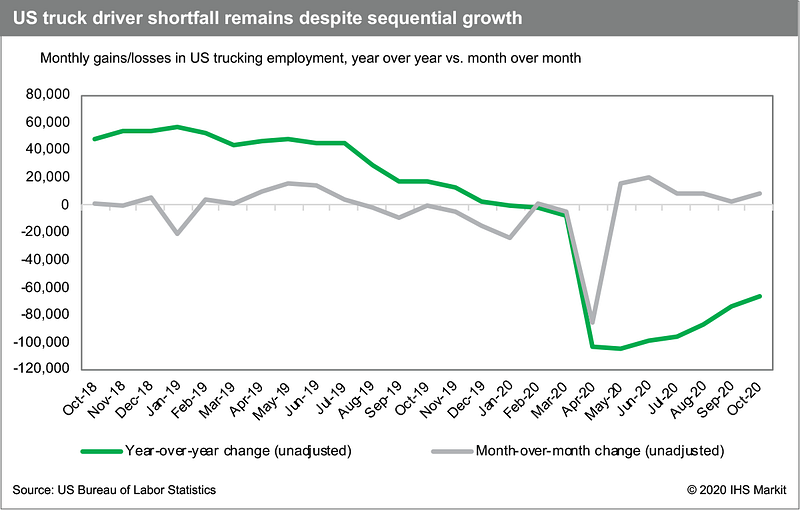
There are a number of reasons for the shortfall of truck drivers. According to Redwood Logistics, the terrible work-life balance long-haul trucking creates, combined with relatively low pay is discouraging younger workers from entering this line of work. In fact, the average commercial truck driver age is already 55 years old. Without significant changes, the deficit of drivers will only continue to increase.
In an attempt to reverse this trend, pay has increased steadily for truck drivers over many years. Yet industry insiders think increasing driver pay won’t be enough. Some experts believe, encouraging more women and minorities to join the trucking business might help alleviate the workforce shortfall. Other suggestions include shortening the time drivers are on the road so they can spend more time at home. In theory, this would help improve work-life balance and health issues many truck drivers currently suffer from.
All of these ideas are worthy of consideration and perhaps a combination of these strategies might attract more workers into the field. However, by far the most promising strategy to make up the growing shortfall of trained drivers appears to be the application of autonomous driving.
Advantages/disadvantages of autonomous trucking
There is absolutely no doubt, autonomous trucking will benefit companies due to lower accident rates and the ability of autonomous trucks to drive more hours. However, autonomous driving will also be a game-changer for drivers who choose to join or remain in the industry as well.
According to Elon Musk, ‘Teslas with Autopilot engaged are almost 10 times less likely to crash than the average vehicle, as measured by federal data’. Statistics appear to back this up. According to the U.S. Department of Transportation, roadway departure (RwD) crashes (lane departures) account for over half of the traffic fatalities in the US. There is a wide range of reasons for RwD crashes, but according to the National Traffic Safety Administration, the main reasons are sleepiness and inattentiveness.
Of course, there are other factors like poor visibility, lane curvature, and high speed. Tiger Woods’ recently demonstrated to the world that excessive speed and even a short lapse in attention can result in terrible consequences. However, anyone who’s ever driven a long distance in a car in even excellent weather conditions knows sleepiness and inattentiveness must of course be a major reason for roadway departures. Obviously, a reliable auto-pilot will drastically reduce this kind of driver error and resulting lane departures.
Yet, there still remains a need for a human operator to be involved in some of the decision-making processes. For example, Chuck Cook demonstrates on his YouTube channel that Tesla’s autopilot still has considerable trouble crossing multiple lanes of on-coming traffic when making a left-hand turn. In fact, if you take the time to surf through various YouTube channels featuring Tesla autopilot, it quickly becomes apparent drivers will likely have to remain attentive, even with autopilot engaged, for a number of years to come. Just like Musk learned when he installed too many robots in the first Gigafactory, some jobs are just much better handled by humans.
“Yes, excessive automation at Tesla was a mistake. To be precise, my mistake. Humans are underrated,” — Elon Musk, April 14, 2018.
Other manufacturers shaping the future of transport
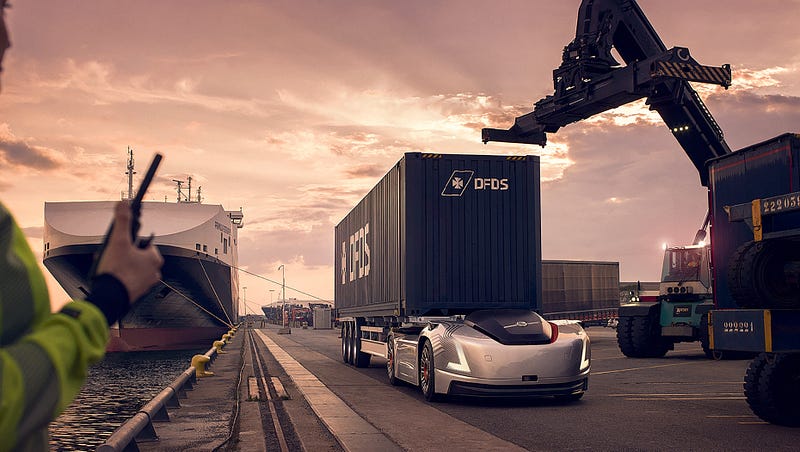
Whether manufacturers believe in going cabless or not, Tesla and Einride are not the only game in town when it comes to innovative new transport vehicles. The list of new, inventive competitors is rapidly growing.
The Volvo Vera
This self-driving, electric, cabless vehicle is designed to pull freight in ports, factories, or large logistic areas. The vehicles are not intended for highway use but rather for repetitive, high-volume work. Cloud service connection and control center coordinates the vehicles allowing them to work as a kind of ‘digital team’.
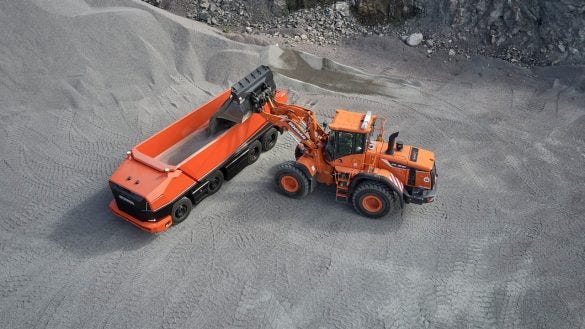
Scania AXL
Manufactured in Sweden, this autonomous and cabless vehicle is designed for use in mining and other heavy-duty service areas. The Scania AXL is not electric but instead uses bio-fuels. The Scania AXL has been undergoing real-world testing with Rio Tinto in an Australian mine. The goal of the ongoing testing is to develop vehicle-vehicle awareness and intelligent fleet supervisory controls.
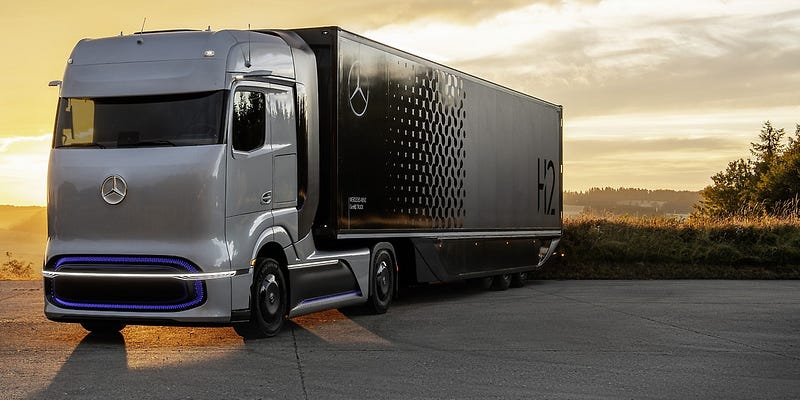
Mercedes-Benz GenH2
The Mercedes-Benz GenH2 Truck is a hydrogen fuel cell concept vehicle aiming to be released to the European market as soon as 2023 and the rest of the world by 2039. Because the truck is powered with fuel cells rather than batteries, it is estimated to have a range of approximately 1000km before having to refuel. Mercedes is currently experimenting with a range of driver-assist and fully autonomous driving systems.
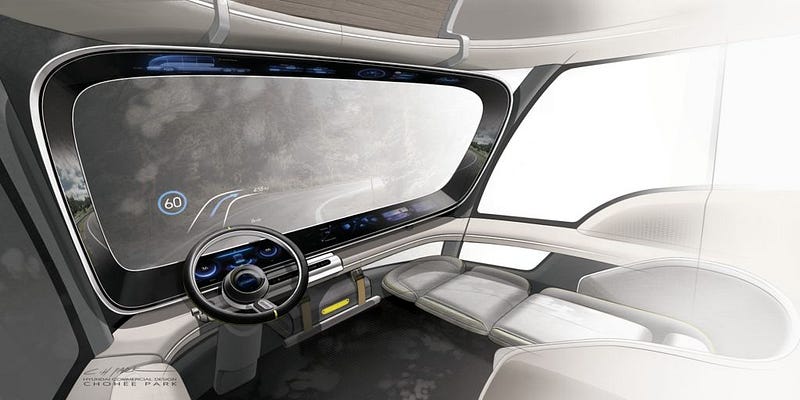
Hyundai HDC-6 Neptune
The Hyundai HDC-6 Neptune is another fuel-cell-powered truck but unlike the Mercedes-Benz GenH2, the Hyundai HDC-6 Neptune is autonomously capable. It also features a cab with seating for two people. The interesting design was apparently modeled after streamliner railway trainsets of the 1930s, giving it an Art Deco feel.
Nicola Two
The Nicola Two is a hydrogen-electric truck with nearly twice the horsepower of any diesel truck, currently on the road today. It has a range of up to 1200 km. It’s thought the Nicola Two is aimed at the single-day delivery market in a single geographic area. The trucks will not be fully autonomous however, they all will have automatic braking and lane-keeping technology, fleet management solutions and data capturing, and receive over-the-air software updates.
Final thoughts
All of the trucks mentioned in this article are a serious technological leap forward when compared to its older diesel competitors. All aim at reducing emissions and increasing safety through some form of driver assistance or autonomous driving systems. All will likely find a business niche, whether cabless or not, depending on whether the application needs drivers to help load and unload the vehicle or make deliveries along a route.
However, on top of saving companies a lot of money, remotely-controlled, autonomous driving vehicles, in particular, solve a lot of problems for the overall trucking industry.
- Working hours can be much more strictly controlled because after finishing an 8-hour shift, a Pod operator can simply be relieved by a second Pod operator.
- Because vehicles can be controlled remotely all over the planet, operators can go home after a hard day at work and sleep in their own beds every night.
- If operators can handle multiple Pods simultaneously, the lack of drivers becomes much less of an issue.
Will all trucks one day go cabless? Probably not — there will likely be a role for truckers for the foreseeable future. Yet with the successful release of cabless, remotely monitored transport vehicles, manufacturers like Tesla, will almost certainly have to follow suit. With the continued refinement of AI and autonomous driving systems, it seems clear the future role of truck drivers will be focused more and more on supervising groups of vehicles remotely, rather than riding along in the cab of a single autonomously driven truck.


