
Terrifying New Demon Shark Species Discovered in Australia
Few people would dare to look a shark straight in the eye. This individual has an exceptionally penetrating gaze. This is not the only thing that distinguishes it from other species.
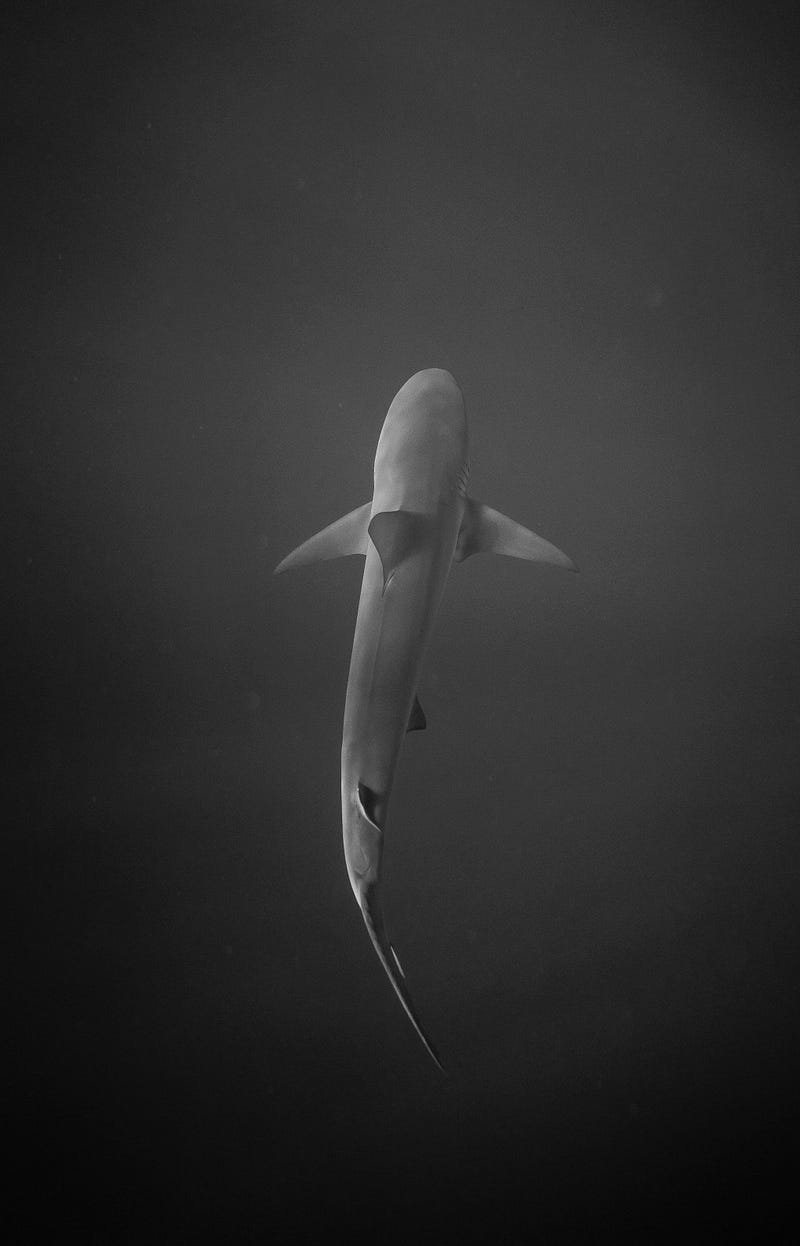
Australia is famous for its diverse fauna. And it’s not just kangaroos or koalas. The land is teeming with dangerous species, with spiders and crocodiles leading the way. In addition, there are more and more of them, that is, scientists are discovering more species. For example, spiders that look like…. pelicans.
A shark that looks like a demon from the deep
As it turns out, it’s not only on land in Australia that things are “interesting.” Surprising animals can also be found in the ocean. Some we still have no idea about. Such was the case until recently with a shark, which scientists compared to a demon. This is due to its unusually bright eyes. In this case, it is not only the appearance of the shark itself that is surprising, but also how researchers managed to identify it.
Let’s go back 10 years. It was then that scientists came across unusual shark eggs with a striated shell. They didn’t immediately know how to identify them. They were helped by a dead pregnant female of an unknown species found off the coast of Western Australia. She was originally misidentified as a representative of Apristurus sinensis. It was only after comparing the eggs she had inside her with another identical specimen in museum storage facilities that the scientists discovered they were dealing with a hitherto unknown species.
But the eggs!
The newly discovered species was named Apristurus ovicorrugatus. The researchers described it in the pages of the scientific journal Journal of Fish Biology.
“The horned shells of the eggs of this species have strongly elongated T-shaped edges on the dorsal and ventral surfaces, which are unique to the genus Apristurus”, they explained.
And here it is worth noting that most sharks are viviparous. Not only does A. ovicorrugatus lay eggs, but these eggs are housed in distinctive horn-like shells. These shells often have long whiskers that allow the egg to attach to seaweed or rocks.
Can these eyes lie?
Unusual eggs are not the only thing that distinguishes these sharks from other species. A. ovicorrugatus quickly gained notoriety for its demonic eyes. This is not a common feature of deep-sea species. To date, similar eyes have only been observed in Apristurus nakayai, which inhabits the waters of Papua New Guinea and New Caledonia.
With approximately 40 species, the shark genus Apristurus boasts one of the greatest diversities among shark genera worldwide. Recent discoveries show that we probably still don’t know all of them yet.
Interesting facts about sharks
Sharks don’t get the best press. Much of this is due to Hollywood productions, with Steven Spielberg’s “Jaws” at the forefront. In reality, sharks do not prey on humans, and attacks are extremely rare. Marine biologists stress that humans are the biggest threat to sharks. The fewer there are, the worse for aquatic ecosystems. Sharks are responsible for regulating the populations of other animals. Their victims are usually weak or sickly individuals.
What else is worth knowing about these fascinating animals?
- Sharks have existed on our planet for more than 400 million years. This means that they are older than the dinosaurs.
- They are long-lived. The oldest specimens are several hundred years old.
- Sharks have no bones. Their skeletons are made of flexible cartilage.
- They have huge eyes that can take in a lot of light and detect the movements of prey. Interestingly, sharks are also able to see colors, making them even more effective at hunting.
Cool that you made it to the end of this article. I will be very pleased if you appreciate the effort of creating it and leave some claps here, or maybe even start following me. It would be nice if you also left a tip! Thank you!


