
Tenerife — A Tragedy of Human Error
Facts you may not know about the worst airline disaster in history.
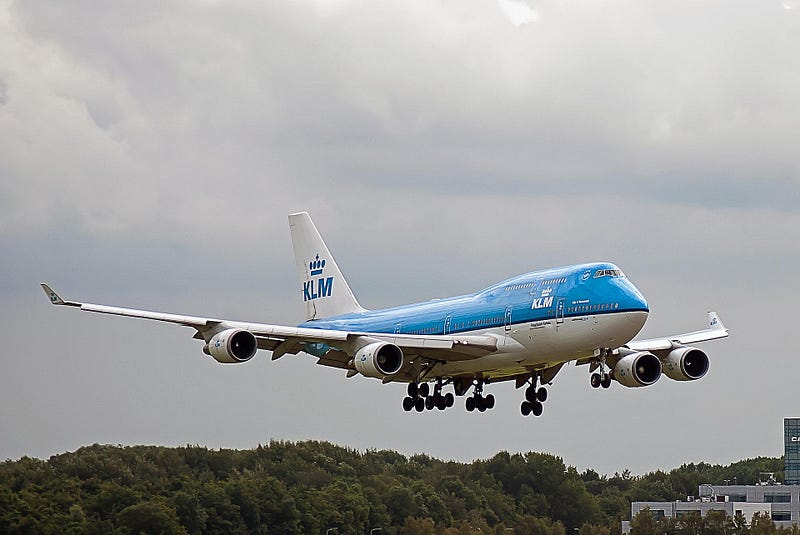
I couldn’t get my Netflix to work recently which was highly irritating. So I turned to YouTube on my piddly phone screen instead.
The first clip on offer was a documentary on the worst aviation accident in history, when two 747’s collided on the runway at Tenerife, killing 568 passengers and crew on March 27, 1977.
I’d heard about the accident more because I was married to an air traffic controller, and it often came up in conversation. The poster boy KLM pilot defied air traffic control instructions and started rolling down the runway in thick fog, clipping a PanAm plane that was still taxiing to manoeuvre behind KLM also to take off.
One person’s error claimed hundreds of lives.
But was it solely his fault? Like any disaster, there is often a trail of incidents that ultimately ended in catastrophe. Although the final report placed the ultimate blame on Captain Van Zanten, a myriad of events led to the accident that claimed the lives of Americans and Europeans who were either doing their job or escaping to vacation in an idyllic part of Spain.
Neither plane was meant to be in Tenerife in the first place.
Both flights were diverted there because a bomb had gone off in the Las Palmas airport, their actual destination. A small, independent group, the Movement for the Self-Determination and Independence of the Canary Archipelago (MPAIAC), was responsible for the event that shut down air traffic while police secured the area.
KLM flight 4805 was en route from Amsterdam to the Canary Islands, intending to have a short turn-around, returning to Amsterdam the same day. Flight 1736 was full of American tourists who had boarded in Los Angeles and New York. Passengers on both planes were heading off to vacation; instead, 583 of the 644 people on board died.
The PanAm flight was ready to leave before KLM.
Because of the tight squeeze on the tarmac at Tenerife, the PanAm flight could not manoeuvre past KLM and leave ahead of them. The KLM captain had decided to take advantage of the diversion and refuel the plane to reduce his turn-around time once back in Las Palmas.
While they were waiting to proceed for takeoff, the weather changed from a clear day into a foggy one. This was typical of this airport because of the mountainous terrain and higher elevation.
There was no surface movement radar.
The planes had to taxi on the runway to reach the threshold for takeoff because the usual route was blocked by other diverted aircraft. Both were confused with air traffic control instructions regarding using the highspeed exits to access the apron taxiway; KLM continued to taxi the entire runway length and then did a 180-degree turn for takeoff. PanAm missed the exit they were supposed to take and had advised air traffic control they were still on the runway.
Because of the foggy conditions, visibility was severely reduced. The centre runway lights were also not working.
The KLM crew didn’t see the PanAm plane until it was too late; the KLM crew pulled the throttle and was airborne, but the tail scraped the runway and the landing gear sheared off the upper deck section of the PanAm plane that had started turning off the runway when they saw the lights bearing down on them.
There were communication issues between the Controllers and Pilots.
The KLM flight crew never heard the message that the PanAm flight was still on the runway. The documentary stated that because they were communicating at the same time with the tower, they effectively cancelled each other out. As well, there was a moment of static ‘squealing’ inhibiting the clarity of information being transmitted.
Furthermore, Captain van Zanten heard the word ‘takeoff’ in a controller statement and misinterpreted it as a clearance to take off; he had actually only given the instructions for the initial flight path after takeoff. His flight engineer questioned it, but the Captain started to roll anyway.
The fog was so thick, the Tower controllers never saw the accident.
They only heard explosions and were advised by a parked aircraft that there was a fire on the runway. The emergency crews were dispatched, but no one had any idea that two planes had collided.
Once the emergency crews located the fire, they noticed a second one, off in the distance; they presumed it to be broken-off debris from the first wreckage.
One passenger from KLM survived because she didn’t continue to Las Palmas.
Since the airport terminal in Tenerife was small, only the passengers from the KLM flight were allowed to disembark while waiting for clearance to head to Las Palmas. Although the PanAm passengers were stuck on the plane, the Captain arranged for a staircase to allow them to stretch their legs; they were also invited up to the cockpit.
Not expecting to land in Tenerife when she lived, an unnamed passenger received permission not to reboard the KLM flight; she would only have to fly back there once arriving in Las Palmas.
Multiple factors contributed to the accident.
When you hear of plane disasters, we all turn to the media for information. What happened? How could this happen?
All I recall after the incident — and bearing in mind I was only ten years old — was that the KLM captain was in a hurry. He proceeded to roll down the runway, gaining full speed to take off without having air traffic control clearance to do so.
Of course, I didn’t know why, but new regulations for restricting pilot service hours had recently come into effect, and the scheduled trip had little room for delays. Captain Van Zanten did not want to overnight in Las Palmas and knew time was of the essence, hence his decision to refuel in Las Palmas.
The official report released by the Dutch authorities cited three recommendations following this accident;
Placing of great emphasis on exact compliance with instructions and clearances
Use of standard, concise and unequivocal aeronautical language
Avoidance of the word ‘TAKE OFF’ in the ATC (air traffic control) clearance and adequate time separation between the ATC clearance and the TAKE OFF clearance.
In the same report, The Kingdom of the Netherlands stated several coinciding factors that contributed to the disaster. In brief, they were;
- The fog
- The congestion at the airport
- Communication misunderstandings between the Tower ATC and KLM
- The use of the word ‘ok’ by the Tower and the simultaneous static, caused misinterpretation
- KLM not listening to communication from the Tower and PanAm
- The takeoff without clearance.
Have we learned from this disaster?
I’m not a guru in aviation standards, but I know that policies did change as a result of this terrible accident. According to a recent article on ‘Simply Flying’, the following rules were implemented to avoid confusion between ATC and pilot communications:
An emphasis on English as a common working language and the use of standard phrases
Air Traffic Control (ATC) cannot use words like OK or Roger
The word “takeoff” is now spoken only when permission is given for actual takeoff
Until actual permission is granted for takeoff, pilots and ATC controllers should use the word “departure”
All ATC clearance to aircraft already lined up on the runway for takeoff must include the prefix “hold position”
There have also been studies done on the hierarchical effect of the cockpit crew. Typically, a junior pilot would be overruled by a more senior one, but more emphasis has been placed on a team approach and that seniority doesn’t necessarily correlate with the best decisions.
Do you still want to fly after reading this?
I will ’fess to loathing not being ‘in control’ when I fly; my life is entirely in the hands of the people flying the aluminum beast I am on.
Over the years, I have learned to let the fear go; I must have faith or travel would be even more a nightmare than it already is. In reality, you are more likely to die en route to the airport, or from heart disease than you are in an aviation disaster. Source
The best thing to do is to fasten your seatbelt, fold your tray table, keep your seat back upright and enjoy the flight — and the destination when you get there!


