avatarLynette Clements

Free AI web copilot to create summaries, insights and extended knowledge, download it at here

1740

Abstract

ch and bunched up on their branches, like a person who curls up in a corner to hide away from reality, cringing in the glare of the assault, hoping not to be noticed.</p><h2 id="9104">The Injuries.</h2><p id="83a9">The bark on the main stem was damaged, as though someone had taken a swipe at it with a sharp object, and a smaller branch had been hacked off leaving ugly scars on the trunk. Once again, I thought of a person who had suffered physical and emotional blows, as he tries to shelter himself from further injury; the evidence is there for all to witness if you care to stop and take notice.</p><h2 id="51b3">The Reaction With Watering.</h2><p id="09e3">Watering produced a loud burst of bubbles rising to the surface of the pot, which went on for several minutes. I was taken by surprise! Apparently, this was happening because the dehydrated roots were stuck to the sides of the pot and to one another, producing pockets of air between roots and soil. With regular watering, the fresh soil would sink down filling the gaps, and the bubbling would eventually stop.</p><h2 id="7d67">The Plan.</h2><ul><li>To provide shelter from the wind, which we did by placing the pot behind a pillar on the patio.</li><li>Regular watering followed by light fertilising after getting the tree to a hydrated state.</li><li>Not to re-pot the tree, as the horticulturist advised this would be traumatic for the roots which were dried out.</li><li>Slowly add fresh soil from the top.</li><li>This was my plan without trying to find a solution in a book. I suppose there aren’t any plans for a dying ficus in a pot, anyway!</li></ul><h2 id="eb5f">The Outcome.</h2><figure id="13d0"><img src="https://cdn-images-1.readmedium.com/v2/resize:fit:800/1*B

Options

r30IDtRJu1UIP0OQXZqAA.jpeg"><figcaption>After Two Years: The New Growth of Bark Clearly Seen and The Ficus Restored with Lush Growth: L. Clements. March 2020.</figcaption></figure><figure id="abd1"><img src="https://cdn-images-1.readmedium.com/v2/resize:fit:800/1*XEfsi2Lhh-iUJjwDr5IDqg.jpeg"><figcaption></figcaption></figure><figure id="dc69"><img src="https://cdn-images-1.readmedium.com/v2/resize:fit:800/1*2wMH9bzBWmpTyf2Sg1Nb7Q.jpeg"><figcaption>The Scars From Injury. and (above) The bark Restored. Photos: The Writer.</figcaption></figure><p id="18f2">It took a long time before the ficus started looking healthy and the water stopped bubbling in the pot. It is over two years since we rescued the ficus and it is thriving. It stands in the same place on the patio. It will never be a glorious tree as it was badly damaged before being rescued, but it has survived, a testimony to loving care.</p><ul><li>The leaves are light-green and form a lush crown, no longer bunched-up with a pinched look.</li><li>Leaf growth has appeared on the smaller branches, filling out the shape of the tree into a relaxed-looking plant.</li><li>The damaged bark is healing; you can see the new bark appearing just as you see a new fingernail growing underneath an injured nail.</li></ul><h2 id="01f7">Satisfaction and Reflection.</h2><p id="502a">Watching the ficus restore itself has been a source of wonder; such a seemingly insignificant rescue, yet it saved the life of a tree and it makes me happy.</p><p id="630b"><i>It made me reflect that plants are like people and animals. All living things need the right environment to grow and thrive; all need tender, loving care, nourishment and shelter from the storms of life.</i></p></article></body>

The Rescued Ficus.

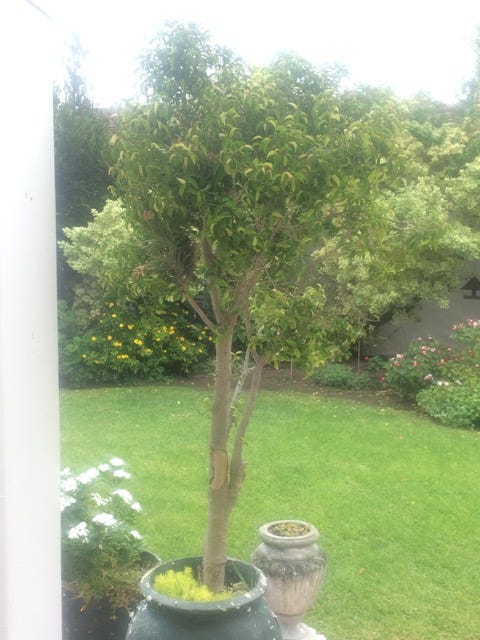
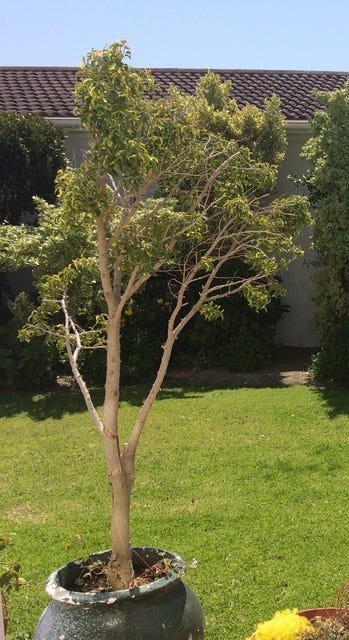
The Ficus in Recovery After A Year and Shortly After Rescue. Note Bark Damage. Photo: L. Clements.

The Neglected Ficus.

There it stood, the potted ficus tree, against a wall about fifty metres from our patio. At first, I did not notice it, but gradually I became aware of the ficus, and that it was struggling to survive; it dawned on me the tree was under stress; big stress. Battered by the strong winds that sweep across our area of Cape Town, where gales from the ocean blow across a flat piece of land, it was not only hammered daily at certain times of the year but was also suffering the effects of dehydration.

Totally neglected, it stood stubbornly in its pot, a symbol of the fight for survival; a lonely silhouette against a white wall, silent in its submission to the elements.

I spoke to our horticulturist; we live in a retirement village, with beautifully maintained gardens. He told me the ficus was earmarked to be thrown out. I was horrified and told him I wanted to rescue it if that was possible; well, he was quite happy for me to take the tree and make it mine. The next day, there it stood on my patio and there it made its home.

Restoration through Tender Loving Care.

The ficus has small green leaves, but at the time of rescue, they were a dark green, hard to the touch and bunched up on their branches, like a person who curls up in a corner to hide away from reality, cringing in the glare of the assault, hoping not to be noticed.

The Injuries.

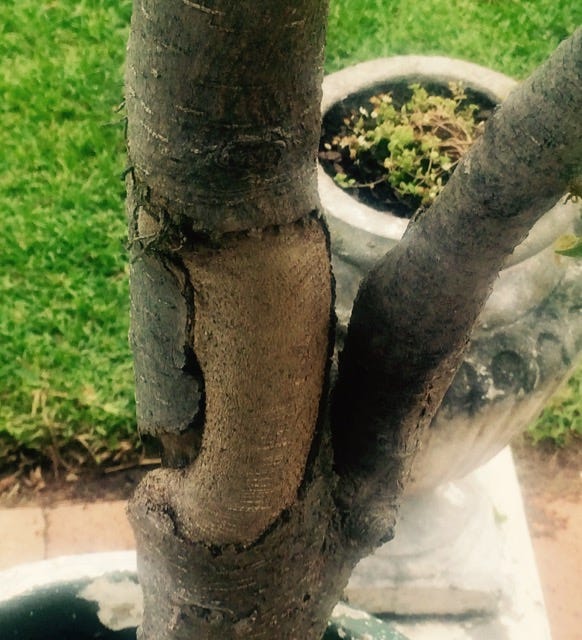
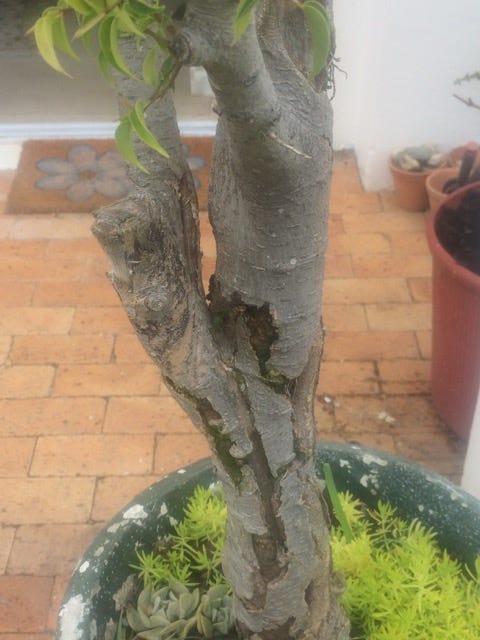
The bark on the main stem was damaged, as though someone had taken a swipe at it with a sharp object, and a smaller branch had been hacked off leaving ugly scars on the trunk. Once again, I thought of a person who had suffered physical and emotional blows, as he tries to shelter himself from further injury; the evidence is there for all to witness if you care to stop and take notice.

The Reaction With Watering.

Watering produced a loud burst of bubbles rising to the surface of the pot, which went on for several minutes. I was taken by surprise! Apparently, this was happening because the dehydrated roots were stuck to the sides of the pot and to one another, producing pockets of air between roots and soil. With regular watering, the fresh soil would sink down filling the gaps, and the bubbling would eventually stop.

The Plan.

  • To provide shelter from the wind, which we did by placing the pot behind a pillar on the patio.
  • Regular watering followed by light fertilising after getting the tree to a hydrated state.
  • Not to re-pot the tree, as the horticulturist advised this would be traumatic for the roots which were dried out.
  • Slowly add fresh soil from the top.
  • This was my plan without trying to find a solution in a book. I suppose there aren’t any plans for a dying ficus in a pot, anyway!

The Outcome.
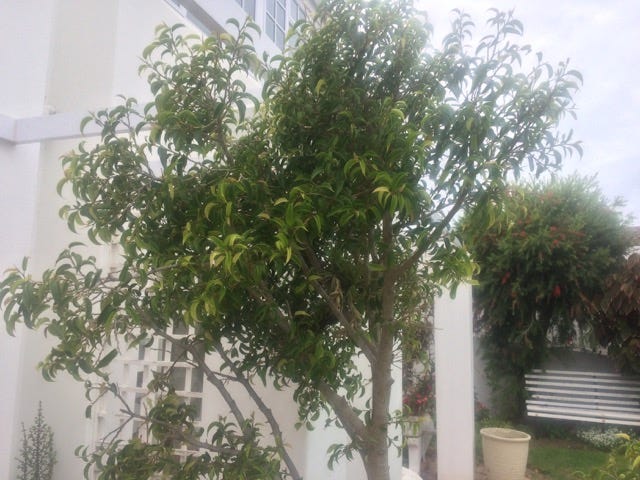
After Two Years: The New Growth of Bark Clearly Seen and The Ficus Restored with Lush Growth: L. Clements. March 2020.
The Scars From Injury. and (above) The bark Restored. Photos: The Writer.

It took a long time before the ficus started looking healthy and the water stopped bubbling in the pot. It is over two years since we rescued the ficus and it is thriving. It stands in the same place on the patio. It will never be a glorious tree as it was badly damaged before being rescued, but it has survived, a testimony to loving care.

  • The leaves are light-green and form a lush crown, no longer bunched-up with a pinched look.
  • Leaf growth has appeared on the smaller branches, filling out the shape of the tree into a relaxed-looking plant.
  • The damaged bark is healing; you can see the new bark appearing just as you see a new fingernail growing underneath an injured nail.

Satisfaction and Reflection.

Watching the ficus restore itself has been a source of wonder; such a seemingly insignificant rescue, yet it saved the life of a tree and it makes me happy.

It made me reflect that plants are like people and animals. All living things need the right environment to grow and thrive; all need tender, loving care, nourishment and shelter from the storms of life.

Relationships
Inspiration
Environment
Caring For Others
Life Lessons
Recommended from ReadMedium