avatarJacob Wilkins

Free AI web copilot to create summaries, insights and extended knowledge, download it at here

5632

Abstract

ationwide book burnings in 1933 are the best example of the student support of the Nazi regime. Organized by the German Student Association, the book burnings aimed to destroy books that went against the ethos of Nazism. This included books written by Jews, communists, and pacifists.</p><p id="1a82">Many of the book burnings took place on or near university campuses in major cities. In Berlin, for example, 20,000 books were burned in Opera Square.</p><h1 id="0b19">5. Fitness For Young People Was a Key Nazi Policy</h1><figure id="1dfb"><img src="https://cdn-images-1.readmedium.com/v2/resize:fit:800/1*qPpVmUt3pZyV0SV04Qndjw.jpeg"><figcaption>German girls practicing gymnastics, 1941 (<a href="https://commons.wikimedia.org/wiki/File:Bundesarchiv_Bild_183-2000-0110-500,_BDM,_Gymnastikvorf%C3%BChrung.jpg">Wikimedia Commons</a>)</figcaption></figure><p id="7798">The Nazis believed the Aryan race was superior to all others. Keen to live up to this mantra, they wanted their young population to be as healthy as possible.</p><p id="d298">During Hitler Youth activities, boys and girls participated in sports and outdoor pursuits. The boys did sports like boxing, swimming, and running, whilst the girls did athletics and gymnastics.</p><p id="521e">Ideologically, boys were encouraged to become strong, dutiful soldiers. They were even shown propaganda films involving men taking part in healthy activities, such as hiking and marching. Girls, meanwhile, were encouraged to become obedient housewives and give birth to the next generation.</p><p id="77d5">Though the Hitler Youth wasn’t compulsory, many parents felt they had no choice in the matter, for the children who didn’t participate could be denied their school leaving certificate. This would prevent them from getting a job in the future.</p><h1 id="e94c">6. A Member of the British Royal Family Had Connections With the Nazis</h1><figure id="9b06"><img src="https://cdn-images-1.readmedium.com/v2/resize:fit:800/1*q-Wx_C90LXDRGzhYp_UwJA.jpeg"><figcaption>A photograph of Edward VIII and Wallis Simpson with Hitler, 1937 (<a href="https://commons.wikimedia.org/wiki/File:Duc_et_duchesse_de_Windsor_avec_Hitler_(1937).jpg">Wikimedia Commons</a>)</figcaption></figure><p id="2ca2">1936 is one of the most interesting years in British history. At the start of the year, King George V died, and he was succeeded by his eldest son: King Edward VIII.</p><p id="6712">But there was a problem. Edward wanted to marry an American socialite called Wallis Simpson. Given she was a divorcee, both the government and the Church of England disapproved of the match. In the end, Edward’s love outweighed his sense of duty, and he abdicated at the end of the year.</p><p id="64e2">In October 1937, Edward and Wallis (who had recently got married) traveled to Germany. They visited factories, dined with high-ranking Nazis, and had tea with Hitler. The disgraced royal even performed the Nazi salute during his visit.</p><p id="9509">Worse still, the historian Andrew Lownie has revealed that Edward made reports on the French Army during his time in Paris in 1940. These reports were passed to Charles Bedaux, a Nazi agent.</p><p id="6da5">However, the extent of Edward’s support for the Nazis shouldn’t be exaggerated. It’s hard to know exactly what his motivations were, and historians continue to debate this topic today.</p><h1 id="5bac">7. Boarding Schools Were Set Up to Train Future Political Leaders</h1><figure id="525f"><img src="https://cdn-images-1.readmedium.com/v2/resize:fit:800/1*pmayoV_gS0k58Gj__eB7VQ.jpeg"><figcaption>A photograph of boys at an Adolf Hitler School, c. 1940 (<a href="https://commons.wikimedia.org/wiki/File:Bundesarchiv_Bild_146-1983-056-07,_Adolf-Hitler-Schule,_Spind-Kontrolle.jpg">Wikimedia Commons</a>)</figcaption></figure><p id="eeb2">In 1937, the Nazis set up a series of boarding schools called Adolf Hitler Schools. The primary purpose of these institutions was to create leaders for the next generation of Nazism.</p><p id="7bfc">Teachers emphasized the superiority of the Aryan race and the glorification of war. Themes studied in literature included wartime heroism and the struggle for the fatherland. Textbooks also emphasized the importance of territorial conquest in Eastern Europe, known as <i>Lebensraum</i>.</p><p id="3f13">To gain some experience in the world of Nazi politics, students at the Adolf Hitler Schools did practical work in different offices of the Nazi Party. This gave them an insight into the jobs they would undertake after leaving school.</p><h1 id="a4e2">8. Hitler Was a Patron of the Arts in Nazi Germany</h1><figure id="8c5a"><img src="https://cdn-images-1.readmedium.com/v2/resize:fit:800/1*5nH-V_YhJgI-0VCGT3BDVw.jpeg"><figcaption>A photograph of Hitler making a speech during the opening of the Great German Art Exhibition, 1937 (<a href="https://commons.wikimedia.org/wiki/File:Bundesarchiv_Bild_183-2007-0605-500,_M%C3%BCnchen,_Haus_der_Deutschen_Kunst,_Er%C3%B6ffnung.jpg">Wikimedia Commons</a>)</figcaption></figure><p id="0658">Before the First World War, Hitler struggled to make money as a young artist in the Austrian capital of Vienna. Though ultimately opting for a political career, his love of art remained.</p><p id="4b62">In addition to opening exhibitions and purchasing pictures for party buildings, Hitler spent lots of money at the <i>Great German Art Exhibition</i>, an event that was held multiple times in the late 1930s and early 1940s. In 1941, for instance, he bought approximately 1,000 pieces of art and distributed them through ministries and public buildings.</p><p id="6a42"

Options

In recognition of his efforts, the Munich Academy of Art honored Hitler by giving him a medal with an inscription on the back:</p><blockquote id="eb53"><p>“To the leader of the German people, Adolf Hitler, who has put national thought in the center of our spiritual life and who has rendered back to art its old rights.”</p></blockquote><h1 id="f441">9. Some of the Worst Concentration Camp Guards Were Young Women</h1><figure id="fac7"><img src="https://cdn-images-1.readmedium.com/v2/resize:fit:800/1*G7djriOw7BdJj6oe-V3FwA.jpeg"><figcaption>A photograph of Irma Grese, 1945 (<a href="https://commons.wikimedia.org/wiki/File:Grese_Irma.jpeg">Wikimedia Commons</a>)</figcaption></figure><p id="75c6">In all historical contexts, men tend to be more violent than women. There are a range of reasons for this, but higher levels of competitiveness and aggression are the main ones.</p><p id="cf55">Consequently, the vast majority of the most notorious Nazis were men, not women. Yet there were plenty of exceptions to this rule. In fact, many female concentration camp guards were sadistic maniacs.</p><p id="b381">Irma Grese is an obvious example. This twisted individual worked at Auschwitz and Bergen-Belsen and developed a terrifying reputation. Grese enjoyed slashing prisoners with her whip, ordering her hounds to tear people apart, and kicking the life out of her victims. After the Second World War, she showed no signs of remorse and was sentenced to death. She was just twenty-two years old at the time of her execution.</p><p id="6d69">Dorothea Binz is another noteworthy example. Though a little older than Grese, her crimes were just as bad. After initially working in the kitchens at Ravensbruck, she worked her way up and became a camp guard. Binz enjoyed beating prisoners without provocation, ordering her German Shepherd to carry out savage attacks, and whipping people in the face. Like Grese, Binz was also convicted of her crimes and executed.</p><p id="6679">Though not as powerful or influential as some of the leading males in the Nazi Party, the crimes these young women committed were horrific.</p><h1 id="f95e">10. The Nazis Murdered Hundreds of Thousands of Disabled People</h1><figure id="180f"><img src="https://cdn-images-1.readmedium.com/v2/resize:fit:800/1*avISIEtI0AB57ULXkybZXw.jpeg"><figcaption>A photograph of Philipp Bouhler, 1936 (<a href="https://commons.wikimedia.org/wiki/File:Bundesarchiv_Bild_146-1983-094-01,_Phillip_Bouhler.jpg">Wikimedia Commons</a>)</figcaption></figure><p id="2262">In the autumn of 1939, Hitler issued a decree requiring doctors, nurses, health officials, and midwives to report signs of mental retardation or physical deformity in all infants and children up to the age of three.</p><p id="a31a">From this data, a panel of “medical experts” decided which of the children should live or die. Those who were selected were taken to what was essentially a pediatric killing ward. Here, they were either killed via lethal injection or moved to places known as “hunger houses,” where they slowly died from malnutrition.</p><p id="2260">This twisted policy extended to disabled adults as well. Hospital officials were required to report all patients suffering from conditions such as schizophrenia, encephalitis, epilepsy, paralysis, Huntington’s disease, and physical deformity. The selected men and women were transported to euthanasia centers and killed in gas chambers. This twisted practice was managed by Philipp Bouhler, the head of the Nazis’ euthanasia program.</p><p id="ecb2">The Nazis also murdered thousands of disabled people in Austria, Poland, and other occupied territories. Many were shot, whilst others were burned, starved, or poisoned.</p><h2 id="34db">Sources</h2><p id="fd7c"><a href="https://archive.org/details/artofthirdreich00adam/mode/2up"><i>Art of the Third Reich</i> (1992) by Peter Adam</a></p><p id="37ed"><a href="https://archive.org/details/briefhistoryofbr0000ashl/page/394/mode/2up"><i>A Brief History of British Kings & Queens</i> (2002) by Michael Ashley</a></p><p id="e19b"><a href="https://archive.org/details/hitlersforgotten0000evan/page/14/mode/2up"><i>Hitler’s Forgotten Victims: The Holocaust and the Disabled</i> (2010) by Suzanne E. Evans</a></p><p id="2c18"><a href="https://archive.org/details/nazigermanynewhi0000fisc_z8u8/mode/2up"><i>Nazi Germany: A New History</i> (1995) by Klaus P. Fischer</a></p><p id="2def"><a href="https://archive.org/details/naziwomenhitlers0000hast/page/36/mode/2up"><i>Nazi Women: Hitler’s Seduction of a Nation</i> (2003) by Cate Haste</a></p><p id="94e9"><a href="https://archive.org/details/mammothbookofkil0000unse/page/228/mode/2up"><i>The Mammoth Book of Killer Women</i> (1993) by Richard Glyn Jones</a></p><p id="72ab"><a href="https://archive.org/details/nazigermany0000lync/mode/2up"><i>Nazi Germany</i> (2004) by Michael J. Lynch</a></p><p id="3d97"><a href="https://archive.org/details/lifeinnazigerman0000marc/mode/2up"><i>Life in Nazi Germany</i> (2015) by Hal Marcovitz</a></p><p id="71b3"><a href="https://archive.org/details/kingsqueensofbri0000phil/page/74/mode/2up"><i>Kings & Queens of Britain’s Modern Age</i> (2008) by Charles Philips</a></p><p id="852d"><a href="https://www.google.co.uk/books/edition/Education_in_Nazi_Germany/1ymC_kb-_WcC?hl=en&amp;gbpv=0"><i>Education in Nazi Germany</i> (2010) by Lisa Pine</a></p><p id="8da9"><a href="https://archive.org/details/womennazisperpet0000sart/page/70/mode/2up"><i>Women and Nazis: Perpetrators of Genocide and Other Crimes During Hitler’s Regime, 1933-1945</i> (2011) by Wendy A. Sarti</a></p></article></body>

Ten Things You (Probably) Didn’t Know About Hitler and the Nazis

Dark and interesting facts about the Nazi Party
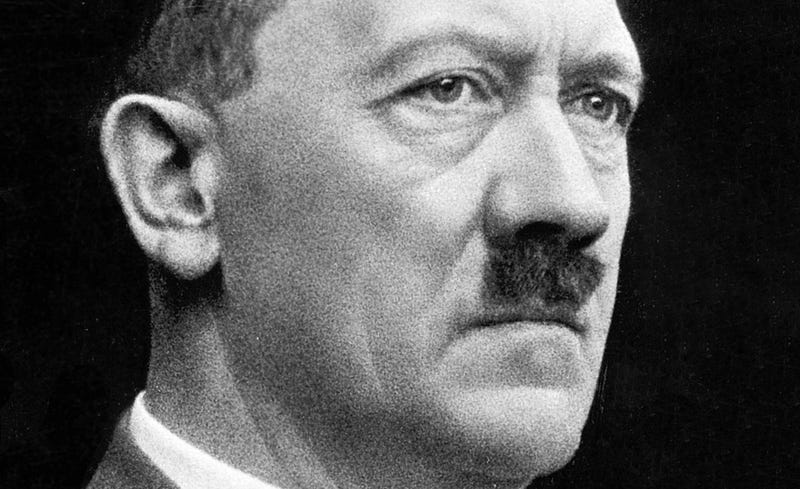
A photograph of Hitler, 1937 (Wikimedia Commons)

Everyone reading this will already know something about Adolf Hitler and the Nazi Party. It’s an era of history that’s impossible to ignore given how often it appears in popular culture, political debates, and the education system.

Yet there are still plenty of fascinating details that won’t be familiar to the average reader. Whilst history buffs may recognize some of the information in this article, the rest of you will discover a wealth of fresh facts about the darkest chapter in human history.

1. Hitler Briefly Dated a Sixteen-Year-Old Girl
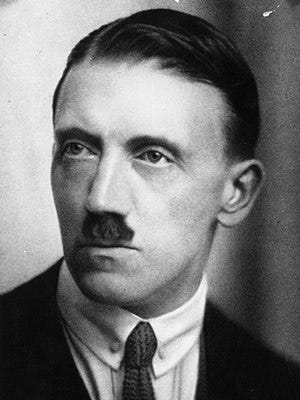
A photograph of Hitler, c. early 1920s (Wikimedia Commons)

After his role in the Munich Putsch, Hitler spent nine months in prison before traveling to Obersalzberg. Here, he met a sixteen-year-old girl with blonde hair named Maria Reiter.

Maria worked at the family clothes shop beside the hotel where Hitler was staying. Despite being twenty years older than Maria, Hitler flirted with her and took her on trips in his Mercedes. The couple also went on dinner dates.

When Hitler traveled back to Munich, he stayed in contact with Maria. The couple wrote letters to each other, and Hitler even sent Maria a leather-bound copy of Mein Kampf for Christmas.

But their romance wasn’t destined to last, for Hitler soon became disinterested in the relationship. Maria was so distraught she tried to commit suicide.

2. Hitler’s Ideas Were Inspired By an Unstable Alcoholic
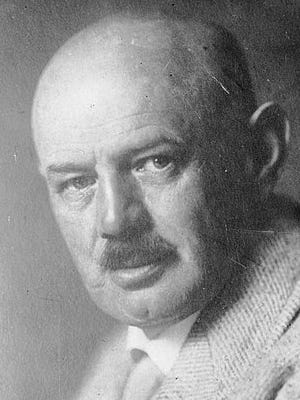
A photograph of Dietrich Eckart, c. early 1920s (Wikimedia Commons)

You probably aren’t familiar with the name Dietrich Eckart, but this twisted individual has an important place in the history of Nazi Germany.

After abandoning his medical studies, Eckart pursued a career in journalism and theater, gaining a reputation as a talented dramatist. He was also known for his outlandish beliefs and skills as a conversationalist.

Despite his talents, Eckart was an unstable individual. As well as spending time at a mental institution, he became addicted to alcohol and morphine.

Between 1918 and 1920, he published anti-Semitic and anti-Communist propaganda before co-founding the German Workers’ Party, the precursor of the Nazi Party.

As well as editing Völkischer Beobachter (the party newspaper), Eckhart took Hitler under his wing, acting as a role model for the future Nazi leader. Following Eckhart’s death in December 1923, Hitler dedicated the second version of Mein Kampf to him.

3. Joseph Goebbels Created a Martyr for the Nazi Party
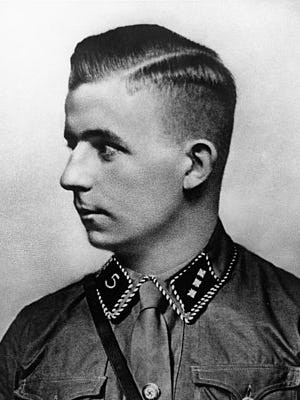
A photograph of Horst Wessel, 1929 (Wikimedia Commons)

Dr. Joseph Goebbels was in charge of Nazi propaganda. He was an intelligent and gifted individual, capable of gaining an audience’s attention and stirring their emotions.

In February 1930, a young Nazi called Horst Wessel was killed by members of the Communist Party of Germany. Wessel had previously written a poem that was published in Der Angriff (a Nazi newspaper), and Goebbels made sure this poem became a battle hymn for the Sturmabteilung, the paramilitary wing of the Nazi Party.

Goebbels also staged an emotive, propagandistic funeral for Wessel, transforming the deceased into a martyr. Communists threw stones over the cemetery wall during the funeral. The violence escalated into a brawl between the two parties, providing Goebbels with more propaganda material.

4. German Students Were Big Supporters of the Nazi Party
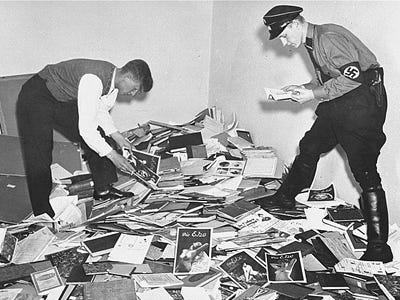
A photograph of a student and a member of the SA collecting books in Berlin, 1933 (Wikimedia Commons)

During the Nazis’ rise to power in the 1920s and 1930s, universities were elitist institutions that were restricted to the upper classes. There was also a lot of anti-Semitism in academia.

More generally, young Germans from a range of backgrounds supported the Nazi Party. They found the party’s revolutionary zeal attractive, particularly when compared with the economic woes of the Weimar Republic.

The nationwide book burnings in 1933 are the best example of the student support of the Nazi regime. Organized by the German Student Association, the book burnings aimed to destroy books that went against the ethos of Nazism. This included books written by Jews, communists, and pacifists.

Many of the book burnings took place on or near university campuses in major cities. In Berlin, for example, 20,000 books were burned in Opera Square.

5. Fitness For Young People Was a Key Nazi Policy
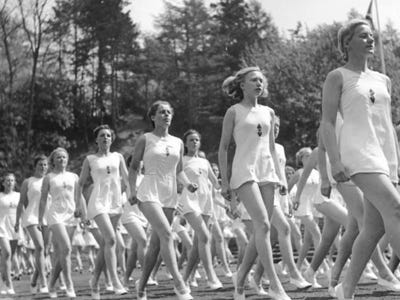
German girls practicing gymnastics, 1941 (Wikimedia Commons)

The Nazis believed the Aryan race was superior to all others. Keen to live up to this mantra, they wanted their young population to be as healthy as possible.

During Hitler Youth activities, boys and girls participated in sports and outdoor pursuits. The boys did sports like boxing, swimming, and running, whilst the girls did athletics and gymnastics.

Ideologically, boys were encouraged to become strong, dutiful soldiers. They were even shown propaganda films involving men taking part in healthy activities, such as hiking and marching. Girls, meanwhile, were encouraged to become obedient housewives and give birth to the next generation.

Though the Hitler Youth wasn’t compulsory, many parents felt they had no choice in the matter, for the children who didn’t participate could be denied their school leaving certificate. This would prevent them from getting a job in the future.

6. A Member of the British Royal Family Had Connections With the Nazis
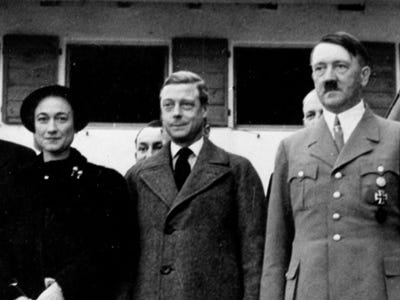
A photograph of Edward VIII and Wallis Simpson with Hitler, 1937 (Wikimedia Commons)

1936 is one of the most interesting years in British history. At the start of the year, King George V died, and he was succeeded by his eldest son: King Edward VIII.

But there was a problem. Edward wanted to marry an American socialite called Wallis Simpson. Given she was a divorcee, both the government and the Church of England disapproved of the match. In the end, Edward’s love outweighed his sense of duty, and he abdicated at the end of the year.

In October 1937, Edward and Wallis (who had recently got married) traveled to Germany. They visited factories, dined with high-ranking Nazis, and had tea with Hitler. The disgraced royal even performed the Nazi salute during his visit.

Worse still, the historian Andrew Lownie has revealed that Edward made reports on the French Army during his time in Paris in 1940. These reports were passed to Charles Bedaux, a Nazi agent.

However, the extent of Edward’s support for the Nazis shouldn’t be exaggerated. It’s hard to know exactly what his motivations were, and historians continue to debate this topic today.

7. Boarding Schools Were Set Up to Train Future Political Leaders
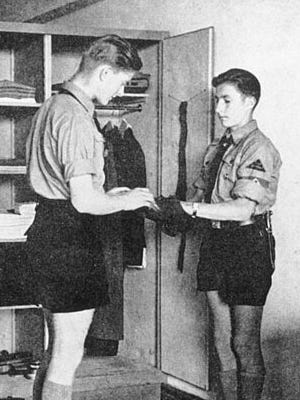
A photograph of boys at an Adolf Hitler School, c. 1940 (Wikimedia Commons)

In 1937, the Nazis set up a series of boarding schools called Adolf Hitler Schools. The primary purpose of these institutions was to create leaders for the next generation of Nazism.

Teachers emphasized the superiority of the Aryan race and the glorification of war. Themes studied in literature included wartime heroism and the struggle for the fatherland. Textbooks also emphasized the importance of territorial conquest in Eastern Europe, known as Lebensraum.

To gain some experience in the world of Nazi politics, students at the Adolf Hitler Schools did practical work in different offices of the Nazi Party. This gave them an insight into the jobs they would undertake after leaving school.

8. Hitler Was a Patron of the Arts in Nazi Germany
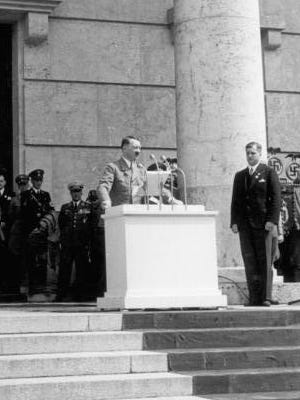
A photograph of Hitler making a speech during the opening of the Great German Art Exhibition, 1937 (Wikimedia Commons)

Before the First World War, Hitler struggled to make money as a young artist in the Austrian capital of Vienna. Though ultimately opting for a political career, his love of art remained.

In addition to opening exhibitions and purchasing pictures for party buildings, Hitler spent lots of money at the Great German Art Exhibition, an event that was held multiple times in the late 1930s and early 1940s. In 1941, for instance, he bought approximately 1,000 pieces of art and distributed them through ministries and public buildings.

In recognition of his efforts, the Munich Academy of Art honored Hitler by giving him a medal with an inscription on the back:

“To the leader of the German people, Adolf Hitler, who has put national thought in the center of our spiritual life and who has rendered back to art its old rights.”

9. Some of the Worst Concentration Camp Guards Were Young Women
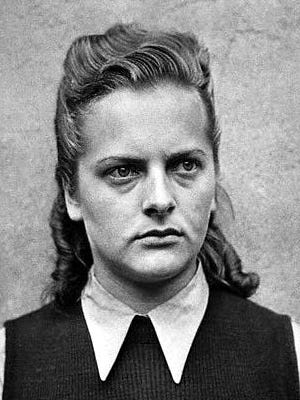
A photograph of Irma Grese, 1945 (Wikimedia Commons)

In all historical contexts, men tend to be more violent than women. There are a range of reasons for this, but higher levels of competitiveness and aggression are the main ones.

Consequently, the vast majority of the most notorious Nazis were men, not women. Yet there were plenty of exceptions to this rule. In fact, many female concentration camp guards were sadistic maniacs.

Irma Grese is an obvious example. This twisted individual worked at Auschwitz and Bergen-Belsen and developed a terrifying reputation. Grese enjoyed slashing prisoners with her whip, ordering her hounds to tear people apart, and kicking the life out of her victims. After the Second World War, she showed no signs of remorse and was sentenced to death. She was just twenty-two years old at the time of her execution.

Dorothea Binz is another noteworthy example. Though a little older than Grese, her crimes were just as bad. After initially working in the kitchens at Ravensbruck, she worked her way up and became a camp guard. Binz enjoyed beating prisoners without provocation, ordering her German Shepherd to carry out savage attacks, and whipping people in the face. Like Grese, Binz was also convicted of her crimes and executed.

Though not as powerful or influential as some of the leading males in the Nazi Party, the crimes these young women committed were horrific.

10. The Nazis Murdered Hundreds of Thousands of Disabled People
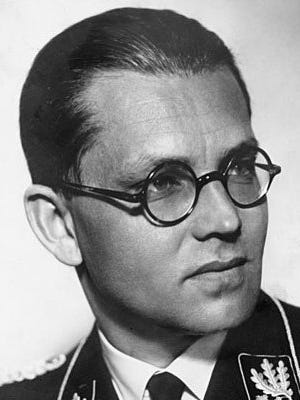
A photograph of Philipp Bouhler, 1936 (Wikimedia Commons)

In the autumn of 1939, Hitler issued a decree requiring doctors, nurses, health officials, and midwives to report signs of mental retardation or physical deformity in all infants and children up to the age of three.

From this data, a panel of “medical experts” decided which of the children should live or die. Those who were selected were taken to what was essentially a pediatric killing ward. Here, they were either killed via lethal injection or moved to places known as “hunger houses,” where they slowly died from malnutrition.

This twisted policy extended to disabled adults as well. Hospital officials were required to report all patients suffering from conditions such as schizophrenia, encephalitis, epilepsy, paralysis, Huntington’s disease, and physical deformity. The selected men and women were transported to euthanasia centers and killed in gas chambers. This twisted practice was managed by Philipp Bouhler, the head of the Nazis’ euthanasia program.

The Nazis also murdered thousands of disabled people in Austria, Poland, and other occupied territories. Many were shot, whilst others were burned, starved, or poisoned.

Sources

Art of the Third Reich (1992) by Peter Adam

A Brief History of British Kings & Queens (2002) by Michael Ashley

Hitler’s Forgotten Victims: The Holocaust and the Disabled (2010) by Suzanne E. Evans

Nazi Germany: A New History (1995) by Klaus P. Fischer

Nazi Women: Hitler’s Seduction of a Nation (2003) by Cate Haste

The Mammoth Book of Killer Women (1993) by Richard Glyn Jones

Nazi Germany (2004) by Michael J. Lynch

Life in Nazi Germany (2015) by Hal Marcovitz

Kings & Queens of Britain’s Modern Age (2008) by Charles Philips

Education in Nazi Germany (2010) by Lisa Pine

Women and Nazis: Perpetrators of Genocide and Other Crimes During Hitler’s Regime, 1933-1945 (2011) by Wendy A. Sarti

History
Nazis
Hitler
Holocaust
Fascism
Recommended from ReadMedium