
TRAVEL. CULTURES
Ten Things You Didn’t Know About Thailand
Different country — different culture
“Big, fat lady is strong, feel no pain.” Those were the words the doctor was telling me because I didn’t make a move when she poked a needle into my body.
Right.
I first had to swallow before knowing how to react and fake-laugh in response. I do know every culture has a different understanding of body image and language. This Thai doctor surely didn’t want to insult me but rather make a compliment. But this European lady knows those words only in a combination with being unhealthy and too big.
This is where culture clashes come into place. Different cultures, different traditions. But not just religious rituals but also the way we use language and which sentences are a compliment to us. Different cultures also have different body ideals and health mindsets.
And while different cultures can teach you a lot and widen your horizon, you must make sure not to insult anyone by ignoring their tradition and language. It helps to do some research before going to a new country to be able to understand the locals better. And here I am not just talking about a new language.
While I am totally fine with hearing sentences like the one above from the locals here (not), I am now on the way to signing a contract in the gym. Yes, my physical body is sure stronger than my mental one. That sentence stuck.
So let’s do some culture learning and teach you whatever I learned about the Thai culture and their country already.
- Thailand has a different alphabet.
- Thailand is in the year 2565.
- There are no kitchens inside Thai homes.
- Beds in Thailand are rock hard.
- Thais have a female and male version of saying thank you.
- You can’t (shouldn’t) throw toilet paper in the toilet.
- The convenience stores of 7/11.
- They wrap bananas in plastic packaging.
- Scooters and bikes do belong to the front at the traffic light.
- You cannot buy alcohol at certain times of the day.
But let’s get into details.
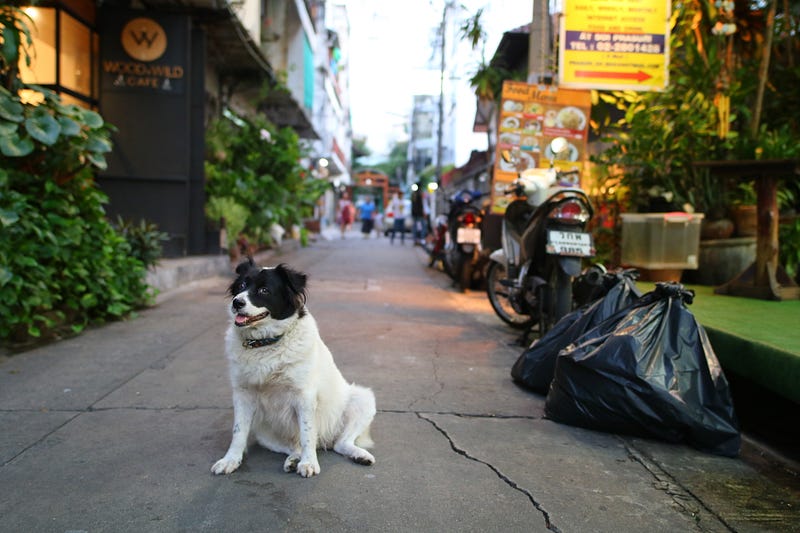
1) Thailand has a different alphabet
I chose this one as the first of many things because I got hit as I entered the country. I must admit, I was ashamed and embarrassed. As a world traveler, I thought I was always well-prepared when going to a new country.
Not so much in 2018 when I visited Thailand for the first time with my boyfriend (now husband). As we left the airport and drove towards the city with a bus I was staring at all the massive billboards. They were all hieroglyphs to me.
Not that I couldn’t understand what the words meant, I couldn’t read the letters. And I just realized Thailand had a different alphabet. I felt so embarrassed for not knowing that beforehand.
So, just be informed. Thailand has its own alphabet called the Thai script. It is only being used in the country itself.
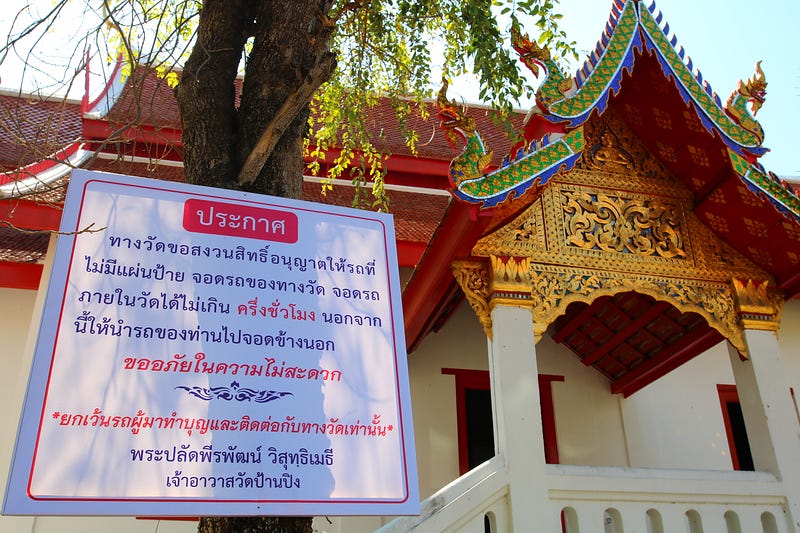
2) Thailand is in the year 2565
The second thing I didn’t know about the country is that they have a different calendar. When trying to read the expiry date on food products I got confused by the numbers 2563. I didn’t get what that was all about.
Until I learned Thailand does not use the Gregorian calendar like most countries in the western world but uses instead a lunar version of the Buddist calendar which is 543 years ahead of us.
The traditional New Year’s Day and the most popular holiday of the Thais is the beginning of their year which is in April.
3) There are no kitchens inside Thai homes
Or let's say in most of them at least. If you do plan on renting an apartment or house in Thailand keep that in mind. The flat might be advertised as furnished and has beds, cupboards and a fridge inside of it. But you won’t find any cooking facilities.
Thais usually do not cook inside their homes but instead on their terrace or balcony. Bigger and maybe richer families built an outdoor kitchen for their property. But most other Thais will simply cook on their doorstep on one or two hot plates on the ground.
We’ve learned this when renting first a studio and later a two-story house in Thailand in 2019. We had two bedrooms and two bathrooms and a large living area downstairs.
But no kitchen.
So, you either go out every day for lunch and dinner (which can be the cheapest option since street food is incredibly affordable in Thailand) or you buy yourself one or two cooking plates and place them into your home (or on the balcony).
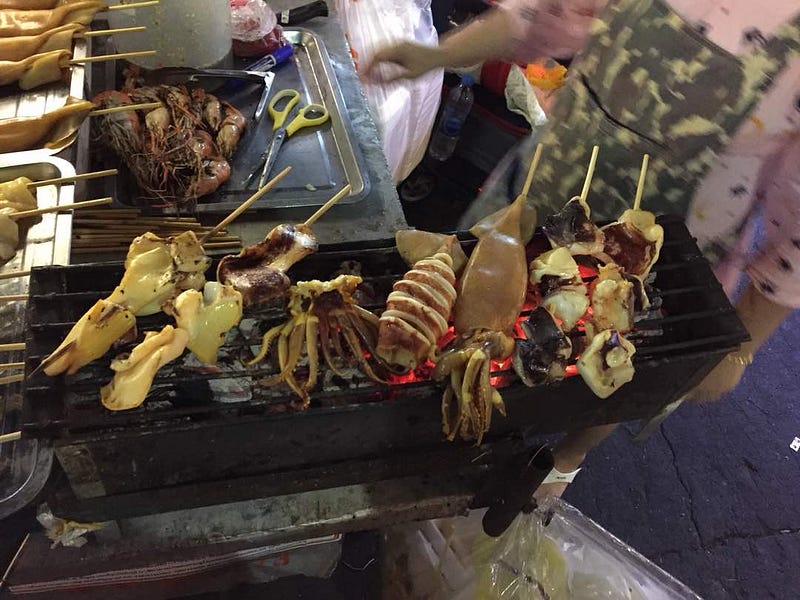
4) Beds in Thai homes are rock hard
Yes, we have to talk about beds. I don't know why. Maybe because the average Thai person weighs half of what I weigh (and I am an average-sized woman in Europe). But those beds are seriously rock hard. You might as well sleep on the tiles. Makes no difference.
If you book yourself into western-style hotels and upper-class accommodation you might not encounter this problem. Because you can buy softer mattresses in the country. But if you’re on a budget booking yourself into hostels or cheap bungalows, you will experience this for sure.
When we moved into our home we just bought ourselves a topper which is like an extra layer you can put onto the actual mattress. It made a huge difference for us and let us sleep comfortably without waking up with neck and back pain.
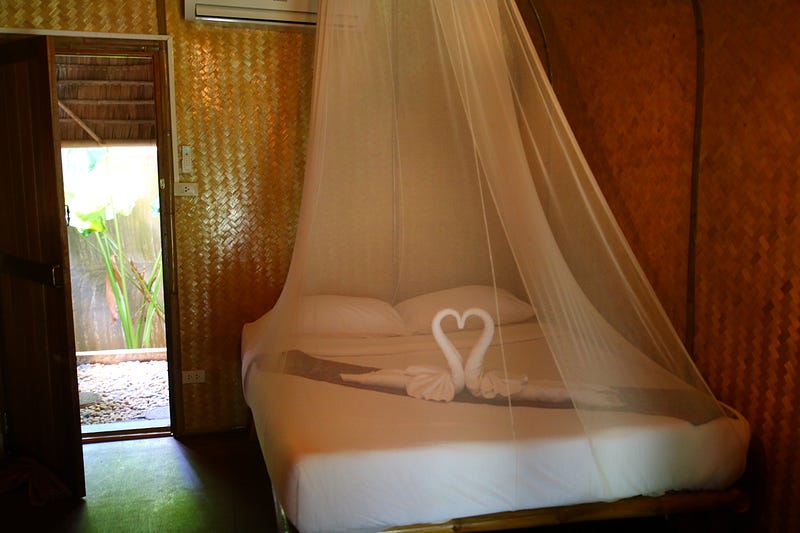
5) Thais have a female and male version of saying thank you
The Thai culture is a very friendly one. Thais do always greet and say please and thank you. Wherever you go and whatever you ask them, you will get an answer.
They will say thank you if you leave a store, if buy something on the street, or if you simply smile at their child on the street. You will always hear them saying “kob khun-krub” or “kob khun-ka”. The reason why there is an or in my sentence is because it depends if the person is male or female.
And this doesn’t just go for thank you. If you say hello or sorry you also add at the end krub if the person talking is male and ka if the person is female. And if they talk English to you they’ll say “thank you-ka/krub”.
Thank you for listening and kob khun-ka.
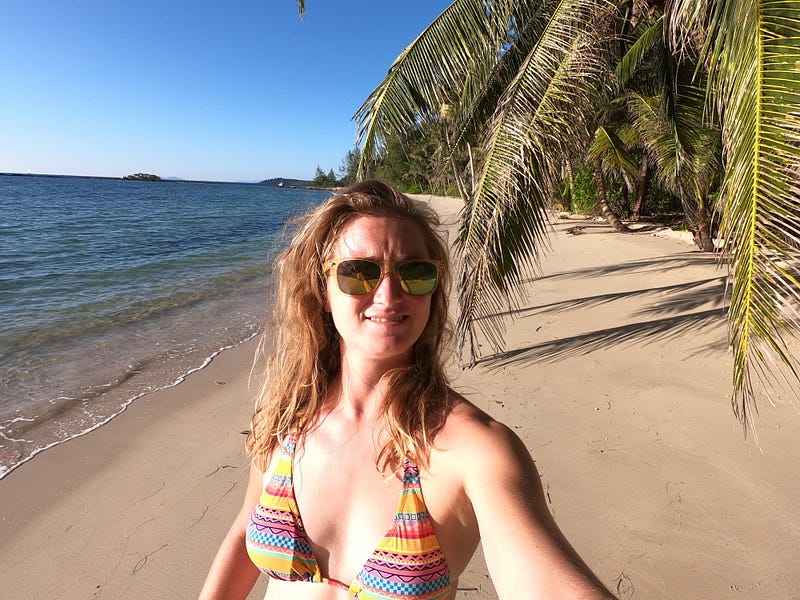
6) You can’t (shouldn’t) throw toilet paper in the toilet.
Yes, this is another thing I came across I had not encountered before. While traveling through Africa I surely have been to some weird or dirty restroom facilities. I’ve been squatting in the bush and carrying my own toilet paper with me.
But I’ve never encountered a sign saying “do not flush toilet paper”.
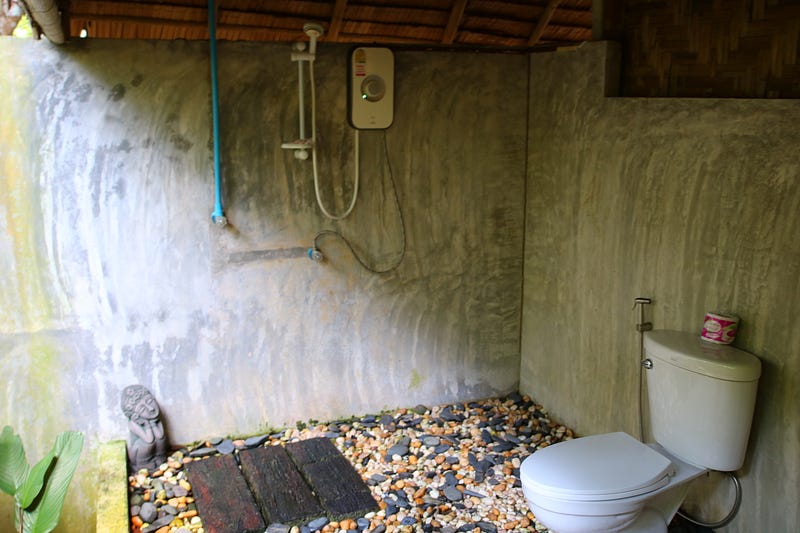
Yes, in Thailand you cannot and should not throw the toilet paper into the toilet. There will always be a bin provided next to it. That is where your trash will go.
The drainage system is simply not strong enough to flash piles of toilet paper. Thailand isn’t just a very populated country but also hosts each year millions of tourists (at least before the pandemic). And that is what you have to do in order not to block a toilet.
For most westerners, this might sound weird to dispose the toilet paper in a bin. But to answer your question — it does not make your bathroom disgusting. We lived in a house for almost a year and had no issues with it. We simply bought a bin with a lid and sometimes trash bags that were scented. No disturbing smell when you enter the bathroom, I promise.
Just please don’t be the ignorant traveler and block the hotel room’s toilet by flushing your toilet paper. It is not necessary. Just follow the country rules. Kob khun-ka.
And while we’re talking about toilet paper, just one more hint. Bring your own. I’m not saying to bring it from home but if you travel throughout the country you will surely get to visit some restrooms with no toilet paper to find. They use a hose instead. And if you don’t like that, simply buy a roll at 7/11 and carry it with you.
7) The convenience stores of 7/11
This brings me to the next topic. I guess a lot of you out there know the convenience stores named 7/11. But if you’re from Europe like me, you might have never heard of them before.
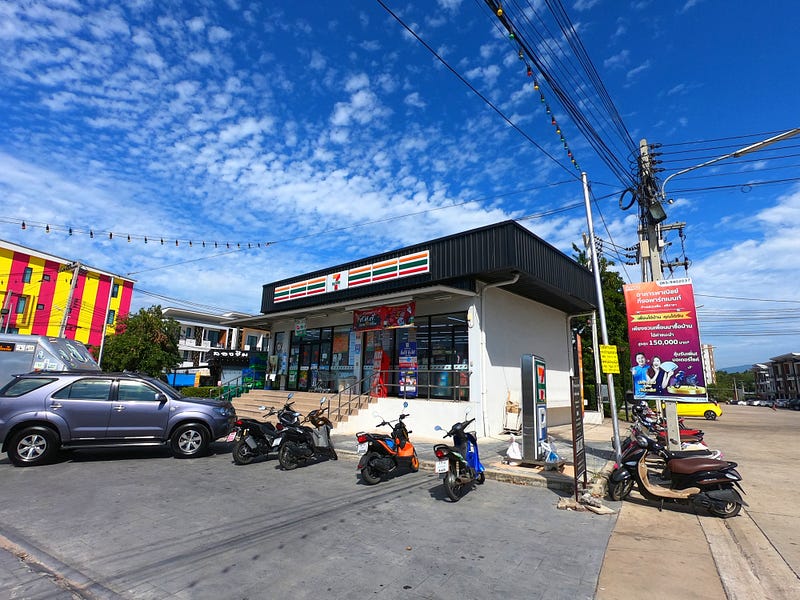
Well, that is going to change if you come to visit Thailand. You’ll find a 7/11 supermarket at every other junction and usually a second one on the other side of the road. In cities, you won’t have to walk more than 200 meters to get to the next 7/11.
But what to buy in this store? Literally, anything. From toothbrushes and sunscreen over washing liquid and toilet paper to drinks, snacks, and entire meals. There are obviously bigger and smaller 7/11 stores but all of them will have something of what you’re looking for.
The most convenient thing of these supermarkets is in my eyes the option of getting a warm meal. You can find toasts, rice dishes, soups, and other meals. They will prepare them either in the toaster or warm them up in the microwave. The meals are cheap and filling.
I do not always eat at 7/11 but especially at the beginning of my very first trip to Thailand, I would always fall back onto their toasted sandwiches whenever my European stomach was complaining and couldn’t handle any more spicy food or Asian dishes in general.
8) They wrap bananas in plastic packaging
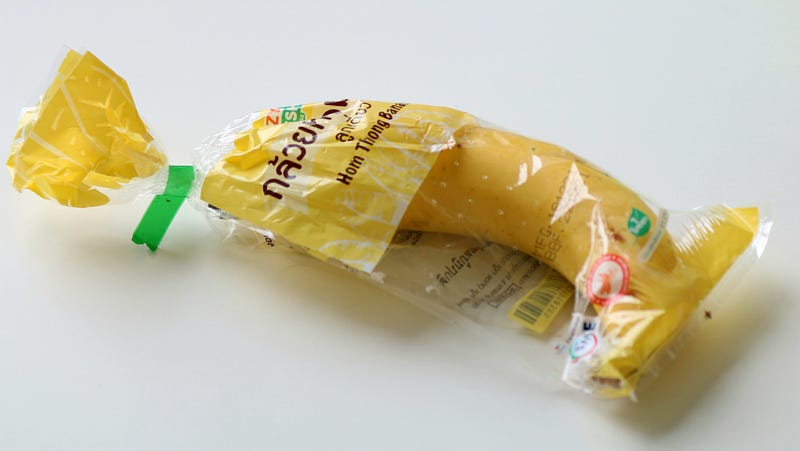
And while I am at the 7/11 there is one thing that disturbs me a lot. Yes, whenever we do buy food, we say “no bag please, no plastic, no plastic spoon wrapped in plastic, and no extra plastic bag to put all the plastic inside of it.”
Because they sure love their plastic packaging. They even sell single bananas in the store. Each of them is wrapped in plastic. Not sure if they do know that bananas come with their very own and very hygienic packaging. It’s called the banana skin. It protects the actual banana from getting dirty and you can easily peel it off.
But no, they put each banana in a separate plastic packaging…
9) Scooters and bikes do belong to the front at the traffic light
But enough about food and buying groceries. Let's get on the road. Of course only if you’re street-wise and have some experience in driving scooters and bikes. Because traffic in Thailand is no joke. It’s busy, it’s loud and it gets crazy.
Don’t try to drive here by following the strict German rules. You gotta see rules made by the government and rules that actually count on the road with different eyes.
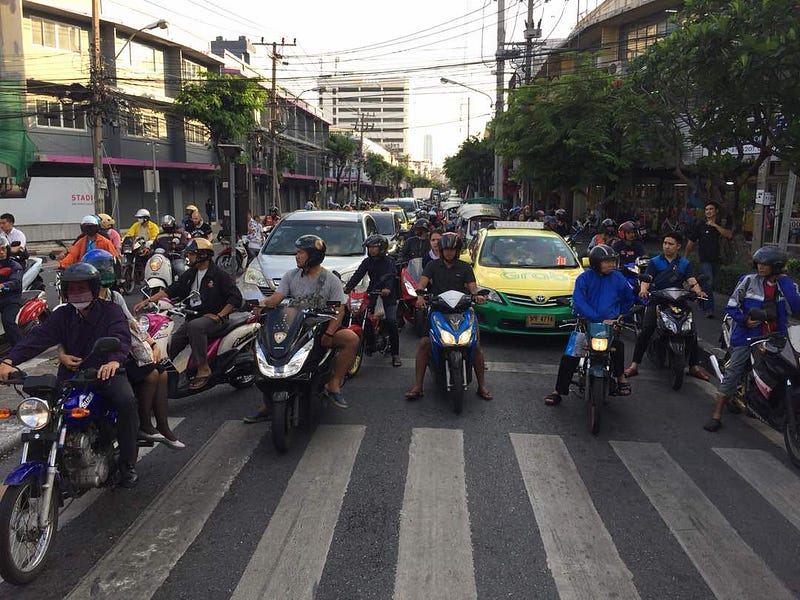
The one rule I’ve learned early by sitting on the back of the bike of my African husband is that bikes are indeed allowed to squeeze in between traffic all the way to the front. You will get honked at if you’re on a scooter and patiently wait at the back behind all the cars.
That’s not your place to stop. Drive between or next to the cars all the way to the front. Right at the traffic light will be an area of at least 2 to 5 meters long where the bikes belong. Some cars even stop a bit further back just to make enough space for the bikes in the front.
So that when the traffic light switches from red to green, all the bikes can speed ahead of the usually slower vehicle traffic of cars and trucks.
10) You cannot buy alcohol at certain times of the day
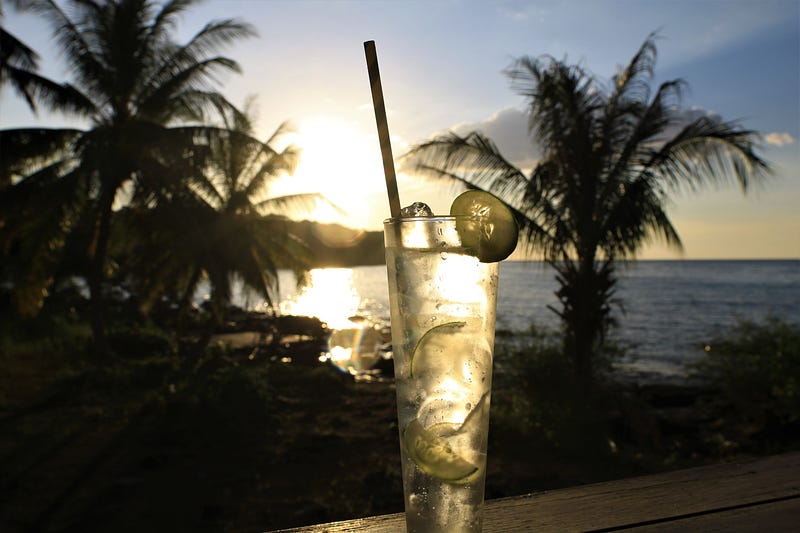
And now I’m getting to the party people and all those who love to enjoy a cold beer for sunset. Many countries have very different rules on the sale of alcohol and this should always be something you find out in advance.
In Germany for example there’s no limit on when you can buy alcohol but supermarkets are closed on Sundays, so you rather plan ahead on your Sunday grill party.
In Namibia on the contrary, supermarkets are open 7 days a week but you can’t buy alcohol on Saturdays after 1 pm and on Sundays and public holidays the entire day.
In Thailand, you can buy alcohol every day of the year (except for a few public holidays) but only at certain times. The earliest you can get alcohol at a supermarket is at 11 am. But between 2 pm and 5 pm, they won’t sell you any alcohol. From 5 pm you can buy your booze for the night but only up to midnight.
These rules do count countrywide and were implemented in 2015. In restaurants and bars of course you can buy and drink alcohol whenever you get to sit down but in supermarkets, you won’t get past the till, and sometimes they even lock the beer fridges at the said times.
This has caught us off guard a lot especially when we used to do our weekly shopping in the big supermarket and would load all the beers in the trolley but by the time we’d get to the till it was past 2 pm and they wouldn’t scan our alcohol.
If you need a beer but don’t want to sit in a restaurant you can still look for a street market or local stall where you will most probably get alcohol at any time of the day. But don’t tell anyone.
Final words
So, these are lessons I’ve learned during my time traveling through and living in Thailand. They are random, just as they came to my mind. But they are important. In my eyes.
Please let me know if there was something new you learned or if there was a topic or two you knew already. I’d love to hear about your experiences and whatever felt strange to you when coming to Thailand for the first time.
Join my email list here if you would like to read more travel essays or sign up for the Medium membership to receive unlimited access to my and other writer’s stories out here (I will receive a commission fee in return).


