
10 Networking Tips to Help Boost Your Career
Networking can be a powerful tool to meet people in business — if you're not standing alone in the corner.

I have done a fair bit of networking over the past five years.
I run business networking events called LinkedIn Local Hamilton.
It helped me meet people that have helped me further my career and gain new clients.
It has helped me immensely.
But it's not easy if you are an introvert! It takes you out of your comfort zone.
Here is what I've learnt.
Business Networking
Business networking is interacting and conversing with other people to develop professional contacts and exchange information, usually in an event or meeting setting.
Networking helps individuals to establish and nurture long-term and mutually valuable relationships, popular with career-focused professionals.
The aim is usually to expand one's circle of influence and acquaintances to enhance opportunities to further one's career — whether a new job or promotion or to meet potential future clients, customers or business partners.
Invest time (and a little bit of money) into increasing your networks and relationships — personal and professional, and in the long run, you will reap the benefits.
Although we often have individual goals, we should not forget that networking is for mutual benefit.
If you want to further your career opportunities, you should be networking. Opportunities to network exist all around us. At the supermarket. At the gym. Picking up the kids from school or watching them play sports, or at religious gatherings.
We should not neglect our networks as an opportunity to grow our business network. As they say, it is not what you know but whom you know.
Growing your networks will help you establish rapport and trust in your local community, so look for opportunities to network strategically. Consider locations where you are likely to meet new people with shared professional or personal interests and where you feel comfortable.
Volunteering is one way to meet people and put yourself in a positive light, whether coaching or a local community group.
Business networking events
Business networking opportunities can occur in all sorts of settings. Beyond water cooler chat in the office, professionals can network in locations such as conferences, tradeshows and expos; set up to attract large gatherings of like-minded individuals.
Networking can be very draining for introverts — it takes a lot of energy.
I have many introvert characteristics and can feel very physically and mentally drained after a big networking event. It would help if you focus your energy in the right places that are most beneficial for your goals, so you have not wasted all this energy.
There are several options for business networking; this section will cover a few of those options to help you choose what might be best for you. There is no "one size fits all" for networking — different settings and strategies will suit other people.
Try different networking events to see what is more comfortable for you.
Do you like busy open networking events with noise and atmosphere, or would you prefer a sit-down coffee group with a dozen or so people, each taking a turn to talk?
Whether you have introverted or extroverted characteristics will influence how comfortable you are in a particular setting.
Work out what type of networking setting suits you best, where you can meet the right kinds of people to help you further your career.
Here are some different options.
Chamber of Commerce
If you join your local Chamber of Commerce, often they have a range of events set up for their members.
A Chamber's goal is to promote sustainable, profitable business growth in the local community for its members. Often, they run events once or twice a month with designated speakers on a particular theme, and there is a networking portion of the event.
BNI
The BNI group (Business Network International) is one of the most well-known and popular networking groups for business professionals.
BNI is an American model franchised around the world, boasting over 270,000 Members in 9,500 Chapters worldwide. They call themselves "the world's leading business referral organisation" and are often very structured, and members meet weekly or fortnightly, usually over breakfast.
There are a significant emphasis and expectation to provide referrals for other members, and because of this, there is a membership fee to be a member. Typically only one person from each profession can be a member of each chapter.
Many of the networking skills discussed in this will not apply as this format is structured, and everyone gets a turn to talk about themselves and what they do.
Coffee groups
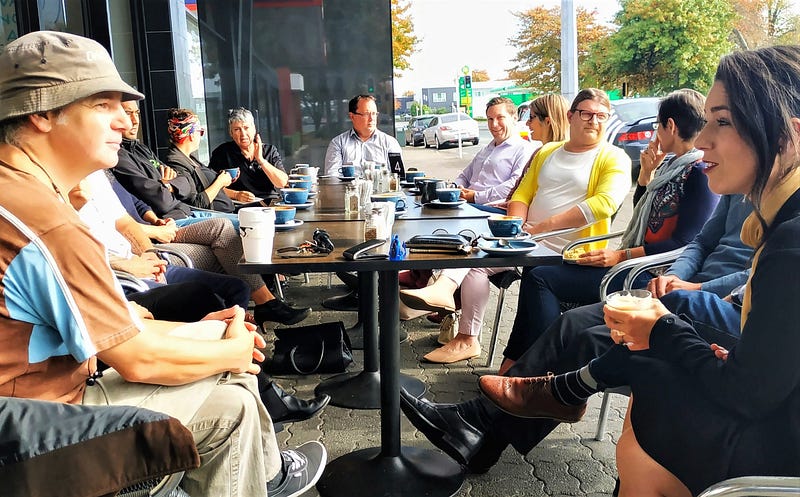
Coffee groups are a fantastic way to build relationships with people over a period. You could consider starting your own, set up through a Facebook or a LinkedIn group, or your local mailing list.
I run a local coffee group that meets once a month on the same day, time and location, to make it easy to lock into the diary.
Everyone gets 30 seconds or so to give their elevator pitch. Then we all have informal discussions with the people next to us, or sometimes as a whole table (inevitably, smaller conversations break out with 10–15 people).
There is no fee to attend and no obligations for referrals like a BNI, so it has quite a relaxed feel. Once you build trust with people, referrals will naturally come.
LinkedIn Local
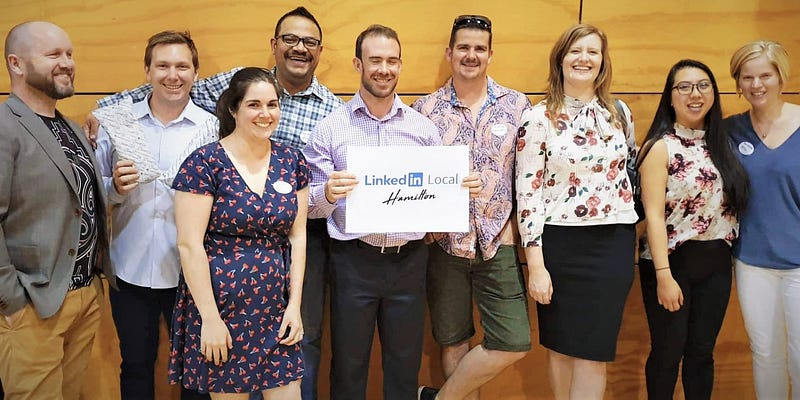
LinkedIn Local is a business networking event set up to leverage the growing popularity of LinkedIn and its professional networks. It is in over 1000 cities worldwide, and the format depends on the individual event and its host. Some events are small coffee group type gatherings or at a bar, and some are more large scale in a specific events space.
I run one called LinkedIn Local Hamilton, and we have an attendance of between 150 and 200 people per event. It is free to attend and sponsors fund free drinks and nibbles.
There are a real buzz and atmosphere at the events, quite different from a BNI group. It is a great format to strengthen online relationships by meeting connections in person.
The benefits of networking
A solid professional network can have many benefits that can influence the success of your career and growth. Here are some of the benefits you will receive through planned and regular networking.
Career development
The overall goal for most people who attend networking groups is the evolution of their careers.
Some people might have a specific goal of short-term sales or meet a particular person or type of person, but these goals all work towards the grand vision of being more successful in life and business.
People used to have jobs, and now people have careers. More businesses would emphasise their staff's professional development in an ideal world, but it is usually up to the individual to further their career.
The average life span for a job is five years, even less for those under 35. Career-focused individuals often have an eye or ear out for better opportunities to further their careers.
More opportunities
Developing your career is a long-term game, and consistently networking will open many new doors for opportunities.
If you are a good networker, you will find opportunities to connect with different people everywhere you go. You could meet people who end up being a mentor to you or build a stronger relationship with somebody from senior management in your workplace.
Do not dismiss the workplace as an opportunity for networking. Often large workplaces have an end-of-week or end-of-month drink, which could be beneficial to your career progression.
You could also use environments such as after-school sport when you chat with other parents as an opportunity to improve your soft skills, and you never know where you might find opportunities. It is all about building relationships with relevant people consistently over a period.
Networking is the perfect opportunity to put yourself out there for opportunities for people who recently lost a job or finished their studies.
You never know whom you might meet who could be hiring or giving you a lead or referral that lands you the role you desire. Somebody might connect you with the right people, and networking helps you watch the local job market.
Like it can help you find a new job, networking is a great environment to meet clients. The more people you meet who know what you do, the more likely you will find new clients who want to engage you. Whether it is directly or through referral because of the trust you have built through networking.
Increase your local profile
If you have been to a networking event before, you have probably noticed that there seems to be somebody who knows everybody.
Chances are, they are probably regular on the local networking scene, and professionals can leverage networking to increase their profile.
When you become well-known and well-respected by many people, this increases their general awareness of what you do and your expertise, leading to more business opportunities.

“Every man I meet is my superior in some way. In that, I learn of him.” (Carnegie, 1936)
Exchange ideas & knowledge
Networking is the perfect opportunity to learn. Therefore, an essential skill to have as a networker is listening, as people who are strong networkers sometimes exchange valuable information that is not public and only gained through conversation.
Whether it is keeping up with current affairs, local news or industry knowledge and trends, the ideas and information gained from networking can help a career move forward.
This sharing of knowledge also helps cement relationships by enhancing your credibility and mutual trust. Networking is a two-way street, so do not underestimate what value you can provide by sharing your knowledge.
Boost your confidence
Networking will help you develop and improve your soft skills, increasing your confidence to start conversations with new people.
This increased self-esteem can be beneficial in the workplace when having conversations with senior staff members or in your following job interview. Without thinking about it, your body language will be a lot more positive from this self-belief.
Students often have not had many conversations with working professionals, and once they leave their bubble of student life, they can be a little nervous in job interviews or networking for the first time, and it can be daunting.
Actively interacting with your industry professionals to gain networking experience and confidence can set you apart from your peers in the job hunt.
10 Essential Networking Skills
Although it seems like great networkers are natural, and often extroverts can be, it is just as much a skill learned and acquired. Here are ten networking skills or tips that you can use to become better at networking.
Have a plan
The first thing you can do to improve your networking is to have a plan. When I first started networking, I must admit that I had no idea what I was doing and would stand awkwardly in the corner and get nothing from it.
Building a network is just like any other goal you have in life, and therefore, you need some plan on achieving this goal.
Often people uncomfortable with networking view it as a work activity, making it seem quite loathsome. This mindset will not put you in the right frame of mind for networking. If you link networking with a higher goal, you will come with a much more positive mindset.
Whilst you do not need a specific goal for each event like I to have to talk to X person, it is essential to plan what you want to achieve to increase your chances of meeting the right people.
Choosing suitable events to attend can define your success as a networker. Have broad goals for each event, such as meeting with three people in your industry and knowing what actions you need to take.
Find familiar faces
If you feel uncomfortable and anxious about networking with people you do not know, look for familiar people and join their group.
It might be work colleagues or people you have met briefly previously. If you start here, you will likely meet new people by introducing you to people they know. You will also grow in confidence, and after a while, you will get a feel for the atmosphere and grow enough courage to approach other groups.

Find other people who are alone.
If you cannot spot anybody you know, try and find other people there alone.
The chances are that they are feeling just as awkward as you are! Not everybody who attends networking events is seasoned pros. Often, many people such as yourself are new to networking or new to the area.
Approach them in a light-hearted way and ask if they are there alone too, and how it is awkward not to know anybody there when everyone else seems to know each other. You will probably share a laugh, and their walls will come down, and you might have a delightful conversation.
Other people might notice this and come and join you.
Position yourself near the bar if you are alone and looking for somebody to chat with.
The worst thing you can do is try and capture people as they walk in. Chances are they are tired and or hungry after work, and the first thing they want to do is grab a drink. They will be far more comfortable and ready to chat if they have just grabbed a drink.
Remembering names
When you meet a person or group of people for the first time, do you forget their names 30 seconds after introducing them?
I am the first person to admit that I am terrible at remembering names. Unless I am focusing on remembering names, it is like they are instantly gone from memory.
Forgetting names will not help your networking very much, as it can be very awkward trying to remember somebody's name, and you might steer clear of them to avoid the situation.
On the flip side, people love to hear their names, and it will leave a great impression if you remember their names and introduce them to someone else.
Luckily, remembering names can be a learnt skill. Try and attach a visual cue to a unique facial or body feature of each individual. If it rhymes, that will help even more. You might meet a guy called Henry or Harry, who has a long beard, and the visual cue that helps you remember his name could be hairy.
Body language
Body language can be a crucial factor at networking events in how many conversations you attract in the evening.
Go in with a positive mindset and Smile! If you are uncomfortable, try not to focus on this. Your body language will reflect awkwardness, and people will feel this energy and will not approach you. Try not to look serious. Focus on happy thoughts and be open with your body language.
Smile at anyone who looks in your direction and say hello. Whilst engaging in conversation, the head tilt is a positive cue to create rapport with the other person. This body language shows the other person that you are interested, paying attention and listening.
Entering conversations
One of the most challenging things to do as a networker is to enter a conversation already in full flow. Especially if none of the people in the conversation knows who you are.
Confidence is essential when networking, but do not go in, all guns blazing and interrupt a group conversation.
Instead, wait for your moment. It will make a wrong first impression if you interrupt the flow of the conversation. Start by listening, and then find a moment where you can add some value. If you can ask somebody a question, this is a gentle way you can enter a conversation.
Listening to others builds them up. Many people at networking events love to talk about themselves.
If you are not a confident networker, let other people lead the conversation. If you show genuine interest, nod in the right places and ask questions to find out more about their experiences and opinion, it will leave a great impression without you having to say very much.
“You can make more friends in two months by becoming interested in other people than you can in two years by trying to get other people interested in you.” (Carnegie, 1936)
Focus on learning
As discussed earlier, the benefit of networking is the exchange of ideas and knowledge. Therefore, part of your mindset when networking should be to learn as much as possible.
Focus on learning instead of what you plan to get out of that specific conversation, and you will come across in a positive light.
Approach networking with curiosity and an open mind about what interesting people you might meet. If you want to learn something new about someone, your conversation will seem far more authentic to the other person.
You may have an interesting conversation that gives you new ideas leading to new experiences. Concentrate on how networking helps you boost your knowledge and skills to further your career.
Identify common interests
Memorable conversations often begin with a point of common ground. Your kids go to the same school, or you are members of the same sports club.
The sooner you can identify any similarities you have, the sooner you will build rapport with that person, and the more comfortable the conversation will flow. This meeting will be the starting point for an ongoing professional relationship.
Consciously think about how your interests and goals align with the people you are meeting.
The easiest way you can do this is by asking questions to find out more about them.
The conversation will feel far less forced and more authentic and meaningful, which will be more memorable than the previous conversation about the weather. They will also appreciate that you tried to get to know them better and might introduce you to others in their network with mutual interests.
Pay it forward
Please do not make the mistake of looking at networking as something you do to get something out of it personally.
If you look at networking equally as an opportunity to help others, people will recognise this and be more willing to help you. Introduce your network to each other if you think they can mutually benefit and look for ways to provide value to people.
The more you learn about your new connections, the easier it will be to help them. It could be anything from a restaurant recommendation to introducing them to someone in your network.
A great networker will know people with skills and expertise in all kinds of areas. If they cannot help them personally, they will know someone who can. They will both feel grateful toward you for bringing them together, giving you brownie points.
There is nothing worse than talking to someone at a networking event. The conversation is cut rudely short when the other person realises there is no immediate benefit for them to gain from that conversation. They walk away to talk to somebody else. Do not be that person!
Following Up
Following up with somebody with mutual interest after meeting them at a networking event might sound obvious, but it is something that many professionals fail to do.
People get busy, and you can quickly become forgotten, wasting your hard work putting yourself out there. Following up reaffirms what you discussed, establishing your connection with them and opening future communication.
Within a couple of days, send them an email (assuming you swapped business cards) or connect with them on LinkedIn with a personalised message, reminding them who you are and your conversation.
Do not follow up too strongly; you do not want to ruin your hard work by coming across as clingy or desperate. Once you connect on LinkedIn, you can stay in touch by wishing them a happy birthday or tagging them in articles that could provide value to them. Just stay relevant — do not be pushy!
In Conclusion
Networking is a powerful tool to help you further your career.
This article has explored 10 tips to help you get more out of networking events.
Thanks for reading.
I hope you enjoyed the content about networking and learnt some practical tips that you can use to increase your career opportunities.
Now go out there and meet some people!
If you enjoyed the article, you might find this one on personal branding useful.
Read more Medium stories
Non-Medium members can only read 3 articles a month.
If you liked the content and would like to read more articles like this, sign up to become a Medium member for only $5 a month.


