
Ten Australian Bush Food Plants for Your Garden
A list of ten bush food plants that have thrived in my South-east Queensland garden.
Despite the general acceptance of Australia as a “barren” nation, there’s a plethora of Australian plants, suited to our environment and climate that can be grown in home gardens. This list includes ten plants of different habits that are Bush Tucker or Bush Food with a rich heritage in our sunburnt country. It makes sense to use native plants rather than their exotic cousins which can prove temperamental in our varying conditions. It was difficult to choose just ten species, but these are the ones that have been most rewarding in my garden rooms.
1. Tree or Hedge — Native Mulberry (Pipturus argenteus)
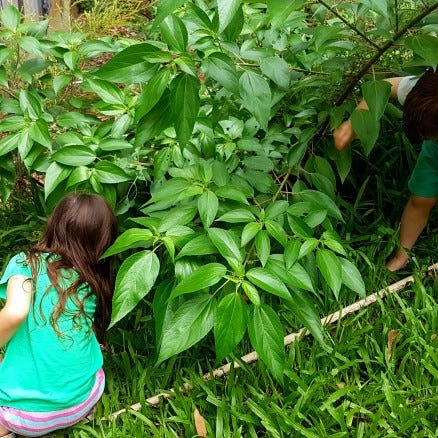
Topping the list is Australia’s Native Mulberry, also know as False Stinger or White Mulberry. This lovely tree grows quickly, can be used as an edible hedge and attracts all sorts of insects, amphibians and birds. It’s a hardy plant that prefers well-drained, moist soil, but will survive drought conditions with infrequent watering. The fruits are small, but sweet and juicy. It’s hard to get a substantial harvest but in my garden it fruits for around five months in Autumn and Winter. Children love to search the branches and gobble down the fruit, so it’s great for a foraging snack in the home garden. It is dioescious meaning that you need a male and a female tree to produce viable seed for propagation. The females will still produce fruit without a male tree. It can be propagated from cuttings just like exotic Mulberry Trees. It’s a great tree for butterfly gardens and children love to crawl under the branches looking up for eggs and caterpillars.
2. Bush or Scrambling Climber — Atherton Raspberry (Rubus probus)
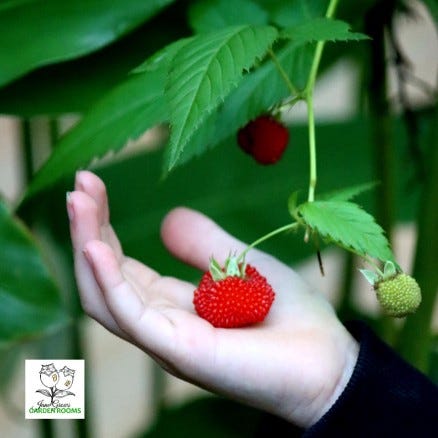
Next up is one you’ll probably want to keep in a pot or raised garden unless you have a big space. This scrambling vine or bush can be invasive. It also produces delicious fruit in significant quantities, with up to three kilograms of the berries each season. It will perform better in moist conditions, but will also tolerate drier conditions with the occasional watering. The berries are large and ruby red. They go through three stages of ripening, so it’s easy to pick them too early. On the third ripening they almost double in size over 24 hours. Children love to watch the berries ripen and they make a lovely jam, especially if you leave the white pith centre in the mix. It’s full of pectin! My bush stands two metres tall with no trellis, but it can be grown over a fence, trellis or wall. It’s perfectly adapted to Australian conditions and grows in the wild from North Queensland all the way to Tasmania.
3. Groundcover or herb — Slender Mint (Mentha diemenica)
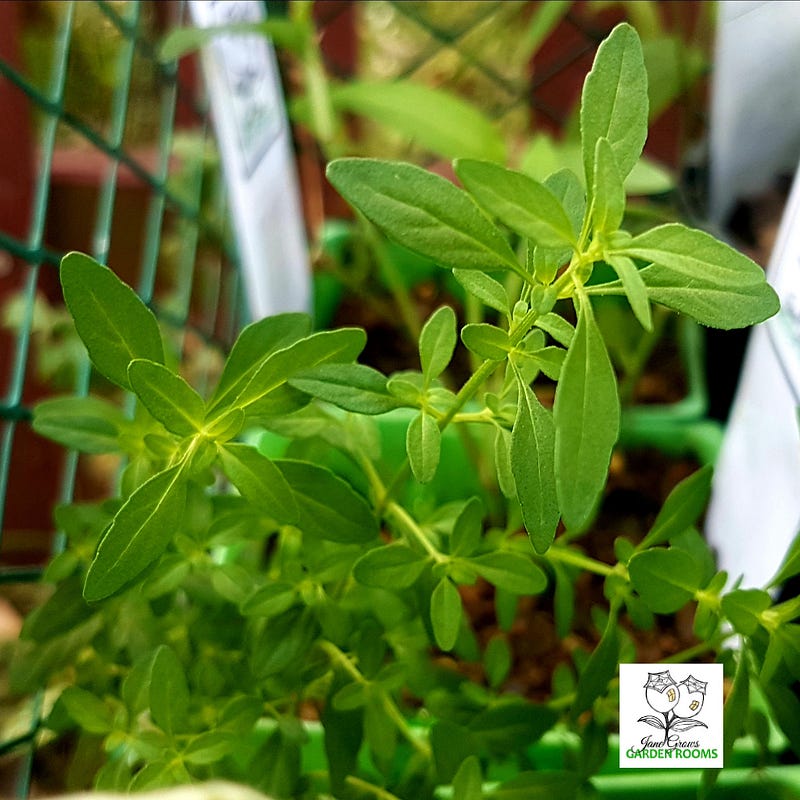
This native mint was used by colonists until European varieties were imported. It’s adapted to our local conditions and despite preferring a well-drained, moist position, once established it will simply die off to rootstock in dry periods before re-emerging in wet conditions. It can be used just like other Mint species, though caution is advised if you are pregnant. It can spread rapidly in good conditions, a point to keep in mind when choosing a position. It is a pretty plant with tiny white flowers and small luscious green leaves that looks lovely in a pot.
4. Tree or hedge — Lemon Myrtle (Backhousia citriodora)
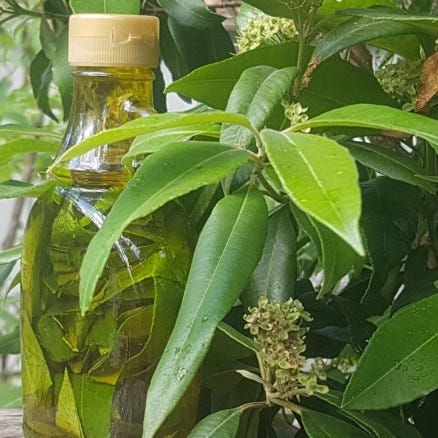
This lovely tree has a beautiful habit and can be hedged or trimmed to shape. The leaves can be used in the kitchen for anything from a herbal tea to a substitute for bay leaves to making a powder to add to shortbread recipes. It contains more citral than lemons and can be harvested all year around. The delightful flowers smell like honey as you brush past them. Every Australian garden from warm temperate regions to the tropics should have one of these trees!
5. Tree — Native Elderberry (Sambucus australisica)
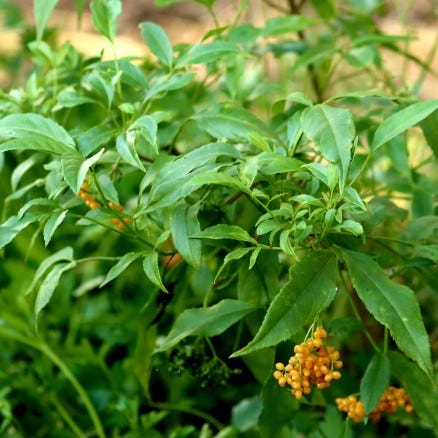
This tree is the perfect alternative to the European Elderberry and can be used in the same way. It is a hardy and vigorous grower which fruits all through Autumn and early Winter. The white flowers are subtle but pretty and the yellow berries which appear in small quantities consistently can be harvested and frozen until they are ready for use in the kitchen. This tree looks similar to other Elderberry trees making it an attractive addition to gardens and a great option for permaculture or food forests.
6. Groundcover — Sea Purslane (Sesuvium portulacastrum)
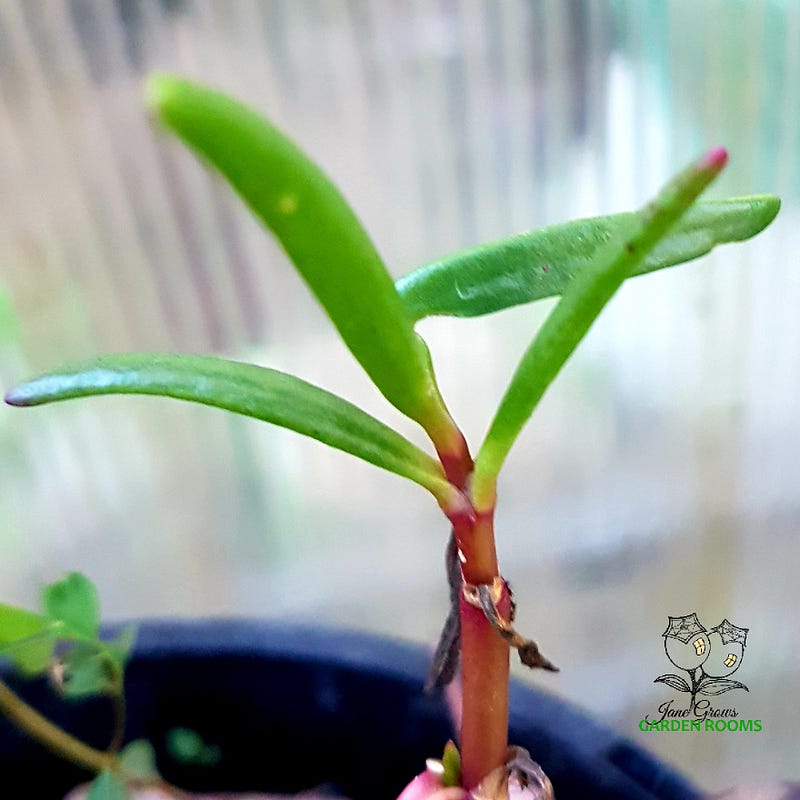
This sprawling groundcover adds salty “pops” to my salads. The “leaves” are crunchy and easy to harvest. It can also be cooked or pickled. It likes a sandy soil and is both salt tolerant and drought tolerant. It’s a great source of Vitamin C and it also contains a natural steroid. To get the best from this plant it should be watered during hot weather, but apart from that it is vigorous and low maintenance. It attracts lizards and other inveterbrates which will take a bite or two from the succulent leaves. If you plant it in Northern regions around the Australian coast, as far South as New South Wales, it should thrive.
7. Groundcover or no-mow grass — Native Violet (Viola banksii or Viola hederacea)
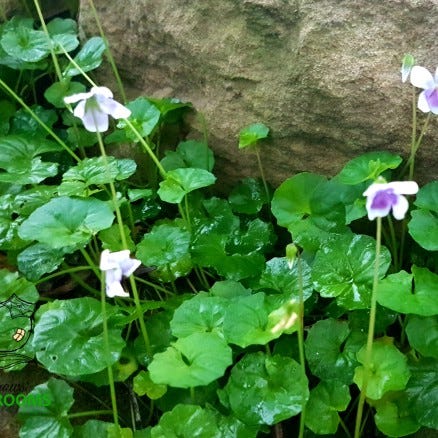
This lovely, lush, edible groundcover will tolerate light foot traffic and looks great clambering over rocks in a rockery. Its leaves and flowers are edible and make a great garnish or addition to salads. This hardy, little native is suitable for the Subtropics and Warm Termperate zones (V. banksii) or colder climates (V. hederacea). The latter is not as leafy as the former. It’s a great choice for boggy sites near ponds or dams. It also looks great in a hanging basket and can be grown indoors in a bright spot. It will tolerate full sun, but prefers a partly shaded location.
8. Shrub — Blue Tongue Plant (Melastoma affine)
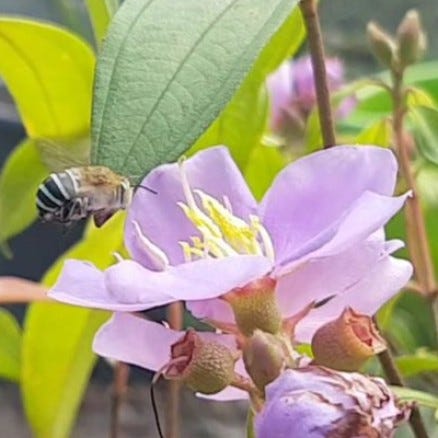
Oh the bees! This plant brings the buzz pollinators, the delightful Blue-banded Bee, the adorable Teddy Bear Bee and the tiny Sweat Bee. It also produces edible berries amongst lush green foliage. These berries turn the tongue blue (which delights the children), hence the name. This plant is also known as Native Tibouchina and is a cousin of the exotic Tibouchina species, easily differentiated by its three-veined leaf (exotic Tibouchinas have five). This lovely plant does require some maintenance in the form of regular watering as it is a rainforest plant. It prefers a partly shaded position reminiscent of its marginal existence in nature. If you want bees, get some of these!
9. Shrub or herb — Bush Basil (Coleus graveolens)
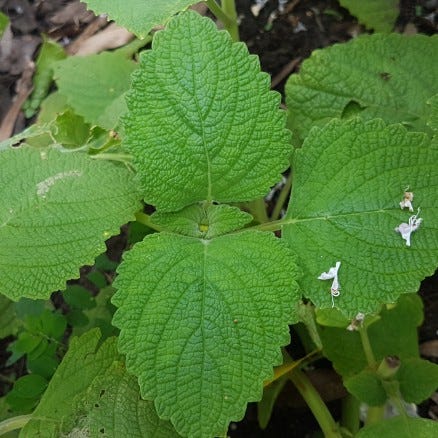
This plant has a pungent aroma whenever its edible leaves are crushed. It grows into a hardy, leafy shrub that can be used as a herb and apparently makes a great pesto! The flowers attract beneficial insects and give cover to reptiles and amphibians in the garden. Like most Coleus species it is easy to propagate from cuttings. The early colonists called it five spice herb due to the flavour and aroma, while the First Nation people used it medicinally and in ceremonies. Its strong flavour has been likened to basil and it compliments Mediterranean flavours in cooking. This plant is very easy to grow and should be successful in Cold Temperate and warmer climate zones.
10. Shrub or groundcover — Midyim Berry (Austromyrtus dulcis)
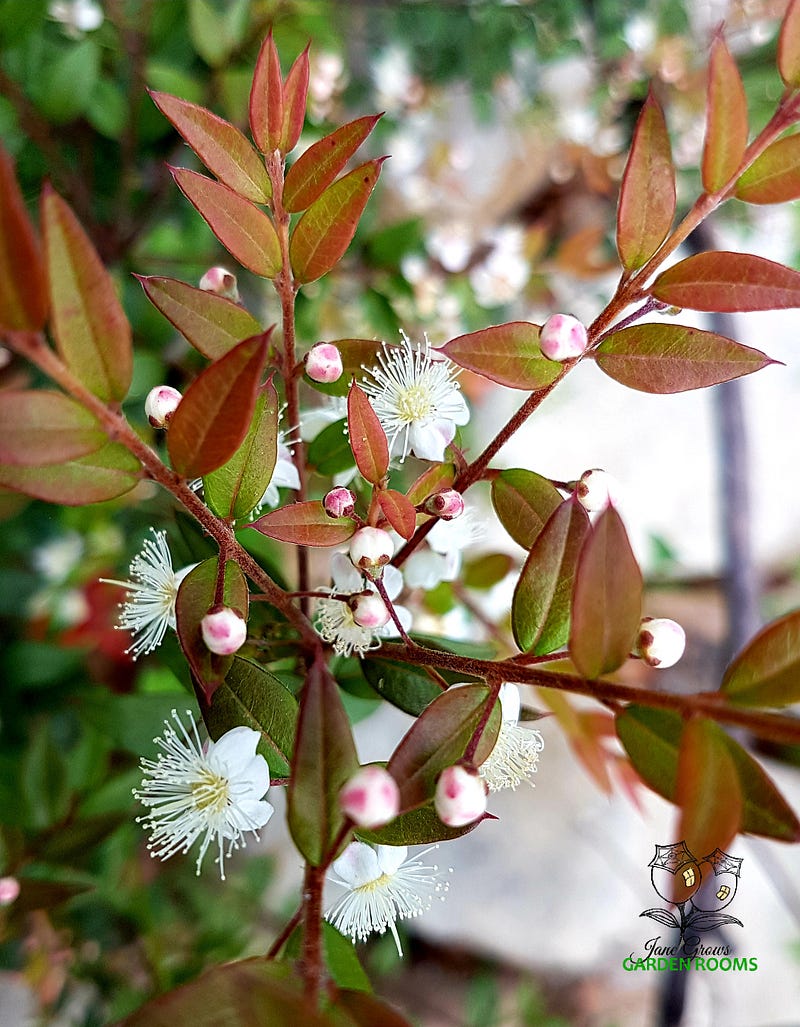
The berries produced by this bush have been hailed as a superfood. They are similar to Blueberries in shape but are white or gray with blue-ish speckles. Native to Warm Temperate and Subtropical climate zones, they like a full sun or partly shaded position with well-drained or sandy soil. They will not tolerate boggy or damp soils but will produce better fruit with regular watering. They are a very pretty plant with lovely ruby coloured new growth. The more sun this plant gets the more upright it becomes. Hence if you want a groundcover, plant it in the shade. If you want a shrub, plant it in the sun.
Planting native alternatives is a rewarding practice, complicated only by the difficulty in obtaining specimens in my experience. Happily this complication is diminishing as Australian native plants become more available commercially and through households sharing cuttings or seeds for propagation. Plant Profiles for most of these plants are available at the Jane Grows Garden Rooms blog. More to be added soon!
Did any of these plants pique your interest? What are you waiting for? Get planting and reap the rewards of planting native!