
Travel guide Tehran
Tehran is not love at first sight
The controversial city I always wished to visit
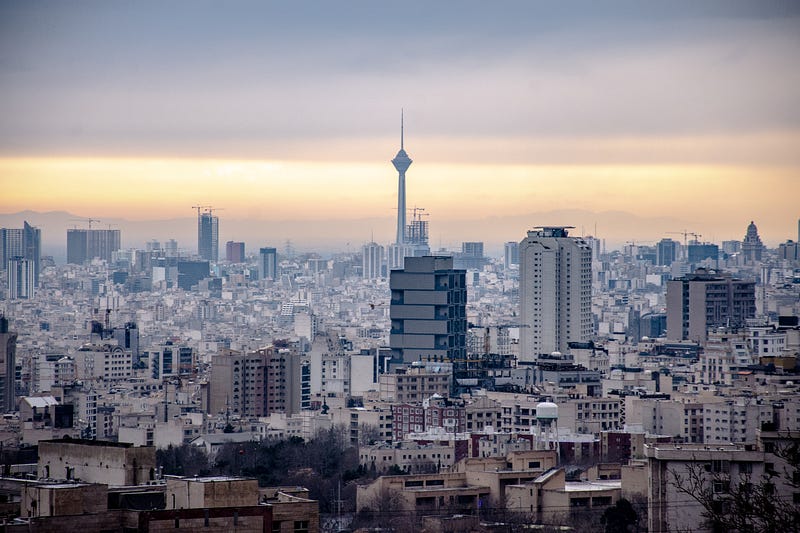
Let’s forget for a second about the one-sided image displayed by the media concerning the conservative hardliner Iranian regime. Instead, we look behind the scenes. Do you know that Tehran is so close to ski resorts like no other capital? Or that a Tehran Museum displays the world-famous Darya-ye Noor diamond?
So what is Tehran like?
Tehran is unarguably not the most attractive city in Iran. Isfahan, Yazd, Shiraz, Mashhad easily beat that. Still, I wanted to set once foot in Tehran. Since I’m not American, I could quickly get a visa and could travel alone. Even Americans can travel to Iran but only with a group. No worries, Iranians are incredibly welcoming, with Americans too, despite the political issues.
It has two distinct parts. The northern and western parts of the city are where the elite lives in attractive private houses and apartments — the poor working-class lives in the south.
Like other major cities in Iran, Tehran lies at a relatively high altitude, in a valley surrounded by mountains, at 1,100 to 1,700 meters above sea level. The northern hilly areas are remarkably colder, while the more flat southern parts have a more pleasant climate.
Tehran is chaotic, messy, and the burdensome traffic makes you waste plenty of time unless you take the metro. It suddenly expanded in size without thoughtful city planning, and unpleasant modern buildings mushroomed.
Tehran didn’t impress me when I was the first time in Tehran. I was trying to “escape” as quickly as possible. It was not charming at all, and it took an eternity to get from one point to the other due to traffic jams and enormous distances. However, the more you return, the more you discover there is much to do. Slowly you are getting a feeling for it.
Apart from its fantastic museums, Tehran is a great place to enjoy its parks and bazaars and is definitely a vibrating city.
The rapid transformation of Tehran
Even in the early 20th century, Tehran looked more like a dusty town. Thanks to the modernization program of Reza Shah of the Pahlavi dynasty, a large-scale construction began in 1926. He rebuilt the city from scratch. At the same time, the old architectural symbols of the city fell victim to his megalomaniac plans. The Shah thought that old buildings such as the former royal residence, the Golestan Palace, did not fit into a modern city landscape. So he demolished plenty of heritage buildings.
He widened the roads, built boulevards and large public spaces. The reconstruction is now, of course, considered a silly mistake that irreversibly damaged the city’s image.
Mohammad Reza Shah, his son, continued Tehran’s unstructured development. It was foreseeable that this would lead to problems such as densely populated outer districts, air and water pollution, backward infrastructure, and unemployment.
During the 20th century, many people immigrated to Tehran from other parts of Iran to seek better opportunities; however, the economy developed rapidly only after the Islamic Revolution.
In the 1980s, the ethnic-social composition of the city changed drastically. After the revolution, many Tehrani left Iran mainly to America, Germany, Sweden, or Canada. In a second wave of the Iraq war, again, many left the country. Most didn’t even come back by the end of the war.
Pollution is a huge concern
The city underwent drastic changes in the last century. It turned from an unimportant, neglected small town to a metropole with over 8,7 million inhabitants (15 million including the outskirts). Once known for its clean air, it is one of the most polluted cities in the world today because of enormous traffic during peak hours. Most cars are old and do not meet environmental standards.
Other problems are that the Mehrabad Domestic Airport stands inside the city, and because of international sanctions, petrochemical refineries got permission to produce lower-quality diesel. The government encourages taxis and buses to switch to compressed natural gas (CNG).
The metro, which opened in 1999, improved the situation somewhat.
What to visit in Tehran
The National Jewelry Museum is one of the top jewelry museums in the world. It is a collection of precious royal objects embedded with gemstones. Its centerpiece, the Darya-ye Noor diamond, is one of the largest cut diamonds in the world, weighing about 182 carats. Its color, pale pink, is one of the rarest to be found in diamonds.
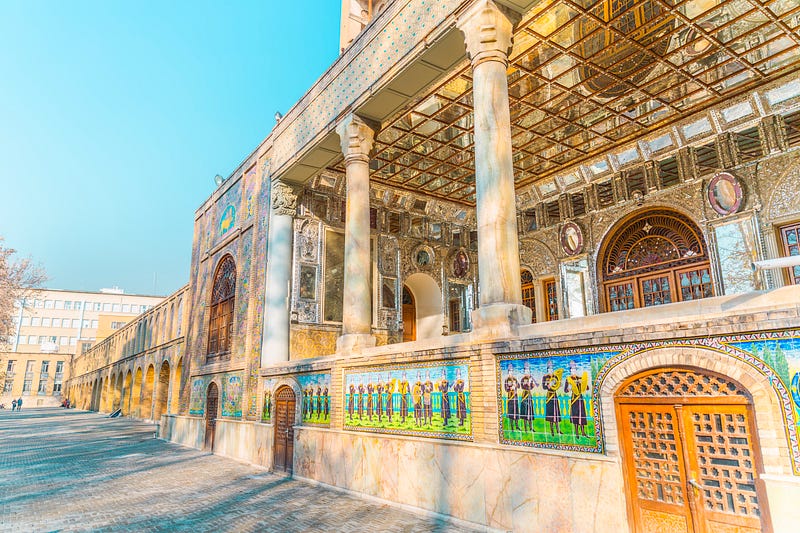
The Golestan Palace, the former royal palace of the Qajar dynasty rulers is the most well-known sight in Tehran and enlisted as a UNESCO World Heritage.
The former American Embassy houses the US Den of Espionage Museum, one of Tehran’s most peculiar museums. It was the American hostage crisis scene when on 4th November (13th of Aban) in 1979, a group of outraged radical Islamic students occupied and attacked the embassy and took 65 diplomats hostage after the Islamic Revolution. They released 13 of them after 16 days and kept 52 diplomats for 444 days inside the building. The outside wall of the embassy is covered with some infamous anti-American graffiti.
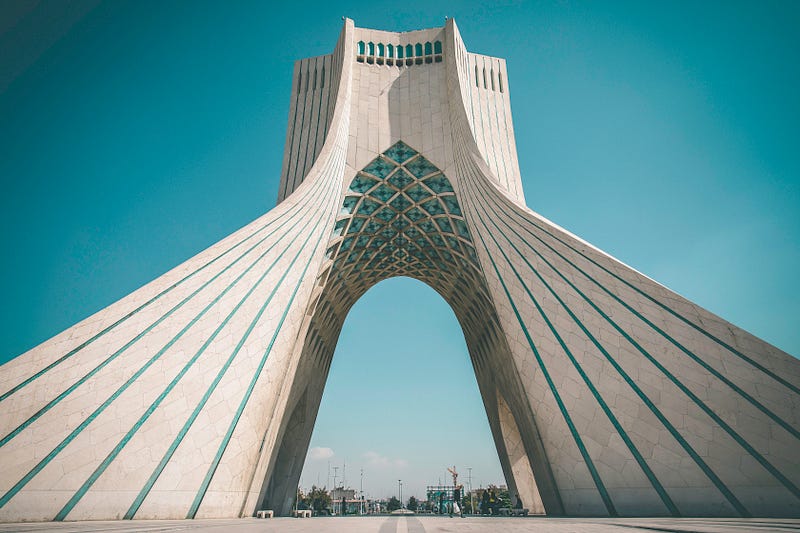
The Azadi Tower, the symbol of independence is the landmark of Tehran was built by Mohammad Reza Shah for the 2500th anniversary of ancient Persia.
Tehran shows its most beautiful side from the Tochal mountain. People from Tehran like hiking in the mountains or take a cable car to the Tochal. The view is spectacular and even the noisy, smoggy Tehran looks beautiful from above.
Tehran has plenty of parks where most Iranians go to have a picnic. Public parks get packed in the evening and at the weekends. Iranians probably invite you to join them as they love hearing about your opinion about Iran.
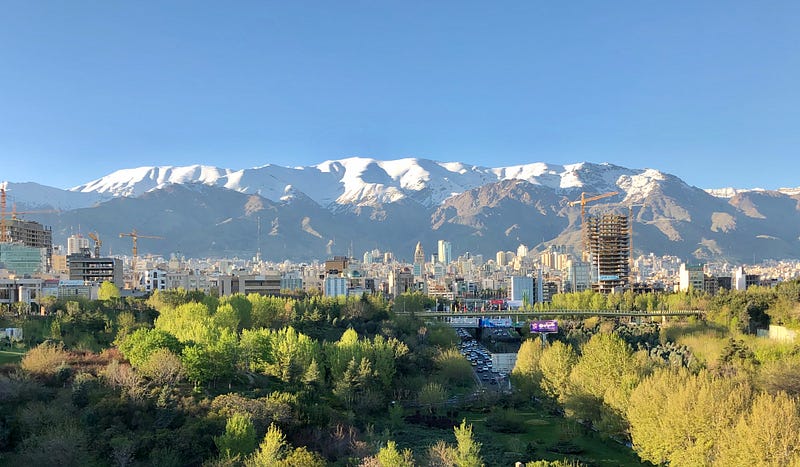
The most attractive place to hang around is the Water and Fire Park. The Tabiat Bridge in the center spans over the highway, from where you have an excellent view of the wealthy northern Tehran with the snowcapped mountains in the background. It is the most popular photo spot in Tehran.
Darband in the north of Tehran is a favorite place for young people to hang around and meet in one of the Shisha bars. All the bars are in a pleasant green environment along the river. Alcohol is not served, however, as it is banned in the whole of Iran.
The shopping malls and renowned bazaars such as the Grand Bazaar and Tajrish Bazaar are the center of social life and great places to try Iranian dates, pistachio, spices, sweets, or buy quality textile handicrafts.
Tehran, the ski paradise?
Surprisingly, there are excellent ski slopes near Tehran. Tochal, Dizin, and Shemsak are the most popular, all within a 1–3 hours’ drive. Tochal is the 5th highest ski resort in the world, open eight months a year.
Skiing was banned after the revolution of 1979 but was permitted again from 1988 onwards. There was a lot of discussion about what women could wear while skiing. At first, they needed to wear a longer jacket, but now it’s enough to wear a ski suit with a mandatory cap on their heads. Especially during the biggest festival, Nowruz, many people take the opportunity to go skiing.
Final thoughts
There are cities you won’t like immediately. As soon as you better understand what happened in Tehran, you realize it is worth much more than a day of visit. Tehran was the heart of the Islamic Revolution in 1979 that completely changed the life of Iranians. Khomeini Ayatollah, the Supreme Leader, imposed a conservative Islamic system on the country. His luxurious tomb in the outskirts is a pilgrimage site for the extreme religious people. Tehran was the scene of the hostage crisis, an unprecedented attack on diplomats of a foreign country. Tehran at the foot of the Elburz mountain has a stunning location. Its museums, palaces, parks, bazaars, galleries, and stylish restaurants can still amaze the visitor.
If you want to read more about what places to visit and things to do in Iran, visit my travel blog:
- What to do in 2–3 days in Tehran
- Best museums to visit in Tehran: museums, palaces and religious sites
Thank you for reading!


