
Teen Suicide

When you get into a tight place and everything goes against you, till it seems as though you could not hang on a minute longer, never give up then, for that is just the place and time that the tide will turn.
Harriet Beecher Stowe
Why are our children attempting to kill themselves? There’s a lot of speculation out there, and the answer is that no one reason causes teen suicide.
Society has become very polarized, and our children are seeing and modeling our behavior. Many are also experiencing bullying, isolation, physical, sexual and emotional abuse, divorces, and loss of loved ones.
They know about climate change, and many feel helpless to do anything about it. They’re growing up in an age where scientists have testified that there’s limited time before damage to the planet is irreversible. Because many politicians still deny it, this isn’t an unfounded concern. They know they’ll be the ones left to live with the mess left by previous generations.
They’ve also grown up with the reality of mass shootings in schools. If they weren’t in a school that one occurred in, they still hear about them frequently in the news and their communities. They’ve grown up with frequent active shooter drills at school. These drills are traumatizing children without showing much effectiveness in real situations.
Our children are growing up with phones and social media. While phones have made it easier to keep in touch and “talk” to more people, many people are feeling lonelier than ever before. Our kids aren’t meeting up in person as often, instead opting to socialize on social media platforms. They watch other people tell stories of their perfect lives and wonder why they can’t have those things or be like that person.
Leading causes of attempted suicide and suicide

Mental Health
People with signs of depression, bipolar disorder, and borderline personality disorder are at higher risk of suicide and suicide attempts. The good news is that mental health issues are increasingly being talked about by the media, doctors, educators, and politicians. Slowly the stigma is falling away, allowing teens to feel more open to discuss when they’re having problems. Mental health problems no longer have to be seen as something that families should hide. Despite these gains, more money and attention are still desperately needed.
Substance Abuse, Physical Abuse, and Sexual Abuse
At the same time, teens that use alcohol and drugs are at a higher risk of committing or attempting suicide. These substances often exacerbate any mental health issues and can numb them from the pain they’re feeling. Physical and sexual abuse, which frequently occur in the home or with people they know, contribute to feelings of helplessness, and suicide may seem like the only way out.
Teen Suicide Attempts
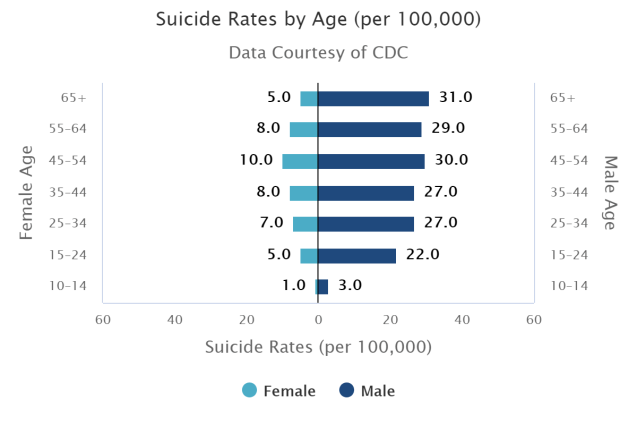
Quoted Statistics, from the CDC on attempted teen suicide, are equally alarming:
“Based on the 2017 Youth Risk Behaviors Survey, 7.4 percent of youth in grades 9–12 reported that they had made at least one suicide attempt in the past 12 months. Female students attempted almost twice as often as male students (9.3% vs. 5.1%). Black students reported the highest rate of attempt (9.8%) with white students at 6.1 percent. Approximately 2.4 percent of all students reported making a suicide attempt that required treatment by a doctor or nurse. For those requiring treatment, rates were highest for Black students (3.4%).”
What can you do about it?
If you’re in the U.S. and feeling emotional distress or suicidal, please reach out to the National Suicide Hotline. The hotline is available 24/7, and the number is 1–800–273–8255 (talk).
If you’re outside of the U.S., visit the International Bipolar Foundation for a list of additional international hotline numbers.
Continue to educate yourself. There are excellent resources available from several nonprofits and government organizations. Below are a few that were invaluable for information on this topic.
American Foundation for Suicide Prevention (AFSP): Provides a list of support groups for various areas. Meeting others that have been affected by suicide or attempted it themselves is often very helpful and comforting. Tells what to do if you think someone you know is at risk. It provides resources for people that have attempted suicide and for people that have a loved one that has attempted suicide.
The website Americas Health Rankings provides statistics on teen suicides, including those broken down by state. The site gives prevention guidance that includes “removing guns from homes of at-risk youth, in addition to reducing medication load.”
The National Council for Suicide Prevention (NCSP): in partnership with the World Health Organization (WHO) and the International Association for Suicide Prevention (IAmptedSP) holds World Suicide Prevention Day every year on September 10. The purpose is to raise awareness of this global issue. In conjunction with these efforts, the NCSP launched its program –Take 5 to Save Lives. It covers learning the signs, knowing how to help, practicing self-care, reaching out, and spreading the word.
The non-profit organization Active Minds describes themselves as a safe space for young people to talk openly about mental health issues. They provide student resources and are at the forefront of decreasing the stigma around talking about mental health issues.
Anti-bullying websites
The federal government website- Stopbullying.gov has information on bullying and cyberbullying. Here you can find state laws and how to help. The site delivers useful information and tools for schools, as well as for kids experiencing bullying.
Another excellent resource for kids is the international anti-bullying charity- Ditch the Label.
The Trevor Project is founded by the creators of the Academy Award-winning short film Trevor. The site offers a 24-hour crisis line specializing in assisting LGBTQ youth in crisis, feeling suicidal, or just needing a safe space to talk.
A useful CDC guide on suicide prevention.
Alternative ways to reach out for help
The Suicide prevention hotline (as mentioned above) also has a chat option available. If you can’t, or don’t want to, talk to a person on the phone, chat is a great alternative. They also provide in-depth information so you can understand suicide and provide ways to help.
Young people may feel more comfortable reaching out via text for help. The Crisis Text line is currently in the US (741741), the UK (85258), and Canada (686868). But they’re also getting set up in Ireland and South Africa, and actively recruiting people to manage those text lines.
Although this article focuses on teen suicide in the U.S., many resources listed are international. Sadly, suicide is prevalent across the globe, and the more we can learn and discuss, the more we can make a difference.
For more reading and resources on mental health issues, the post 10 Ways To Increase Mental Health Outcomes.
Resource for reasons teens commit suicides https://www.healthyplace.com/suicide/why-do-teens-commit-suicide-causes-of-teen-suicide