
Technology, the Beast
How It Evolved and Where It’s Going
- Introduction: The Meaning of Progression
- How Technology Works to Service Human Needs & Desires
- Purpose of Technology
- A (Very) Short History of Technology
- Is Technology the Same Thing as Innovation?
- Why the Hype?
- Human Challenges
- Elements of Good Design According to Paul Graham
- Should I Compete With Another Technological Solution?
- But How Do I Know If It’s A Good Idea?
- Conclusion & References
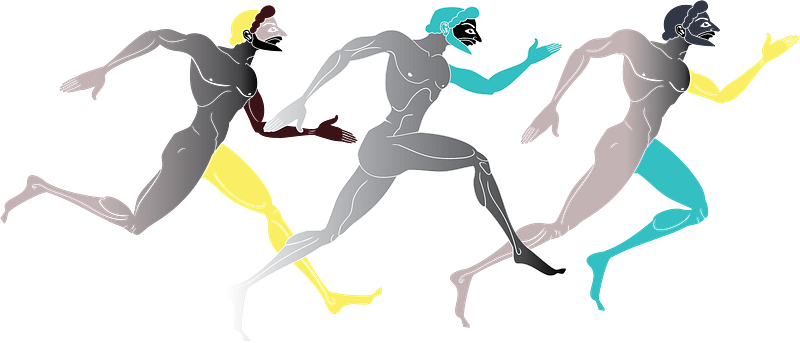
‘When human beings create and share experiences designed to delight or amaze, they often end up transforming society in more dramatic ways than people focused on more utilitarian concerns.’
— Steven Johnson, Wonderland.
So many people think we have the next best app, the next best ‘Uber for X’, or the next best third-party platform. They’re all well and good (and some terrible), but to solve the right problems, we need to have a better understanding of why we build technology the way we do. We should be asking questions. Is this thing we want to build really going on the best medium for its purpose? What basic human need are we servicing, and what is the real problem we’re solving?
Only when we start asking questions can we begin to find a helpful solution — and that’s where technology may come in. Then more questions. What is it anyway? Why are humans developing it? Why do consumers latch onto it? We’re going to look at some of these harder questions.
‘To do good work you need a brain that can go anywhere. And you especially need a brain that’s in the habit of going where it’s not supposed to. Great work tends to grow out of ideas that others have overlooked, and no idea is so overlooked as one that’s unthinkable.’
— Paul Graham, Hackers & Painters.
Introduction: The Meaning of Progression
Why do we feel the need to create more, to design more, to evolve? It seems an innate human desire. We want to progress because we have an incredible ability to grow and improve our quality of life.
Some new ideas are executed out of necessity, and many are to quench our desire for novelty. When the first purple dye was discovered from the Murex snail, it was allowed only to be worn by the Roman elite, providing a rather inconveniently sourced visual social indicator of class and wealth. If you want a small sample and you have a spare USD107, like almost anything, you can find it online.
‘The initial fixation with [Tyrian] purple was the prime mover… delightful things are valuable, they often attract commercial speculation, which funds and cultivates new technologies or markets or geographic exploration.’
— Steven Johnson, Wonderland.

But then after we discover something new, we explore how we might apply it on a bigger scale, how we can share it with more people, how we might advance our new idea. So Tyrian purple garments, once traded from merchant to vendor to customer, evolved into a storefront for luxurious clothes. And then, in 1852, luxury clothing storefronts turned into the first department store. It was conceived by Parisian merchant Aristide Boucicaut. Because it was a concept far ahead of its times when it opened in 1852 and has kept at the fore of developments, it is still a significant part of Parisian culture today.
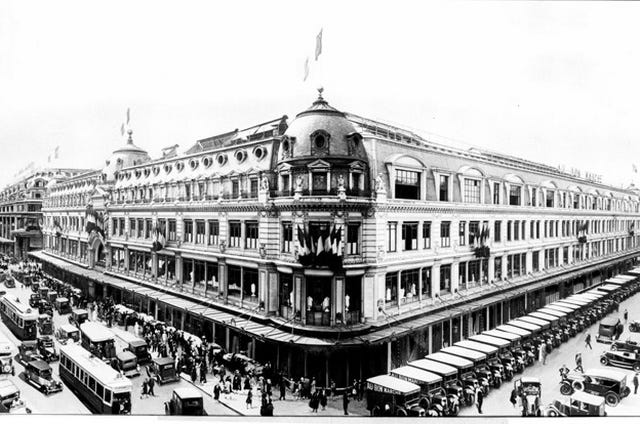
Department stores have evolved from their first vision in 1852. The department store created 164 years later still serves the original need of people wanting to be clothed, but has also evolved to serve so many other human needs — our desire for entertainment, our need to be fed and our need for community.
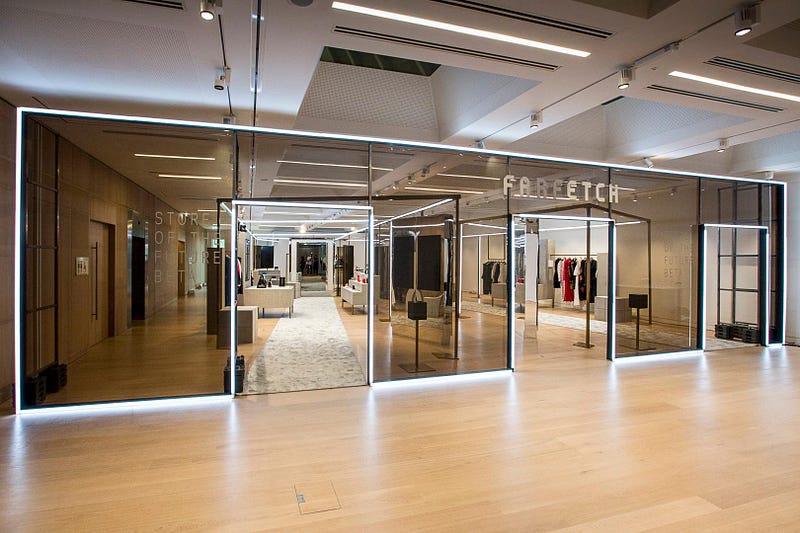
Although we are experiencing technology in a limited capacity in day to day shopping experiences, by 2025 we can expect it to be a much bigger part of the retail experience. Farfetch, an online luxury marketplace with a current valuation of $1.5b, is planning an overhaul of the retail shopping experience. Some new features it is developing is enabling a universal login that recognises customers as they check into the store, an RFID-enabled clothing rack that can auto-populates customer wishlists based on what the customers are browsing instore, a digital mirror that allow customers to view wishlists and summon items that are on their wishlists, and connecting the technology in the Farfetch app to the physical shopping experience.
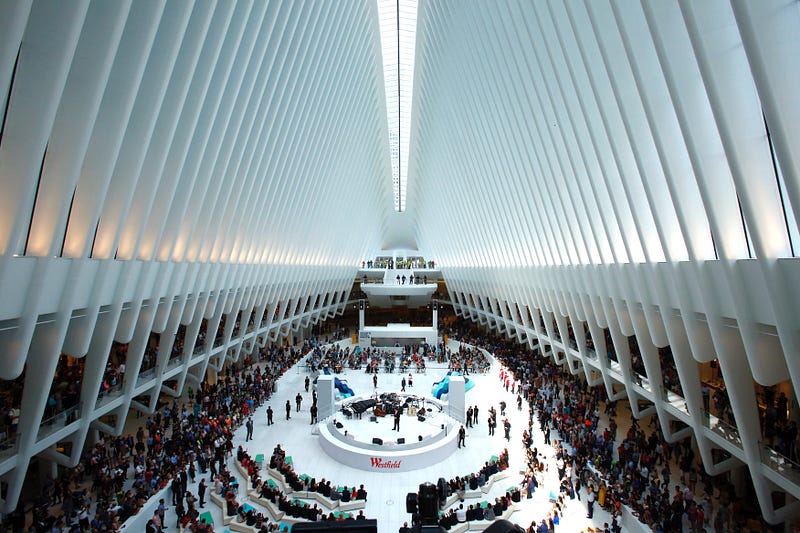
[We] constructed environments designed to trigger certain emotional responses in their visitors: think of the soaring interiors of the medieval cathedral, meant to inspire awe and wonder.
— Steven Johnson, Wonderland.
Understanding the Meaning of Tech: So what is it? Paul Graham calls technology technique. It’s the way we all do things. When we discover a new way to do things, its value is multiplied by all the people who use it. If we solve a technical problem that a lot of people care about, we’re helping everyone who uses our solution.
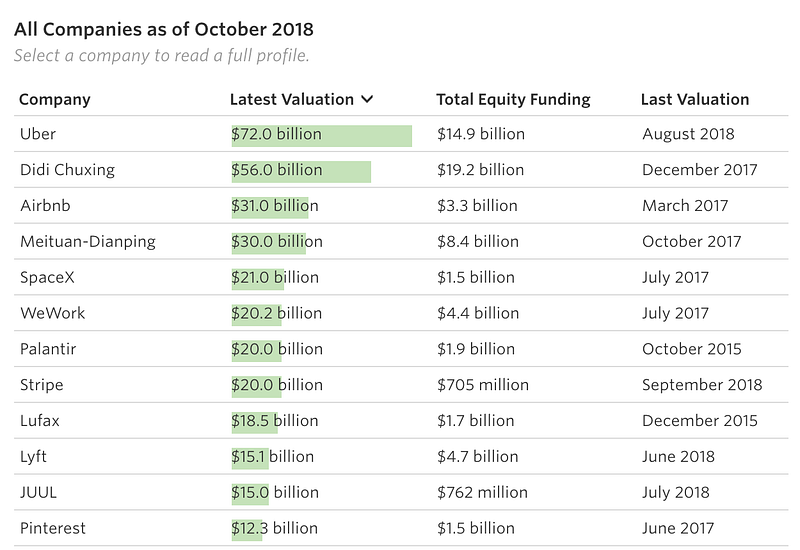
Understanding the Monetary Value of Tech: Not that I need to point out the obvious, but I will because the statistics are really interesting. The wealth in this world lies in successful technological advances (and by wealth I mean the term we use as we all know it conventionally — the exchange of money). The common denominator in top performing companies around the world is that they are enabling a product or service that is faster, better or cheaper in some way (and in many cases, all three).
But do remember that technology isn’t its own industry. Rather, it is the vehicle to serve an underlying need in another industry to serve basic human needs — transportation (Uber), beauty (Adore Beauty, Sweat) Status (arguably a human want in this case — Farfetch), food (Ubereats, Deliveroo), using resources to find things (Google). Have a look at the top performing companies around the world and the industries they work in. Although they all serve a basic human need of some kind, their high valuation is a result of their successful technological advances.
How Technology Works to Service Human Needs & Desires
- The Human Desire for Play (Industry: Gaming ): Play is vital for humans — we play as a form of restoration. It also helps us learn about the world and each other, helps us form close relationships and gives us respite from the daily grind. One of the earlier examples of ‘play’ being created to help us learn is the first version of Monopoly, patented in 1904 by Lizzie Magie. When you think of ‘game’ now, you might think of something like Call of Duty — contrast how much the concept has evolved overtime, and how technology affects social norms. It is unlikely that the Call of Duty would have passed moral standards in 1904.
- The Human Need to be Fed (Industry: Hospitality): The evolution of food accessibility has changed so much — probably more than any other industry globally. From highly limited resources has come an almost instant gratification for the need to be fed (even when we’re not hungry). From old restaurants only built for the elite to food delivery platforms sending food out cheaper than $10, the industry has been all but turned completely on its head.
- The Human Need for Communication (Industry: Advertising and Marketing): The earliest example of advertising is when cavemen were writing messages on cave walls for future generations. It evolved to become its own source of innovation. Cavemen didn’t need to do it as often as we do it now — the world was too small for them and they lived in communities, servicing needs directly. As communities grew in size, in population and geographically, the need to send out our message grew. [Thought: Kevin Kelly challenges this idea. Marketing has always been controversial — after all, many of us receive messages about products we really don’t ever need or plan to purchase. Kelly suggests that advertising might follow the trend other industries have — customers begin to place and pay for our own ads. What if we choose the ads we want to see? What if we only see the ads that are relevant to our needs? This might create viral ads and videos — much more so than what we see now. The problem with ultimate curating and filtering is that our worlds become essentially ‘overfit’ and we have no opportunities to grow or challenge the knowledge we have. (See The Startup of You by Reid Hoffman, who discusses the importance of spontaneity in growing our networks and developing personally).]
- The Human Need to be Clothed (Industry: Fashion): Kevin Kelly describes a day where all our basic needs and desires will be serviced by technology. Clothing may be custom fit based on an avatar of ourselves with measurements, servicing the basic need to be clothed. The desire to travel might be serviced by a ‘Universal You’ that chooses accommodation based on your personal preferences — it’s a bit like what Farfetch is planning as we looked at above. The need to remain connected to the greater community may be serviced by filters applied to only provide you with the news you want to read about. The same applies to the need or desire for entertainment, and for the need to be fed and sheltered.
‘If there is enough demand for something, technology will make it cheap enough to sell in large volumes, and the mass-produced versions will be, if not better, at least more convenient. And there is nothing the rich like more than convenience.’
— Paul Graham, Hackers and Painters
Purpose of Technology
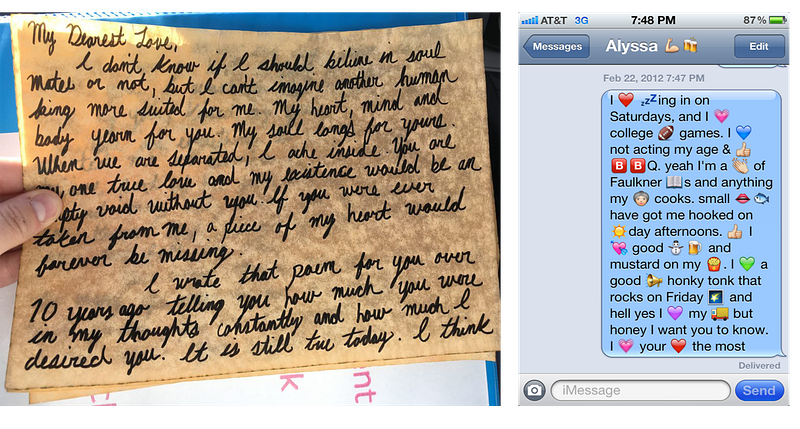
Let’s take one specific scenario, like texting. We might consider what it was first intended for. Sherry Turkle, author of Alone Together, thought it was a way to check in; intended ‘to confirm an appointment, settle on a restaurant, or say you were home safely’… but it has evolved from a purpose that is disconnected from emotion to one very much connected to emotion, albeit not as thoughtful as it once was. You can probably hark back to some point today when you or someone you know used texting for something emotional — good or bad. Human connection is becoming inextricably linked to advances in technology. It requires us to constantly question whether a situation is better suited to a physical interaction — face to face.
Some of us might remember the thrill of receiving a handwritten letter or a gift or small contribution that required the giver’s full attention — something almost impossible to find nowadays. The intention of technology was not to disconnect us from emotion — but the gradual decline of human connection is the collateral damage of technology.
Advances in technology are to make basic human needs more easily met, and also to advance the human race. This might be a subjective purpose — one advance I might consider to hugely benefit our society may very well be considered by another person to be a step backwards for humanity. But we are hardwired to innovate and improve our world.
A (Very) Short History of Technology
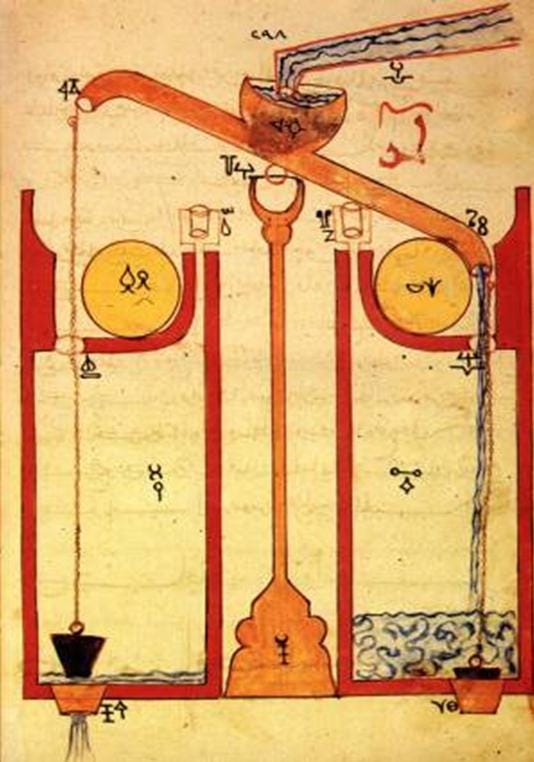
The common element between what ancient civilisations considered technology and what we consider technology now is that the devices allow us to do something new, something faster, better or cheaper.
If you look at history, it seems that most people who got rich by creating wealth did it by developing new technology.
— Paul Graham, Hackers & Painters.
How Tech Evolved
If today someone says that she is interested in technology, this is generally taken to mean computers or other kinds of current digital technologies. But if she says she is interested in, say, kerosene lamps, then most listeners would assume she is interested in antiques, not technology, even though, of course, kerosene lamps were once considered cutting-edge technology.
— Timothy Taylor, Strange Sounds: Music, Technology and Culture.
Is Technology the Same Thing as Innovation?
Edmond’s Innovative Gesture: Le geste d’Edmond
Innovation may be the discovery of a new way to do something. Technology will help reproduce the discovery. This is what happened to the global phenomenon of the spice trade from the 1700s, and to take a specific example, the story of Edmond’s vanilla.
Pods of vanilla were worth their weight in silver in the 1700s! A slave, Edmond Albius, found a method of fertilising the plant by pressing leaves together. Now, the small island where the Bellevue plantation was located produces more vanilla than all of Mexico. Vanilla is still one of the more expensive spices to purchase. But it’s more accessible than it has ever been and will continue to become easier to source, so long as the consumer demand is there.
Producing vanilla isn’t what any of us might consider ‘technology’, but its reproduction is what allowed it to serve a basic human need (to be fed) and the desire for novelty to be replicated and sold globally. Remember Paul Graham’s statement: If there is enough demand for something, technology will make it cheap enough to sell in large volumes.
Why the Hype?
Why are these technology companies so successful, anyway?
Physical goods stores might be able to tap into human experience and our senses — something technology has still limited capacity to work in. However, intangible goods have no rival — you can rent the same movie to as many people that want to see it, which explains the success of iTunes and Netflix and the ‘accessibility’ models rather than physically renting the last movie off the shelf (remember those signs ‘if we don’t have your movie, you get the next rental free’?).
Even in the case of Airbnb, a customer is likely to choose another property even if their perfect property isn’t available at the time because the platform is so easy to use, and humans are hardwired for convenience. Contrast this to the times we physically had to go in store to hire out a movie on VHS or DVD. It was effort spent and therefore much more frustrating when a movie was already rented out. On-demand products and service by access are becoming much more biased over owning things.
SaS Models
Other examples of the ‘accessibility’ model are Adobe and Microsoft. Instead of downloading software, we have subscription models to Photoshop and InDesign, and to Microsoft 365. There’s also:
- Hotels and Accommodation as Service (Airbnb and Stayz);
- Tools as Service (TechShop);
- Clothes as Service (Stitch Fix, Bombfell; Rent the Runway);
- Toys as Service (Nerd Block; Sparkbox);
- Food as Service (Deliveroo, Dine&Cook, Tayble, Hello Fresh).
You can get flowers on demand (Daily Blooms and Florist Now), worldwide fashion on demand (FarFetch, Net-a-Porter), laundry on demand, cleaners on demand (Simply Maid), tech support and even legal marijuana delivery in the States (Eaze). Rather than just ‘getting an Uber’, you can now pick up someone else (using Shuddle), or you can get drivers to bid on your pick up (Sidecar). That’s just one industry — software is being used to revolutionise industries globally. The asset of all of these companies is their software. Their success lies in their ability to innovate on service in many different ways, very quickly. Taxi companies and non-SaS models are restricted in the ways they can scale and innovate. By comparison, software is nimble by nature, and convenience for the user will almost always win.
Our appetite for the instant is insatiable.
— Kevin Kelly, The Inevitable.
The Other Side: Entertainment
There are success stories that go against the accessibility model, like Victor Churchill, a retail store that garnered its success by being so far beyond the concept of selling meat as we know it that it drove customer curiosity. Even if people don’t go there to satisfy one basic human need or desire (to be fed), they’ll go for another — to be delighted. Human experience is becoming far more important than ever before as technology has, in some ways, freed up time for us to enjoy physical experiences.
This is why, despite the success of software-based companies, the importance of human experience cannot be overlooked. Luxury entertainment is increasing in spend.
In developed countries at least, we are investing more in restaurant and bar spend than ever, as well as concert attendance and (possibly as a result) an increase in babysitting spend (take a look at the Uber for babysitters, Sittr). Human attention is becoming strongly captured by physical experiences.
Sharing intangibles scales magnificently…but humans excel at creating and consuming experiences, and this is no place for robots.
— Kevin Kelly
As technology is changing so rapidly, it’s a good idea to keep a finger on the pulse — have an awareness of the challenges that go hand in hand with technology and consider how we might address them. After all, it’s a sharing economy.
Human Challenges
There is a vast range of benefits that we have all felt come with the advances in technology. But anything new brings its own challenges. Some of them affect us indirectly, and it’s important for the future of our consumer choices to be more conscious about how technology affects human behaviour and interaction.
- The Challenge of Accepting How We Live: We have subconsciously accepted a new way to interact with each other. Increasingly, we find ourselves annoyed to receive unexpected phone calls. What used to be an exciting part of the day (“Who’s on the phone?”) has become an interruption. Why answer someone’s call when we can respond in our own time? If we don’t ‘like’ someone’s photo, or if we’re not added to a group chat, does this mean we’re not accepted into society? If we’re not on Instagram, are we really able to progress as part o f a wider community? We desire to live in a new way without really asking if it’s the best way for humanity. In contrast, we’re happy to accept that privacy is no longer as valued as it once was, with gadgets like Google Home knowing our entire lives inside out.
- The Challenge of Social Connections: The nature of human relationships have changed drastically. Consider the image of the handwritten letter above. Look how inward facing the text is by comparison. It is important to relate important principles about relationships to our children, to maintain human connection in future generations.
This is our current challenge: combatting the sense that it is normal to lose privacy for a feeling of sociability… we allow relationships that diminish our humanity. Machines want you to keep using them. That is how they can get more data from you in order to sell more to you and others. Machines keep us in a world of machines. Technology always brings change, and people always adjust.
— Sherry Turkle, Alone Together
- The Challenge of Finding the Right Solution: It isn’t easy to find the perfect solution for your needs, even if it’s directly available somewhere online. How do you go about finding just the right solution for your problem when you need it most? To complicate the matter, each solution is competing for our attention all the time, hoping it offers what we need most to solve our problems. It’s simply an inefficient way to face challenges today.
- The Challenge of Trust in an Instant Economy: Trust is changing. It can be challenging to deal with because we associate with it so differently now. Trust used to be local — small communities who defined trust as a person to person relationship. It evolved to become institutionally recognised, where a gentleman’s handshake now had to be codified into a contract, and carried out in courts. Corporate brands had to convey trustworthiness, and awards like ‘Most Trusted Brand’ took on great significance. Distributed trust is the movement we are now in. Trust is far broader, not just in bigger institutions and corporations but everywhere online. Can we trust this source? ‘The Food Trust’, for example, is a new initiative in its final stages of development by PwC. Instead of relying on claims by institutions, we will be able to track the source of where our food came from. You might also think of distributed trust when you use the sharing economy, when you review a restaurant or service online. The control is distributed much more broadly.
Principles: How Businesses Get Consumers to Trust
So, how do you get people to trust you and your business or product? Rachel Botsman, author of Who Can You Trust? puts it down to three factors.
(1) The California Roll principle: Sushi was really unpopular in the States in the 1960s for a number of reasons, perhaps because raw fish was still largely controversial and the flavours and textures were still foreign to those who lived in the States. So Ichiro Mashira used familiar ingredients, like cucumber and avocado, to create the California Roll, introducing people in the States to a novel concept by making it risk-free enough to try. Thus followed the raging success of the California Roll and sushi thereafter.
(2) The WIIFM Principle: “What’s in it for me?” Relate the product or business to something consumers can understand and relate directly to themselves. Airbnb users, for the first time, often search properties near their own, tying in the first two principles together.
(3) Trust influencers: This is probably the most obvious principle, and one we all see commonly as a result of the sharing economy and social media. If an ‘influencer’ or someone we generally trust online endorses a product or service, we are more likely to use it.
Airbnb and Alibaba are both strong examples of how significant groups of consumers trusted their platforms enough to use them — and use them incessantly. Airbnb is valued at $31 billion, and Alibaba is valued at approximately $500 billion.
Airbnb used technology and human connection to plan the website so it would be easy for customers to use, to make them feel like it was familiar and intuitive, and also ensured reviews, hosts and guests were big contributors to making customers feel they could trust the platform.
I think the Model T has a lot of analogies to us. Look at early photos. It didn’t have doors; it didn’t have blinkers; it was missing all of these things that are needed for a safe ride, and that Ford added over the years. Sometimes I think we’re like a Model T, that we haven’t added our blinkers yet. — Joe Gebbia, Airbnb
— Rachel Botsman, Who Can You Trust?
The second example, Alibaba, was created by Jack Ma, who realised that to create trust between buyers and sellers online, he needed to use technology to reduce uncertainties or lower the risk enough to allow transactions to go ahead. To Ma, the bigger the trust problem, the greater the business opportunity (e.g. eBay, Amazon, Farfetch, Airbnb, Uber = Trust). The company just celebrated a $30.8 billion trading day.
Elements of Good Design According to Paul Graham
There are elements that make technology well-designed — even if it isn’t always pretty, it’s well designed enough that people want to use it. Here are some common principles you might find in well-designed technology.
- It works with speed for users: they should be able to access the platform quickly without delays, and the platform should also be quick and responsive to fix teething problems.
- It has the ability to redesign: ‘the word ‘essay’ comes from the French verb ‘essayer’, which means ‘to try’. An essay, in the original sense, is something you write to try to figure something out. This happens in software too. I think some of the best programs were essays, in the sense that the authors didn’t know when they started exactly what they were trying to write.’ — Paul Graham.
- It functions with simplicity: the shorter, the easier to understand, the easier it will be for your customers to access.
- It is timeless: good design will surpass trends, fashion and short-lived ideas. It will be designed for the future. The design of the Porsche is a great example — a shape that has transcended every other vehicle design.
- It is solving the right problem: Paul Graham uses a really interesting example of a stovetop. A typical stovetop has a row of dials at the base or side of the stove. But to solve the problem of knowing which burner matches its respective dial, a good design would be to have the dials in a square like the burners, so its user would intuitively know which dial to turn.
- It’s suggestive: you only need the most basic information, and you should be able to put the rest of the image together yourself. This would apply to a good piece of clothing, a good story, a great piece of literature and good music that lets you decide the mood.
- It’s humorous: you’ll remember the design if it’s funny — it’s not a mandatory element, but it is a great way to show confidence in design.
- It’s hard: solving a real problem is difficult. It’s not a spin off another brand or idea. It’s actually challenging because you find the right solution to the right problem.
- It looks easy: like the first iPhone. Intuitive, simple to use, but a lot of work behind the human-friendly screen.
- There’s symmetry: just look at nature. The most beautiful things are found in natural symmetry.
- It resembles nature: many designers actually find their inspiration in nature and music. Try going for a walk, observing nature and see how many ideas you come up with.
- It can copy: it’s not always evil — done tastefully, copying is actually giving credit to its maker and also attempting a genius form of original thinking.
- It can appear strange: good design should make you question what you know about an industry. Airbnb made us all question what we knew about travel and about what it means to stay in another city.
- It works in chunks: You get a burst of creativity, zest and success, and then it becomes a bubble. It’s a bit like the property market. But if you hold on to a gem and work on it, it will come out the other side much brighter than it was during the bubble.
- It’s daring: We all know that the best ideas that are executed are often much more daring than we could have thought of or brought to the public.

The first truth of entrepreneurship and investing is that the very big ideas are contrarian, because the contrarian is part of the reason why a bunch of large companies and competitors haven’t already done it.
The best design surpasses its predecessors by using new ideas, like Edmond with his vanilla, and the best research solves problems that are not only new, but truly worth solving. Like Airbnb, these solutions are solving problems we didn’t even know we had.
Should I Compete With Another Technological Solution?
Viewing their idea as being competitive is often the downfall of many startups that bet their hedges on a new technology solution.
The problem with being competitive is that, if you bet on the wrong technology, your competition will crush you, because there will generally be competition in that space. Just think about the ridesharing platform. When you choose a solution, you must ignore what other people are doing, and consider only what will work best for the problem you are solving.
For example, get your users to be a part of the solution. Kind of like open source code, your consumers might offer answers that your team could never have come up with. Draw a balance between Henry Ford’s completely new idea approach (“If I had asked people what they wanted, they would have said faster horses.”) and the effectiveness of the Wikinomics economy — encouraging users to contribute to the value and ownership of your product. You have to know when to ignore voices and when to listen to them.
But How Do I Know If It’s A Good Idea?
Fortunately there’s a natural fit between smallness and solving hard problems. The leading edge of technology moves fast… technical advances tend to come from unorthodox approaches, and small companies are less constrained by convention.
— Paul Graham, Hackers & Painters.
Reid Hoffman believes great ideas would tear a boardroom of investors apart in their opinion about whether the idea is a good one. Test your ideas on an honest group that needs the same problem solved. See what they have to say about your solution.
Here are some questions to ask yourself:
- How hard will this idea be for someone else to develop? (Paul Graham’s Hint: Have a convincing explanation of why your technology would be hard to develop.)
- Can a competitor run as fast as you?
- If you could invent your idea today that would last 100 years into the future, what would it look like? [See Reid’s episode on Phoenix companies to get an idea].
- Will your idea have political, economic and social consequences? Some ideas are great but might come with backlash. The great-great-great-great American grandkid of the cotton trade legacy probably isn’t doing too well in the school playground right now.
- Think about hard problems to solve. Start with a problem, not the solution. There are lots of solutions for a clean house — vacuums, half-hearted domestic cleaners, sad looking mops and a variety of chemical filled cleaning products. The problem though, is how to minimise dirt in a house in the least time consuming and most efficient way in a time poor society. That, my friend, is a billion dollar industry for the person willing to attack the dirt (pun very much intended). Some theories explain the reason it isn’t a very advanced industry is that the industrialisation era strongly focused on creating great tools for those who were working — men. Cleaning tools were created by men who for women back home. The practice of minimising dirt with a plethora of clunky tools like vacuums, mops and washing machines has not changed, even though societal norms have. Listen to Brian Chesky’s 11-star example and ask yourself how much a family might pay to click their fingers and have their houses cleaned.
- Did you have to take yourself really (really) out of your comfort zone to get this idea? Or is it just different to something that’s already out there? Paul Graham points to the example of Steve Russell, who transformed a theoretical exercise into an actual programming language — and a more powerful one than the creator, John McCarthy, had intended. Question the purpose of solutions to problems you already know. History always provides a good starting point.
Try documenting your process of answering these difficult questions. What could people be doing if they weren’t using the internet? Think of all the activities — archery, piano, drawing, dance — all of those tactile and sensory things that require nothing more than the human body and a willingness to learn. If they don’t help you with inspiration, they’ll at least help you form a better understanding of human nature. The best ideas for the future are, in fact, often found in places where technology does not usually exist — like in history, nature and art.
Many world-class performers of different industries often refer to areas that do not directly relate to technology for inspiration. Brian Chesky of Airbnb is inspired by the stories produced by cinema.
I went to the woods because I wished to live deliberately, to front only the essential facts of life, and see if I could not learn what it had to teach, and not, when I came to die, discover that I had not lived.
— Thoreau
Conclusion
If you do a paternity test on many of the world’s most important ideas or institutions, you will find, invariably, that leisure and play were involved in the conception as well.
— Steven Johnson, Wonderland.
What Comes Next?
If you are trying to figure out what’s coming next, you are often better off exploring the margins of play: the hobbies and curiosity pieces and subcultures of human beings devising new ways to have fun.
— Steven Johnson, Wonderland.
Anything goes, and the world is changing at a dizzying pace. The truth is that many of us will simply not ask questions before adding new layers of technology to our lives — the promise of novelty is the trade-off we will take in place of privacy and personal wealth. The ethical questions may need to rest on the shoulders of the makers.
As a consumer, you care more for what you invest in — whether it is time, money or effort. So if we invest more in our phones, we will feel deeper connections to them. Think about where you most want your investments to lie — where you treasure is, there your heart will be also.
Perhaps the most important question to ask is, who are we? As Kevin Kelly frames the future, it is likely that technology will evolve into an experience that is at the height of personalisation — giving us the incredible ability to access anything we desire at the reach of our fingertips. In such a liquid economy, all we need to know is how to answer to ‘what do you want?’. By then, hopefully we’ll understand ourselves enough to have an answer.
References:
- Who Can You Trust?
- Megatech
- Here Comes Everybody: The Power of Organizing Without Organizations by Clay Shirky
- Brave New War: The Next Stage of Terrorism and the End of Globalization by John Robb
- The Pirate’s Dilemma by Matt Mason
- You Are Not a Gadget: A Manifesto* by Jaron Lanier
- The New New Thing by Michael Lewis
- Founders at Work by Jessica Livingston (Amazon) (interviews with technology founders from one of the best investors of all time)
- The Net Delusion: The Dark Side of Internet Freedom* by Evgeny Morozov
- Wikinomics: How Mass Collaboration Changes Everything by Don Tapscott
- The Cathedral and the Bazaar: Musings on Linux and Open Source by Eric S Raymond
- Alone Together
- How the Internet Gets Inside Us (The New Yorker) by Gopnik, A.
- Information is Beautiful
- The Inevitable by Kevin Kelly
- Technically Wrong
- Hackers and Painters
- Wonderland
- Australia Reimagined
- Show Your Work
- Runaway Species
- Utopia for Realists
- The Book of Knowledge of Ingenious Mechanical Devices: https://www.gettyimages.dk/detail/illustration/water-pump-miniature-from-the-book-of-knowledge-of-stock-graphic/142452723?language=it
- Tyrian purple from the Murex snail: https://io9.gizmodo.com/the-perfect-purple-dye-comes-from-milking-snails-of-co-1714748278?IR=T
- Le Bon Marché: http://oeil.eklablog.fr/1852-le-bon-marche-a68615327
- https://libweb5.princeton.edu/visual_materials/maps/websites/pacific/spice-islands/map-moluccas-porcacchi-1576.jpg
- The First Monopoly: https://landlordsgame.info/games/lg-1906/lg-1906.html
- Old Gaming Pieces: https://ancienttouch.com/gaming%20astragali%20and%20dice.htm; https://blogs.missouristate.edu/rstats/2017/11/15/throwin-bones-astragalus-ancient-games-and-probability/; https://www.chicagotribune.com/news/ct-xpm-2003-03-26-0303260196-story.html
- Before Coffee Was a Thing Everywhere:

- Wall Street Journal, The Billion Dollar Startup Club
- The Importance of Human Emotion
- Lo and Behold: https://www.youtube.com/watch?v=Zc1tZ8JsZvg
You can see the full list of sources I consulted on my Trello Master’s Board.
EndNotes: The idea for this Masters came from our slow-moving and irrelevant tertiary education. I deferred a Masters of Law (Corporate and Commercial Specialty) to focus on areas that are more relevant to the conceptual age. I’ll still be learning about the law, but in a way that’s more relevant and connected to the outside world. You can follow along with my progress on Medium.
Dedication: It’s a long dedication, but I have a big family:
To Dad, thanks for teaching us the power of persistence and Dettol. To Mum, I really loved my quattro-flavoured sandwiches. I never exchanged any of my quarters with anyone. To Jeremy, thanks for being prepared with the promise of a power wedgie if anyone tried to harrass me (they never did). To Jules, thanks for introducing me to Mr Bingley’s confession: ‘I have been the most unmitigated and comprehensive ass.’ I hope to return the same value to your life some day. To Mat, thanks for sharing my love of bacon. Keep cooking until crispy. Maybe one day we won’t have to hit the fire detector with pillows. To Dora, there’s a lot more to you than soap bombs. If you’re not careful we might start randomly posting your art around Sydney. To Tim, your flatulence may be powerful, but your inheritance of Dad’s persistence is even more powerful. May the force be with you. To Luke, your passion for fact books and finger pointing will take you far. Never give up your sense of curiosity.


