
Future
Tech-Innovation: Replace Something with Nothing.
Technology is often adding more when they jump the innovation bandwagon. Well, why not less? It can be done. And it’s tech-awesome!

Innovation, innovation, innovation. The words are buzzing around the world. Suggesting new options. New vibes. New ways of doing things. Promising better, better, better with even higher-tech than you can imagine.
But, girls and guys, our challenge is bigger than that.
Our challenge is to build a more beautiful world for a fine tomorrow.
In which we can live within the boundaries of our planet.
And that needs a different strategy than drooling over things that are tweaked a bit this way or that. And calling them innovative. We need a whole different mindset to find the solutions for an abundant future.
So that’s why I’m writing about Blue Economy principles and give you some ideas on the mindset needed to find the scientific, technological solutions we need. Many countries, companies are already busy finding them…
As an external Blue Economy expert for the European Commission and entrepreneur myself, I see a lot of new innovations. But often the innovations are on the track of ‘doing less bad’. Reducing some bad impact here or there.
What I’m eager for, is doing more good! We need to unleash abundance!
Why not invent the cars that clean the roads instead of polluting them? Why not invent pavements that soak up water and release the water when we need it? Cleaned and all.
Why not invent houses that produce their energy from gravity? Roofs are pulled down by it. Bamboo as a building material creates the tiny movement necessary. Piezo-electronics might do the rest?
Why not put our ambitions high enough to really make a difference for future generations? Why not create technology that supports life?
So I hope that in return, many smart, tech-inspired people are giving me some feedback with great ideas, new innovations, and matching business models. Reach out in the comments, I welcome discussions…
Addicted to Energy
The title of this story tells it all: replace something with nothing. Duhhh. I can hear you say it. I could’ve thought of that. Well, no. It’s not often done yet. But the examples are appearing more and more often. And I love them.
We all know that our modern societies are addicted to energy. Energy has given us wealth, the possibility to stretch our productive hours long into dark times, and luxuries.
But the masses of energy we use to produce goods and use them, destroy a lot of other values. Those are just as important or even more so! The CO2 emissions are speeding up climate change. Air pollution, light pollution, and water pollution are massive. And at the center of it all is energy.
Oh, but we’re tackling that, you say. We are going for solar panels and windmills. We have Tesla.
Well, let me help you out of that dream. If we go on innovating the way we do now, we will need more and more and more energy. Tesla is electric. Yes. But that means a whole lot of energy is needed to keep the smart car driving. And what to think about the energy needed to even produce it?
We won’t have enough space for all the solar panels and windmills, not even if we include the sea. And do you think those solar panels and windmills don’t pollute?
Lithium Mining
We made the choice to use lithium for our batteries. To store energy. And boy, does lithium pollute! The mining destroys the ecosystems in South America big time! In this story, by Logic Magazine you can read first-hand observations. Gruesome!
Aaaarrrrgggghhh. Why does everyone stay in their own little box, never looking over the side of it? Let’s zoom out. Get a bigger view and innovate in ways that are really producing the systemic solutions of tomorrow.
Let’s look at both sides. Production of energy and consumption of energy. And instead of maximizing one thing, please see the bigger picture and optimize it…
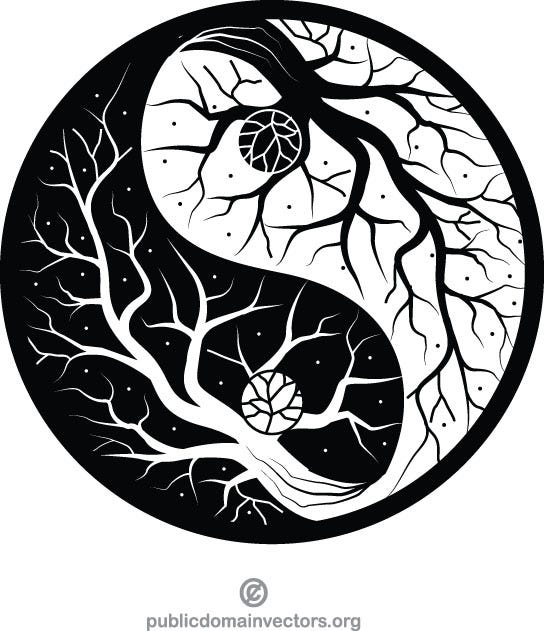
Production and Consumption
Here are some ideas on how to do that.
Think radical! Not tweaking a little, but radically different. Use all your knowledge of physics, biology, and non-toxic-chemistry to find ways.
Zoom out.
See the bigger picture of the world and our challenges. Dare to face the problems we need solutions for!
Zoom in again.
Look at your products and how they solve basic needs on this planet.
Zoom out again.
Look at the chain producing your product. Can we replace something with nothing? Can we maybe leave out the battery completely and use energy on the spot? Can we inject air to improve our products?
Zoom in again.
What about the materials? Can we use local, abundantly available materials, such as a waste stream of other production processes? Or biobased materials that grow quickly without fertilizers and pesticides?
Those materials will add value to the soil as well, making it healthy and allowing soil life. Examples are bamboo, industrial hemp, nettles, thistles, miscanthus, etc. etc. Their validity is of course dependent on the region where your product is being produced.
Zoom out again.
Look at your production methods and even your business models. You don’t have to rely on economies-of-scale to reap benefits. You can use synergy to make your model work and build a resilient company.
Here’s a story I wrote about regenerative business models.
Get the gist?
Well, let’s give you some concrete examples to finalize this story. It can be done, you see. Inventors are onto it. Start-ups are onto it. And tech-savvy innovators are onto it. But we need many more people thinking like this.
I invite you to be inspired by these examples…
Batteries
Forget about lithium. There are many more ways to store energy. Salt does it. A difference in temperature does it. We once held a little brainstorm with laypeople, non-technical people, and came up with around 25 alternatives to store energy. Well, what’s holding you back? Let’s innovate!
There are biodegradable batteries made from paper.
And there are other innovators using nanotechnology without scarce metals. They use local, biobased materials. Those are the batteries of the future!
Replace Something with Nothing
And there are innovators that do exactly as I said in the title: replace something with nothing. E.g. a mobile phone without a battery.
“Peter Spies and his colleagues [from Fraunhofer Institute] designed a cell phone that operates without batteries. The temperature difference between body and phone provides sufficient energy to keep the phone on standby. The conversion of sound waves, created by voice into an electric current through a piezo-electric device, powers the call — as long as we talk. The longer you talk, the longer your call. This is an existing science turned successful since the same team designed phone devices that require less energy.” — Gunter Pauli, ZERI in The Blue Economy Case 4.
Stone Paper and Air
Another example of using ‘nothing’ in your innovation concerns stone paper. Stone paper is a good replacement for tree paper that needs 20 liters of water to produce one A4 size of paper. We can do better!
Stone paper needs no water and no chemicals. However, the first paper was heavy. Heavier than tree paper. Injecting air made it lighter, smarter to transport…
Tires and Microplastics
Tires have shown to be one of the big microplastics polluters in the ocean, according to several recent studies and this article by National Geographic. Not so strange. They wear, the microplastics rain into the rivers and stream to the oceans…
The reaction from the tire industry is defensive. They lobby. They try to influence science.
Please, innovators, why not invent a different tire? Let’s stop the technological lock-ins that keep our world hostage in waste and pollution. Let’s really change the world!
This company has taken the first step. I haven’t looked into the product deeply yet, but the idea is brilliant. A tire from biodegradable material that restores itself while driving.
I know the comments in this youtube video say silly and magic and whatever… But think about it. This is the kind of biodegradable inventions we need.
Can we have fully biodegradable materials (in soil, salt water, and freshwater) for 3D printing of your own shoes? And really change the world of production and consumption?
Innovation Needed
Okay, back to electricity. Another trend is the grids. Why transport energy over long distances with AC, losing a lot on the journey? When you can produce and distribute it locally (DC)?
Why not create small, local 12V or 24V DC grids? It would save so much! And much of our use is electronic anyway. So we would need no more than this small amount of Volts.
Innovation needed: the next hoover that hoovers well with fewer Volts. Or blender. Or hairdryer.
Innovation needed: electronics without scarce metals. Electronics using e.g. nanotechnology combined with local, abundantly available materials.
Innovation needed: multifunctional products. If you have one product with more functions, you need fewer materials. Less production capacity. We can have smaller houses because we don’t need to store so much stuff.
Innovation needed: let’s make our future technologies flexible. No more technological lock-ins that create a group of people wanting to protect their vested interests.
Let’s create business models that are prepared to let the past go and let products die. New products will do better. We still need to learn so much before we can stay within planetary boundaries…
Technology Supporting Life
Well, there’s much more to say about this. I’ll keep writing and giving you examples. But I hope others will as well. Together, let’s trigger many young (and older) people to assess all innovations. And think LIFE.
Does my innovation support life?
It’s the only relevant question!
If we all work towards YES as an answer to this question, technology can change the world.
And if you are a technology-inspired person wanting people to thrive, this is a story by Tristan Harris you should be reading. You probably don’t even realize that what our technology is currently doing is definitely not supporting life. It’s manipulating life.
If you listen to your heart, you can make a promise to support life. The ways HOW TO will emerge in your life and your work. Be confident. The answers regarding your contribution will come for sure…
I add some writers about products, technology, lean, and scrum here. You might be inspired by their stories as well.
Dr Michael Heng, Willem-Jan Ageling, Diana Bernardo, Todd Lankford, Tristan Libersat, Marty de Jonge, David Pereira, Jazmeen Azman, Beth Haworth, Maarten Dalmijn, Nisha, Anshul Kapoor, The Beam, BEAM, inc, Dr Mehmet Yildiz, Dr John Rose.
And maybe you want to add to my story in the comments. You don’t have to agree with me. Different points of view are just as welcome. From those, I always learn the most…
And if you want to connect, you can find me on LinkedIn, Facebook, Twitter, Instagram, or my website. Or somewhere in nature learning how to align economy, ecology, and technology…
Thank you, Mike, for adding your wise energy to my words.


