
How Tech Constructs Our Reality
What Stories Are True in Your Universe? Examining the words of the enigmatic Philip K. Dick.
Author Philip K. Dick’s existentialist philosophy found its way into his literary works in a fantastical sense. It most notably took — I dare say its “literal” reasoning — when he was given the opportunity to speak publicly. From theories on simulated universes to lives being lived simultaneously in different historical timelines, Dick did his best to bring a sense of logic to far-out ideas.
However, perhaps his most overlooked and likely most notable words of wisdom came during his famous “How To Build A Universe That Doesn’t Fall Apart Two Days Later” speech at Disney in 1978, where he spoke on the power storytellers hold in shaping our reality (amongst other topics). While stories shape our realities, he noted that stories also find themselves full of chaos, character development, and usually aim to better explain or further understand an idea.
Dick’s speech at Disney in 1978 was a wild ride. During it, he revealed that some of the stories he wrote turned out to be prophecies of sorts, in so far that he eventually met the characters he wrote about and found that they were living the actual lives he penned. The speech is rich and worth a read in its entirety, if not to at least ponder what those in attendance thought of Dick’s revelations.
Despite the fact that some would consider Dick’s words outlandish, there is an astonishing section of the speech in which he touches on the power of technology and storytelling:
Today we live in a society in which spurious realities are manufactured by the media, by governments, by big corporations, by religious groups, political groups — and the electronic hardware exists by which to deliver these pseudo-worlds right into the heads of the reader, the viewer, the listener…
… Unceasingly we are bombarded with pseudo-realities manufactured by very sophisticated people using very sophisticated electronic mechanisms. I do not distrust their motives; I distrust their power. They have a lot of it. And it is an astonishing power: that of creating whole universes, universes of the mind…
… Fake realities will create fake humans. Or, fake humans will generate fake realities and then sell them to other humans, turning them, eventually, into forgeries of themselves. So we wind up with fake humans inventing fake realities and then peddling them to other fake humans.
If Philip K Dick were alive today he wouldn’t be surprised at the nature of social media and the internet. Technology has fundamentally changed the way we structure our reality and understand our world. And yes, powerful proprietors have gotten hold of this tech and used it to shape the world to serve their own interests — we needn’t look much further than the Cambridge Analytica scandal, one that served the interests of Brexit and the Donald Trump 2016 Presidential campaign to see that technology can be used to tell stories that in essence become reality.
Dick explores who we are in his work — what makes us “us” and reality “reality”. Reality is personal — we can’t really be sure if our reality is like another’s. Sure, we agree on things, for instance, what the colour red is. However, we don’t know what the other person truly sees when they see red — is your red the same as my red? However, it’s shaped by something, others, and to a large extent, the stories we’re told.
Humanity has longed to answer the reason for its existence. Theology, philosophy, and science are noteworthy pursuits to answer the fundamental questions dogging our existence, however, we often look past the idea of stories as a way to explain things. We continually tell ourselves stories to help us relate to one another. Religions use stories to seek common moral grounds. The scientific method is a story structure of sorts, an investigation of a problem or thought and the act of going through a means to solve or prove this problem or thought. Stories are the common denominator in science, religion, and philosophy. They’re a dominant force in our cultural landscape.
A story on social media can incite riots across the world.
A story ran by ad masters and politicians can frame a narrative that gets people to vote a particular way or act in a specified manner.
A story based on science, forecasting what’s happened and what’s to come, can shape economic policies, technology, and innovation.
Are these stories true? They are to the people who believe them. They become a part of their reality. People will live and die by the stories they’re told by their parents, teachers, authors, politicians. Those that understand and wield technology in efficient and effective ways tend to garner more influence and therefore power.
Today, as we are attempting to mature through our technological adolescence with new storytelling mediums, we need to understand Dick, the power of stories, and we have to embrace the chaos stories bring. If not, we will continue to have divisions within society and in turn, we may never truly understand our own true reality.
We need to ask ourselves what’s real, or if our reality is merely being created by stories and those that can better tell them. Dick, in his speech, went on to address the power these storytellers have, stating, “They have a lot of it. And it is an astonishing power: that of creating whole universes, universes of the mind. I ought to know. I do the same thing. It is my job to create universes, as the basis of one novel after another. And I have to build them in such a way that they do not fall apart two days later.”
Of course, we are not bound by the stories we’re told. We don’t have to continually follow leaders when their shortcomings are revealed, only because we believe in the story of the particular party they’re affiliated with or the story of themselves that their public relation teams masterfully crafted, or more importantly, the story of the issues we hold near and dear to our hearts, only to realize later that the truth was not what it seemed to be. For that, Dick also has advice to us:
I will reveal a secret to you: I like to build universes which do fall apart. I like to see them come unglued, and I like to see how the characters in the novels cope with this problem. I have a secret love of chaos. There should be more of it. Do not believe — and I am dead serious when I say this — do not assume that order and stability are always good, in a society or in a universe. The old, the ossified, must always give way to new life and the birth of new things. Before the new things can be born the old must perish. This is a dangerous realization, because it tells us that we must eventually part with much of what is familiar to us. And that hurts. But that is part of the script of life. Unless we can psychologically accommodate change, we ourselves begin to die, inwardly. What I am saying is that objects, customs, habits, and ways of life must perish so that the authentic human being can live. And it is the authentic human being who matters most, the viable, elastic organism which can bounce back, absorb, and deal with the new.
The heart of Dick’s work was not in his visions of the future, of alternate histories, or even that of his own reality — the heart of his work was in his understanding of humanity. We are fallible beings and we don’t like to admit that. This can create division between us as we remain entrenched in our world, our version of reality. We have to be okay with letting go, with adapting, with living in a reality that is not fake. Reality is not fixed in time, it’s fluid, constantly changing and reshaping itself. We need to accept this in order to get the most out of reality, and the most out of our lives.
…..
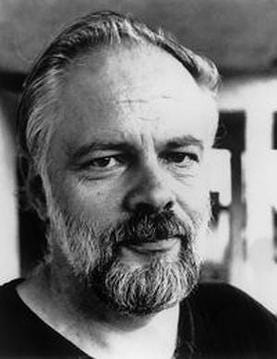
Who is Philip K Dick?
For those who may be unfamiliar…
Dick’s prominence came after his death as many of his stories were adapted for the screen, from Blade Runner, to Total Recall, both popular enough to earn sequels and reboots respectively, to the Adjustment Bureau, the popular television series The Man in the High Castle, and most recently Electric Dreams, a TV anthology adapted from a selection of his short works.


