
Tech Can Help Solve Our Mental Health Crisis. But We Can’t Forget The Human Element.
Tom Insel was the director of the National Institute of Mental Health from 2002–2015 and led the mental health team at Alphabet’s Verily. Tech alone can’t solve our mental health crisis, he writes.
Hi, and welcome back to Big Technology. This week we’re featuring an opinion piece from Dr. Thomas Insel, the former director of the National Institute of Mental Health, who went on to lead mental health at Alphabet’s Verily. He shares an important perspective about how the push for scale in mental health tech can conflict with some of the field’s fundamentals. Dr. Insel’s book, Healing: Our Path From Mental Illness To Mental Health, comes out on February 15. You can pre-order your copy here.
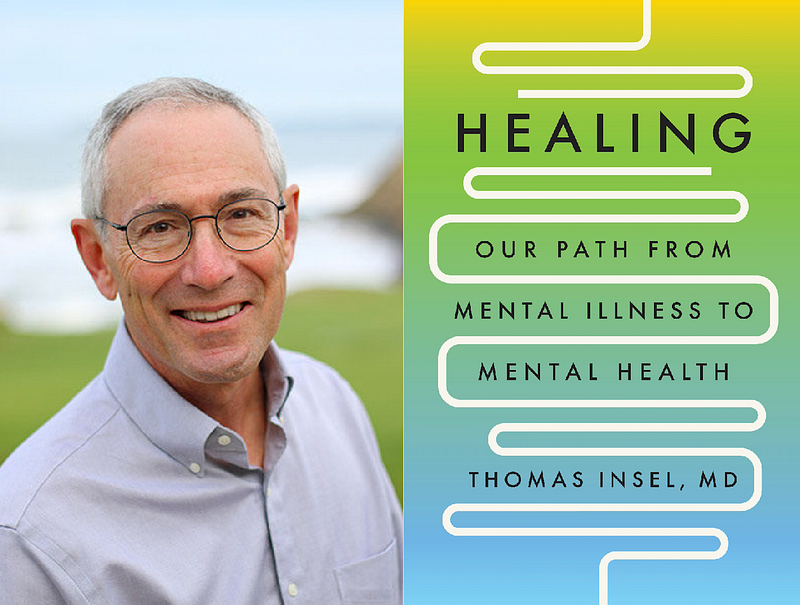
By Dr. Thomas Insel
When I left government late in the Obama era to join Google, I felt like I had entered a different universe. Since 2002 I had been Director of the National Institute of Mental Health, informally the “nation’s psychiatrist,” although not nearly as well-known as the “nation’s infectious disease expert,” my colleague Tony Fauci. As NIH Institute directors, we’d communicate with the public as part of our jobs. And as I described the NIMH’s extraordinary breakthroughs in genomics and neuroscience to a group of families in 2015, a parent in the audience stopped me. “My son has schizophrenia,” he said. “He has been hospitalized five times, made three suicide attempts, and is now homeless. Our house is on fire, and you are talking about the chemistry of the paint.”
I left NIMH for Google hoping that a big tech company could help me put out that fire. Google had the data science, scale, and resources to solve a problem as difficult as the growing mental health crisis. In my first six months at Verily — which emerged from Google X in 2015 — we hired more people than I recruited in 13 years at NIMH. The speed of execution and access to data was beyond anything I ever imagined. The team developed an entire product line while I was away for my first winter break. The NIMH would take 18 months to fund a clinical research project on 50 patients. Google’s Search team would run data on 10 million people before lunch.
I entered the tech world just as it discovered health care. Over the past six years, nearly every major tech company has focused on some aspect of health. Mental health startups, in particular, have become investor catnip. Venture capital investment has increased more than tenfold since 2015, launching hundreds of startups and surpassing $5 billion in 2021. At least eight digital mental health companies are unicorns, with three of them valued above $4 billion. All this investment and entrepreneurial activity has been inspiring. But it hasn’t put out the fire.
Initially, I gushed about how digital mental health companies were bringing therapy to millions by improving access. It took me a while to ask the “putting out the fire” question. Were digital mental health companies improving outcomes? Better outcomes — fewer suicides, more recovery — requires improved quality as well as access. Watching online therapy companies hire therapists who could not fill their practices, even at a time of unprecedented demand, made me wonder about quality. Seeing the churn in therapists at some of these companies, I worried about the patient’s experience. Where were the startups dedicated to serving patients with serious mental illness, like the man’s son with schizophrenia?
“Watching online therapy companies hire therapists who could not fill their practices, even at a time of unprecedented demand, made me wonder about quality.”
To be clear, the potential for innovation remains profound. Unlike other areas of health that require in-person procedures or extensive lab testing, mental health does not. Diagnosis is based on an interview, and treatment is either via medication or psychotherapy. Interviews are easy to put online, medication can be dispensed remotely, and teletherapy is effective and more convenient than sitting in a brick-and-mortar office.
Diagnosis, which had always been subjective, can become more rigorous with signals from smartphones and wearables for digital phenotyping, or natural language processing to measure mood or psychosis. Virtual reality can be used to treat phobias with immersive exposure. Online therapy can democratize care, delivering the same treatment from the same therapist in Boston and Botswana.
But my experience in both big companies and startups taught me that better software and hardware only go so far. No app or algorithm can replace human touch for a suicidal adolescent or a new mom struggling with postpartum depression. Putting out that fire requires high-touch and high-tech, as some of the most successful startups are figuring out. Recovery requires relationship. When technology empowers people with information and connects people to trained providers and others struggling with similar problems, outcomes improve.
“Recovery requires relationship.”
When I moved from DC to Silicon Valley, I was hopeful that tech could solve the growing mental health crisis. Despite the techlash, and the widespread belief that tech is the problem, I still believe it can get the job done, as long as we don’t ask the tech to do it all. Scaled tech alone can’t solve all problems. If we manage to combine the human aspect of care with the signals, size, and speed of technology, we’re going to douse that fire.
Thomas Insel, MD is a psychiatrist and neuroscientist who served as Director of the National Institute of Mental Health from 2002–2015. He led the mental health team at Verily (2015–2017), co-founded Mindstrong Health (2017–2019), NeuraWell Therapeutics (2020), and Humanest Care (2020); and served as Special Advisor on Behavioral Health for Governor Gavin Newsom (2019–2020). He is the author of the forthcoming Healing: Our Path from Mental Illness to Mental Health and the co-founder of MindSite News.