
Teaching Your Child Academics During a Pandemic
When homeschooling isn’t something you thought you would do
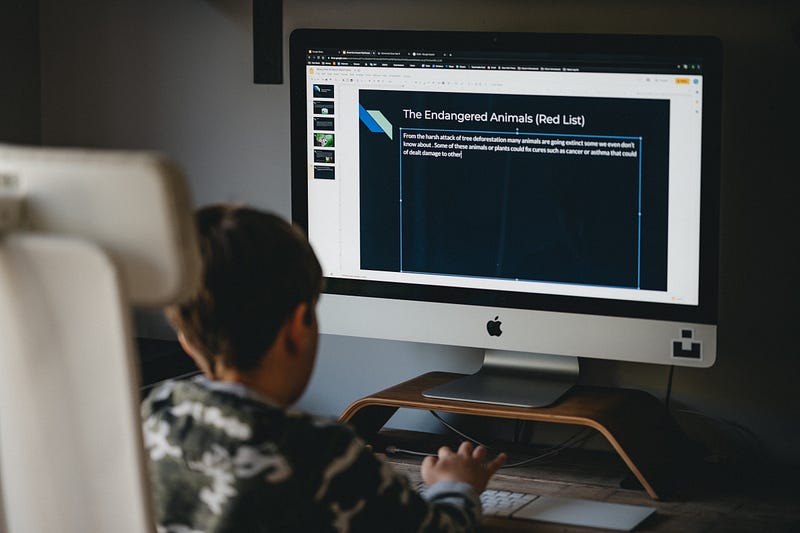
One of the jobs of parenting is implementing life lessons that we choose to pass on. We draw from our own childhood experiences, from observing current parenting trends, and often from our intuition. We want to teach our kids how to be self-sufficient, self-reliant individuals who have the capacity to love and the drive to succeed.
But what happens when teaching your child academics at home becomes the unwanted norm?
Homeschooling is nothing new. In FamilyEducation, it states,
“At its core, the concept behind homeschooling is really quite simple: Parents accept total responsibility for the education of their children rather than transferring the bulk of this responsibility to an institution (usually a public or private school).”
This concept leaves parents with a wide range of options on how best to teach their child. They have the freedom to develop an educational plan designed around their particular child’s needs in contrast to the standard curriculum taught in an institutional school.
Whether due to a lockdown or fear of sending their children to school, when a pandemic forces parents to teach their children at home following a structured educational program, it leaves unskilled parents stressed and their children overwhelmed.
During COVID-19, these are some problems parents are facing, and suggestions to help overcome them if you’ve got the desire and the means.
1. How do you teach kids who are smarter than you?
This dilemma can happen at any age. You may find yourself lagging behind your child’s studies because their knowledge of the subject is more advanced than yours. During the pandemic, I met an English speaking father tasked with teaching his seven-year-old daughter her French studies.
In an article, Lead with Languages, we learn,
“People who speak more than one language have improved memory, problem-solving and critical-thinking skills, enhanced concentration, ability to multitask, and better listening skills.”
Jay and his wife put their daughter in French-immersion to give her the resources for future success. Muddling through the teachings was a humbling experience when he admitted to Sadie he didn’t know it all. A free program like Systran, a French-English translator, can help you teach your child’s French studies and help you save face. (Google translate also offers translations in over 100 languages).
A great way to handle your scholar is to put them in charge as the teacher. Have them educate you on the subject. Encourage further research and/or study and allow the child to teach you the new material as they continue to learn.
2. I can’t get my child to focus.
The idiom, A Chain is As Strong As The Weakest Link, is useful to remember when your child schools at home. Parents often don’t recognize how they lead by example. Does the child have a calm workspace free of distraction, and are you modelling motivation, attentiveness, and overall interest?
Children watching couch potato-like, disoriented, or leisure-seeking behaviours around them during study time will lead children to unfocus and to gravitate toward higher interests of their own.
This doesn’t mean you need to constantly work alongside your child or spend their study hours helping them along.
An article by Ashley Trexler focusing on a new parenting style called Lazy parenting suggests you should ignore your child.
“By staying in the sidelines ready to offer assistance, but not taking responsibility for each and every minute of their time, you let your kids develop the lifelong skills of creative exploration, problem solving, and critical thinking, through self-directed learning and free play.”
Stick to a consistent routine, be mindful to eliminate distractions as much as possible, and ensure your child is well-rested. These elements will give your child the best shot at staying focused and engaged.
3. I don’t know my child’s learning style?
It’s been suggested there are many different learning styles. Parents may worry they are unskilled to teach in a way that fosters their child’s best approach.
Take heed and don’t worry.
According to the University of Waterloo, “They state that while there have been studies done on how individuals can have preferences for learning, almost none of the studies employed rigourous research designs that would demonstrate that people benefit if they are instructed in a way that matches their learning style (Pashler, McDaniel, Roghrer, & Bjork, 2008).”
This is good news.
According to abilitypath, there are four main learning styles,
Visual (learn through seeing)
Auditory (learn through hearing)
Tactile (learn through touch)
Kinesthetic (learn through doing and moving)
With these types in mind, why wouldn’t you want to foster a child/parent-teacher relationship that’s easiest to maintain by catering to the style your child seems to relate to the best?
Many children haven’t had the opportunity to explore the different approaches through traditional schooling. Now is the perfect time to experiment. Offer lessons through the various methods and together identify which models work best.
What if your style is different than your child’s? This will be a learning experience in and of itself. Try each other’s styles, and if all else fails, don’t be afraid to ask for support.
4. Some people are better students than teachers.
This topic is closely related to the one above. While you both may know the best learning style, what if you have difficulty expressing what you know?
I once had a math tutor who was clearly a genius, but for the life of him couldn’t explain all the facts in his brain.
In his article in Edutopia, Seth Linden explains,
“A truly successful tutor can make learning real, relevant and rigorous. Such tutors are experts in their academic content — they know the subject’s concepts, ideas and problems inside out.”
The author forgot one major point. A teacher, parent-teacher, or tutor must be able to teach the content understandably.
Be patient, be transparent, and be honest with your limits. For things you find unteachable, turn to the internet, the television, or another person for help. Set clear boundaries (and parental controls if necessary) so your child is surfing the web for the age-appropriate content you want them to learn.
Let’s face it, for many, teaching children academics at home during a pandemic is hard. You may have your own work, other children, and household duties also to consider. Remember to take heart; it is doable—Pat yourself on the back for managing this far.
On top of your children’s curriculum, take advantage of teachable moments. That special, spontaneous opportunity when your child is eager to learn a particular topic of interest.
Teaching your child academics at home may be something you never expected, but congratulations, you’ve added another notch in your parenting belt. Take heart. This, too, is a life lesson you’ve successfully passed on.


