
Teaching is political: rethinking education towards social justice.
Growing concerns in society, for instance on race, gender, artificial intelligence, war, and the quality of life shape the socio-political dynamics of both learners and educators. Simultaneously, the rise of fake news, misinformation, intolerance, and propaganda is at par with the former concerns, affirming the need for literacy and an ethical understanding of the socio-political realm. Moreover, in a world where such affairs intersect with the global and the local, where socio-political discourse is inevitable to seep within the classroom, an outcry for educators to become activists and to develop their political propensity is very well needed — especially from a social justice position.
Teaching Ethics Education gave me the privilege of teaching a syllabus geared towards social justice. For instance, issues of equity & equality, vulnerability & the welfare state, fairness, solidarity, and human rights are just a teaser of what goes on and beyond the ethics room. However, and this is the point I would like to emphasise, such topics are not exclusive to subjects such as ethics or other “political/humanitarian” topics in our schools.
A mathematics teacher may be faced with an issue of racism in the classroom; a science teacher might be challenged by a student to state her views on abortion; a language teacher can be asked why the school excludes certain students’ languages in morning assemblies; an art teacher may be probed to explain why certain artwork has been prohibited while others have not, and an ethics teacher might be confronted with students affirming that “gay sons will be kicked out of the house” — as I experienced.
All of the above portray scenarios which are both political and present in today’s classrooms. In other words, teaching is political; yet political discourse is no easy task for an educator to engage with in such situations. Issues of teacher education, personal disposition, ethical demeanour, and pedagogical approaches all play a role in how the teacher can be an effective political educator in class. As Diana Hess argues, by engaging in socio-political discourse, the classroom can become more democratic and “enlightened” in its outlook on society. On the other hand, by depoliticising the educator and thus the classroom (which is in itself a political act), the students are in a position of what I term “educational precarity” — when education becomes precarious to counter injustice.
Moreover, we have to rethink what we understand by (1) politics, (2) education, (3) teaching, and (4) social justice. We have to also reconsider how we can integrate rather than segregate the four, ensuring that our schools are creating spaces of critique, dialogue, and inquiry; rather than spaces which are depoliticised, dogmatic, or unrepresentative. In doing so, educators ought to keep in mind the ethical issues surrounding the above, for instance (a) which political issues are to be discussed; (b) how to manage the tension between student engagement and equal representation; (c) the classroom’s socio-political position towards the other, and (d) whether educators’ views are to be withhold or disclosed with the students. Such issues help to widen the discourse on the ethical obligations that teaching requires; obligations which are influenced by the teachers’ political positions.
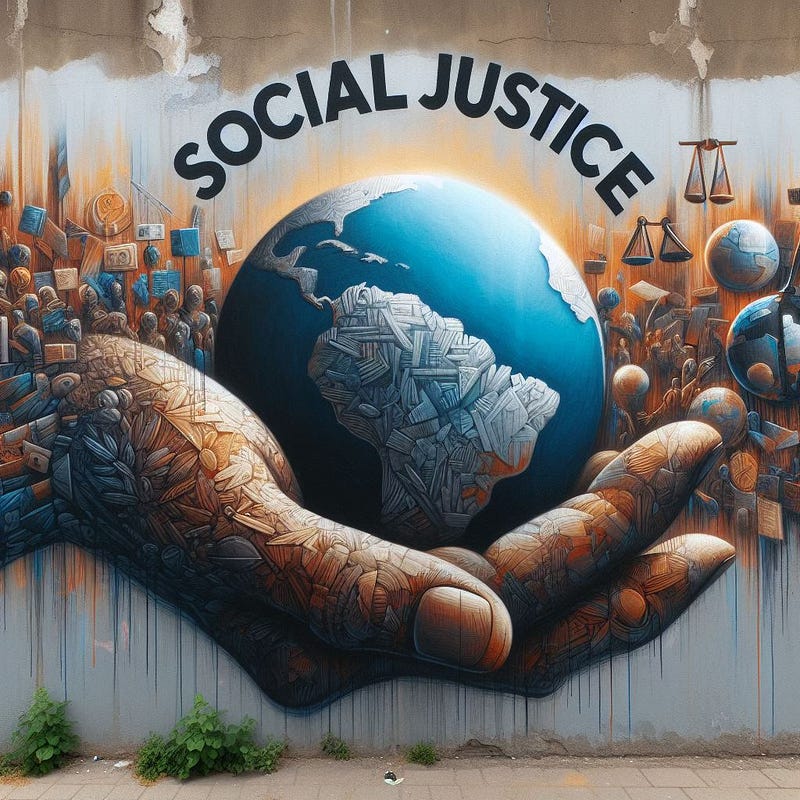
Equity is an important pillar of social justice, and more ink has to be spilled on its role in the education system, for instance:
- Issues of numerous workers with low levels of formal education;
- The right to a holistic education — and not only for what the market wants, and
- The multifunctional use of public schools, where they can become multifunctional centres for different needs.
Regarding equity and social justice in education, it has to be first acknowledged that we are walking towards an uphill path. This realisation can get blurred at times, especially due to efforts that aim to depoliticise the very nature of justice, whilst having systems which focus more on economic rather than human growth. We have to also mature with our understanding of politics, and realise that in some way or another, we are all ‘politicians’ living in a society. Furthermore, although various educators understand their political responsibility to teach towards social justice, every person has an agency to do alike. Let us keep in mind the responsibility of parents and guardians towards their children; the responsibility of companies towards their workers, customers and society; the responsibility of politicians towards good ethical practice and the people, and the responsibility of institutions to provide equality and equity for everyone.
Therefore, let us not take for granted the political duty that each person has to teach and learn for the sake of what is just — and thus for the sake of everyone’s life.
Consider following this blog for similar articles.


