
Taylor Swift’s New Song Has Me Rethinking Think Pieces
Taylor Swift’s new pro-LGBTQ single has once again riled up her detractors on the Internet with criticisms of money-grabbing, self-serving, and poor ally-ship. But here’s an alternative take.

“You Need to Calm Down”
Last Friday, Taylor Swift dropped her new song “You Need to Calm Down,” the second single from her forthcoming album Lover (her seventh, due August 23rd).
Like the first single, “Me!” (a duet with Brendon Urie of Panic! At the Disco), it is a candy-coated, rainbow-colored pop confection that seems determined to show us that she has fully moved on from the relatively darker and more cynical era that surrounded her last album, Reputation.
Unlike the first single, however, underneath the synth beats and clever hooks there is actually a coherent, progressive, and dare I say bold theme embedded in the lyrics of “You Need to Calm Down.” This is hardly the first time Taylor Swift has written about living your best life despite the pathetic haters that try to get you down (two of her best songs — “Mean” and “Shake It Off” cover this exact ground). But, it is the first time she got quite so specific about it.
The first verse references the admittedly long-list of haters that Taylor Swift has and how they tend to hide behind their Twitter handles (“You say it in the street that’s a knockout/But you say it in a tweet that’s a cop out”). She argues that from personal experience obsessing over an enemy only leads to internal suffering and then pleas, “Can you just not step on my gown?”
In the second verse — which has been the source of much debate — she takes on the homophobia faced by her LGBTQ friends: “You are somebody that I don’t know/But you’re coming at my friends like a missile/Why are you mad, when you could be GLAAD? Sunshine on the street at the parade/But you would rather be in the dark ages/Making that sign must’ve taken all night/You just need to take several seats and then try to restore the peace/And try to control the urge to scream about all the people you hate/Because shade never made any less gay!” She then makes a parallel plea from the first verse, “Can you just not step on his gown?”
And in the bridge, she shifts back to a more self-centered approach noting how the internet likes to set all of the female pop stars against each other (“We see you over there on the internet/Comparing all the girls who are killing it/But we figured you out/We all know now we all got crowns.”) And then, inevitably, “Can you just not step on our gowns?”
Clocking in at under 3 minutes, it is a bright and breezy listen that involves some clever lyrical themes, a nice beat, and an explicitness in its support of LGBTQ people that is exceptionally rare in popular music. I was hardly ready to call it a classic, but I was delighted and playing it on repeat.
And then came the think pieces…
Enter the Think Pieces
Articles started popping up all over the internet with titles like “Taylor Swift’s New Single is a Teachable Moment about How Not to Be an Ally” and “Taylor Swift’s ‘You Need to Calm Down’ Misses the Point about Being an LGBT Ally.” The authors of this article mercilessly deconstructed the song, its promotion, and its writer, interpreting everything through the most cynical possible lens.
Criticisms include (but are certainly not limited to): She should have made the song just about LGBTQ people and not inserted herself into it. She shouldn’t have made song about LGBTQ people at all. She shouldn’t be telling people how to feel or how to act as allies. As a (presumably) heterosexual person, she had no right to perform at the historic Stonewall Inn and doing so was queer-baiting. Name-dropping GLAAD was lazy writing. The list goes on… and on… and on…
After reading these, I couldn’t help but think to myself, “Am I so shallow that I can’t see the horrible disservice she has done to my community with this song? Am I so easily seduced by a pop beat and my love for Taylor that I can’t see how she’s appropriating our culture for her own personal gain?”
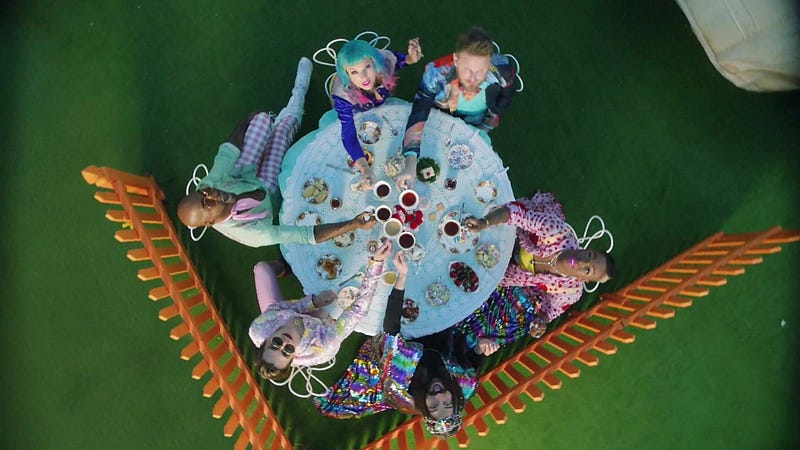
But then I saw the trailer for the music video (released earlier today) and saw the incredibly impressive long list of LGBT icons who were slated to appear in it, including Ellen DeGeneres, LaVerne Cox, Adam Rippon, and Jesse Tyler Ferguson. Clearly these influential people didn’t think Taylor’s heart or mind were in the wrong place or they wouldn’t have agreed to appear.
So then I got thinking about all the problems with think piece culture.
Rethinking Think Pieces
Before I enumerate my problems with current think piece culture, I have to make something extremely clear. I do not think anyone should be dissuaded from writing a critical or cynical think piece about anything or anyone. To all the think piece writers out there — your emotions and thoughts are valid and the Internet (and the world) is a better place because you critically examine our culture.
As I see it, the problem with think piece culture isn’t that there are an over-abundance of critical and cynical think pieces. The problem is that there are rarely positive ones to balance them out.
And I see all too easily how this happens. The instant the think pieces came out about Taylor’s new song, I decided I had two choices as a blogger. One choice was to not write anything at all. After all, the public had spoken and decided this was bad so who was I to say otherwise. My other choice was to take on the think pieces and dismantle their arguments, thus inviting a heated social media debate.
Only this morning did it occur to me that I had a third option — I could just express my far less cynical view of the whole thing and send it out into the world. It won’t be as flashy or click-baity or sharable as the takedowns and I run the risk of being called naive or — worse — being the subject of my own think piece takedown. (But, thankfully, I am not nearly an important enough voice for anyone to waste their time.) So here’s an alternate take.
An Alternate Take on “You Need to Calm Down”
Taylor Swift’s personal roots are in suburban Pennsylvania and her professional roots are in the country music industry — neither are bastions of LGBTQ acceptance. Born in 1989, her social brain’s formative years were dominated by the AIDS epidemic, the rise of the Evangelicals, and a time when any celebrity coming out of the closet was unheard of. Yet on her road to superstardom, she nevertheless became a major LGBTQ ally.
One of the notably apolitical Swift’s first public statements was denouncing an anti-LGBTQ political candidate in Tennessee. Since then she has put her money where her mouth is, donating large sums of money to fight anti-LGBTQ laws in the state (nicknamed the “Slate of Hate”) and becoming increasingly vocal about her views on LGBTQ equality.
Many of her songs have always had an appeal to LGBTQ listeners, with lyrical themes related to beating the bullies (“Mean,” “Shake It Off”), owning the narrative (“Blank Space,” “Look What You Made Me Do”), unrequited love (“You Belong With Me”), and heartbreak (“Back to December,” “All Too Well.”) But despite her activism and her LGBTQ-friendly lyrical themes, prior to “You Need to Calm Down” she had never explicitly discussed LGBTQ rights in her lyrics — well, save a cheesy, vague line about boys liking boys and girls liking girls in “Welcome to New York.”
And here’s the thing — very few pop stars have ever done so either. Gay icons like Madonna, Barbra, Celine, Mariah, Cher, Beyonce, and Britney have all made queer-friendly jams and publicly expressed their support for the community, but have never directly confronted these issues in their lyrics. Two of the only pop artists that have are quite complicated. Katy Perry gave us the cringe-inducing lesbian-as-a-sexy-experiment “I Kissed a Girl” and Lady Gaga gave us the self-empowerment of “Born This Way,” which is a hard comparison because unlike those other artists Gaga actually self-identifies as bisexual.
Not only does Taylor Swift use the word “Gay” and reference Pride and GLAAD (the influential non-profit that fights for LGBTQ equality), but she goes a step further. She’s not content to just tell the LGBTQ community that they are loved or should love themselves more, but she actually calls to task the homophobes whose toxic hate is as destructive to LGBTQ people as it is self-destructive.
The lyrics also take one of the most oft-used criticisms of queer people and turns it against those who hate them. Queer people have been historically derided as too flashy, over-the-top, dramatic, sensitive, demanding, sexual, and flamboyant. Here, the only people who are “too loud” and “need to calm down” are the haters. [Also, regarding the oft-criticized line “Shade never made anybody less gay,” I think it is quite clear she is saying that hate does not change people’s actual sexual orientation not an ignorance of the fact that homophobia does often lead to drastically increased concealment of one’s sexual identity.]
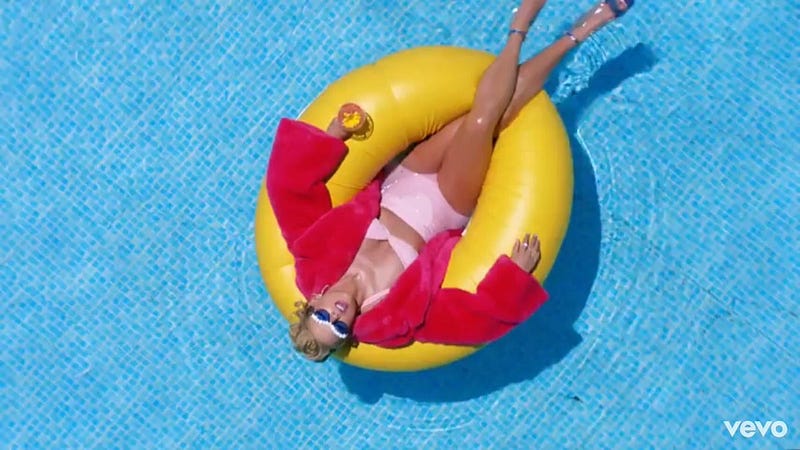
The video is a love letter to the LGBTQ community, with the aforementioned list of icons frolicking in a candy colored trailer park, living their best lives despite the protestors. (OK, the ending where Taylor ends her longstanding feud with Katy Perry by having them embrace each other while dressed in fast food costumes is exceedingly random, but it certainly gets points for shock value.)
So, I have now argued that I think “You Need to Calm Down” is pro-LGBTQ and actually represents an important milestone in pop music. Now there’s the issue of whether or not Taylor is an opportunist. Note that it was not her who called the song a queer anthem, but her critics. Note that her performance at the Stonewall Inn was a surprise and not televised or pre-publicized. Note that the inclusion of GLAAD in the lyrics led to a spike in donations for the organization (as was intended). Note that the song is being released in the context of her doing important work for LGBTQ people in her private life. Note that the song is perfectly in fitting with the lyrical themes and aesthetic of her new era. Note that her 7th album was going to be a huge commercial hit across the board (including with LGBTQ people) regardless of whether the explicitly supported them in her lyrics or not. Now counter-argue that she is merely an opportunist trying to profit off a community she is not a member of. I’m willing to listen.
People can hate the song. They can think its beat is lazy, its lyrics are trite, and that it represents a missed opportunity to do something even bolder or more queer-positive. But I honestly struggle with the idea that song’s message is a negative for the LGBTQ community or problematic. After decades of asking our pop culture icons for more explicit ally-ship, we get one who makes a damn good effort and the Twitterverse seems determined to take her down.
But ultimately, the takedown mentality is par for the course given Taylor Swift’s penchant for riling up detractors and the cynical think piece culture we are immersed in.
In Sum
My hope in writing this is not that I change the minds of anyone who has decided the song is problematic. Rather, I hope that I provide a compelling counterargument reflecting the feelings of those who don’t and do my microscopic bit to encourage people to write think pieces about things they admire, things they love, and things that are progressive, not just things that are just outrageous, offensive, or tone deaf. For real discourse, we need both.
Read other articles about Taylor Swift by this author:
- Red (Taylor’s Version): Track-by-Track Review
- Fearless (Taylor’s Version): Track-by-Track Review
- evermore: track-by-track review
- folklore: track-by-track review
- Lover: Track-by-Track Review
- Reputation World Tour: Review
Read recent articles by this writer about other musicians: Lady Gaga, Mariah Carey, Aretha Franklin, Elton John, Madonna, and Florence Welch


