
Taylor Swift: A Witless Twit of the Left (According to the Right)

Why is the world’s biggest pop star on the wrong end of conspiracy theories?
Note: If you are not a Medium member, you can read this story for free using this link. I encourage you to join our community!
Taylor Swift is one of today’s greatest pop stars, with millions of fans, many of whom are known as “Swifties.” Swift recently performed at 60 concerts held worldwide during 2022 and 2023. According to Pollstar, a music industry publication that tracks concert grosses, the Eras Tour grossed roughly $1.04 billion. Forbes reports that Swift sold more than 4.3 million Eras Tour tickets at an average price of $238.95, making her average gross per show $17,321,063, which Pollstar considered “massive.”
Whether you are a Swiftie fan or not, you can think of this living phenomenon in one of two ways.
- She is a highly talented singer/songwriter and a savvy businesswoman.
- Or she is a mindless and hapless fool who has been co-opted by deep-state forces who are manipulating her to support a liberal agenda that is being foisted on the American public.
Consider this small sampling of conservative theories claiming that Swift has become a twig thrashed about by frothing tidal waves of liberal values.
1. She is being coerced or blackmailed by the Democratic Party.
2. Her support for Democrats is a publicity stunt.
3. She is under mind control or hypnosis.
4. She is part of a secret society pushing a hidden agenda.
5. Her support for Democrats is financially motivated.
6. Swift’s political statements are written by a ghostwriter or manipulated by others.
7. She is manipulating her boyfriend, Travis Kelce, for political gain.
8. She is really a Trump supporter, as “evidenced” by deepfake videos.
Why Trash Taylor Swift?
Assuming you regard Taylor Swift as an accomplished performer and savvy businesswoman, you may wonder: Who are these people who feel compelled to belittle a woman who has developed her considerable talents to become a cultural and financial success? Why are so many so angry at someone who has done them no harm?
Like many cultural icons who find themselves in the public spotlight, Taylor Swift has become a victim of multiple conspiracy theories. Why?
The dynamics of people who engage in conspiracy thinking are complex. Conspiracies are created by conspiracy thinkers with various character traits and motivations. Swift’s subjection to multiple conspiracies is due to the convergence of several factors that have created a perfect storm, mainly on social media platforms.
I’m not a math guy, but these converging factors fit neatly into a formula:
(Fandom + Zero-Sum Thinking) * Cognitive Dissonance = Conspiracy Thinking
I will explain the components of this formula one by one (without math).
Fandom: When Stars Become Gods

As noted, Taylor Swift has millions of fans worldwide. A recent poll showed that a slim majority of U.S. adults (53%) identified as her fans. This U.S. fan base is white (74%), Democratic (55%), and suburban dwellers (53%). About half of these fans (49%) reported a household income under $50,000.
A notable characteristic of fandom is the degree to which they identify strongly with the values and lifestyles of their stars. One measure of this identity alignment is the sale of merchandise associated with stars. For the entire entertainment industry, in 2023, one market researcher estimated the global licensed merchandise market to be $295.1 billion, with the U.S. accounting for a significant portion.
The billions of dollars that fans spend on “merch” is a proxy measure for the degree to which fans identify with and emulate the idols of their worship. The bond between devoted fans and their stars is highly emotional.
As an indicator of this bond, fans typically personalize the meaning of the song they memorize. When a star sings a romantic lyric about love gained and love lost, fans will create theories about the paramour who jilted their beloved star.
For the song “All Too Well,” Swifties menaced musician John Mayer and Jake Gyllenhaal, the actor who reportedly inspired the fan-favorite song. John Mayer received several threatening messages on Instagram from Swift fans, including one that read, “I hope you choke on something,” along with a string of choice expletives.
Perhaps to her detriment, Swift encourages fan engagement with the use of coded messages, easter eggs, and elaborate narratives in her music and public appearances.
Fans imagine the life of a star, and that idealized life becomes theirs. This highly personalized identification with stars is the foundation of conspiracy theories, especially if fans feel betrayed by their stars.
While devoted fans are alike in identifying with their stars, they differ in how they process this identification in their minds. This is known as having an individualized mindset. To understand how mindsets differ, we will turn to the notion of zero-sum thinking.
Zero-Sum Thinking: If You Win, I Lose

Zero-sum thinking is when you believe that life’s resources, including success, wealth, and happiness, are limited and that another person’s gain is necessarily your loss. Zero-sum thinking is an example of a particular mindset.
Zero-sum thinking is found in all cultures. Sporting competition is the best example of a popular business empire built entirely on zero-sum thinking. If one team wins, the other loses. Sports teams will never cooperate to share a trophy. The trophy will go to one team only. The winning team is honored and revered. The losing team is castigated. A draw leaves fans frustrated because there is no clear winner.
The opposite of zero-sum thinking is abundance thinking, which emphasizes creating opportunities for collective improvement, learning, and development. This mindset encourages cooperation, empathy, and understanding, fostering environments where individuals and groups seek ways to enhance their welfare rather than competing for limited resources mutually.
People who use zero-sum thinking often have a fixed mindset. They like routines and familiarity, and they don’t like surprises or conflicts.
In contrast, people who use abundance thinking tend to have a growth mindset. They see the success of others not as a barrier to their own success but as an opportunity to learn, be inspired, and find new ways to grow.
How do mindsets relate to Taylor Swift being the victim of conspiracy theories? Her diverse fans number in the millions and represent a variety of worldviews. Those with fixed mindsets tend to think in binary terms: good or bad, right or wrong, for me or against me. With binary (zero-sum) thinking, there is no “in-between”: You are on my side or the other side.
Many of today’s political polarities result from binary (zero-sum) thinking fueled by fixed mindsets. The culture wars make this obvious: conservatives vs. liberals, whites vs. people of color, straights vs. LGTBQ+, abortion rights vs. right to life. There is no dialogue or attempt to resolve differences for people at either extreme of these polarities. Zero-sum thinking leads to people firmly standing poles apart. If people of color win, white people lose.
We see zero-sum thinking in the sports industry and in politics — but do we see it in the entertainment industry?
We don’t think of fans who attend music concerts as polarized. Everyone comes to hear the same music and moves to the same rhythms. Unlike a sporting event, there are no winners and losers at the concert's end. Everyone has a good time.
If Taylor Swift is the epitome of fans enjoying her non-polarizing music, how did she become a polarizing figure? To answer this question, we’ll turn to the dynamics of cognitive dissonance.
Cognitive Dissonance: Do Not Forsake Me Oh My Darling
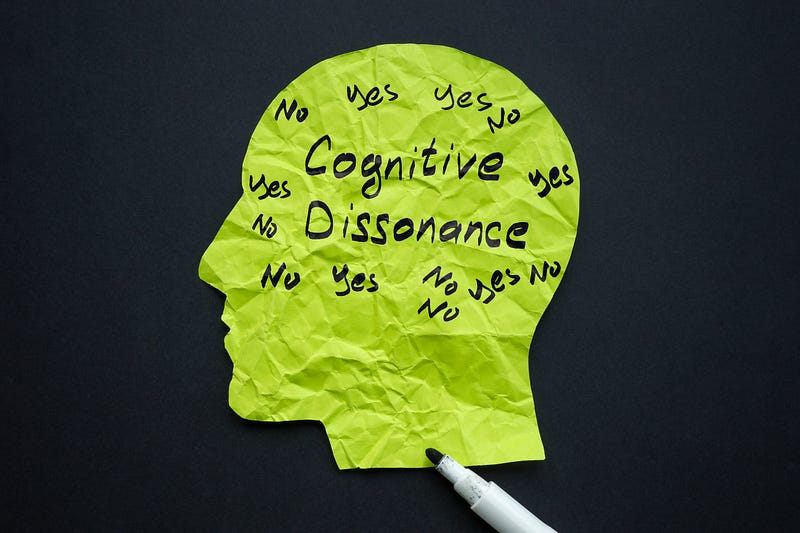
As a universal quirk of human nature, superstars become role models. We want to be like them. Their values are our values. We envy their popularity and wish we could share a tiny modicum of their lifestyle. The bigger the star, the more we identify with them.
What happens when you learn that a star with whom you align your identity has different personal values than you expected? What if your star holds beliefs that do not align with your most cherished beliefs?
Personally, I experienced an “identity misalignment” when I learned that one of my music heroes, songwriter/guitarist Eric Clapton, publicly opposed COVID-19 vaccinations. During the pandemic, news reports also revealed that Clapton had other politically conservative beliefs. Now what? I love Eric Clapton’s music, but his political values conflict with mine. Can I still admire him as a musician?
With value conflicts like these, we may find that some people are troubled more than others by interpersonal value disparities. The idea of a fixed versus growth mindset helps explain this difference.
I consider myself to have a growth mindset. I work at being tolerant of people who do not share my values. I try to see the best in friends whose political beliefs are very different than mine. In a similar vein, while I don’t agree with many of Clapton’s values, I respect him as a master musician.
People with fixed mindsets tend to be less accommodating. This is where cognitive dissonance becomes part of our equation for understanding how the political right turned on Taylor Swift.
Cognitive dissonance refers to the uncomfortable feeling you experience when you simultaneously hold two or more contradictory beliefs, attitudes, or values. For example, suppose you have irrefutable proof that your romantic partner betrayed your trust. You may now find it painful to both trust and mistrust your romantic partner at the same time. The greater your discomfort with this conflict, the more likely you will change the relationship with your partner to reduce the pain of your conflicting emotions.
As this related to Taylor Swift’s early career, fans with conservative political values believed she was “one of theirs.” At age 14, exploding onto the Nashville music scene, she had all the hallmarks of a country singer whose values aligned with folks wearing cowboy hats and driving pickup trucks. Without evidence, some pundits mislabeled her on social media as a Trump supporter and a neo-Nazi.
Although Swift kept her political values to herself, she came under pressure to refute accusations of racism and sexual harassment of women. In 2017, she became an original signatory to a published Time’s Up letter related to the #MeToo movement. She openly favored gun control, pro-choice and anti-discrimination legislation, and LGBTQ+ rights.
In short, Swift became identified as a left-leaning liberal, much to the dismay of her right-leaning conservative fans.
This binary (zero-sum) thinking triggered massive cognitive dissonance among her conservative fans: does Taylor Swift belong to us or to the radical left? She can’t be both. She is one or the other.
This creates a painful conflict for her conservative fans: the bright star in your dreary life has political values that you hate. How do you resolve this conflict?
There are lots of ways to resolve the pain associated with cognitive dissonance. Forgiveness is one solution. But how does forgiveness inspire conspiracy theories?
Conspiracy Theories: The Absolution of Taylor Swift, Who Was Duped by the Left
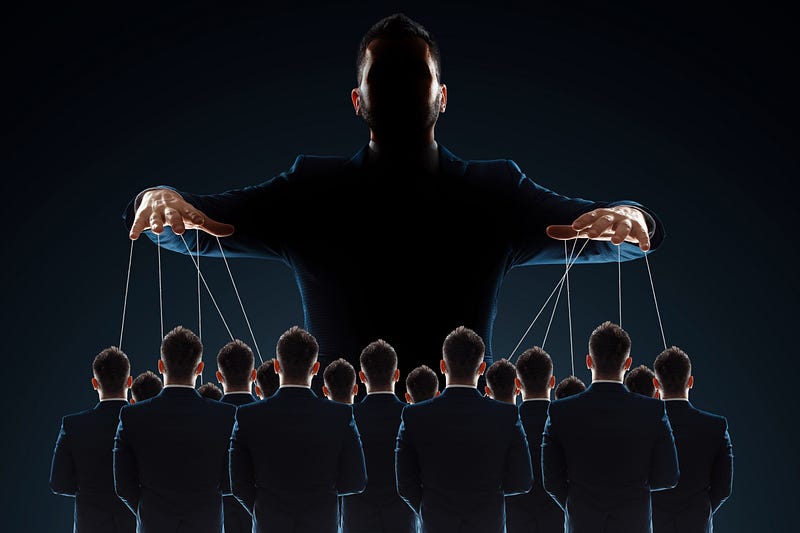
For someone whose worldview has been turned upside down by conflicting beliefs, conspiracy theories are like a salve on an open wound. The wound is there, but the pain goes away.
A conspiracy theory is a belief that events or circumstances are controlled by powerful and malicious groups or individuals, often working against your common good. How can someone whom you adore have beliefs that are so bad? You say to yourself: “There’s got to be some explanation for the sins of the one I love!”
Conspiracy theories offer those explanations. Conspiracy thinking creates a rationale for forgiving someone who has betrayed your values and love.
Absolution is a wonderful way to make peace with someone who has sinned. Typically, the sinner does some penance in return for the forgiveness of absolution. Religions have long used penance to welcome sinners back into the congregation.
What happens when the sinner is not penitent? And what if the congregation wants the return of the prodigal sinner? In that case, the congregation creates a shared story that absolves the sinner of the deed by explaining why they continue to be unrepentant.
This is how Taylor’s adoring but conservative Swifties resolve their cognitive dissonance. They have created many stories about how her liberal beliefs have been forced upon her by dark and controlling forces.
Through these many conspiracy theories, Swift has been cast as a hapless victim of forces much stronger than her. By redefining her as a victim, her fans are degrading her stature as a talented artist and a savvy businesswoman. But that degradation is of little consequence to her conspiring fans because Swift’s diminished status can make her more approachable as someone who is vulnerable — like they are.
Eliminating the Sour Pickles Raining on Taylor Swift’s Parade

No talented public figure wants to be the butt of social media flooded with conspiracy-laden backbiting. Are there any off-ramps to reduce this identity persecution of Taylor Swift and other notable stars who sin in the eyes of others?
Let’s recall the factors that got Taylor Swift into this pickle: (Fandom + Zero-Sum Thinking) * Cognitive Dissonance = Conspiracy Thinking.
Fans will always idolize and emulate their cherished stars. That is not likely to change soon. Should a star fall short of the fans’ idealized fantasies, the pain of fans seeing the real star compared to the idealized star will always trigger cognitive dissonance.
Conspiracy thinking is a useful remedy for absolving a fallen star: the hero tragically came under the dark influence of others, and their fall was not their fault. That said, it is unlikely that humanity will abandon cognitive dissonance and conspiracy thinking any time soon.
If there is any hope for tolerating differences between the products of stars (music, art, performances) and their personal values, we will need to find this hope in ridding humanity of zero-based thinking.
The more that one social group can accept differences in another social group, the greater the chances of both groups finding a common ground to celebrate a common good. No two people will have the same values. No two social groups will share the same worldview. By becoming more tolerant of differences in beliefs, we will have some hope for positive dialogue about that which is valued by all.
Perhaps the continued romance between the world’s leading pop star, Taylor Swift, and America’s football hero, Travis Kelce, will melt the hearts of liberals and conservatives into one big accommodating puddle.
Toward that end, good luck to us all!
Update — February 14, 2014: A recent poll of the American public conducted by Monmouth University found that of the 902 adult respondents to the survey, almost 20% (1 in 5) believe that Taylor Swift is part of a covert “deep state” governmental effort to help President Joe Biden win the 2024 election. Drilling down the conspiracy belief respondents, 71% identify with or lean toward the Republican Party, and 83% indicate they are likely to support Donald Trump.
I will point out the obvious by saying that even if Taylor Swift endorses Joe Biden for a second term as president, this doesn’t mean that her endorsement is due to dark psychological operations (psy-ops) that have manipulated her mind. A key part of conspiracy thinking is to resolve the cognitive dissonance by making the “sinner” (the fallen angel) a victim of evil forces.
On the flip side, two-thirds (68%) of the survey respondents approve of Swift encouraging her fans to vote in the upcoming election.
This update brings no surprises. Conspiracy thinking runs deep in conservative sectors of the American public. The greater the star power of Taylor Swift, the more we can expect novel and nasty conspiracy theories.