avatarDanielle Herring

Free AI web copilot to create summaries, insights and extended knowledge, download it at here

4500

Abstract

ards temperance, since these beverages did not cause violence in the same way alcohol does.</p><p id="3131">Vegetarians in favor of coffee and tea suggested that promoting vegetarianism first instead of temperance would cause teetotalism. Their reasoning was that meat consumption causes cravings for alcohol and other stimulants, which would naturally taper off if a vegetarian diet was adopted. Others argued that demanding too many dietary restrictions would be off-putting to potential vegetarians in the first place, and any <a href="https://www.google.com/books/edition/Fifty_Years_of_Food_Reform/gYRIAAAAYAAJ?hl=en&amp;gbpv=1&amp;pg=PA76&amp;printsec=frontcover">dietary reform</a> activity should focus only on encouraging the public to avoid meat.</p><p id="d1c9">Regardless of any individual 19th century vegetarian’s opinion on the consumption of tea and coffee, there is<b> </b>widespread evidence that coffee and tea alternatives were available in the 19th and early 20th century.</p><figure id="611c"><img src="https://cdn-images-1.readmedium.com/v2/resize:fit:800/0*d67ZNTaKBJQ0RFa3"><figcaption>Cichorium Intybus, Common Chicory <a href="https://commons.wikimedia.org/wiki/File:Illustration_Cichorium_intybus0_clean.jpg">Wikimedia Commons </a>Public Domain</figcaption></figure><p id="e791">Grains, <a href="https://www.google.com/books/edition/A_Supplement_to_Ure_s_Dictionary_of_Arts/UckoAAAAYAAJ?hl=en&amp;gbpv=1&amp;pg=PA324&amp;printsec=frontcover">chicory</a> and dandelion roots were the <a href="https://www.google.com/books/edition/The_Druggist_s_General_Receipt_Book_Etc/qZNkAAAAcAAJ?hl=en&amp;gbpv=1&amp;pg=PA252&amp;printsec=frontcover">usual ingredients</a> in coffee substitutes. <a href="https://archive.org/details/b20402405/page/148/mode/2up">Molasses</a> or other sweeteners were included sometimes to add another dimension of flavor and caramelization to these drinks. Dried, roasted fruits like <a href="https://www.google.com/books/edition/History_of_the_Natural_and_Organic_Foods/hQPcDwAAQBAJ?hl=en&amp;gbpv=1&amp;dq=Free%20Produce%20Movement%20%2B%20Coffee&amp;pg=PA37&amp;printsec=frontcover">figs</a> or even <a href="https://archive.org/details/laurelhealthcook11perk/page/484/mode/1up">vegetables</a>, or more eccentric ingredients like <a href="https://www.google.com/books/edition/The_Dietetic_Reformer_and_Vegetarian_Mes/lAEFAAAAQAAJ?hl=en&amp;gbpv=1&amp;pg=RA2-PA46&amp;printsec=frontcover">asparagus seeds</a> could find their way into the ingredients lists of these alternative beverages. Recipes in vegetarian cookbooks and periodicals provided resources for vegetarians looking to switch from caffeinated beverages to herbal alternatives. <a href="https://www.google.com/books/edition/The_Dietetic_Reformer_and_Vegetarian_Mes/lAEFAAAAQAAJ?hl=en&amp;gbpv=1&amp;pg=RA1-PA32&amp;printsec=frontcover">Tea substitutes</a> were usually created by steeping culinary herbs like sage in boiling water. Infusions of lemon or orange peels were also considered palatable substitutes.</p><p id="b45d">An early vegetarian cookbook — <i>Vegetable Cookery</i> contains an <a href="https://archive.org/details/b22014263/page/333/mode/1up">extensive list</a> of herbs, leaves and flowers recommended as tea substitutes.</p><blockquote id="42d1"><p>The leaves of hawthorn may be taken from April to September (inclusive); they must first be carefully picked and cleansed, then well rinsed in cold water and drained, and whilst damp to be put in a common culinary steamer, where they are to be subjected to the action of vapour till changed from a green to an olive colour ; the leaves are then to be dried on a hot plate well heated, and are to be continually stirred up and turned over until thoroughly dry, when they may be preserved for use. Agrimony, Sage, Balm, Peppermint, and similar spicy plants, the flowers of sweet Woodroof, Pimpernel Rose, the leaves of Peach and Almond trees, the young leaves of Bilberry, Black Currant, and common Raspberry, the blossoms of Sloe-tree or Black-thorn, Red Sage, Wild Thyme, John’s Wort, Mint, Meadow Sweet, Lavender, Rosemary, Wild Marjoram, Wood Betony, Ground Ivy, Hyssop. The whole, or any of these herbs mixed according to the taste, are very excellent as substitutes for tea. They should be gathered dry, and picked from the stalks, and dried in the shade. (p. 333)</p></blockquote><p id="df14">This late Victorian <a href="https://archive.org/details/mazdaznanhomecoo00chic/page/5/mode/1up">recipe</a> for Health Co

Options

ffee is a typical example of cereal coffee that could be prepared from scratch at home.</p><blockquote id="dab8"><p>Health Coffee.–Take a quantity of whole barley (not pearl barley) and soak twenty-four hours in as much water as the barley will absorb. Keep in a warm place. Dry the barley by slow heating and brown in a slow oven, stirring it occasionally. Prepare and serve as other coffees. (p. 5)</p></blockquote><p id="a4d1">Mass-produced coffee and tea alternatives were available for purchase by the Victorian era. Advertisements in vegetarian periodicals for tea and coffee substitutes were commonplace.</p><figure id="daff"><img src="https://cdn-images-1.readmedium.com/v2/resize:fit:800/0*EFvTurp3G5IpCqFo"><figcaption>Herald of the Golden Age <a href="https://www.google.com/books/edition/Herald_of_the_Golden_Age/4Nj5XPoAmdEC?hl=en&amp;gbpv=1&amp;dq=%22Charles+Cunliffe%27s+Dandelion+Coffee%22&amp;pg=RA4-PA40-IA3&amp;printsec=frontcover">Google Books</a> Public Domain</figcaption></figure><figure id="9f41"><img src="https://cdn-images-1.readmedium.com/v2/resize:fit:800/0*9ux-ixO5oUga9Wsu"><figcaption>Health Reformer <a href="https://archive.org/details/health-reformer-volume-32-issue-01-january-1st-1897/page/n58/mode/1up">Internet Archive</a> Public Domain</figcaption></figure><p id="53b4">While the most common form of coffee and tea alternatives were offered as dry ingredients, they were also available as liquids, like Pittman's Apple Tea Essence, advertised below.</p><figure id="2925"><img src="https://cdn-images-1.readmedium.com/v2/resize:fit:800/0*1AGNO2VqWLxYq0dU"><figcaption>Herald of the Golden Age <a href="https://www.google.com/books/edition/Herald_of_the_Golden_Age/4Nj5XPoAmdEC?hl=en&amp;gbpv=1&amp;pg=RA4-PA100-IA4&amp;printsec=frontcover">Google Books</a> Public Domain</figcaption></figure><p id="d54e">The unusual trade names are one of the most entertaining things about older advertisements for tea and coffee alternatives. Creative spellings of the word coffee abound in alternative products such as <a href="https://archive.org/details/universalnaturop00lust/page/1307/mode/1up">No-Ko-Fe</a> and <a href="https://archive.org/details/foodhomeandgard00unkngoog/page/n495/mode/1up">Kaughphy</a>. Latin references were naming inspiration as well, such as the dandelion root based beverage <a href="https://www.google.com/books/edition/Herald_of_the_Golden_Age/4Nj5XPoAmdEC?hl=en&amp;gbpv=1&amp;pg=RA2-PT1&amp;printsec=frontcover">Taraxo</a>, the name likely derived from the official Latin name for the plant, <a href="https://www.britannica.com/plant/dandelion"><i>Taraxacum Officinale</i></a><i>.</i> <a href="https://www.google.com/books/edition/The_Vegetarian_Advocate/5dQiLGxP_SsC?hl=en&amp;gbpv=1&amp;pg=RA1-PA92&amp;printsec=frontcover">Breakfast Powder,</a> a powdered instant hot beverage meant to replace tea and coffee at breakfast, was a more literal name.</p><p id="a8bb">Sometimes these beverage alternatives were named for their inventors. <a href="https://www.atlasobscura.com/foods/postum">Postum</a>, created by C.W. Post, is one of the best known and one of the longest continually sold coffee alternative products. The original version of Postum was sold from 1895 until its discontinuation in 2007. <a href="https://www.fooddive.com/news/why-a-north-carolina-couple-brought-postum-back/540515/">Customer demand</a> brought the instant beverage powder back to store shelves in 2013.</p><p id="bc3d">Like the demand for the return of Postum, <a href="https://www.alliedmarketresearch.com/herbal-tea-market">herbal teas</a> and <a href="https://adv-bio.com/the-rise-of-coffee-alternatives/">coffee alternatives</a> have been projected to continue rising in popularity. When people embrace the modern trend for coffee and tea alternatives by sampling cereal coffee or decaffeinated herbal tea, they are drinking a beverage from the past.</p><p id="881e"><b><i>Thank you for reading!</i></b></p><p id="d394">If you love history, plants or the history of plants, consider supporting <i>Plant Based Past</i> by buying me a (cereal) <a href="https://ko-fi.com/danielleherring">coffee</a>!</p><p id="05c6">For more vegan, vegetarian, and botanical histories, follow Plant Based Past on Medium.</p><p id="cad0">You can sign up for email alerts to receive the next story when it becomes available, just by clicking the envelope icon.</p><p id="8090">Next Week: <i>5 Temperance Beverages from the Past in Time for Dry January</i></p></article></body>

Taraxo, Postum and Breakfast Powders: A Vegetarian History of Tea and Coffee Alternatives
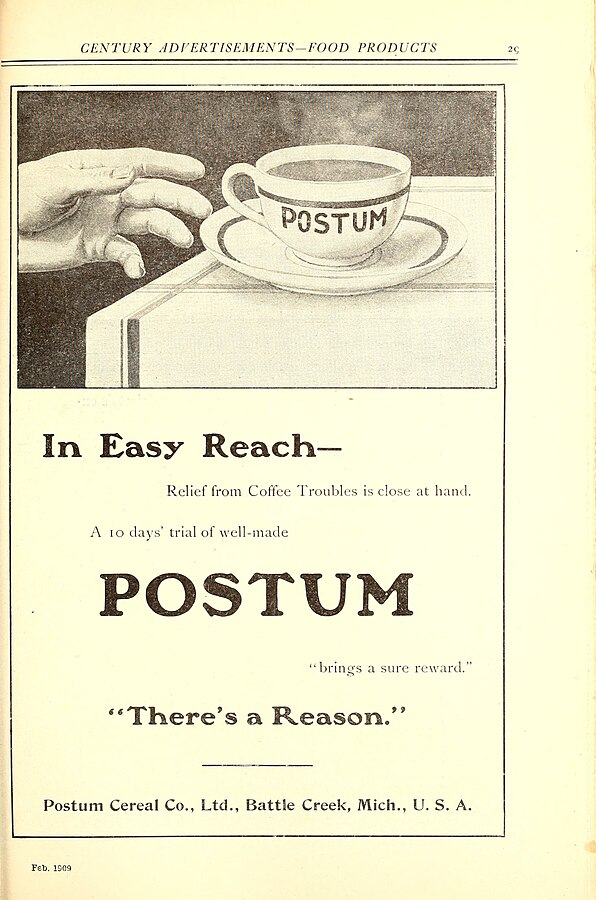
Postum Advertisement (1909) Wikimedia Commons Public Domain

Eating healthier is a common New Year’s resolution and quitting caffeine or cutting back on your coffee and tea consumption may be part of that goal. Switching to alternative versions of your favorite beverages has never been easier, with modern grocery stores and online retailers offering wide varieties of herbal teas and coffee-like blends. The origins of these alternative drinks are entwined with 19th and early 20th century vegetarian and vegan culinary history.

Vegetarian attitudes about tea and coffee consumption varied over the 19th and early 20th century. A more numerous, or at least more vocal group of vegetarians and vegans in the 19th and early 20th century were opposed to drinking tea and coffee. Coffee and tea drinking were blamed for poor mental and physical health by vegetarians. Conditions like indigestion, rheumatism, and “irritated nerves” were attributed to these “slow poisons.”

There was also an ethical component to the vegetarian argument against tea and coffee drinking. A slippery slope of potential violence to human beings and contributing to animal deaths was attributed to these popular beverages. Coffee and tea drinking would lead to alcoholism and the return to meat eating, according to vegetarian tea and coffee critics.

Many 19th century vegetarians considered coffee and tea to be “stimulating” beverages with little nutritional value, not very different in effect on the human psyche and appetite than alcohol or meat. They argued that the desire for these stimulating foods only increases once they are consumed, and stronger stimulants would be desired over time, when coffee or tea no longer satisfied cravings. Vegetarians argued that excessive consumption of tea and coffee would inevitably lead to a desire to consume alcohol, if not full-blown alcoholism. Alcoholism was considered to be the root of most violence by temperance-supporters.

Vegetarians who were more permissive in regards to tea and coffee consumption argued that coffee could be an “antidote to drunkenness”. Some vegetarian periodicals and cookbooks also included instructions on preparing coffee. Some vegetarians considered replacing all alcohol with tea and coffee a positive step towards temperance, since these beverages did not cause violence in the same way alcohol does.

Vegetarians in favor of coffee and tea suggested that promoting vegetarianism first instead of temperance would cause teetotalism. Their reasoning was that meat consumption causes cravings for alcohol and other stimulants, which would naturally taper off if a vegetarian diet was adopted. Others argued that demanding too many dietary restrictions would be off-putting to potential vegetarians in the first place, and any dietary reform activity should focus only on encouraging the public to avoid meat.

Regardless of any individual 19th century vegetarian’s opinion on the consumption of tea and coffee, there is widespread evidence that coffee and tea alternatives were available in the 19th and early 20th century.
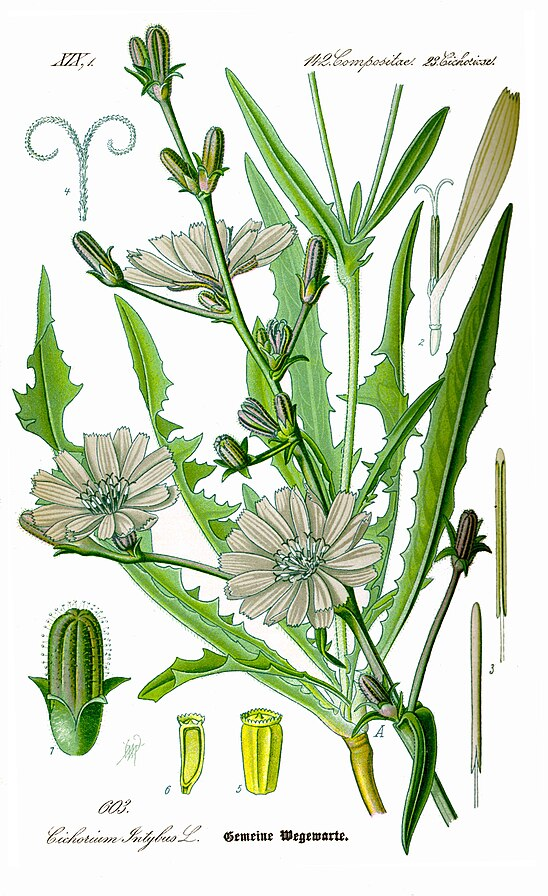
Cichorium Intybus, Common Chicory Wikimedia Commons Public Domain

Grains, chicory and dandelion roots were the usual ingredients in coffee substitutes. Molasses or other sweeteners were included sometimes to add another dimension of flavor and caramelization to these drinks. Dried, roasted fruits like figs or even vegetables, or more eccentric ingredients like asparagus seeds could find their way into the ingredients lists of these alternative beverages. Recipes in vegetarian cookbooks and periodicals provided resources for vegetarians looking to switch from caffeinated beverages to herbal alternatives. Tea substitutes were usually created by steeping culinary herbs like sage in boiling water. Infusions of lemon or orange peels were also considered palatable substitutes.

An early vegetarian cookbook — Vegetable Cookery contains an extensive list of herbs, leaves and flowers recommended as tea substitutes.

The leaves of hawthorn may be taken from April to September (inclusive); they must first be carefully picked and cleansed, then well rinsed in cold water and drained, and whilst damp to be put in a common culinary steamer, where they are to be subjected to the action of vapour till changed from a green to an olive colour ; the leaves are then to be dried on a hot plate well heated, and are to be continually stirred up and turned over until thoroughly dry, when they may be preserved for use. Agrimony, Sage, Balm, Peppermint, and similar spicy plants, the flowers of sweet Woodroof, Pimpernel Rose, the leaves of Peach and Almond trees, the young leaves of Bilberry, Black Currant, and common Raspberry, the blossoms of Sloe-tree or Black-thorn, Red Sage, Wild Thyme, John’s Wort, Mint, Meadow Sweet, Lavender, Rosemary, Wild Marjoram, Wood Betony, Ground Ivy, Hyssop. The whole, or any of these herbs mixed according to the taste, are very excellent as substitutes for tea. They should be gathered dry, and picked from the stalks, and dried in the shade. (p. 333)

This late Victorian recipe for Health Coffee is a typical example of cereal coffee that could be prepared from scratch at home.

Health Coffee.–Take a quantity of whole barley (not pearl barley) and soak twenty-four hours in as much water as the barley will absorb. Keep in a warm place. Dry the barley by slow heating and brown in a slow oven, stirring it occasionally. Prepare and serve as other coffees. (p. 5)

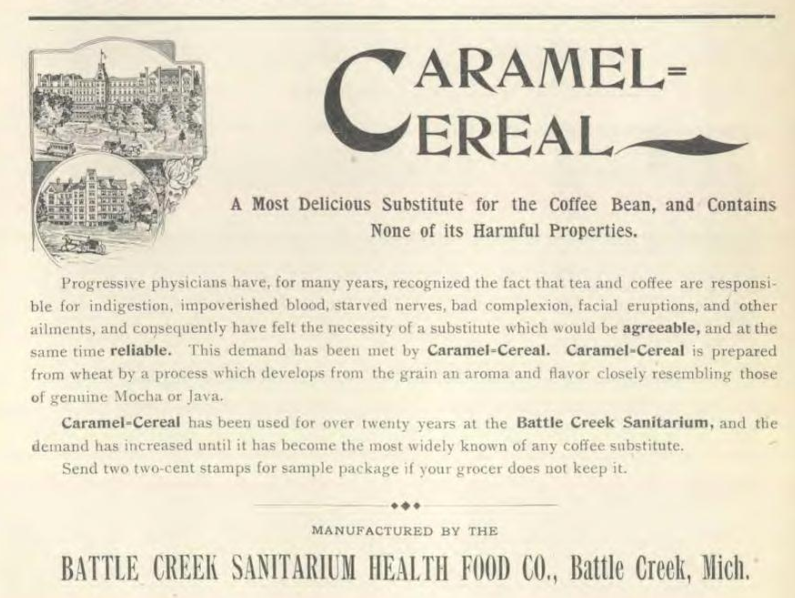
Mass-produced coffee and tea alternatives were available for purchase by the Victorian era. Advertisements in vegetarian periodicals for tea and coffee substitutes were commonplace.
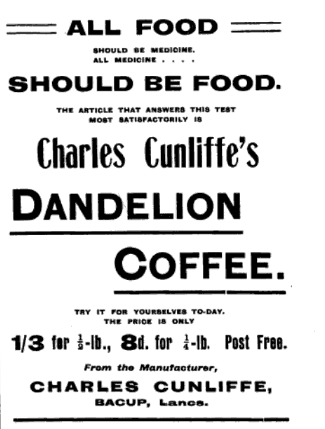
Herald of the Golden Age Google Books Public Domain
Health Reformer Internet Archive Public Domain

While the most common form of coffee and tea alternatives were offered as dry ingredients, they were also available as liquids, like Pittman's Apple Tea Essence, advertised below.
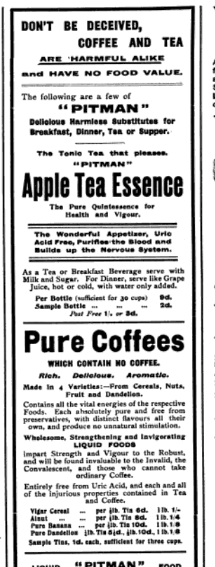
Herald of the Golden Age Google Books Public Domain

The unusual trade names are one of the most entertaining things about older advertisements for tea and coffee alternatives. Creative spellings of the word coffee abound in alternative products such as No-Ko-Fe and Kaughphy. Latin references were naming inspiration as well, such as the dandelion root based beverage Taraxo, the name likely derived from the official Latin name for the plant, Taraxacum Officinale. Breakfast Powder, a powdered instant hot beverage meant to replace tea and coffee at breakfast, was a more literal name.

Sometimes these beverage alternatives were named for their inventors. Postum, created by C.W. Post, is one of the best known and one of the longest continually sold coffee alternative products. The original version of Postum was sold from 1895 until its discontinuation in 2007. Customer demand brought the instant beverage powder back to store shelves in 2013.

Like the demand for the return of Postum, herbal teas and coffee alternatives have been projected to continue rising in popularity. When people embrace the modern trend for coffee and tea alternatives by sampling cereal coffee or decaffeinated herbal tea, they are drinking a beverage from the past.

Thank you for reading!

If you love history, plants or the history of plants, consider supporting Plant Based Past by buying me a (cereal) coffee!

For more vegan, vegetarian, and botanical histories, follow Plant Based Past on Medium.

You can sign up for email alerts to receive the next story when it becomes available, just by clicking the envelope icon.

Next Week: 5 Temperance Beverages from the Past in Time for Dry January

Vegetarian
Vegan
History
Coffee
Tea
Recommended from ReadMedium