
Taps from the Arizona
A Memorial Day Tribute to an Old Marine
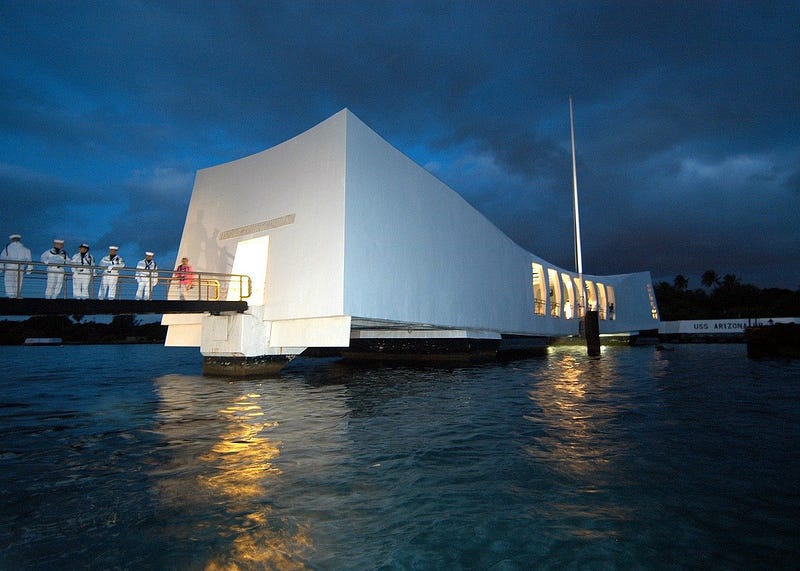
Despite that one horrific day in infamy, it remains a beautiful and striking place. A place now four score years older than the day it erupted into flames and death and war. Hawaii has a way, with its paradisaical strokes, of painting over scars to make places beautiful again. Pearl Harbor is no exception.
In 1998 our family had the good fortune to visit The Islands. On our last day, we scheduled a visit to Pearl. I’d been to the Arizona Memorial once before, and I wanted my son and daughter, young teens at the time, to have that solemn and most reverent experience; to gain some understanding of the heavy price America has always had to pay for shining a beacon of freedom throughout the world.
Upon our arrival we found all the boat trips out to the Arizona Memorial booked for the the day. Ironically, about 90% of the visitors were Japanese. That bothered me, even angered me a bit. So we wandered the small park, taking in the view of the harbor and the other memorial plaques and monuments there on the shore. To assuage my pique against the Japanese tourists, I started photo bombing their camera shots. Passive aggressively, it seemed the least I could do. I fear I’m in several Japanese family albums.
Then something subtle happened.
I didn’t even notice it at the time, but later reflection brought it home.
After seven and a half brief decades as a human being… and a believer, I’ve found that coincidences rarely happen in life. Had there been seats on one of those boats, we four would’ve been able to visit the Arizona; we would’ve been able to stand in humbled silence before the Memorial Wall bearing the 1,172 names of sailors and marines killed when the ship was attacked on the morning of December 7, 1941. We no doubt would’ve been moved by the moment, gaining an indelible memory. On the other hand, had those things happened, we may never have met Sergeant Dick Fiske.
I first spotted Mr. Fiske moving through the park
and the gift shop as I made my photo op rounds among the Japanese tourists. He seemed to stand out. Somewhere in his 70’s, he was a small, neat man dressed in an aqua “Hawaiian” shirt festooned with white blossoms, a loose-fitting green vest, and white slacks. He sported a snow-white mustache to match his pants. His gossamer hair was white, too, but a military cap covered most of it; a little hat like you see VFW or American Legion guys wearing adorned with buttons and patches and inscriptions. I could see a Marine emblem on one side of the cap, and sergeant stripes on the other. The words U.S.S. West Virginia were embroidered on one side, and “Pearl Harbor Survivor” was emblazoned across the back of his vest. He carried a big white scrapbook. Intrigued, I wanted to approach him, but was a little shy. This man was a hero, after all. As it turned out, I had no idea.
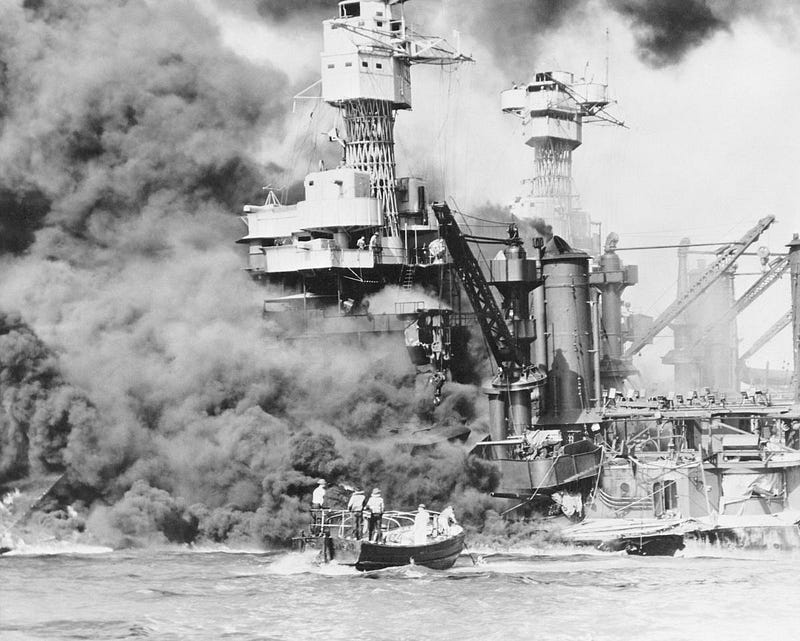
“Excuse me, sir,” I said to him. “Were you on the West Virginia during Pearl Harbor?” In the American lexicon, the proper noun has become an event.
He looked straight at me, his eyes keen and bright. “Sure was, son. Would you like to hear about it?”
I swallowed and said, “Yes, sir, I would. And I’d like for my kids to hear your story, too.”
He nodded with a smile, and I led him to a bench where my family sat.
He told us the events he’d experienced that Sunday morning, then 57 years past, turning through the book he held to show us pictures to fit his narration.
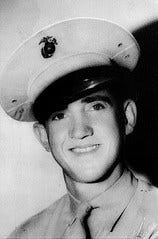
He’d been a nineteen year old Marine assigned to the Battleship West Virginia. In those days, those easy duty days in paradise, he was a bugler. It was his job that Sunday morning to go topside and play reveille for the ship’s company. The ship’s chaplain and several sailors were setting out rows of chairs on the after deck preparing for the morning services.
Having just piped his reveille, Private Fiske stood on the quarterdeck when the first torpedoes struck.
The blast blew him across the ship. Stunned, he got to his feet. Looking astern, where the Arizona sat parked behind them on Battleship Row, he watched as the bow of the great ship rose up out of the water followed by a massive explosion. The eruption blew him backward thirty feet. Soaked in oil and water, but somehow uninjured, he got to his feet again and ran to his battle station on the bridge.
Once there, he witnessed his captain receive mortal wounds when bomb shrapnel ripped through the windows. The ship was gone, and the abandon order was given. The young Marine jumped over the side and swam to Ford Island, helping those in the water not able to swim… those who still needed help.
Dick Fiske survived that “day of infamy”
at Pearl Harbor, and later 36 days on Iwo Jima. But what Dick Fiske did after the war is even more incredible. He accomplished what few of us could ever do: he forgave his enemies.
After the war in the Pacific, combat veteran Marine Sergeant Dick Fiske went home, but he was not through serving his country. He enlisted in the Air Force and went to two other wars in Korea and Vietnam. He retired a master sergeant, returning to make his home in Honolulu. But one more mission called out to him. Once a month he dutifully went out to the Arizona Memorial to play Taps for his brothers still entombed there. That’s where he met Zenji Abe who’d flown a dive-bomber over Pearl Harbor and had become a successful businessman back in Tokyo. The two became friends, and Abe gave Fiske a sum of money asking him to lay two roses every month at the base of the Arizona Wall before he played Taps.
Story posted on TAPS BUGLER about Dick Fiske.

Abe invited Fiske to Japan. He was asked to play his Taps at Ground Zero in Hiroshima during a Japanese memorial service. He continued to do both those homages for several years. In 1996, Fiske received The Order of the Rising Sun from the Japanese Emperor for his reconciliation efforts. Marine Sergeant and Air Force Master Sergeant Richard I. Fiske died in 2004 at age 82.
Finding reconciliation with a mortal enemy is a profound act.
Nearing the nineteenth anniversary of the 9/11 Attack, I don’t know if any of us are ready to reconcile with those who attacked us that day, to forgive them. I don’t think I am. Those enemies don’t appear to be interested in any kind of reconciliation. It seems we daily get messages from some quarter in their camp that their on-going intent is to annihilate all Americans, every man, woman, and child. Tough to forgive people like that. They appear to be against all we believe in: the right to say and write what we want, worship how we choose, go where we please, freely choose fellow citizens to represent us in our government, help those in need, allow all citizens the opportunity to better themselves. Though not a perfect people, decent Americans have always known the difference between hatred and tolerance, tyranny and liberty.
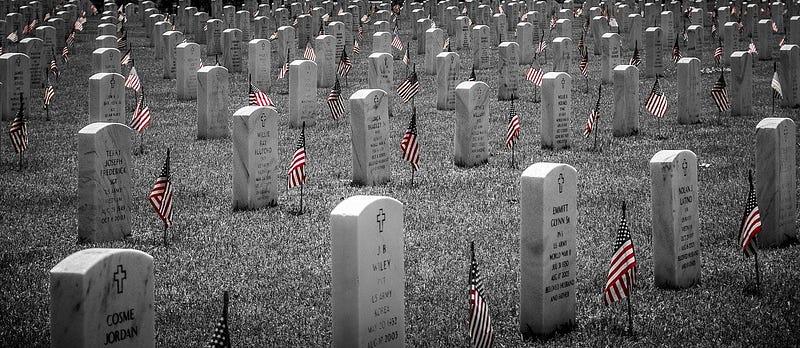
Memorial Day is a time when we mourn and remember our honored dead, and pay tribute to the sacrifice of those who died for our freedom’s sake in all battles and wars before and since Pearl Harbor. What a glorious world it will be when we can all find Dick Fiske’s and Zenji Abe’s kind of forgiveness.

I like to call myself a storyteller and novelist, because that’s what I do. Click image above to visit my website where you can read excerpts from my novels.


