
Tap Into Your Third Eye with Nature-Inspired Imagery Work
Rock reading — a scrying exercise.
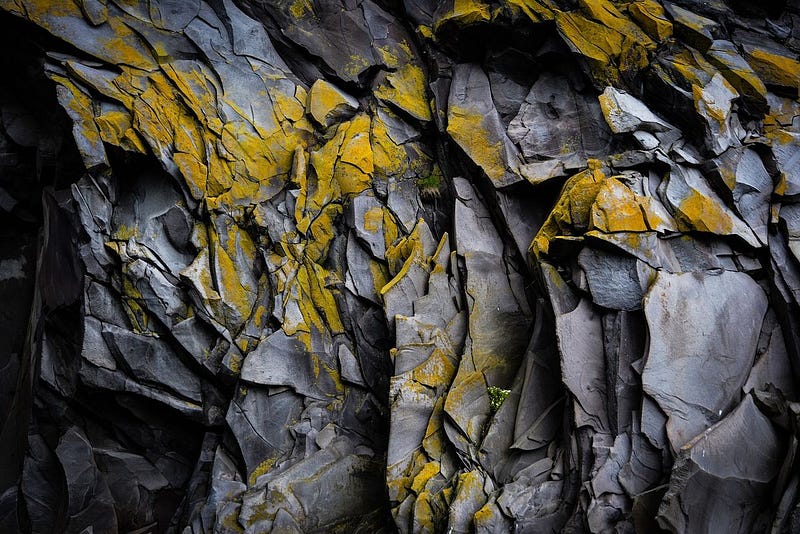
I talk to rocks. And they talk back. It’s called scrying.
The act of relaxing and concentrating on the shapes and forms in the rock helps me get into an altered state — much like a dreaming state — where I can listen to what my Higher Self is trying to tell me.
So many of us have a barrage of voices in our heads that do little to help us, much less calm us and give us confidence. This exercise can help.
Scrying a Rock
This is a Shamanic Scrying exercise that, according to cultural anthropologist and shamanic teacher Michael Harner, appears in nearly all shamanic cultures around the world, in some version or another.
Scrying helps us to get in touch with our unconscious minds: the realm of the soul. It can be used as a powerful form of self-understanding and psyche-analysis. If you’re struggling to find direction, meaning, or purpose in life, scrying can be a wonderful way to get in touch with your core needs, dreams, and goals.
1. Determine a Question
Come up with a question that you would like some guidance on, perhaps some input different from what your mind gives to you in its normal processes.
You may have “thought” this issue through but still feel perplexed. It should be a big, open-ended question about something specific. Examples: “What guidance do you have for me about ______?” “What skills do I need to fulfill my role as __________?”
2. Find a Rock
With your question in mind, go out in a meditative way, quietly walking in Nature, and look for a rock, about grapefruit-sized, one that has a pattern or variegated color to it, so that it can operate kind of like a Rorschach test*, letting forms emerge out of the patterns of the rock.
*The Rorschach inkblot test has been used to determine the level of healthy imagination in subjects. According to Professor of Psychology Jerome L.Singer, Ph.D., people who see human figures in action (as opposed to inanimate objects) in ambiguous inkblots tend to be not only more imaginative but also have a better grasp on reality. He also stated that adolescents who lack imagination tend to be more aggressive. (MindPlay: Creative Uses of Fantasy, Prentice-Hall Inc., 1980, pp 20–21)
Of course, you can also take a rock from your home or yard if one is available, but don’t just take any rock — wait for the one that you have that definite AHA feeling, “Yes, this is the rock for me.” Keep your question in mind as you make this decision.
Bring your rock with you into a quiet, serene place. It is preferable to do this in dimmer light, where you feel more dreamy and relaxed, rather than in bright daylight. Sit comfortably in a chair or on the floor, and place the rock in front of you where you can observe it from all angles. Pick up the rock and turn it over as necessary, while contemplating your big question.
Take a few breaths in and out, calming body and mind, as you continue to look at your rock.
2. Finding Images
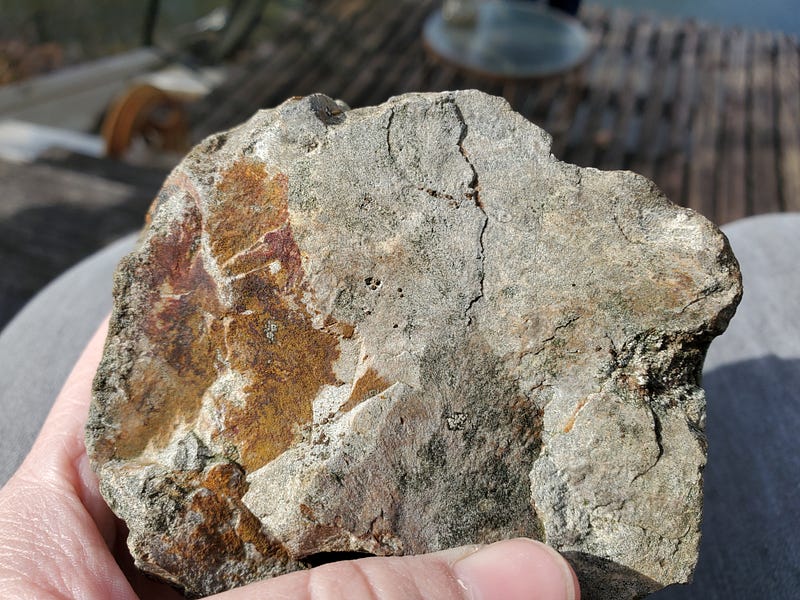
In this relaxed state, you are going to look for patterns that jump out at you as imagery, in much the same way that you might look at a cloud and see a poodle or a bird shape.
Find two or three images and note their position on the rock (use pen and paper to note the image and position if desired. Alternatively, you can have a companion note this for you.)
Seeing things that aren’t there might seem a little strange. There’s a scientific name for it — pareidolia. It means to see beyond images, and according to the NIH, it describes “the tendency of the human visual system to extract patterns from noise.” The pattern we are most likely to see is faces.
An article on Psyche.co says that pareidolia used to be considered a mental deficiency or illness but is now being seen as a sign of creativity. My experience is that pareidolia — as a contemplative practice rather than a static mental condition — can help develop creative traits. Working with the images can help increase intuition, as we learn to listen to our own ideas instead of all the external authority voices that fill our minds.
Talking to Your Rock
Ask each image your question directly, one at a time, waiting for an answer to enter your psyche. You might experience this as words coming into your consciousness in a “fed” way — they are your words, but, at the same time, clearly coming from beyond your normal thought processes.
Write these answers down, also trusting them, however unusual they might sound. Before moving to the next image, ask, “Is that all the advice you have for me about [the question]?”
Do this for each of your two or three images, recording the answers. Finish by thanking all the images and the rock for their guidance.
You are really talking to yourself, your subconscious mind, allowing the images in the rock to move you past the critical, analyzing mind. In this way, you reach a place of deeper knowing that can illuminate your inner wisdom.
Psychologist Carl Jung did something similar with imaginal characters and called it active imagination.
If you find this difficult, you might work with a trusted friend or someone with experience with active imagination or other similar techniques.
Contemplate the answers given, considering that the words could be coming from some spiritual source “outside” you, or they could be coming from your own subconscious. It doesn’t matter — the information is valuable regardless. From the standpoint of shamanic or indigenous spirituality, there is no difference between those two!
What insight did you receive? Was it expected or unexpected? How was it different from your “thoughts” about this issue before any scrying activities? Were those “thoughts” coming through as voices of others you’ve given your power to?
Find a way to implement this shamanic guidance, trusting your Inner Wisdom.
♥ Runa
Runa Heilung is an Old Soul Alchemist and dream archaeologist. She works with dreams, oracles, and the imagination to help people rediscover their Inner Wisdom.
Originally published at https://www.oldsoulalchemy.com on November 14, 2023.