
Tap Into Emotion to Shape a Person’s Reasoning
A revolt against western philosophy that’ll improve your influence as a leader

Each day, our senses are slammed with inputs. Perceptions form in our minds and ego rears its ugly head. It’s a constant battle to make sense of it all.
Sensemaking is ingrained — an innately human process that’s always running. It’s a subconscious code that’s programmed into us. Using it, we digest the experiences we encounter and give them meaning. We do this to translate complexity to simplicity, enabling us to act.
Sensemaking is especially important for leaders, as they must master it to influence others and gain loyal and genuine followership as they steer the ship. But how do we do this authentically?
For centuries, western schools of thought have touted that we can influence people through reason — our ability to consciously interpret and navigate a situation by applying logic and developing a conclusion. Greek philosophers Plato and Aristotle tenaciously advocated reasoning, and this thinking carried forward into the Age of Reason (championed by René Descartes). It still reigns dominant in today’s data-driven world.
Reason certainly has its place, but we must recognize its severe limitations.
Why reason is limiting
“Reason is, and ought only to be the slave of the passions, and can never pretend to any other office than to serve and obey them.”
— David Hume
There’s widespread belief today that reasoning one’s way through a situation leads to the ideal outcome and can fuel influence over others.
Rational Choice Theory doubles down on this. It says that individuals make decisions that most align with their personal preferences. Essentially, we weigh the options in a given situation and reason our way to the choice that maximizes gains and minimizes losses. For example, a person may decide to change careers if she believes the benefits outweigh the burdens imposed upon her. This is reasoning in action.
All seems easy, right?
No, not quite.
This isn’t easy because we’re not robots. We are sentient beings. As Mark Manson argues in his latest book, a person’s “thinking” brain constantly gets ramrodded by their “feeling” brain, and that creates massive internal conflict.
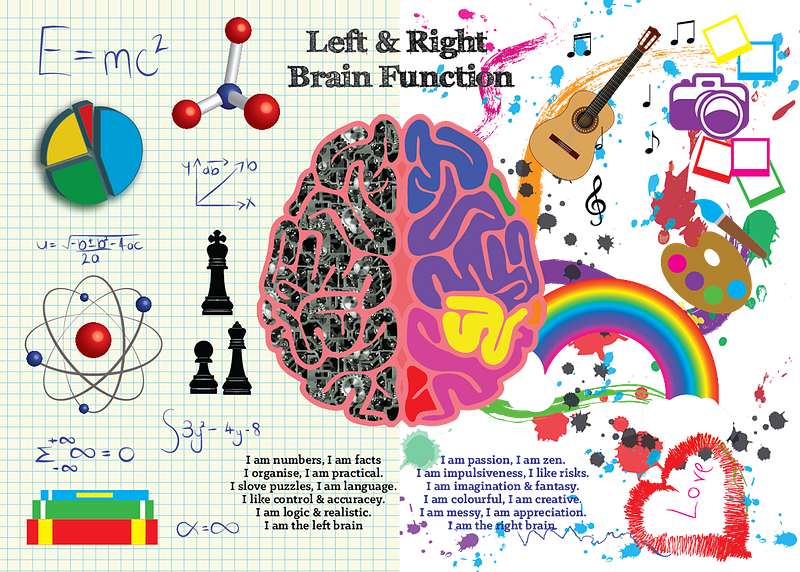
We get caught up thinking that we — and those around us — are rational actors. However, there’s little rationality here. Humans are naturally irrational, constantly succumbing to emotional flooding, groupthink, selective attention, and more subliminal foolishness. A person’s rationality only develops with intentional practice.
Scottish philosopher David Hume had the right idea. He saw the challenges with purely reasoning one’s way through a situation. Hume viewed pure reasoning as being perilously ignorant of emotion, which underlies and governs all human behavior. Instead, in A Treatise on Human Nature, Hume describes our psychological machinery in a way where our “passions” (emotions) reign supreme. In this sense, reason inherently plays a subordinate role to emotion — it’s due to our wiring, and it’s not something we can change.
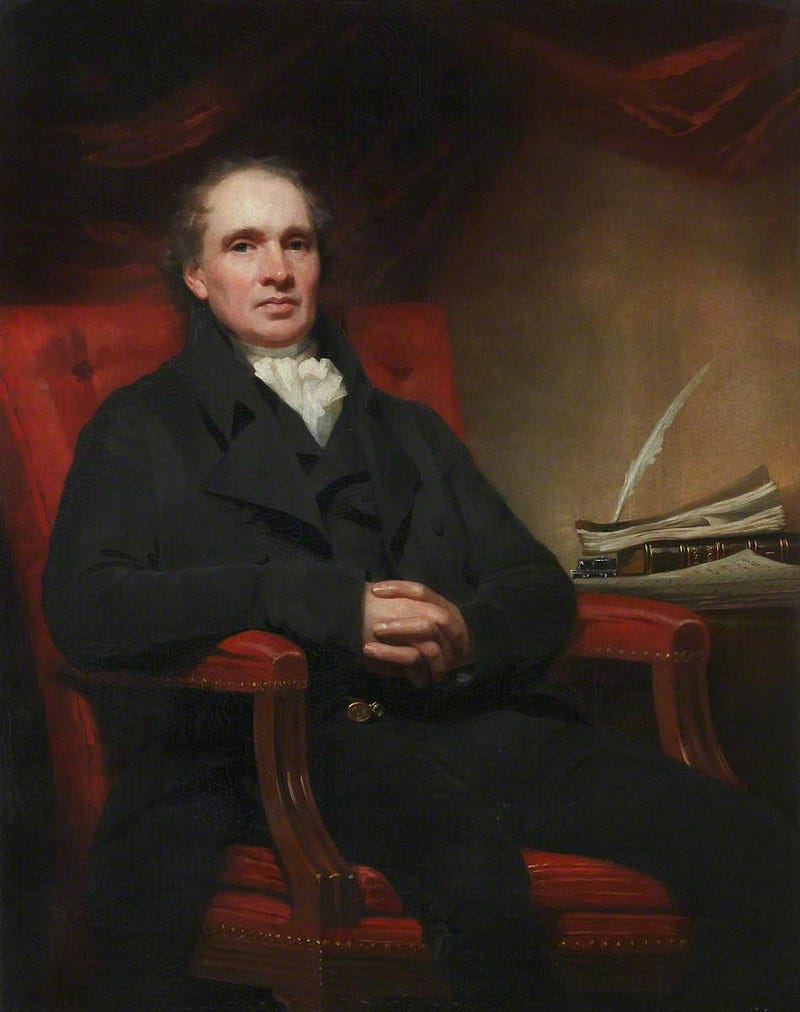
Reasoning is useful, though we must recognize emotion as the dominant force that guides human thinking and behavior.
Big implications for influencing and leading others
The common approach to changing the culture within any organization — a business, church, sports team, family, anything — is to conduct a top-down “push” campaign. Let’s take a medium-sized company for example.
In this scenario, a small team gathers a few inputs from the masses and then crafts a strategy, change management plan, and communications campaign. And then it’s on to distribution: “Here’s why our thinking makes sense.”
Through town halls, webinars, and more, leaders give the blah blah vision of a better state and back it up with their reasoning. Finally, some objectives and KPIs are laid out, capped with a galvanizing “we can do this!” wrap-up. (Motivating, clearly.)
What has leadership missed here? A lot, really. But the big thing? Emotion.
They completely sidestepped it, neglecting how people will feel about the change and what it’ll take for them to get emotionally invested. And now, the boatloads of time and money spent won’t amount to much.
Your people are the ends, not the means. Tapping into peoples’ emotions shows them they are the focus. A leader can do this by practicing and improving their emotional intelligence. Here are some proven ways:
- Self-Awareness: Reflecting on your own emotions, understanding how they’re manifesting, and gauging the effects you’re having on others
- Self-Regulation: Expressing your emotions at the right time and place and through appropriate means — the Stoics emphasized this self-control through the virtue of Temperance
- Social Skills: Being adept at interacting with others, putting them at ease, and earning their trust by building emotional bonds
- Empathy: Truly seeing a situation through the eyes of another and working to feel what they feel (consider how the Platinum Rule applies)
- Motivation: Heavily focusing on intrinsic motivation — helping people get into flow states and have peak experiences — while also considering the extrinsic factors that people might value
Influence people through well-practiced emotional intelligence and by helping them make sense of it all — by tapping into emotion (primary) which then feeds their reason (secondary).
Engaging emotion to rewire logic
“I’ve learned that people will forget what you said, people will forget what you did, but people will never forget how you made them feel.”
— Maya Angelou
Once we engage others through emotional connection and build trust, only then have we earned the right to tap into and influence their reasoning.
We need to embrace this emotion-to-reason sequence to overcome the difficulty of changing someone’s opinion solely using reason. Getting humans to make decisions based on complete objectivity usually takes scientific minds and controlled environments (not real-world at all).
In The Righteous Mind, Jonathan Haidt uses a metaphor to explain how emotion takes precedent. He describes an elephant and a rider. The elephant, traveling along, makes judgments immediately based on emotions and bodily sensations. The elephant is primarily in control, though it’s steered by the rider, which is reason. Takeaway: emotion is dominant and reason is subordinate, but they work together to move forward.
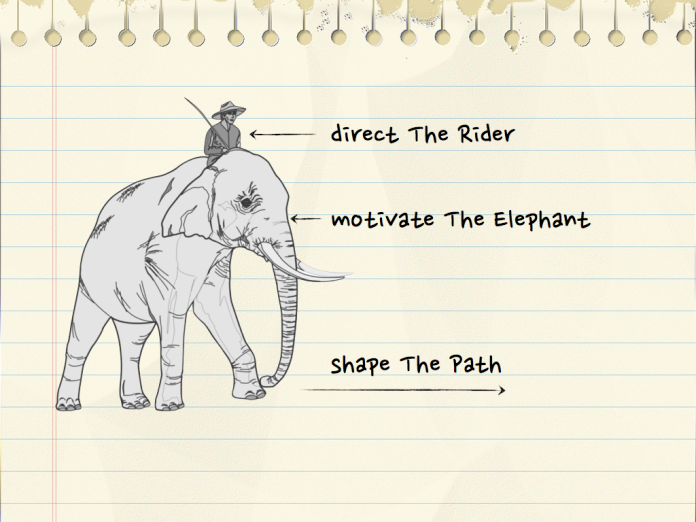
For each of us, reason exists to protect our emotions. We develop our own reasoning over time as we have experiences, but it’s there primarily to keep our emotions alive and justified. Luckily, it’s something we can influence.
Tapping into emotion is a mindset shift, and the skill only comes with continual practice. Influencing — getting people to believe in you and your thinking — is an iterative process of making people feel the way you want them to feel.
We influence people by helping them make sense of a situation, not by us delivering sense. However right a leader might be, they rarely change a person’s reasoning without authentically engaging the “feeling” brain. Take emotion seriously — tap into it, account for it, and lead with it.
Want to stay in touch? Follow me on matthewdoan.com, Medium, LinkedIn, and Twitter.


