
Taoism’s Sage-Like Advice to Be Like Water
A lesson from ancient wisdom

I’ll never forget the day the nearby river broke its banks, sending torrents in through the front door of my house and out through the back door. Personal belongings flowed forth, among them my favorite red shoes. I found one shoe floating in the car park beyond the garden, along with an action figure belonging to the child next door: a tiny plastic superhero. I remember scooping up the figurine and saying, “Well, it turns out you are weaker than water, pal.”
Taoism’s suggestion for us to be like water comes from the Tao Te Ching, a book of Chinese philosophy by Lao Tzu. Although it was most likely written in 600 BC, it offers sage-like advice for anyone on a spiritual or personal development path today.
“Nothing under heaven is as yielding as water. And yet in attacking the hard, the unyielding, nothing can surpass it. Nothing can take its place. The weak overcomes the strong, the soft surpasses the hard.” Tao Te Ching
Water is one of the softest substances known to humankind, yet it can mold the landscape, pick up and toss about massive trees, and preserve life, helping plants grow and creatures survive harsh summers. Indeed, water looks perfectly weak when it’s calm, but it is a force of nature.
Like water, we, too, can be soft and still greatly impact the environment. First, though, we must overcome the socially propelled notion that strength and softness are poles apart.
Some of the strongest people I’ve met have been soft like water. Take Brin, for example, a modest-looking man dressed in indistinct clothing. He had a deep, calming voice like colossal ocean waves that crash on the shore yet soothe the soul. His large hands crafted delicate sculptures from wood, and he took in homeless people, no matter who they were or what had led them onto the streets.
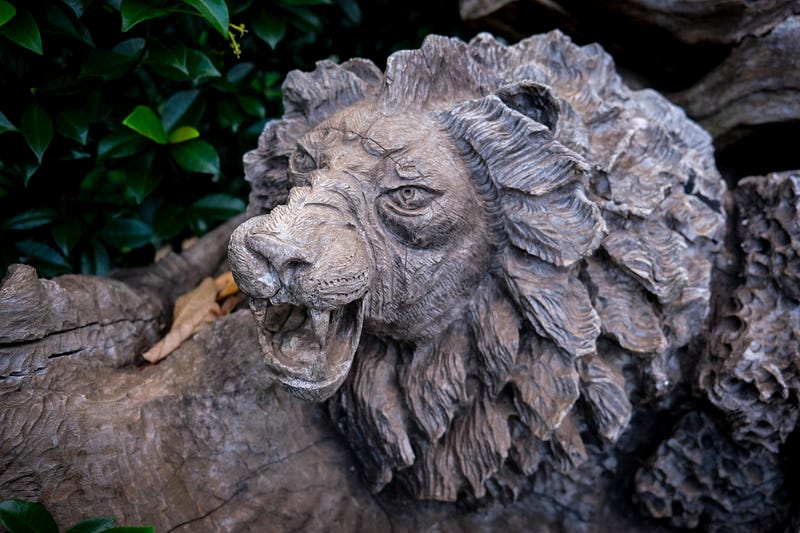
Brin would collect a piece of wood from the forest and cast a gentle gaze over it. Then, as if gifted with magical sight, he would draw out whatever was in the wood, a lion, fisherman, or nature spirit, with careful chiseling and buffing.
He did likewise with vagrants. Once indoors, he’d offer them tea and shelter. Later, when they shifted from fight-or-flight due to various traumatic memories, he gave them a task, a responsibility to handle that helped them see they were effective and powerful.
The task could be as simple as helping him find suitable wood for a carving from the forest, or it could be more challenging, like helping to fix someone’s fence. Afterward, the individual’s faces brightened because they had reclaimed their inner strength. Brin achieved this with kindness, slowly nudging them to do well like a mother hen encourages her chicks to explore the yard.
Occasionally, I’ve been lucky enough to meet others like Brin. They didn’t necessarily do anything as visibly incredible as Brin but, instead, made a gradual difference to their surroundings or the people in their lives.
Water has an uncanny knack for entering crevices so it can flow through rocks and stream over and around them. Even the tiniest fault in a vessel is an escape route. I didn’t notice that the massive pot housing my peace lily had a crack until the water seeped out of it, staining the coffee table. Similarly, many soft people find slight, often unobservable ways to use their inner strength.
My mother-in-law, for instance, was aware her elderly neighbor across the street didn’t have anybody to talk to after her husband died. Her natural softness and sensitivity helped her notice that her neighbor might be lonely and need simple signs that she wasn’t alone.

Each day, my mother-in-law waved to her across the street. The two women habitually pulled their respective lounge curtains at the same time each morning, so the first thing they saw from the window was one another. The friendly smile and attention, doubtless, gave the older woman across the road a reason to get up in the morning and an emotional lift to start the day.
One of my favorite qualities of water is its stillness when undisturbed. When the nearby river gently flows during warm summer days, I love to lean on the wall over the bridge, watching the sunlight bounce off the surface. Being so close is a mediative, absorbing experience. It’s interesting to note that the calmness of water is part of its strength.
I’ve noticed society commonly links strength with aggression. The ocean and rivers can be fierce, but don’t lose their power when calm. Knowing they have the capacity to rage yet remain tranquil demonstrates a fine quality for humans to develop. We can decline drama and anger and opt for peacefulness. The waterways can’t choose their behavior, but their actions, as with much of nature’s ways, reveal measures we can adopt to help us live well.
I know a gentle giant who could, with ease, defend himself physically using a flick of the wrist. But when challenged, he uses communication skills to soften would-be aggressors’ hearts. He understands that most defensive people are fearful. They don’t want to get into a fight and would rather find common ground. The strength of softness helps pave the way for healthy dialogue.
“True goodness is like water; it nurtures everything and harms nothing. Like water, it ever seeks the lowest place, the place that all others avoid. This is the way of the Tao. For a dwelling, it chooses the quiet meadow; for a heart, the circling eddy. In generosity, it is kind; in speech, it is sincere; in power, it is order; in action, it is gentle; in movement, it is rhythm. Because it is always peaceable, it soothes and refreshes.” Tao Te Ching
Sometimes, I see a similar trait in my dog. When another dog challenges him, growling and raising its upper lip to reveal teeth, he steps to the side and remains still for a moment or two while assessing the situation. These few precious seconds of stillness are enough to show the other dog he isn’t interested in grappling with them, and they become calmer.

Indeed, my dog is like water in other ways, too. He knows how to gently seep into conversations with little actions like gaining eye contact or wagging his tail. These behaviors create cracks in people’s attention, and they are magnetized toward him. Such is the power of the softness and persistence of water.
“The supreme goodness is like water, nourishing all of creation without trying to compete with it… nothing is softer or more flexible, yet nothing can resist it.” Tao Te Ching
Another aspect of water mentioned in the Tao Te Ching is flexibility. We are advised to be still until the mud clears when situations are hazy. This reminds us that sitting tight rather than forcing circumstances or wrestling with them lets challenges work themselves out. We need not struggle and can wait for clarity to arise naturally, allowing us to see the best course of action.
“To clarify muddy waters, you must hold them still and let things settle. To glimpse the secret of the Tao, you must keep still and quiet your mind.” Tao Te Ching
I’ve frequently followed this lesson and put action on hold when the way forward was indistinct, and it’s saved me a great deal of effort and worry. The times when I’ve forgotten this secret, I’ve muddied the water further or taken the wrong route.
Living near a river is a constant reminder to take Lao Tzu’s advice and find inner strength in flexibility, softness, and patience. Not a day goes by without me contemplating the power of the water outside my window.