
Tanzania and Zanzibar. Part 1 Gateway to Tanzania
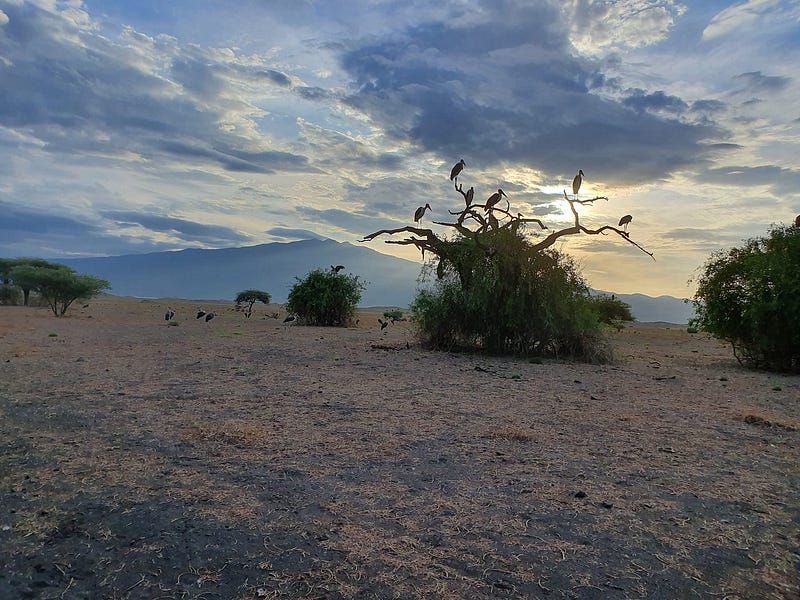
In our unstable world, you can have fun with fate by planning where to go in the near and not so future. The situation in the world is changing dramatically, predicting a sharp change in air travel prices or even canceling a flight becomes more difficult than playing on the stock exchange and depends only on luck and chance. So it happened to us. The planned trip to the USA was postponed indefinitely, and the New Year in South America replaced the warm coast of the Indian Ocean in Zanzibar. Despite such a sharp change in travel directions, this did not affect the acquired new impressions and emotions from what they saw. Everything that is not done is for the better, and Tanzania (which I am visiting for the second time) turned out to be a pearl in the collection of countries we saw, both in terms of the new experience presented and in the diversity and intensity of the trip, which I want to talk about.
Tanzania is a country in East Africa, famous for vast areas of virgin nature and sandy beaches with azure water (mainly on the islands adjacent to the continental territory). In terms of the number of national parks and the diversity of animals, Tanzania is unmatched in Africa (and maybe the world) and attracts thousands of tourists every year.
But I will start the story on the beauty of the safari and the identity of the Masai tribes, and from the tourist gates of Tanzania — the island of Zanzibar.
Zanzibar — how the capital of the East African slave trade turned into African Turkey
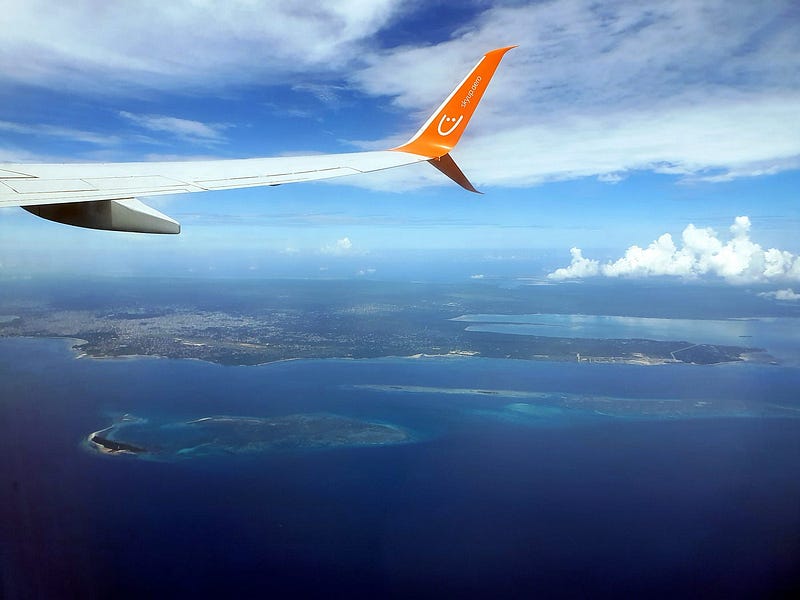
It so happened historically that it is more convenient and cheaper to get to Tanzania by buying tickets to Zanzibar. This is especially surprising when you consider that the island became part of Tanzania (formerly Tanganyika) only in 1964, and before that, it survived the protectorate of Portugal, Oman (under which it became the largest center of the slave trade), and, finally, England.
Some 3–4 years ago, Tanzania was an African exotic, it was problematic to get there directly from the CIS countries, you had to select connecting flights, and the total duration of the trip turned out to be very significant. Then the situation began to change, tour operators suddenly realized that Zanzibar, even despite its unpretentious service and not the lowest prices (especially by the standards of Africa) can provide tourists with excellent beaches (no worse than the Maldives), one of the best kite spots in the world is the beach Page, temperate climate and even some historical interest (Stone Town). And the matter, as they say, went on — more and more acceptable packages designed for the average wallet began to appear, for more sophisticated tourists, tour operators began to offer safari programs to continental Tanzania, and the local service did not stand still and tried to develop. But the real boom happened in 2020. Due to the COVID-2019 pandemic, many popular and popular destinations among our tourists were closed, and Tanzania, on the contrary, did not introduce any significant restrictions. It was then that the charters of our compatriots were drawn to this island, previously unknown to the mass tourist. How this affects the island itself and tourists, we will talk separately, but for now, let’s get back to flights.
After spending 9–11 hours on a plane of varying degrees of comfort, we arrive at a very modest airport and immediately plunge into the arms of warmth, a tropical climate, and … crowds of tourists trying to get through customs control. It’s not that the Tanzanian customs officers are too strict, but the principle of Hakuna Matata, in accordance with which the locals live, does its job, everyone is relaxed, smiling, and very slow. True, the process can be accelerated by completely legally paying a representative of the airport staff $ 10, and she, guided by the well-known and dearly beloved principle of “I just ask”, will bring the passport into the right window out of turn.
After spending an hour and a half in queues at different windows, we find ourselves in the baggage claim hall and … get in line for the 3rd and final window in order to finally get the coveted visa. Luckily, the process is going a little faster. Yes, and in everything you need to see the positive — standing in line you can meet very interesting people and learn something new.
That’s all, the visa is received, the luggage too, and we, happy and a little tired, go to the exit from the airport. Ahead of the trip to the hotel. Everything is simple here, depending on the type of tour, either a pre-booked transport will be waiting for you (if you took a tour at an agency), or if you, like us, like to organize tours on your own, you can find a taxi right at the exit, good there are many options. Prices range from $12–15 for Stone Town to $40–50 for Kendwa/Nungwi (the most popular tourist destinations). It all depends on the ability to bargain. But there is a life hack — you can find local carriers before departure and arrange a transfer, in which case they often make discounts. For example, we agreed with this guy:
Since our trip was busy and there were a lot of rides both in Zanzibar and to /from the airport, Ali gave us a good discount on the total amount.
The trip will take from 20–30 to 60–90 minutes, depending on the place, and all this time you can admire the color of local villages and tropical nature, and, if you wish, chat with a taxi driver. The local population, which is employed in the tourism sector, speaks English quite tolerably, so there should be no discomfort. You can find out about the availability of shops and restaurants near the hotel, ask about the island, and of course, you can always surprise a Tanzanian by answering his question about the weather in our area in December, saying that we have an extremely warm winter, only -1 on the street.
After a short trip, we are already at the hotel. For us, this was not our first visit to Tanzania, we traveled far and wide in Zanzibar on our first visit, so we decided to stop here for just a day and then fly to Mafia Island, but more on that later. Since the proximity to the airport was important, but at the same time we wanted to swim and have fun, our choice fell on the capital of Zanzibar — Stone Town, and the Tembo House Hotel right on the beach.
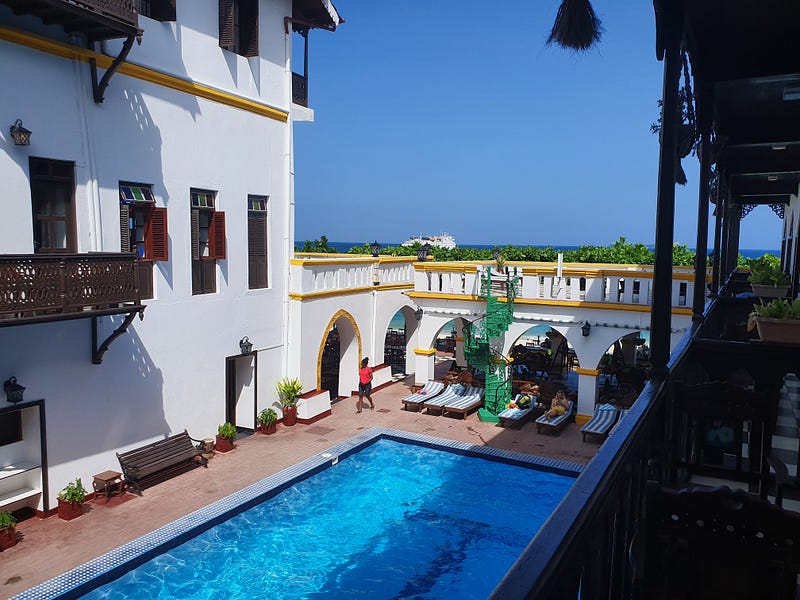
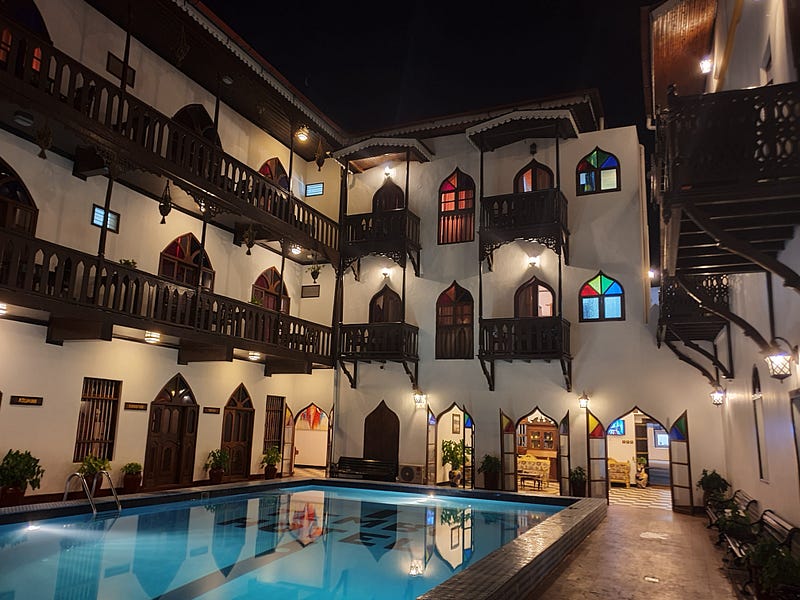
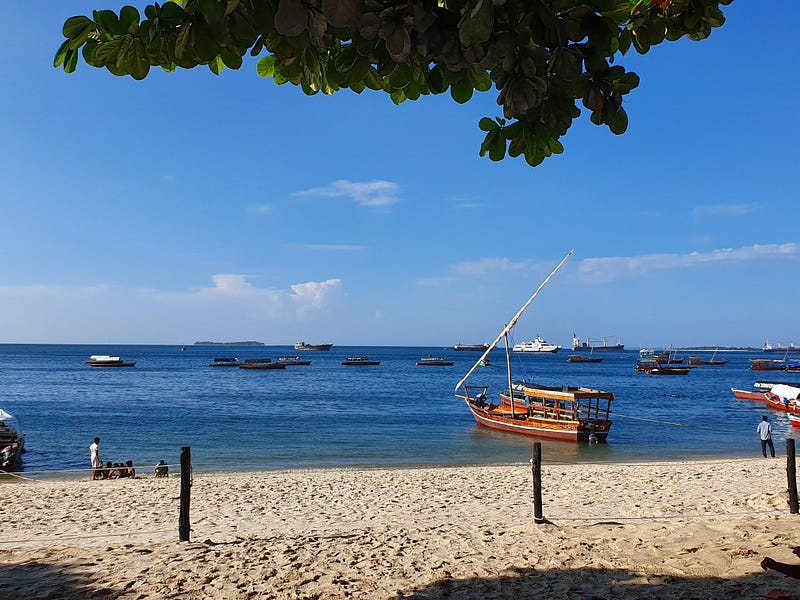
A cozy hotel almost in the city center, and, at the same time, with its own beach. The rooms are clean, the staff is friendly, and the food is delicious. Of the minuses, one can only note the lack of Internet in the rooms and its poor quality on the territory of the hotel, but this is a common problem in Tanzania, and Africa as a whole. Finding fast, stable internet is hard. Perhaps he is in very expensive hotels, and even then I’m not sure. Here the countries of Africa still have a huge field for improvement and development.
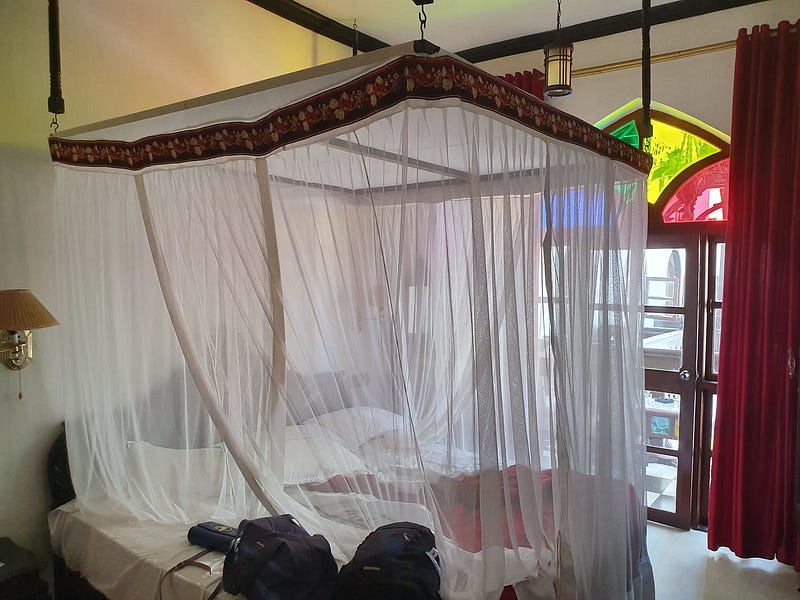
Speaking of rooms, the first feature that catches your eye when you enter any room with a bed is the anti-mosquito canopy. A mandatory and invariable attribute of many tropical countries. Despite the fact that mosquitoes are found only in continental Tanzania (they are not in Zanzibar, at least officially), tropical mosquitoes are no less annoying, can be carriers of various diseases and, unlike our native mosquitoes, practically do not make any sounds. Therefore, the air defense system in the form of palms and other percussion means is extremely easy to overcome. In view of all this, such nets are very out of place.
Cuisine of Zanzibar
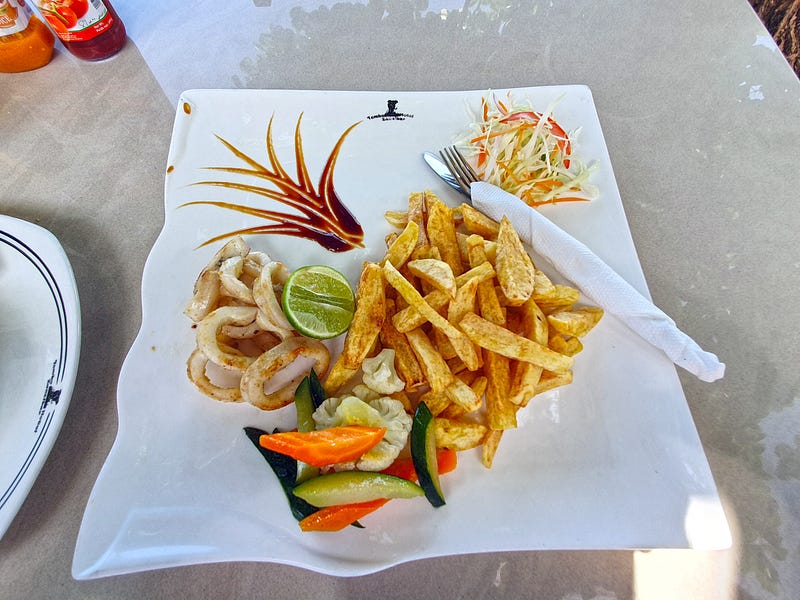
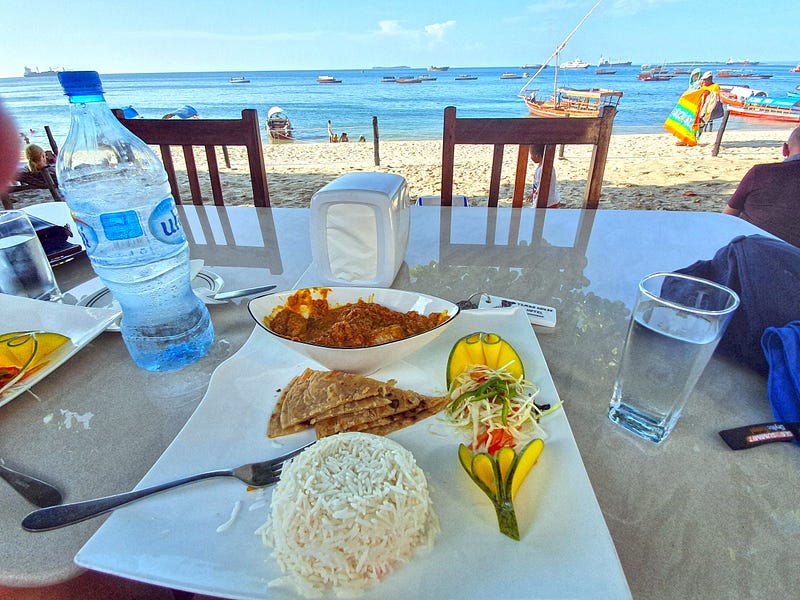
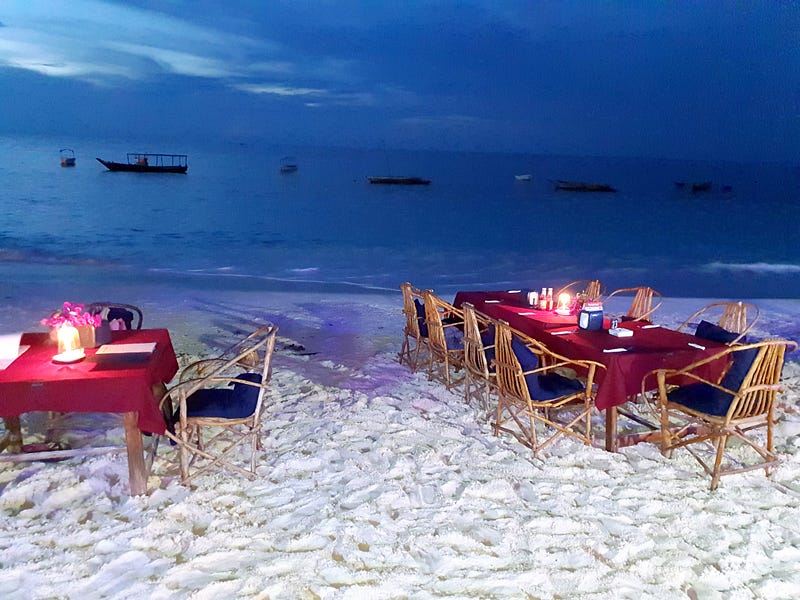
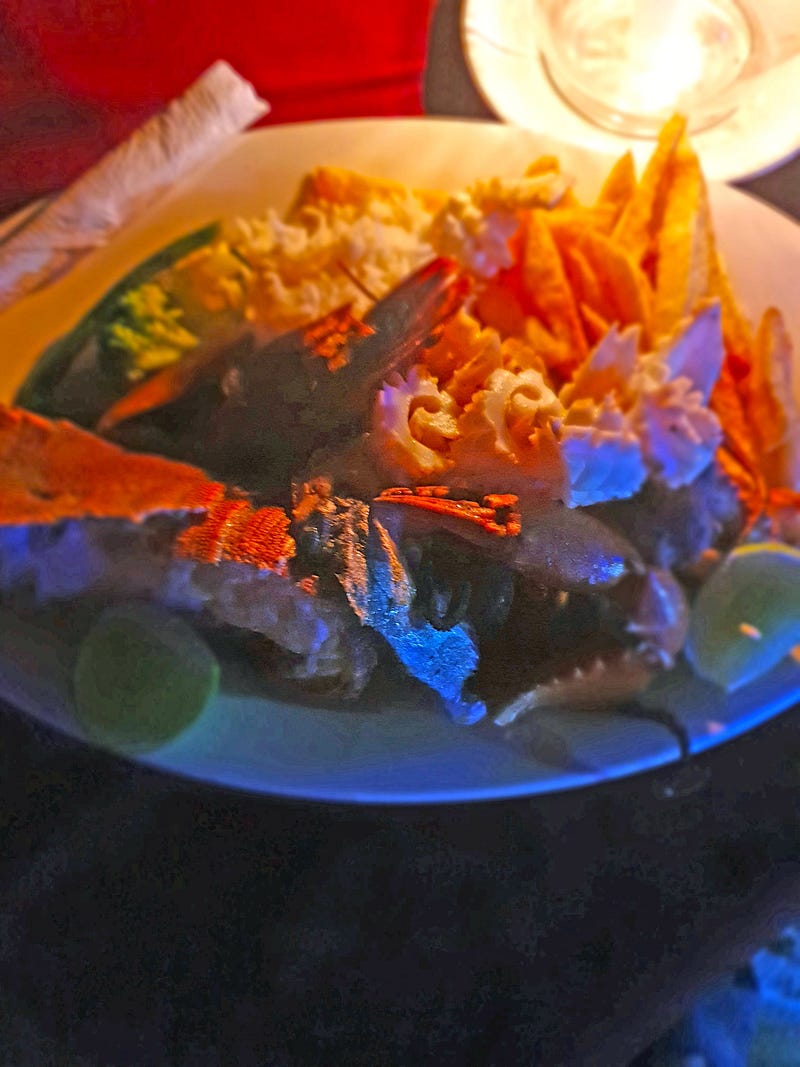
After checking into a hotel, washing up, and recovering after the flight, you inevitably remember that you haven’t eaten for 12 hours already (nuts, snacks, and other nonsense from the plane do not count). Therefore, it’s time to get acquainted with the cuisine of Zanzibar. At first glance, it does not shine with variety, but this impression changes if you eat not only in restaurants at hotels but also go to places popular with the local population (TripAdvisor or LonelyPlanet can be excellent sources of recommendations and tips for such establishments). The food is quite filling and tasty. It even seemed to me that during our 3-year break in visiting this island, the quality of food has increased somewhat, although this may be a subjective opinion and very much depends on the hotel/restaurant. Basically, the dishes are represented by various seafood with a side dish of rice or french fries, they can also serve a salad, or cold cuts, including, among other things, mangoes or pineapples. One of the signature dishes and an invariable addition to meat, fish, and sauces are unleavened chapati flatbreads — a heritage of Indian cuisine and my main gastronomic weakness in Tanzania. An inexpensive snack for two will cost $20–30. The cost of a hearty lunch or dinner for two varies from 35 to 50 US dollars (including wine or beer), which is not very cheap, but it is worth noting that you will have to pay more for the same quantity and quality of seafood in the Mediterranean countries. Add to this a huge selection of marine life — from tuna and shrimp to crabs and lobsters (worth absolutely not space money), as well as the opportunity to sit at a table almost in the ocean itself, meeting a stunning sunset, and the picture becomes much more pleasant:
An approximate order of prices can be viewed, for example, here: Zanzibar, prices.
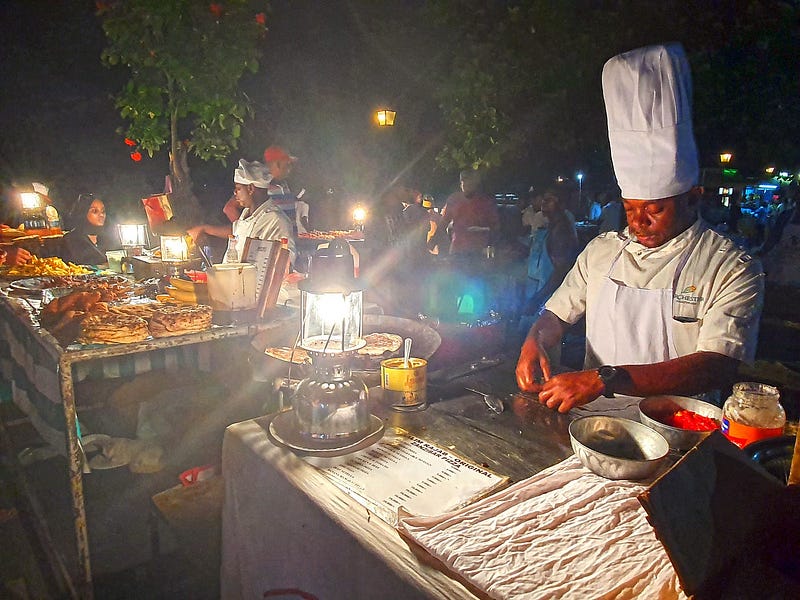
In addition to traditional food, Stone Town is famous for its street food fair (Forodohani Gardens). Like all such places, this is very amateurish, as evidenced by some indignant reviews on TripAdvisor :) but if you like this format and you like to bargain, then there is every opportunity to try even more variety of seafood, pancakes, flatbreads, and many more, combined of your choice and cooked right there. There may be different opinions about this place, but it left only pleasant memories for me.
Well, a little about alcohol. Since Zanzibar is a former sultanate and the main religion on the island is Islam (unlike the rest of Tanzania, where Catholics predominate), one involuntarily wonders if it is allowed there at all. The answer is no, it’s not allowed, but you as a tourist will get a drink in most establishments, with the exception of local-only places and some particularly strict hotels. Still, the tourism business is doing its job, no one wants to lose profits, and the local government turns a blind eye to this topic. Also keep in mind that it is no longer possible for anyone to drink alcohol outside the establishment, including tourists, but if you really want to buy a few bottles of wine (and it’s quite good here) or beer at the hotel, be prepared for the fact that you will have to pay separately for a container. Yes, the locals hand over the bottles and understand that they also cost money, which is not included in the original cost of the drink.
Zanzibar — the beach mecca of Africa
Well, we rested, ate, and it’s time to swim! And here I turn to the pearl, thanks to which tourism in Zanzibar is growing from year to year (and, in truth, has already begun to harm it, but this is a separate topic) — its soft sandy beaches and the extraordinary beauty of azure warm waters. Many have seen photographs of unreal shades of coastal waters in different parts of our planet as if descended from fantastic stories, and, often, they were disappointed when they arrived at such a place and saw that the reality is very different from the brochure. So — Zanzibar, this is not the case, the water here is exactly that bluish/greenish pearly color as in the photo and, moreover, a very comfortable temperature in the range of 26–28 degrees. The soft fine sand and the almost complete absence of garbage also add to the comfort and feeling that you have landed in Paradise (the locals still adequately withstand the battle with the ever-increasing number of not the neatest tourists). By law, all the beaches of Zanzibar are a national treasure, so you will not find fenced-off areas, as in Turkey or Egypt. The entire beach spit is at your disposal. Also in many places, there are sun loungers and umbrellas, but they are already paid — about $ 10 / day per seat. The advantage is that sun loungers and umbrellas are located next to many cozy take-away cafes that can bring you everything from juice to a full meal or hookah.
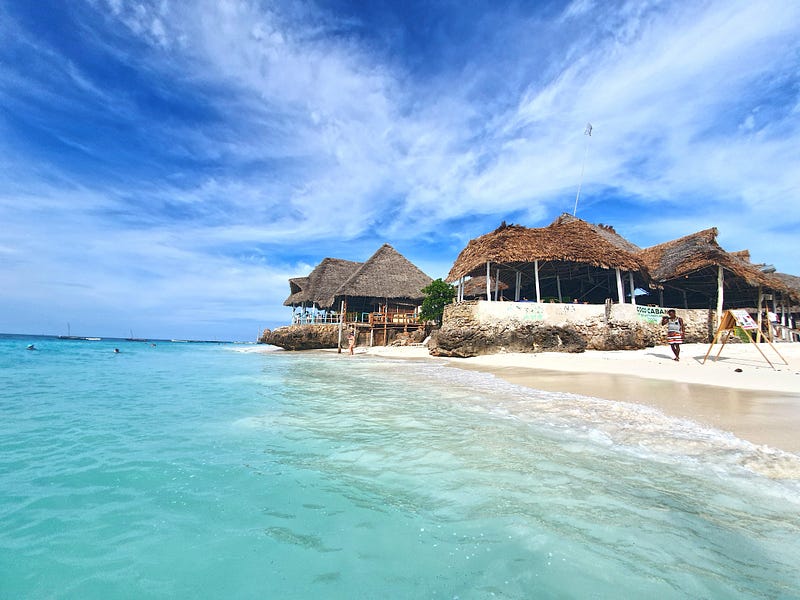
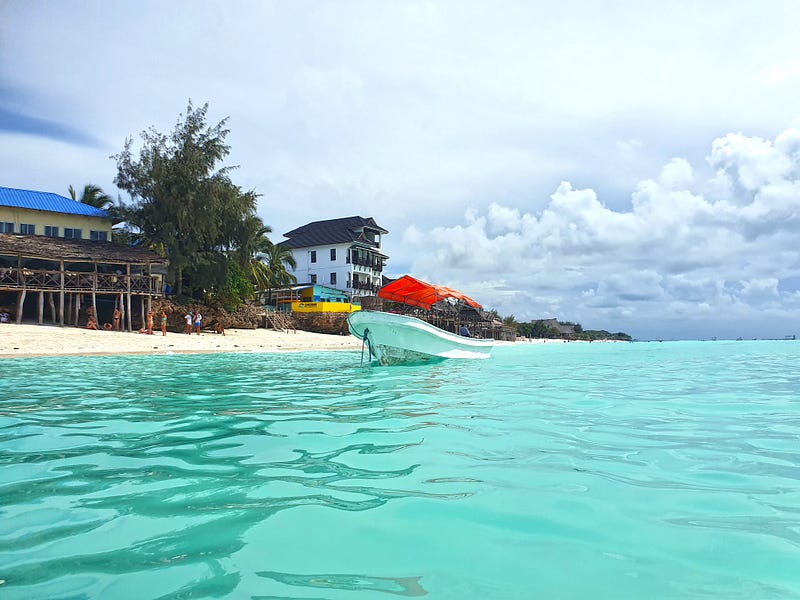
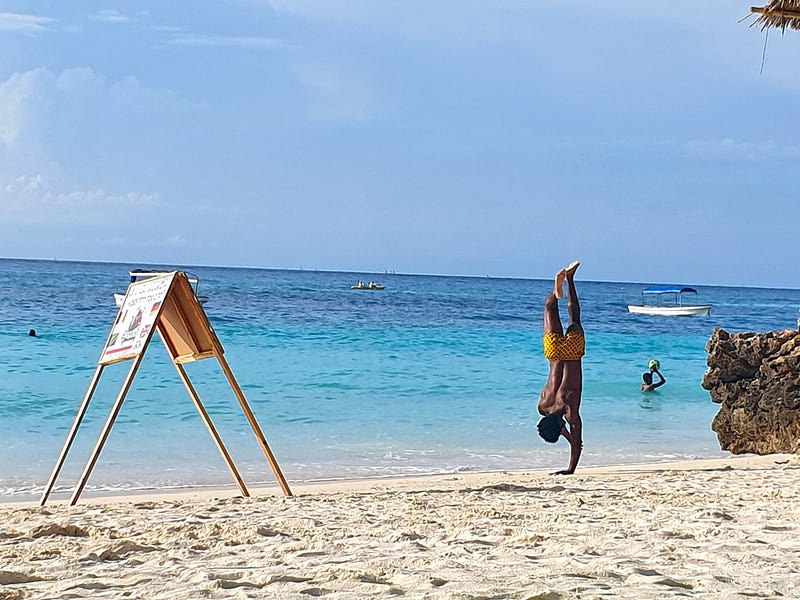
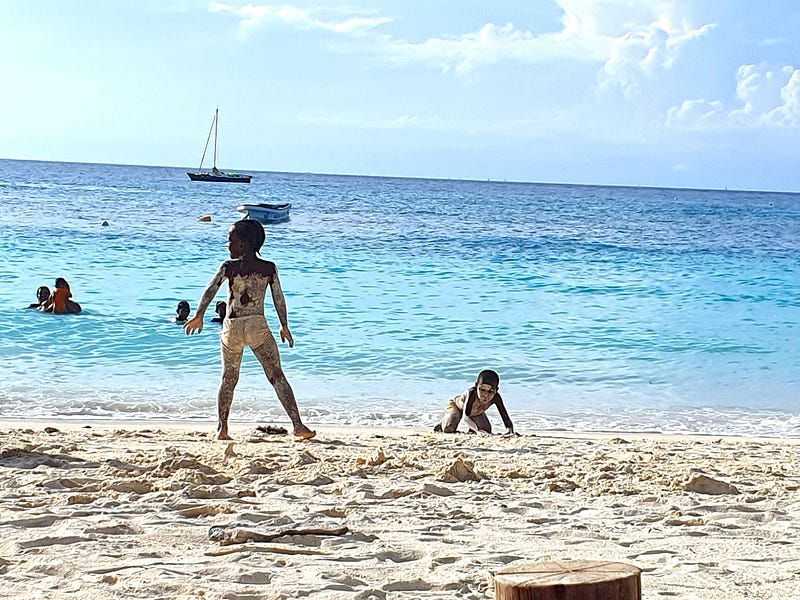
The view of the coastal hotels further complements the colorful atmosphere — they are all with thatched roofs, deliberately unsightly as if made from improvised means by local Robinsons (the impression is often deceptive — inside they are very comfortable buildings). There are plenty of places on the beaches, but if you like a relaxing holiday, it is better to come in the first half of the day, as in the second half the local population begins to pull up to the beaches en masse. One gets the impression that coastal activities are the main leisure activity for many Zanzibaris. What they just do not do — someone plays football, someone performs acrobatic numbers right on the sand, children sprinkle sand in crowds and rush all over the beach. And of course, the locals are trying to sell all sorts of things to tourists — from fruits and coconuts to sunglasses, “real” Masai capes, and slippers. In general, they are not too intrusive, especially in comparison with Egyptian merchants and representatives of some other countries, but not everyone will like the fact that every 10–15 minutes they try to sell you something. Of particular interest is to watch pseudo-Masai — local guys dressed in their capes (real Masai tribes live only in central Tanzania) who are ready to take pictures for a small fee, and also actively woo European tourists. Kind of macho. The fact is that Zanzibar is considered one of the unspoken capitals of sex tourism for women, which is especially popular with single women over 40, mainly from central Europe. There are excellent stories about this in Orel and Tails and the World inside out.
When choosing a holiday destination in Zanzibar, it is worth considering several factors, and perhaps the main one is the presence of very significant ebbs and flows. They occur twice a day, and if on the northern coast, their amplitude does not exceed 20–30 meters, then on the eastern coast the water can “run away” into the sea for 1.5–2 kilometers. This is not very suitable for those who like to spend the whole day on the beach, but, on the other hand, it provides an excellent opportunity to walk along the exposed bottom, looking at starfish, urchins, and other animals. In addition, on the east coast is the Mecca of kite surfers — the world-famous Page Beach. If you, like us, are interested in this sport, then you should stay there for at least 3–4 days and take a basic kite surfing course.
Another important factor is the price and availability of rooms in hotels. Kendwa and Nungwi on the northern coast are traditionally considered the most popular, the prices there are quite high and there are not many places, so you need to book everything very early. This is especially true for the New Year holidays, when, to the already not small demand for these resorts, there is also the factor that the kendwarocks hotel is located in Nungwi — one of the venues for the popular Full Moon party series in the world, which a lot of tourists strive to get to. Because of this, such strong excitement is created that hotels sometimes even take dishonest actions, canceling reservations in order to resell them at a higher price. We have to put pressure on them through the administration of Booking.com and force them to change their minds since they are very susceptible to this.
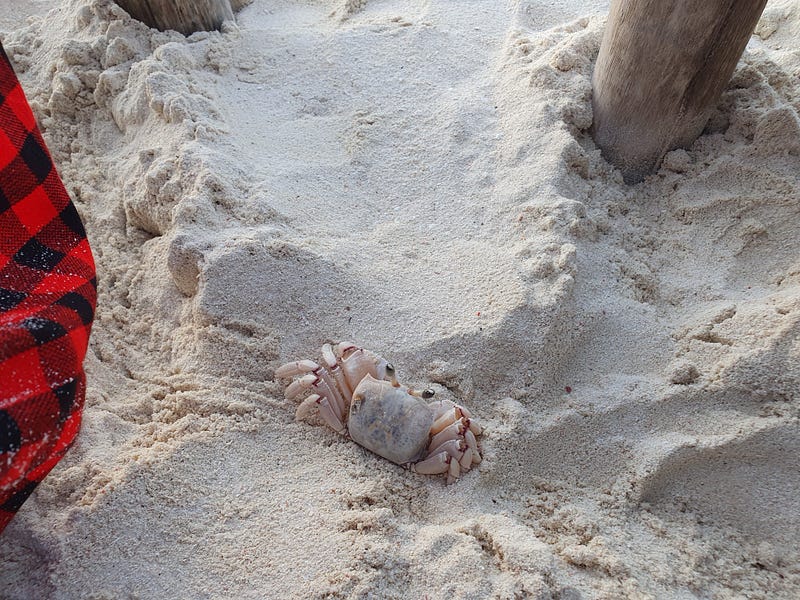
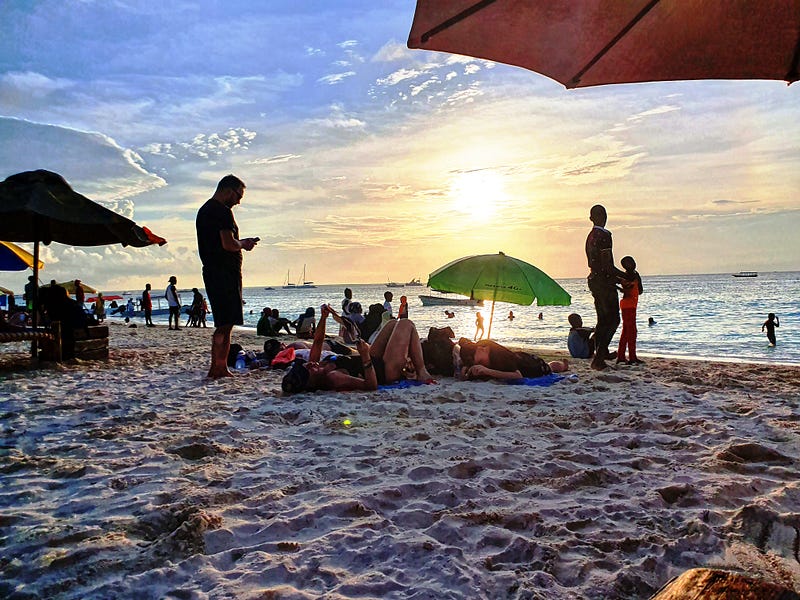
Since during our second trip, we were in Zanzibar for only a few days (at the beginning and end of the trip), we stopped at the beginning in Stone Town, and then in Kendwa to relax after the safari, eat cheap and tasty mangoes, celebrate the new year at Fool Moon Party, swim in the warm ocean and fly home happy and rested.
What’s next?
I can talk about Zanzibar for a long time. I did not touch on the topic of sights at all. I didn’t talk about Turtle Island, the house where Freddie Mercury was born, and the architecture and sights of Stone Town, but since on this trip my wife and I were only passing through Zanzibar, I will leave this topic for another story.
In the meantime, our path lies further — to Mafia Island and a meeting with Whale Sharks. But more on that in the second part…
While you are waiting you may check my other fascinating story about a trip to Armenia:
Find me on social networks: Instagram, Facebook, Twitter
Also if you like my articles you may support my further work at ko-fi.
See you in the next story!


